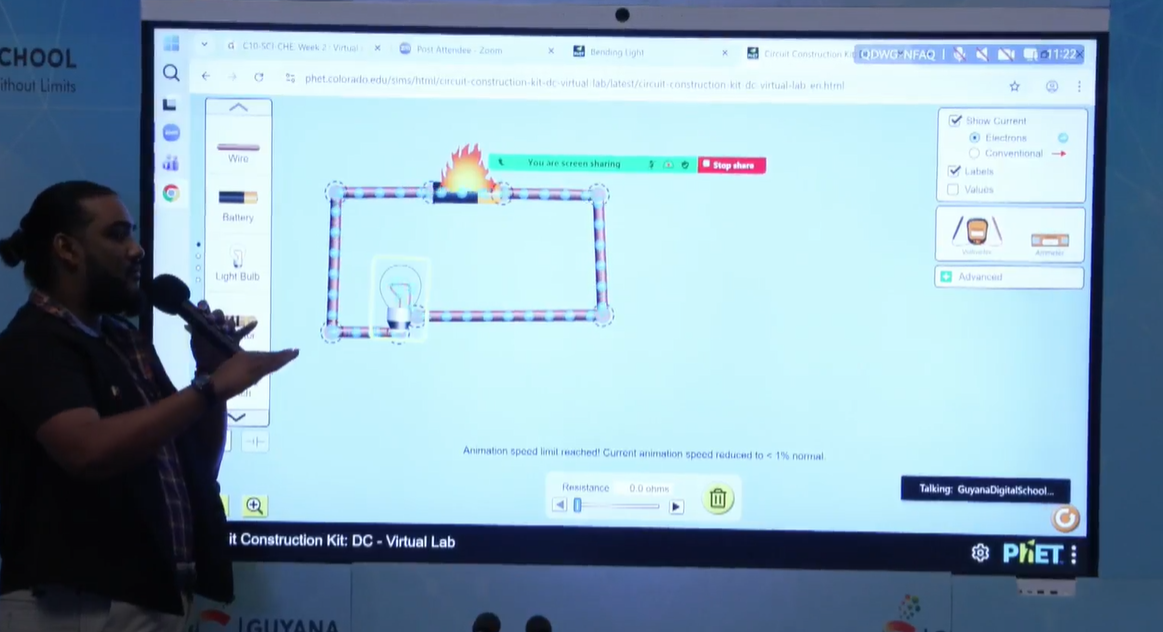
In a landmark initiative for Caribbean education, Guyana has officially launched the Guyana Digital School with over 20,000 students already enrolled from across the region. The platform, inaugurated on December 5, 2025, represents a significant step toward equitable educational access throughout the Caribbean Community (CARICOM).
Education Minister Sonia Parag revealed that 20,368 students from Grades 10 and 11 throughout Guyana and CARICOM member states have registered on the digital platform. The program is scheduled to expand to include Grades 7 through 9 by early 2026, creating a comprehensive digital learning ecosystem.
President Irfaan Ali emphasized the platform’s strategic importance for disaster resilience in a region frequently impacted by natural disasters. ‘For a region that is susceptible to so many natural disasters… once electricity and communication services are restored, education is back up with the digital school,’ President Ali stated, highlighting the system’s capacity to minimize educational disruption during crises.
The digital school employs a sophisticated four-quadrant approach that integrates technology, content, engagement, and hands-on experience into a cohesive learning model. The platform incorporates artificial intelligence elements and features an extensive library of on-demand digital resources, including textbooks for CXC and CSEC subjects. Minister Parag clarified that the initiative enhances rather than replaces traditional education: ‘This is not an abandonment of the traditional school methodology. It introduces new avenues for learning so that no child falls behind because of distance, circumstance or pace.’
The initiative has received regional endorsement from Caribbean leaders. Barbados Prime Minister Mia Amor Mottley praised President Ali’s ‘bold and innovative vision,’ while Belize expressed interest in connecting their national digital system with the Guyana Digital School. Grenada’s Prime Minister Dickon Mitchell has directed his education minister to ensure active participation, expressing optimism about the platform’s potential to transform educational delivery throughout CARICOM.
Beyond academic instruction, the digital school aims to bridge cultural divides and prepare students for the digital era across multiple sectors including transportation, finance, public services, and healthcare. President Ali noted the platform will enable students from across the region to conduct experiments and share experiences, ultimately working to break down cultural barriers.
The initiative also addresses persistent challenges revealed during the COVID-19 pandemic, when educational systems struggled with digital transition due to untrained teachers, uncomfortable parents, and limited internet access. The Guyana Digital School now stands as a resilient partner for parents and educators during times of uncertainty, helping to mitigate learning losses that continue to affect educational systems across Guyana.