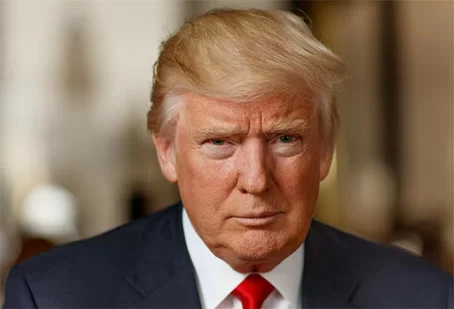
The recently unveiled U.S. national security strategy under President Donald Trump has triggered significant apprehension across European diplomatic circles. Security analysts and government officials characterize the new doctrine as a substantial departure from multilateral cooperation toward strategic confrontation, potentially destabilizing the existing international order.
The revised strategy emphasizes military dominance, expansion of offensive capabilities, and asserts the right to preemptively address perceived threats—even those not directly targeting American interests. European policymakers interpret this shift as particularly confrontational toward Russia, China, and several Latin American nations.
In Brussels and Berlin, concerns center on potential destabilization effects. European security advisors have labeled the American approach “alarming” due to its potential to pressure NATO into supporting operations that contradict European interests. Diplomatic sources indicate that the EU fears Washington will increasingly conduct solo operations without prior consultation, normalize cross-border actions similar to recent Caribbean interventions, and escalate economic and military pressure against rivals—actions that could jeopardize European energy, trade, and migration interests.
A senior EU official described the strategy to European media as “a rupture with the international consensus that has provided stability for decades.”
The strengthened American military focus on the Indo-Pacific region and NATO’s eastern flank presents both strategic importance and substantial risk for European nations. While dependent on U.S. defense capabilities, European leaders worry that escalation around Ukraine or Taiwan could directly impact European security.
Europe is developing a dual response: accelerating the development of independent defense capabilities to reduce reliance on American priorities, while pursuing diplomatic efforts to avoid being drawn into renewed geopolitical polarization. French and German ministers have emphasized the necessity of building “greater strategic autonomy” to protect European interests.
Security analysts identify the most profound concern as the potential erosion of international legal norms. Experts warn that if the United States increasingly operates without UN mandates, other global powers may follow, potentially accelerating conflict escalation worldwide. As one analyst noted: “American actions carry global consequences. A security strategy that stretches the boundaries of international law endangers everyone.”