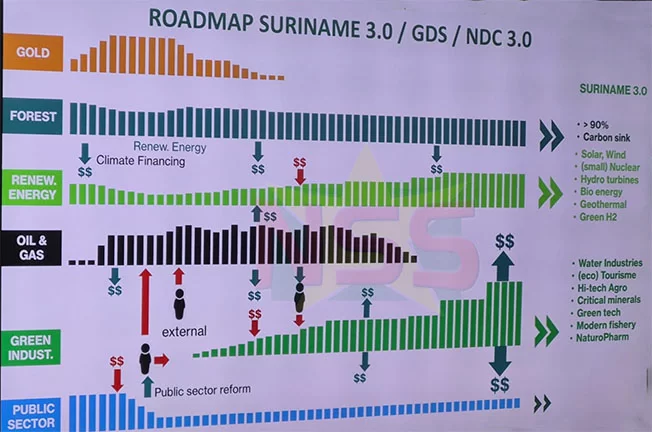
Suriname stands on the brink of a historic economic transformation as its offshore oil and gas sector accelerates development, according to Oil, Gas & Environment Minister Patrick Brunings. The government has announced plans for a comprehensive national conference in April 2026 that will bring together government entities, private sector representatives, academic institutions, and international partners to establish a detailed roadmap for ‘Suriname 3.0’ – the nation’s transition to a modern, diversified, and sustainable economy.
Minister Brunings, who comes from an oil industry background himself, emphasized the urgency of preparation: “We must make a structural leap. The offshore developments are real, investments are coming, and we must be ready.” The future oil and gas revenues are specifically intended not to maintain the status quo but to fundamentally reshape Suriname’s economic structure.
The proposed roadmap outlines a strategic shift away from the gold sector toward multiple new revenue streams supported by oil income. Key development areas include water and climate industries, eco-tourism, high-tech agriculture, critical minerals, green technology, modern fisheries, natural pharmaceuticals, and renewable energy as a second economic pillar. Suriname aims to maintain and even expand its status as a >90% carbon sink nation through investments in solar, wind, hydro, bioenergy, geothermal, green hydrogen, and small-scale nuclear power.
A crucial component involves reforming the government apparatus, with plans to gradually reduce the size of the public sector. Part of the civil service workforce will be retrained for positions in the oil, gas, and green industries. “The government cannot keep growing. Future jobs will emerge primarily in the productive sector. We must prepare personnel for that,” Brunings stated.
The transformation faces significant challenges, particularly regarding local content capacity. A masterclass organized by Staatsolie highlighted growing gaps between industry requirements and current market capabilities. International companies operating in Suriname need local goods and services, technically specialized personnel, and supporting sectors including legal, financial, hospitality, logistics, and medical services.
Despite evident motivation and potential among Surinamese businesses, substantial deficiencies remain – including shortages of well-trained technical staff, insufficient HSE and quality standards, lack of certifications, and inadequate training facilities. The Kuldipsingh Port Facility demonstrates both the rapid pace of offshore development and Suriname’s potential competitiveness, as major international players now operate locally rather than diverting to Trinidad & Tobago or Guyana.
However, government preparedness lags behind market developments, particularly in policy formulation, regulations, local content requirements, and data collection. Without accelerated action, local small and medium enterprises risk exclusion from emerging opportunities. The April 2026 conference will establish foundations for a national oil and gas development plan, green economy investment strategy, public administration reform, robust local content agreements, and a long-term roadmap for Suriname’s economic future.