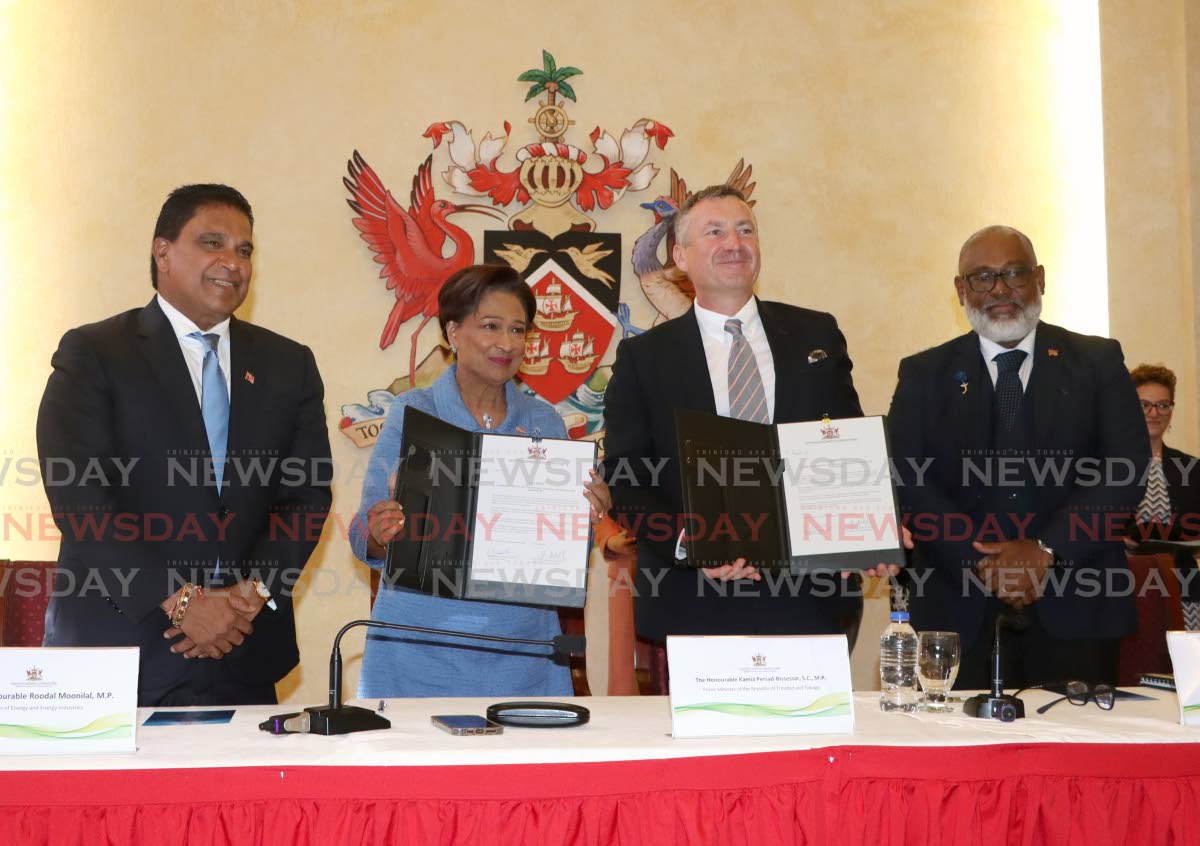
In a landmark development for Caribbean energy markets, ExxonMobil has finalized a comprehensive production sharing contract for Trinidad and Tobago’s Ultra Deep 1 block (UD1), marking the largest multinational oil company’s strategic expansion beyond its Guyana successes. The agreement, signed just three months after Prime Minister Kamla Persad-Bissessar’s administration took office, covers 7,765 square kilometers of unexplored maritime territory—an area larger than Trinidad itself—positioned at the nation’s eastern maritime boundary near Barbados and Guyana.
The contractual framework mandates accelerated exploration timelines, with 3D seismic acquisition scheduled for 2026 and initial drilling by 2028—exceptionally rapid deployment for deepwater operations. This urgency reflects Exxon’s regional operational advantages and the block’s strategic significance amid ongoing Venezuela-Guyana territorial disputes that create complex geopolitical dimensions for the project.
Critical to the agreement’s implementation are robust local content provisions detailed in Article 39 of the production sharing contract, requiring preferential treatment for Trinidadian companies across supply chains, workforce development, and technology transfer. The contract stipulates that all tenders must be advertised, evaluated, and awarded within Trinidad, with mandatory high weighting for local value addition in evaluation criteria. Exxon must further ensure technology transfer in seven strategic areas including fabrication, seismic processing, maritime services, and business support functions.
However, enforcement mechanisms remain problematic through the under-resourced Permanent Local Content Committee (PLCC), which lacks sufficient staffing, authority, and governmental support despite its mandate to monitor compliance. Industry analysts emphasize that strengthening the PLCC represents the most urgent reform priority, requiring no new legislation but rather political will and administrative reinforcement.
The discovery of commercially viable reserves could prove transformational for Trinidad’s declining hydrocarbon sector, where oil production has dwindled below 50,000 barrels daily. Successful development might mirror Guyana’s spectacular output growth from zero to 900,000 barrels daily since 2019, potentially establishing a new Caribbean energy corridor alongside Suriname’s emerging developments.