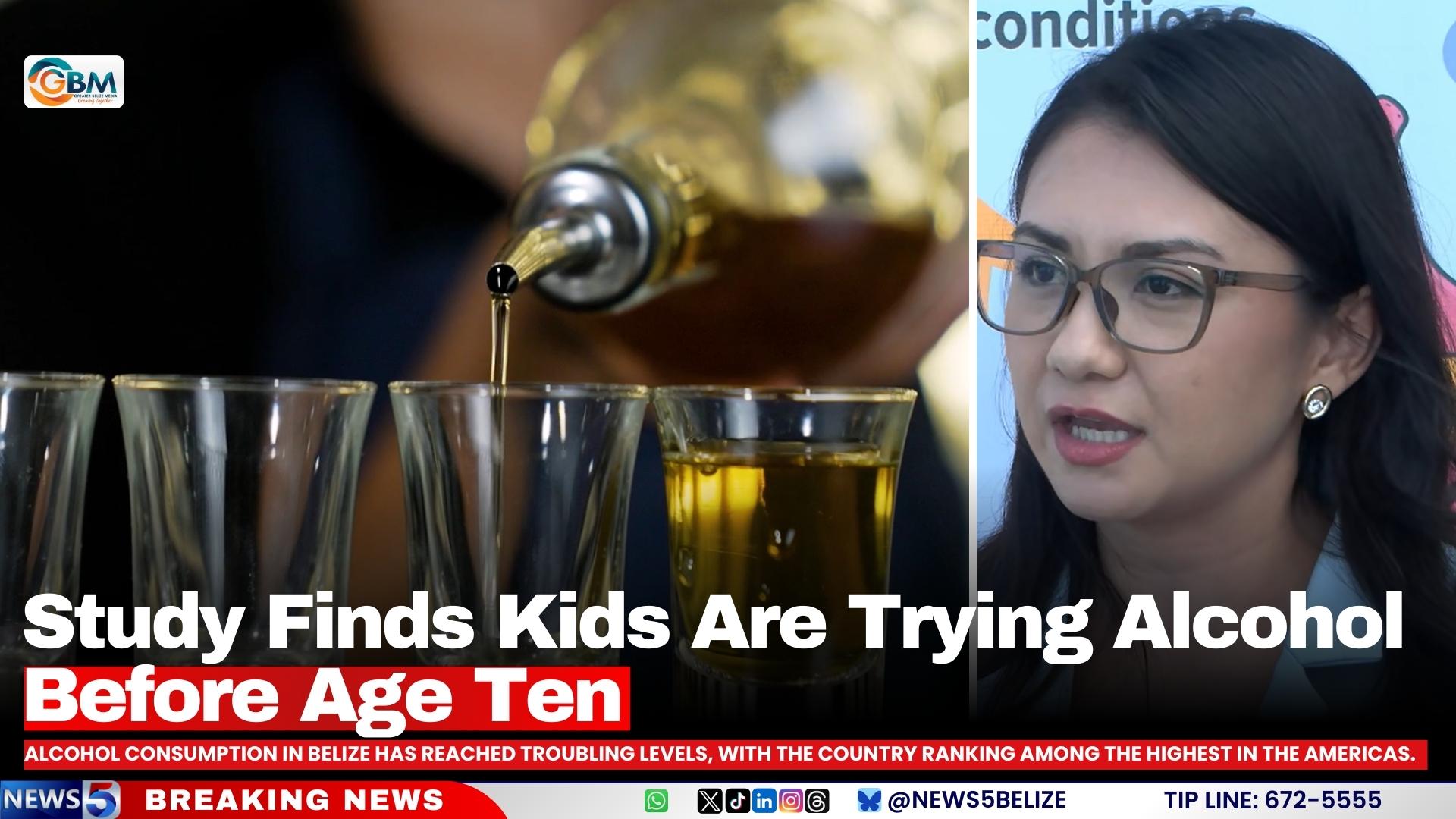
A comprehensive public health study has revealed a disturbing trend of early alcohol initiation in Belize, with the nation now ranking among the highest consumers in the Americas. The research indicates that 15% of surveyed individuals reported their first experience with alcohol before reaching ten years of age, signaling a profound public health challenge.
Dr. Melissa Diaz-Musa, Director of Public Health and Wellness, presented concerning data showing Belize’s alcohol consumption rates significantly exceed regional averages. “Compared to the region of the Americas, we are graded high in terms of the amount of alcohol we drink,” Dr. Diaz-Musa stated. “We are also considered to be binge drinkers.”
The study identified typical binge drinking sessions involving approximately eight glasses of alcohol, with men consuming more frequently and in larger quantities than women. Particularly troubling is the finding that 18% of adolescents aged 13-15 reported experiencing intoxication at least once. A cheap, high-concentration rum locally known as “bad man” has been identified as a primary contributor to the problem.
Dr. Lila Estephan, Non-Communicable Disease Coordinator, emphasized the cultural dimensions of the crisis. “We have to look at our society and our culture. When we have Independence celebrations, when we have a festival, when we have Agric, what do you see mostly? Alcohol,” Dr. Estephan noted. “You will see a lot of people drinking, and it is something we encourage in our society as fun.”
The health implications are severe, with alcohol serving as a risk factor for over two hundred health conditions. Beyond physical health consequences, the study found significant social ramifications, with marginalized households spending disproportionate amounts of income on alcohol and families experiencing breakdowns.
Cynthia Williams, Human Development Coordinator, clarified the relationship between alcohol and violence: “Alcohol is not a cause for domestic violence or gender-based violence. It is a factor.”
Dr. Estephan further explained the addictive nature of alcoholism, stating, “At the end of the day, alcoholism is a disease and an addiction. We cannot blame the consumer. But it makes it much easier and accessible for the person.”
The findings present a complex public health challenge that intersects with cultural traditions, economic factors, and accessibility of high-potency alcohol products, requiring comprehensive policy interventions.