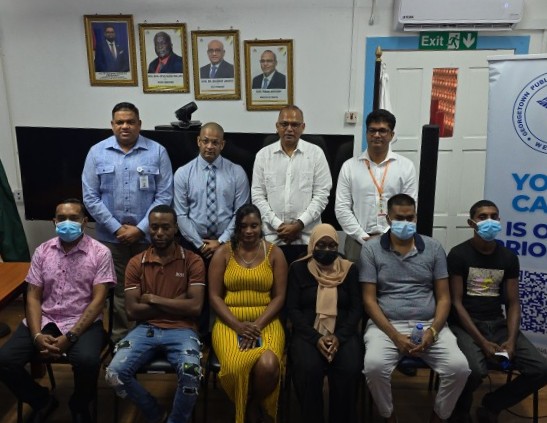
The Georgetown Public Hospital Corporation (GPHC) has established itself as the Caribbean’s premier kidney transplant center, achieving regional medical leadership through innovative surgical programs and substantial cost savings for patients. Health officials announced Wednesday that the Guyanese institution has performed more transplants than any other Caribbean facility in 2025, with 13 procedures completed this year alone.
GPHC’s transplant program delivers extraordinary financial benefits to recipients, saving patients between US$400,000-$500,000 (approximately GY$87.2-109 million) compared to market rates for equivalent surgeries elsewhere. The hospital has provided these life-saving procedures completely free of charge, including for patients from several Caribbean nations such as Antigua and Barbuda, Barbados, The Bahamas, and Trinidad and Tobago.
CEO Robbie Rambarran highlighted the hospital’s pioneering achievements, including performing the Caribbean’s first kidney transplant on a 20kg infant in 2023 and conducting the region’s first laparoscopic donor nephrectomy in 2024. The institution recently achieved another milestone by completing its first chain transplant surgery—an intricate process involving multiple donor-recipient pairs that demonstrates sophisticated medical coordination.
Multi-organ transplant specialist Dr. Kishore Persaud emphasized the entirely local nature of these accomplishments: “Culturally, there is sometimes a belief that outsiders can do it better than our own. Today, I proudly sit here to say that these surgeries were performed entirely by the doctors and staff of the Georgetown Public Hospital Corporation.”
Despite these successes, hospital officials revealed concerning statistics about kidney disease in Guyana. From 2023 to present, GPHC has registered 2,200 individuals diagnosed with kidney disease, with 368 patients currently on dialysis—246 of whom began treatment this year. Rambarran noted that demand for dialysis and transplants “exceeds our capacity,” describing this as a “call to action.”
Health Minister Dr. Frank Anthony indicated that while services remain free for now, the government might eventually charge foreign patients for these “very, very expensive” surgeries as the program develops. The ministry plans to enhance capabilities through international training partnerships with institutions in Spain, Brazil, India, and Canada, and will soon send a doctor to India’s Apollo Hospital to advance HLA testing capabilities.
Patient testimonials highlighted the exceptional care received. Samantha Ault, who experienced transplants in both Trinidad and Tobago and at GPHC, praised the “amazing transplant team” in Georgetown. David Singh, who previously received treatment in the United States, commended the local doctors’ accessibility: “I’ve never seen a team of doctors that are so loving and caring.” Donor Akeem Ault reported that his experience “changed my entire narrative that I had about hospitals especially Georgetown Hospital.”