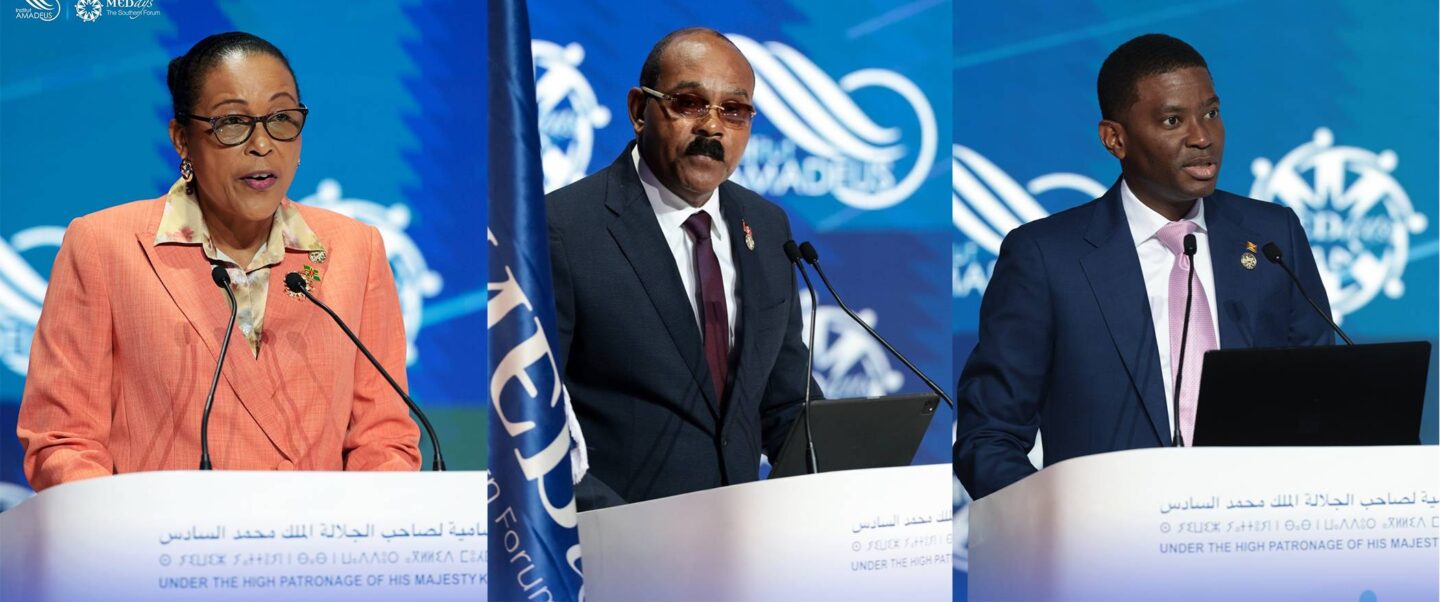
Against a backdrop of escalating geopolitical fractures, the 17th MEDays Forum convened in Morocco from November 26-29, 2025, under the royal patronage of King Mohammed VI. The high-level international gathering, organized around the theme ‘Fractures and Polarisation: Reinventing the Global Equation,’ featured a significant delegation from the Organisation of Eastern Caribbean States (OECS) that included Dominica’s President Sylvanie Burton, Antigua and Barbuda’s Prime Minister Gaston Browne, and Grenada’s Prime Minister Dickon Mitchell.
The forum emerged as a critical platform for addressing mounting global challenges, including fractured multilateral systems, economic volatility, and accelerating climate disruptions. For Caribbean leaders, these issues represent immediate threats rather than abstract concepts, as small island developing states remain disproportionately vulnerable to global systemic shocks.
Prime Minister Mitchell delivered a powerful address calling for the transformation of historical trauma into contemporary partnership. He emphasized that the Africa-Atlantic-Caribbean corridor, once defined by the transatlantic slave trade, should be reimagined as a modern avenue of cooperation and shared prosperity. Mitchell advocated for a revitalized multilateral framework that acknowledges the existential threats facing small nations.
During the closing ceremonies, President Burton drew upon Dominica’s indigenous Kalinago heritage to emphasize the importance of cultural wisdom and mutual respect in addressing contemporary challenges. She stressed the critical need for accessible financing mechanisms and coordinated international action to support vulnerable states.
Prime Minister Browne addressed the compounding ‘poly-crisis’ affecting small island nations, demanding urgent financial system reforms, vulnerability-based assessment metrics, and meaningful inclusion of small states in global decision-making processes concerning climate, trade, technology, and security.
His Excellency Ian M Queeley, Ambassador of the Eastern Caribbean States in Rabat, expressed satisfaction with the strong OECS representation, noting that the participation demonstrated the region’s commitment to forging strategic partnerships with African nations. The ambassador reaffirmed the embassies’ dedication to maintaining this diplomatic channel for future cooperation.
The collective interventions of Caribbean leaders underscored their vital role in shaping global transformation narratives and reaffirmed their commitment to fostering a more inclusive, equitable, and resilient international order through strengthened Africa-Caribbean cooperation.