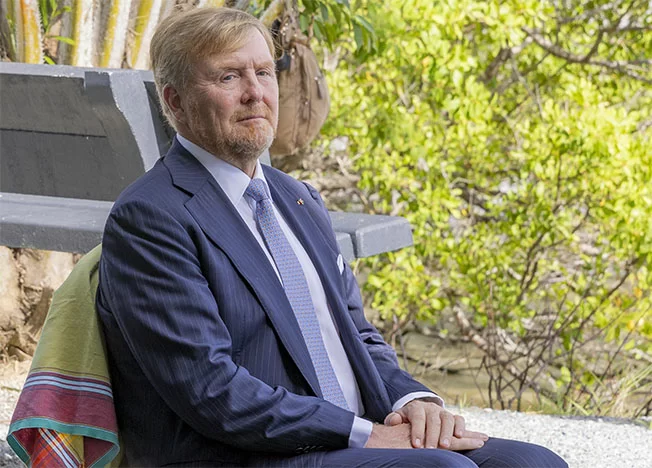
In a strikingly candid address to visiting Dutch King Willem-Alexander, Surinamese commentator Nita Ramcharan delivered a powerful critique of contemporary Netherlands-Suriname relations during the monarch’s recent state visit. The article captures Suriname’s assertive national awakening fifty years after independence, challenging historical power dynamics and demanding equal partnership.
The piece begins by acknowledging Suriname’s traditional hospitality while immediately establishing that formal politeness no longer masks unresolved tensions. Ramcharan references outdated colonial-era imagery of schoolchildren singing ‘orange above, long live the royal couple’ to highlight how far the nation has evolved into a digitally-connected modern society.
King Willem-Alexander witnessed Suriname’s transformation firsthand—encountering tech-savvy youth who fact-check in real-time, engaging with traditional leaders, and receiving direct political messaging that ‘We walk beside you, not behind you’ in the National Assembly. This sets the stage for the central issue: visa policies that Surinamese citizens find deeply discriminatory.
The author contrasts the seamless entry process for Dutch travelers to Suriname with the ‘theatrical tragedy’ Surinamese face when applying for Netherlands visas—requiring extensive documentation ‘as if leaking state secrets’ while subject to consular officials’ arbitrary decisions. Ramcharan dismisses potential Schengen Zone excuses, insisting the king possesses both platform and moral authority to address what she characterizes as institutional humiliation.
Beyond visa grievances, the article outlines Suriname’s vision for truly balanced relations: trade without dependency, cooperation without paternalism, and ensuring future oil revenues benefit local generations. While acknowledging domestic challenges, Ramcharan emphasizes national resilience and self-determination.
The powerful conclusion rejects orange symbolism entirely: ‘The shadow of orange lies behind us. The sun of Suriname lies before us.’ This encapsulates the piece’s core message—Suriname now stands beside its golden star symbol, on its own soil, as an equal partner rather than former colony.