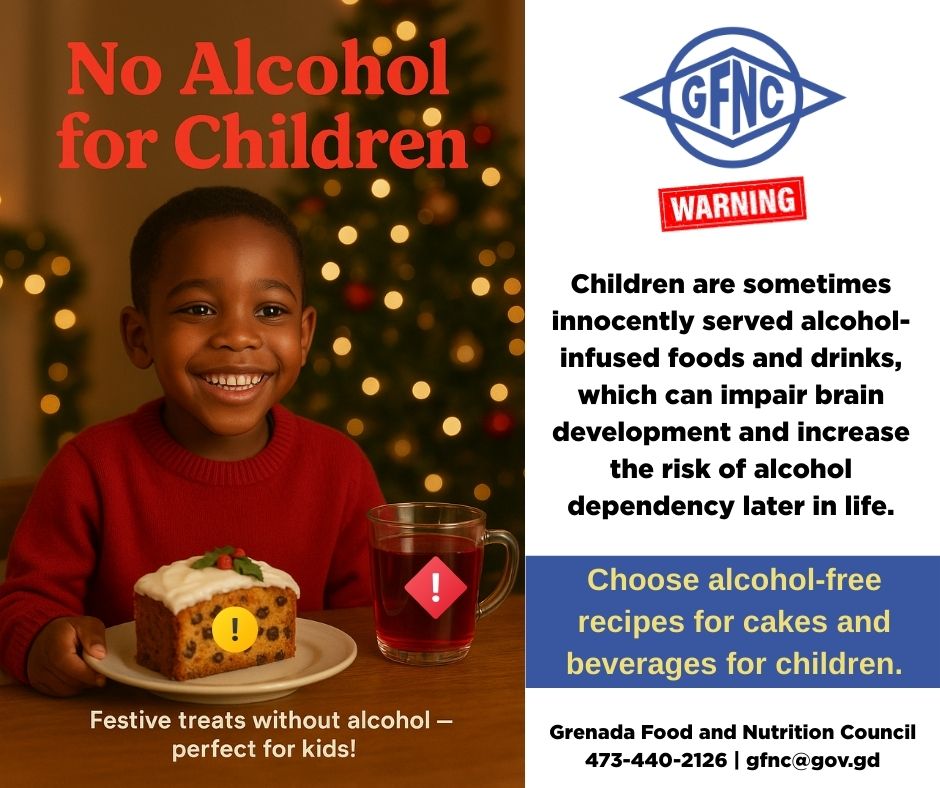
The Grenada Food and Nutrition Council (GFNC) has issued a critical health advisory targeting a deeply entrenched cultural practice: the serving of alcohol-infused traditional holiday foods to minors. During Christmas celebrations, households across Grenada typically feature black cake and sorrel drink, treats that conventionally include alcoholic ingredients. The GFNC emphasizes that these items, along with other beverages containing 3-4% alcohol, are often given to children without recognizing the significant associated risks, which include fostering dependency and precipitating long-term health complications.
This warning is substantiated by a global perspective outlined in the journal article ‘Too Young to Pour: The Global Crisis of Underage Alcohol Use.’ The research identifies ‘parental modelling and permissive attitudes’ as primary drivers in normalizing alcohol consumption among youth. This raises a pivotal societal question regarding the extent to which observed behaviors in familial and social environments shape children’s perceptions and habits related to drinking.
Supporting data reveals a concerning trend in Grenada’s alcohol consumption patterns. A publication from The University of the West Indies indicates that alcohol use has surged from 74.4% to 94% over the past four decades. Furthermore, Central Intelligence Agency (CIA) figures from 2019 estimate the per capita alcohol consumption for individuals aged 15 and older at 8.62 litres of pure alcohol, positioning Grenada as the fifth-highest consumer in the Caribbean according to Data Commons. A World Health Organisation (WHO) fact sheet adds another layer of concern, highlighting prevalent binge drinking, with 32.6% of the population and 7.1% of adolescents (15-19) engaging in heavy episodic consumption at least once monthly.
The GFNC reminder aligns with the legal stance of Grenada’s Drug Control Secretariat, which explicitly prohibits the possession, use, sale, and distribution of alcohol in environments associated with schools and youth functions. The council argues this protection must extend into the home. Early exposure to alcohol is linked to severe consequences, including an elevated risk of developing alcohol dependence in adulthood, impaired neurological development, a greater likelihood of involvement in road accidents, and an increase in general risk-taking behaviors.
As a preventive solution, the GFNC strongly advocates for preparing exclusively non-alcoholic versions of traditional holiday foods and beverages for minors. Providing nutrient-rich, alcohol-free alternatives is paramount for supporting the healthy physical and cognitive development of children and adolescents. The public is urged to heed this advice to safeguard the well-being of Grenada’s youth.