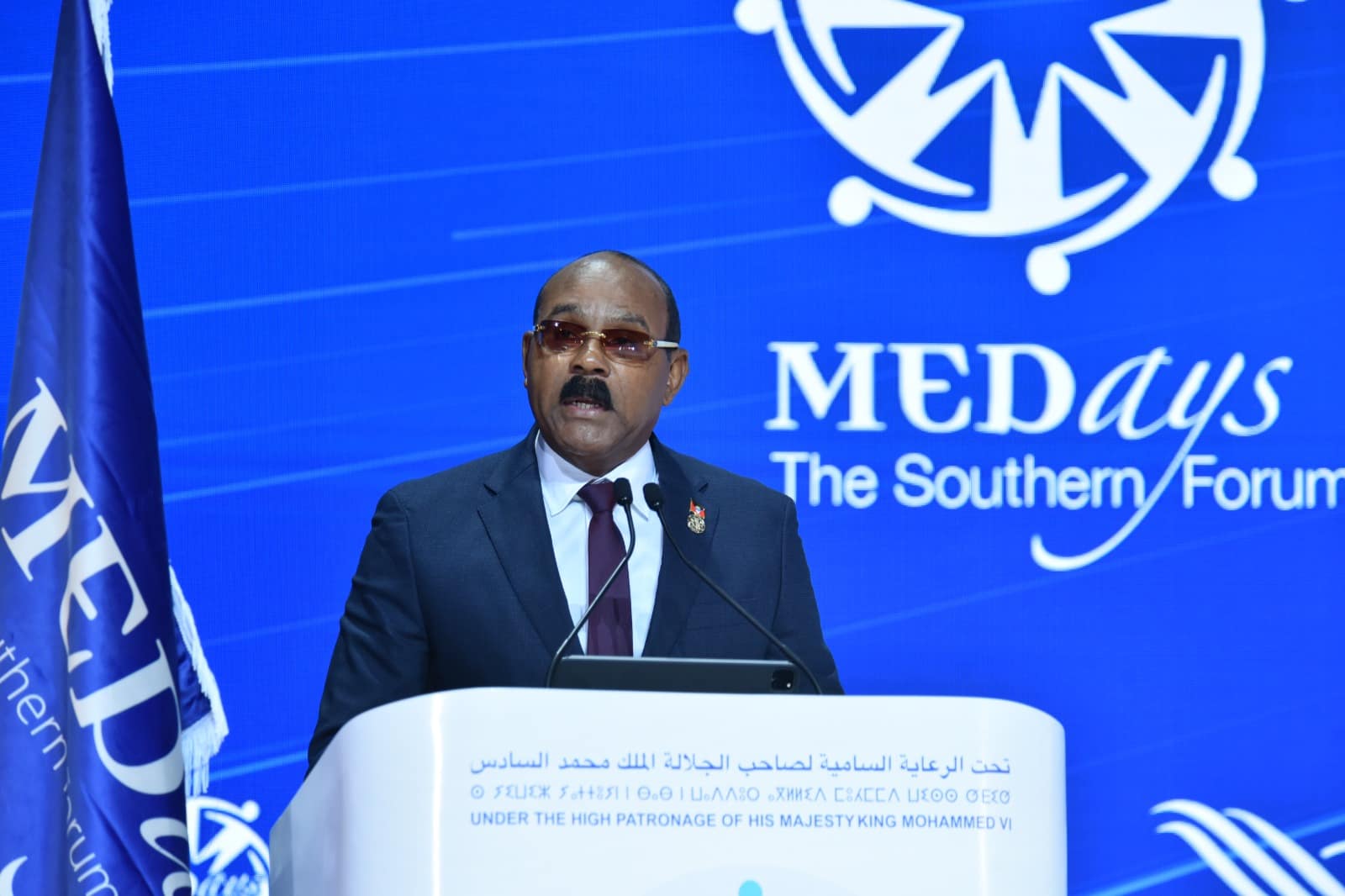
At the prestigious Medays Forum in Tangier, Morocco, Prime Minister Gaston Browne of Antigua and Barbuda delivered a compelling address on the contemporary polycrisis threatening global stability. Speaking during Morocco’s 50th anniversary of the Green March, the Caribbean leader extended congratulations to King Mohammed VI while affirming his nation’s steadfast support for Moroccan sovereignty over the Sahara region.
The Prime Minister characterized the current era as one of unprecedented instability, detailing a convergence of geopolitical confrontations, nuclear threats, climate emergencies, debt distress, food insecurity, and technological disruptions. He emphasized how these overlapping crises disproportionately affect developing nations, particularly small island states like his own, where supply chain disruptions and distant conflicts directly impact food prices and fiscal stability.
Browne criticized the weakening rules-based international order, noting that competition between emerging and established powers has eroded global cooperation. This fragmentation has resulted in new alliances and trade relations that undermine multilateralism, creating what he described as ‘a world teetering on the edge of implosion.’
The address highlighted climate change as particularly devastating for the Global South, noting that developed nations continue to profit from fossil fuels while vulnerable nations bear the consequences. Browne referenced Antigua and Barbuda’s leadership in establishing COSIS (Commission of Small Island States on Climate Change and International Law), which secured a landmark advisory opinion from the International Tribunal for the Law of the Sea establishing legal obligations against marine-harmful emissions.
Calling for comprehensive reform, the Prime Minister advocated for restructuring global financial architectures that currently use GDP per capita as an inadequate metric for development needs. He urged a shift from symbolic inclusion to meaningful participation in global decision-making processes covering climate, trade, health, and digitalization.
The speech concluded with an urgent appeal for collective action, emphasizing that developing nations are already proposing solutions through regional integration, climate litigation innovations, and the Multidimensional Vulnerability Index. Browne issued a clarion call for a new ethos of global stewardship based on moral imperatives rather than geopolitical calculations.