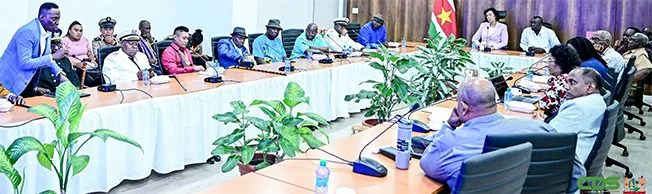
President Jennifer Simons of Suriname convened a comprehensive dialogue with traditional leaders from Indigenous and Tribal communities on Wednesday, focusing primarily on preparations for the imminent state visit of King Willem-Alexander and Queen Máxima of the Netherlands. The meeting served as a strategic coordination session ahead of the monarchs’ scheduled engagement with Suriname’s traditional leadership cadre.
Edgar Dikan, Advisor on Land Rights and Decentralization at the Presidential Cabinet, reported near-complete attendance from traditional authorities, including representatives from all six tribal groups. While the Association of Indigenous Village Chiefs in Suriname (VIDS) was notably absent, several delegates from Southern Suriname participated in the discussions.
Dikan emphasized the consultative nature of the gathering, stating: “President Simons prioritized this careful deliberation given the diplomatic significance of the royal encounter during the state visit.” The presidential advisory team—specializing in land rights and decentralization matters—was formally introduced to the traditional leaders during the proceedings, according to Suriname’s Communication Service.
The dialogue maintained sharp focus on immediate logistical preparations rather than substantive policy decisions. “Today’s priority was short-term coordination given the King’s arrival within days,” Dikan explained. Participants agreed to resume broader consultations shortly after the royal visit concludes. The Dutch royals are scheduled to arrive in Suriname on Sunday evening.
Future discussions will elaborate on the policy frameworks outlined by President Simons regarding land rights and decentralization. Dikan highlighted these issues’ critical importance for interior communities: “Since these regions maintain close administrative cooperation with district commissioners and governance services, achieving broad policy consensus is essential. This fosters greater local ownership and enhances implementation success rates.”