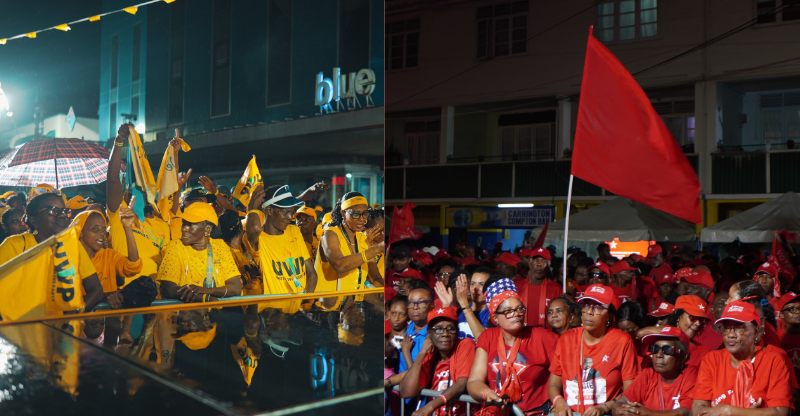
With the pivotal 2025 General Election approaching, St. Lucia stands at a political crossroads that will define its governance for the coming five-year term. Political analysts are examining the complex voter dynamics that could disrupt traditional party strongholds across the island nation.
Political observer Rhyesa Joseph identifies multiple factors influencing voter behavior, noting that “constituency level politics vary throughout the island, and there are different kinds of voters.” Key considerations include assessments of national leadership, parliamentary representation quality, opposition candidate appeal, and overall trust in political affiliations.
Several constituencies emerge as critical battlegrounds that may signal the national outcome:
Gros Islet, a tourism-centric region, features a contest between incumbent Youth and Sports Minister Kenson Casimir and entrepreneur Marcella Johnson. Political commentator Rahym Augustin-Joseph highlights this constituency’s historical significance: “History has told us that a government must win Gros Islet if they want to win the elections.” The area’s growing population and history of political alternation make it a crucial indicator of national sentiment.
Micoud North represents a remarkable political transformation, having shifted from decades as a United Workers Party (UWP) stronghold to electing Labour’s Jeremiah Norbert in 2021. Development professional Ajani Lebourne notes this constituency’s traditional tendency to return to UWP, making the incumbent’s project delivery record essential. With fishing and farming as primary industries, candidate performance on infrastructure and market access will significantly influence voter decisions.
Dennery North presents Education Minister Shawn Edward seeking his fourth term against community leader Bradley Marcelle Fulgence. Lebourne characterizes this as a closely contested race between candidates of “similar profile and stature,” noting Edward’s historically narrow victory margins. The constituency’s response to government policies in education and agriculture, particularly their impact on youth opportunities and farming communities, may prove decisive.
Vieux Fort North and Laborie remain traditional Labour strongholds, with veterans Moses Jn Baptiste and Alva Baptiste facing challenges from police officer Callix Xavier and entrepreneur Laura Jn Pierre-Noel respectively. Augustin-Joseph suggests these constituencies will test Labour’s continued dominance, potentially indicating whether national momentum might favor UWP despite historical voting patterns.
These contested regions collectively form a political barometer that will measure St. Lucia’s governing direction for the next parliamentary term.