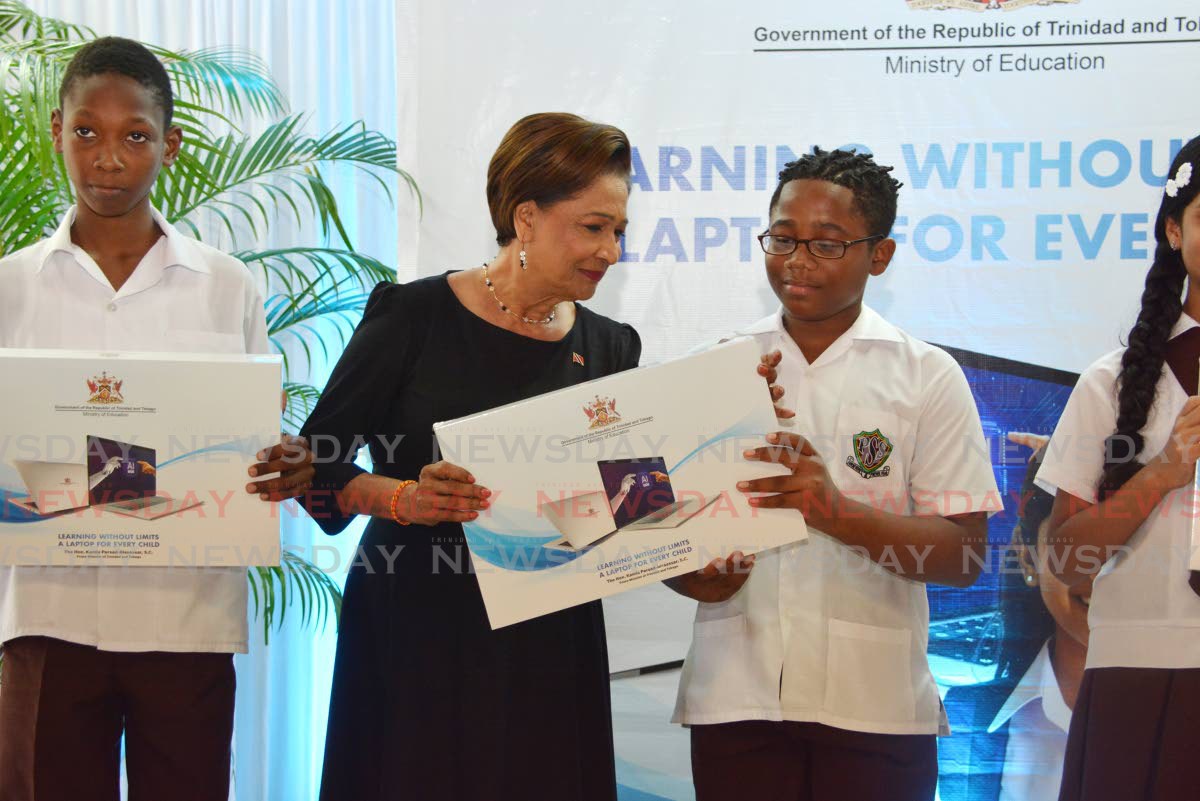
Trinidad and Tobago’s Prime Minister Kamla Persad-Bissessar has confirmed the presence of United States military personnel in Tobago, characterizing their mission as technical assistance for radar surveillance enhancement at the island’s airport. The disclosure came during a media interaction following a laptop distribution event at Penal Secondary School on November 27.
Persad-Bissessar clarified that US Marines are actively supporting improvements to runway infrastructure and radar capabilities at the Arthur NR Robinson International Airport. ‘They will help us to improve our surveillance and intelligence we gather…the narco traffickers in our waters and outside our waters,’ the Prime Minister stated, emphasizing the counter-narcotics focus of the cooperation.
This development forms part of broader US military activities across the southern Caribbean initiated in August, which initially involved three guided missile destroyers and has since expanded to include nuclear submarines, amphibious assault vessels, and the aircraft carrier USS Gerald R Ford with its strike group. The 22nd US Marine Expeditionary Unit recently conducted joint exercises with Trinidad and Tobago Defence Force personnel.
The military cooperation occurs under the framework of the Status of Forces Agreement (SOFA) signed between both nations in December, facilitating bilateral military coordination. Persad-Bissessar explicitly denied any offensive intentions toward Venezuela, asserting, ‘Trinidad has not been asked to be a base for any war against Venezuela.’
This stance has generated significant political controversy domestically and regionally. Opposition Leader Pennelope Beckles has filed a motion condemning the Prime Minister’s statements as ‘inflammatory’ and damaging to Trinidad and Tobago’s international standing. The motion calls for reaffirmation of commitment to CARICOM and international law.
Persad-Bissessar’s position notably diverges from the traditional CARICOM consensus maintaining the Caribbean as a zone of peace, placing her at odds with regional leaders including Barbados Prime Minister Mia Mottley and St Vincent and the Grenadines Prime Minister Ralph Gonsalves. The Prime Minister has additionally predicted potential CARICOM fragmentation, alleging interference by regional leaders in member states’ elections—a claim particularly directed at Gonsalves regarding upcoming elections in St Vincent and the Grenadines.