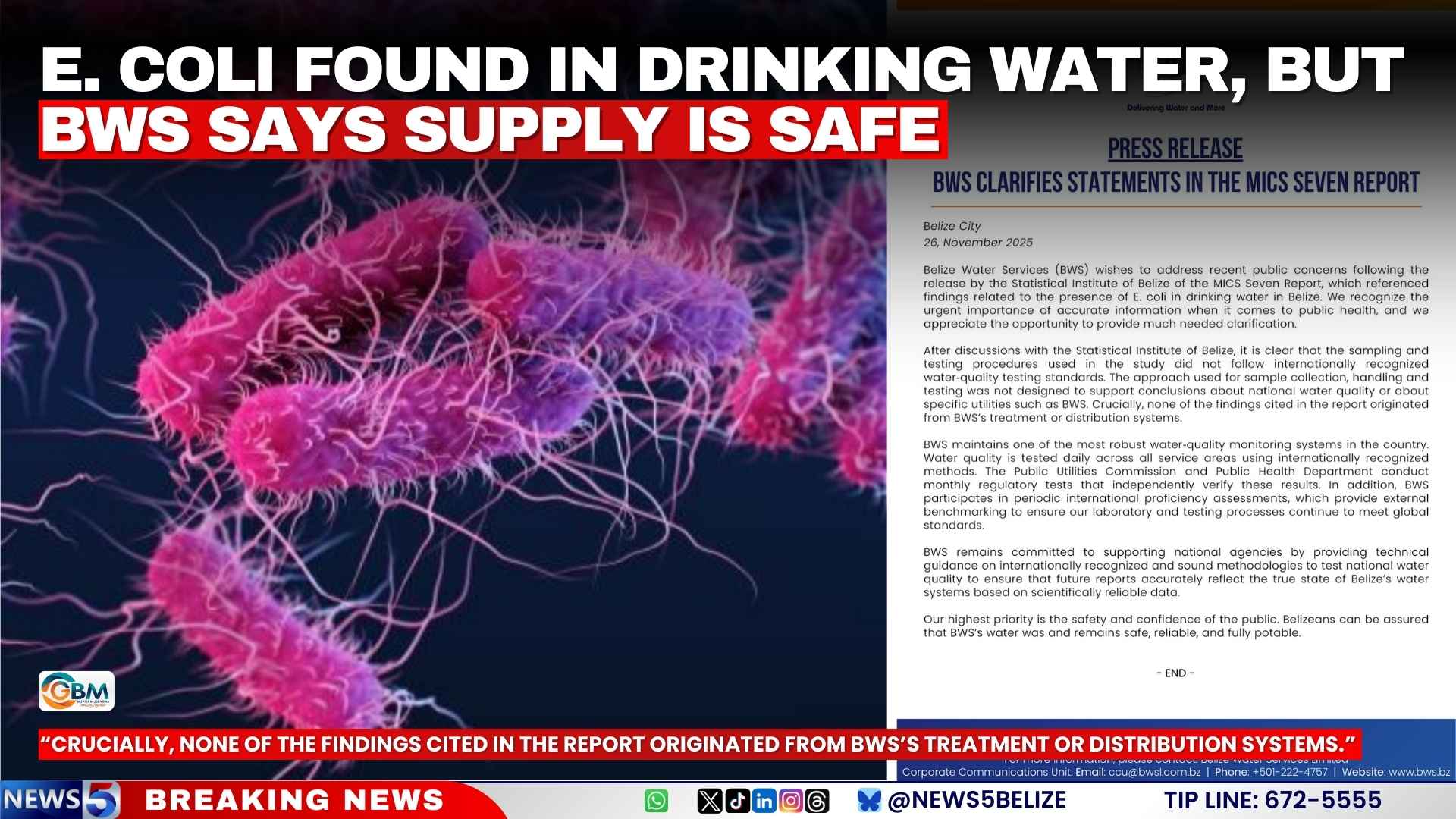
A recent national survey conducted in Belize has revealed alarming levels of E. coli contamination in drinking water, sparking widespread concern. The findings, part of the Multiple Indicator Cluster Survey 7 (MICS7), were released by the Statistical Institute of Belize on November 26, 2025, in collaboration with UNICEF and the Government of Belize. The survey, which adhered to UNICEF’s rigorous testing standards, identified contamination in water samples collected from both urban and rural households across the country.
In response to the report, Belize Water Services (BWS) swiftly issued a statement to reassure the public. BWS emphasized that the contamination detected in the survey does not reflect the quality of water it treats and distributes. The utility company clarified that its water undergoes daily testing in compliance with international standards and suggested that any contamination likely occurs after the water leaves its facilities. BWS further asserted, ‘None of the findings cited in the report originated from BWS’s treatment or distribution systems.’
The discovery has raised questions about water safety and infrastructure in Belize, particularly in rural areas where access to treated water may be limited. While BWS maintains that its supply is safe, the survey highlights the need for improved water management and monitoring systems to ensure public health. Authorities are urged to investigate the sources of contamination and implement measures to safeguard drinking water quality nationwide.