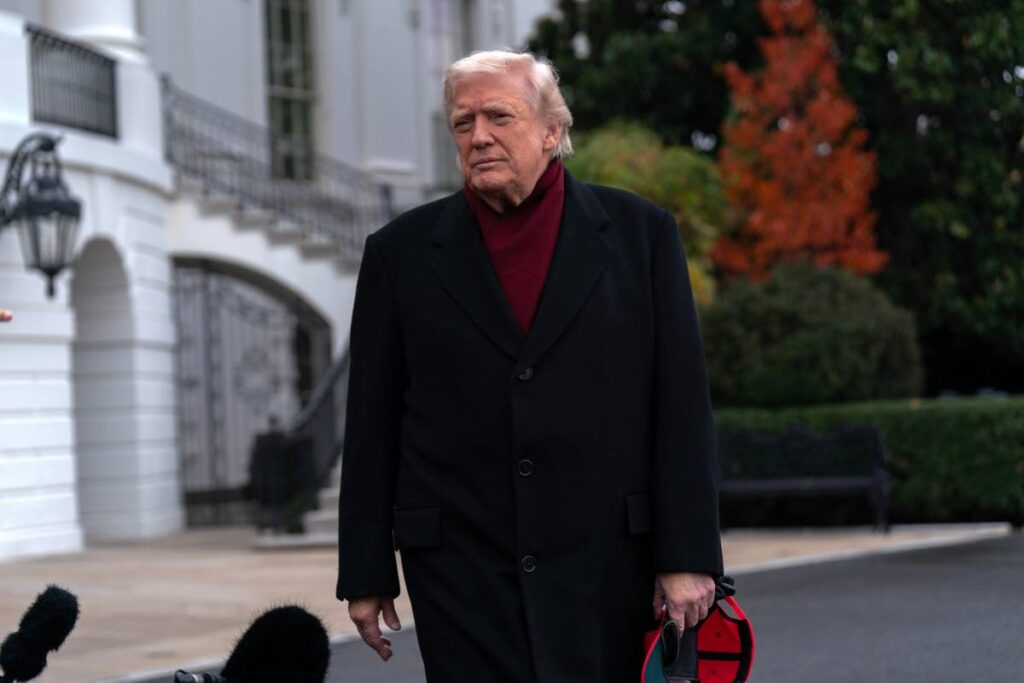
The possibility of U.S. military intervention in Venezuela has become a topic of intense speculation, particularly among citizens of Trinidad and Tobago and Guyana. Many Guyanese view Venezuelan President Nicolás Maduro as a threat, given his territorial claims over two-thirds of Guyana and his veiled threats. The question of whether U.S. President Donald Trump will authorize strikes or an invasion to remove Maduro has been repeatedly posed to the President by reporters. While Trump has not directly addressed these queries, he has hinted at potential land strikes targeting drug-manufacturing facilities and camps labeled as terrorist organizations, which are allegedly responsible for shipping drugs to the U.S., causing thousands of deaths annually. Maduro, who has been accused of leading a terrorist organization, has denied these allegations and expressed a willingness to engage in discussions with the Trump administration. Trump has indicated openness to meeting with Venezuelan leadership and may send emissaries to negotiate Maduro’s departure from office. However, any talks would likely delay immediate military action. Strikes could be avoided if Maduro agrees to concessions, such as compensating Exxon and other oil companies nationalized by Venezuela, dismantling drug labs, and cracking down on criminal gangs. Venezuela’s role in drug production is relatively minor compared to Colombia and Bolivia, but its jungle airstrips are used to transport drugs to Central America, Mexico, and beyond. Reports from Guyana have uncovered secret airstrips and small aircraft linked to drug trafficking, implicating local police and military personnel. American intelligence has identified Guyana as a transshipment point for drugs destined for developed countries. Despite these issues, it is unlikely that Maduro will make sweeping concessions, leaving the door open for further U.S. strikes. Trump’s cabinet members have labeled Maduro an illegitimate ruler due to alleged election rigging, increasing the likelihood of targeted military action. However, Trump has previously expressed a desire to reduce U.S. foreign involvement, citing the country’s poor track record with regime changes in nations like Guyana, Haiti, and Iraq. A full-scale invasion of Venezuela carries significant risks, reminiscent of costly quagmires in Afghanistan and Iraq. While the U.S. military is prepared for such an operation, immediate large-scale intervention seems improbable. Air-powered strikes, however, remain a likely scenario, and the fall of the Maduro regime would likely be met with indifference or relief by Guyanese citizens.