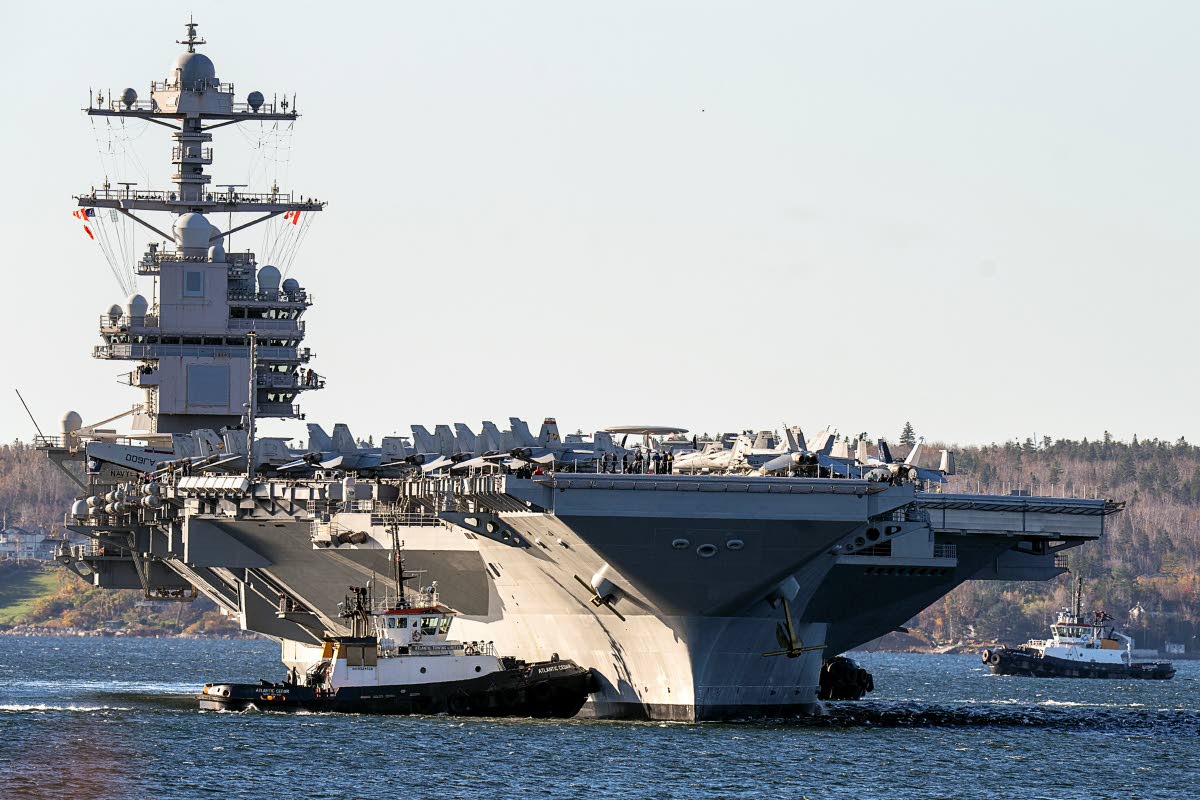
The deployment of the USS Gerald R Ford, one of the world’s largest aircraft carriers, to the Caribbean has heightened tensions in an already militarized region. This move, coupled with rising US-Venezuela tensions and global shipping instability, has significant implications for Trinidad and Tobago’s economy, particularly its small and medium enterprises (SMEs).
Over the past few months, the southern Caribbean has become a hotspot for military activity, with US naval vessels operating near local waters. This escalation, combined with ongoing global conflicts, has disrupted shipping routes and increased freight costs. For SMEs in Trinidad and Tobago, which rely heavily on imported goods, these developments pose a serious threat to their operations and profitability.
The vulnerability of Trinidad and Tobago’s SMEs stems from their business model: importing goods from abroad, shipping them in, and selling them locally. While this model works well in stable times, it becomes precarious when global events disrupt supply chains. The COVID-19 pandemic offered a glimpse of what can happen when supply chains break down, with skyrocketing freight costs, delayed shipments, and unpredictable lead times. Geopolitical tensions and military conflicts can cause similar, if not more severe, disruptions.
For instance, when an area becomes militarized or classified as high-risk, several consequences follow: freight costs increase due to war-risk premiums, shipments become unpredictable as vessels are rerouted or delayed, marine insurance premiums rise, and consumer behavior shifts as households prioritize essential spending over non-essential goods. These changes create immediate pressure on SMEs, affecting their cash flow, sales, and long-term viability.
Trinidad and Tobago’s SMEs face additional challenges, including persistent foreign exchange shortages, high dependence on imports, thin profit margins, and long supply chains. These factors make the sector highly sensitive to global shocks. The COVID-19 pandemic revealed how quickly things can fall apart, and a major geopolitical event could have even more severe consequences.
To mitigate these risks, SMEs must adopt more resilient business models. This includes diversifying their offerings, reducing dependence on distant supply chains, building hybrid digital and service-based businesses, strengthening regional or local sourcing, and creating more forex-generating enterprises. Resilience is no longer optional in an increasingly volatile global environment.
The decision to pause a promising business venture in light of these risks underscores the need for SMEs to pay attention to the broader environment, not just the strength of their ideas. As the backbone of Trinidad and Tobago’s economy, SMEs must rethink how they build and protect their businesses to survive in an unpredictable world.