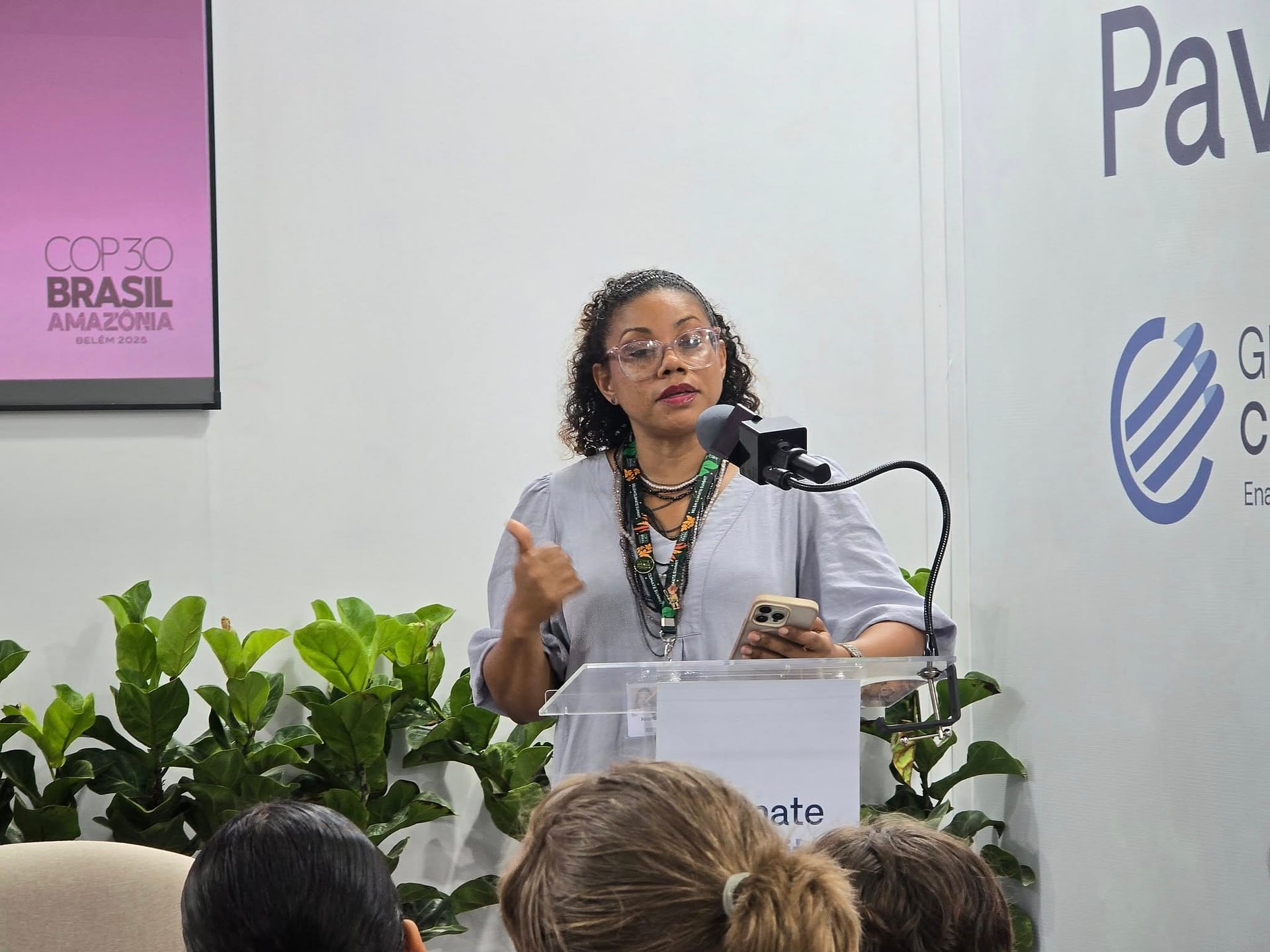
At the High-Level Session on Climate Mobility in the Greater Caribbean, held during COP30 in Belém, Brazil, Antigua and Barbuda reaffirmed its commitment to climate justice and resilience. Her Excellency Ruleta Camacho Thomas, the Ambassador for Climate Change, delivered a compelling keynote address, urging enhanced international collaboration, regional solidarity, and robust financing mechanisms to safeguard the rights, culture, and livelihoods of Caribbean communities grappling with climate change.
Ambassador Camacho Thomas highlighted the immediate reality of climate-induced displacement in the region, citing examples such as Dominicans seeking refuge in Antigua after Hurricane Andrew and the evacuation of Barbuda’s entire population to Antigua following Hurricane Irma. These incidents underscore the vulnerability of communities already forced to relocate, often at the cost of their homes, heritage, and sense of belonging.
She emphasized that most residents of Small Island Developing States (SIDS) wish to remain in their ancestral lands due to deep cultural and historical ties. To support this, she called for increased investments in resilient infrastructure, innovative housing technologies, and community-based adaptation strategies.
The Ambassador also addressed the broader implications of climate mobility, describing it as the human face of loss and damage. She stressed the need for financing mechanisms that not only aid recovery but also preserve cultural identity, livelihoods, and community cohesion. “Justice without finance is delay by another name,” she asserted.
Referencing the Advisory Opinions of the International Court of Justice (ICJ) and the International Tribunal for the Law of the Sea (ITLOS), Ambassador Camacho Thomas reiterated the legal obligation of states to prevent environmental harm and uphold the right to a healthy environment. She firmly declared that rising sea levels must not erode sovereignty or maritime rights, stating, “Loss of land must never mean loss of nationhood — nor loss of identity.”
She also advocated for regional cooperation, emphasizing the necessity of a unified Caribbean approach to address mobility, social protection, and relocation planning. “No island can face this crisis alone,” she said. “Collaboration and solidarity are the foundation of our survival — we do not want cultural displacement; we want support to stay rooted, resilient, and proud of who we are.”
Antigua and Barbuda continues to lead efforts to integrate climate mobility into National Adaptation Plans, Nationally Determined Contributions (NDCs), and Loss and Damage frameworks. The nation remains a staunch proponent of the Multidimensional Vulnerability Index (MVI) to guide concessional finance and ensure direct funding reaches affected communities efficiently.