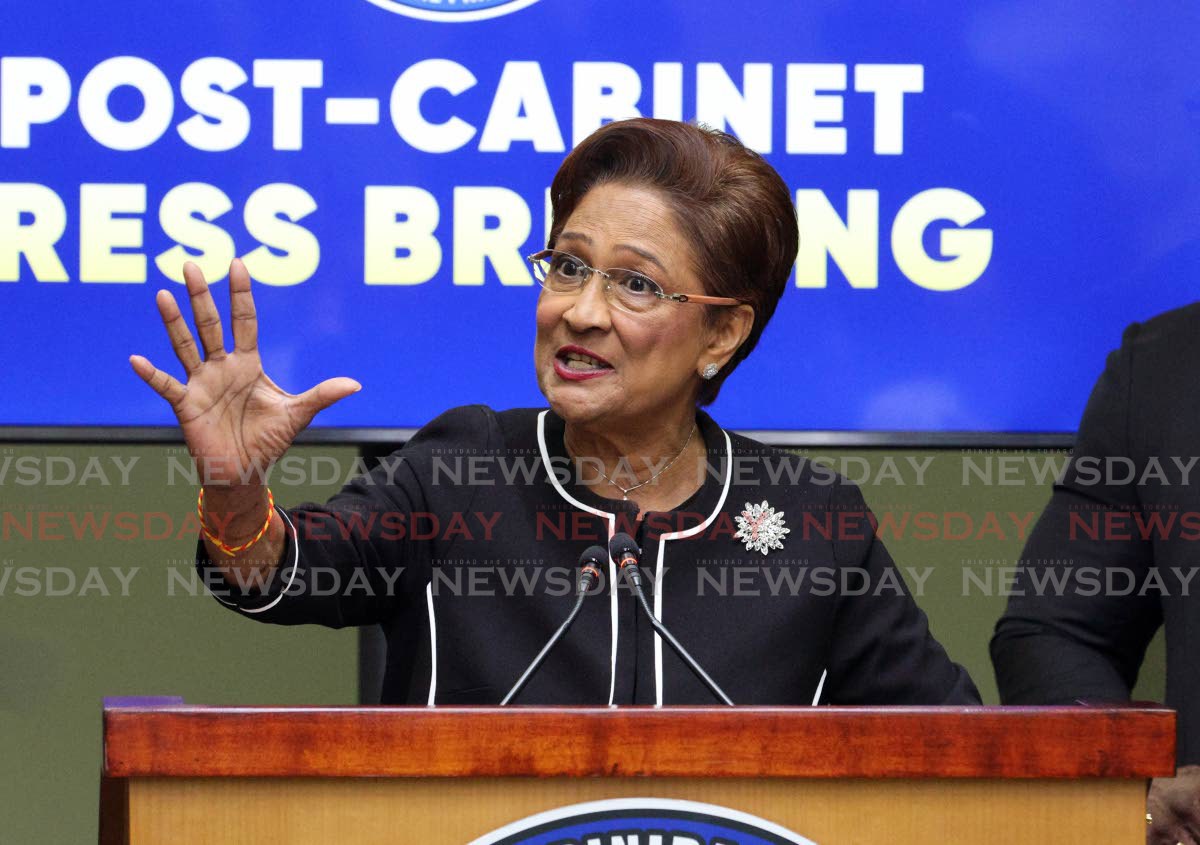
In a recent appearance on the Crime Watch television show hosted by Ian Alleyne on October 27, Trinidad and Tobago’s Prime Minister Kamla Persad-Bissessar expressed her dissatisfaction with Caricom, labeling it as an unreliable partner. She accused the regional organization of siding with Venezuela over its own member state, Trinidad and Tobago. Her remarks came shortly after Venezuelan Vice President Delcy Rodriguez announced that Venezuela would not collaborate with Trinidad and Tobago on any energy projects. Rodriguez had previously criticized Trinidad and Tobago for what she described as an act of aggression—the docking of the US destroyer USS Gravely at the Port of Spain. The vessel is part of a US anti-narcotics fleet currently stationed in the Southern Caribbean, which some analysts speculate could be aimed at influencing regime change in Venezuela. Persad-Bissessar countered by asserting that Trinidad and Tobago does not depend on Venezuelan gas, highlighting alternative projects in both energy and non-energy sectors. Additionally, she announced that the House of Representatives would convene on October 31 to vote on extending the current state of emergency (SoE), initially declared on July 18 and extended on July 28 for three months. The SoE was prompted by allegations of criminal gangs plotting to overthrow the government. Meanwhile, former Foreign Affairs Minister Dr. Amery Browne criticized Persad-Bissessar, accusing her of isolating Trinidad and Tobago from Caricom and rejecting the concept of a zone of peace. Browne emphasized the importance of unity within Caricom, stating, ‘The truth about TT and Caricom is that we are always stronger together.’
标签: Trinidad and Tobago
特立尼达和多巴哥
-
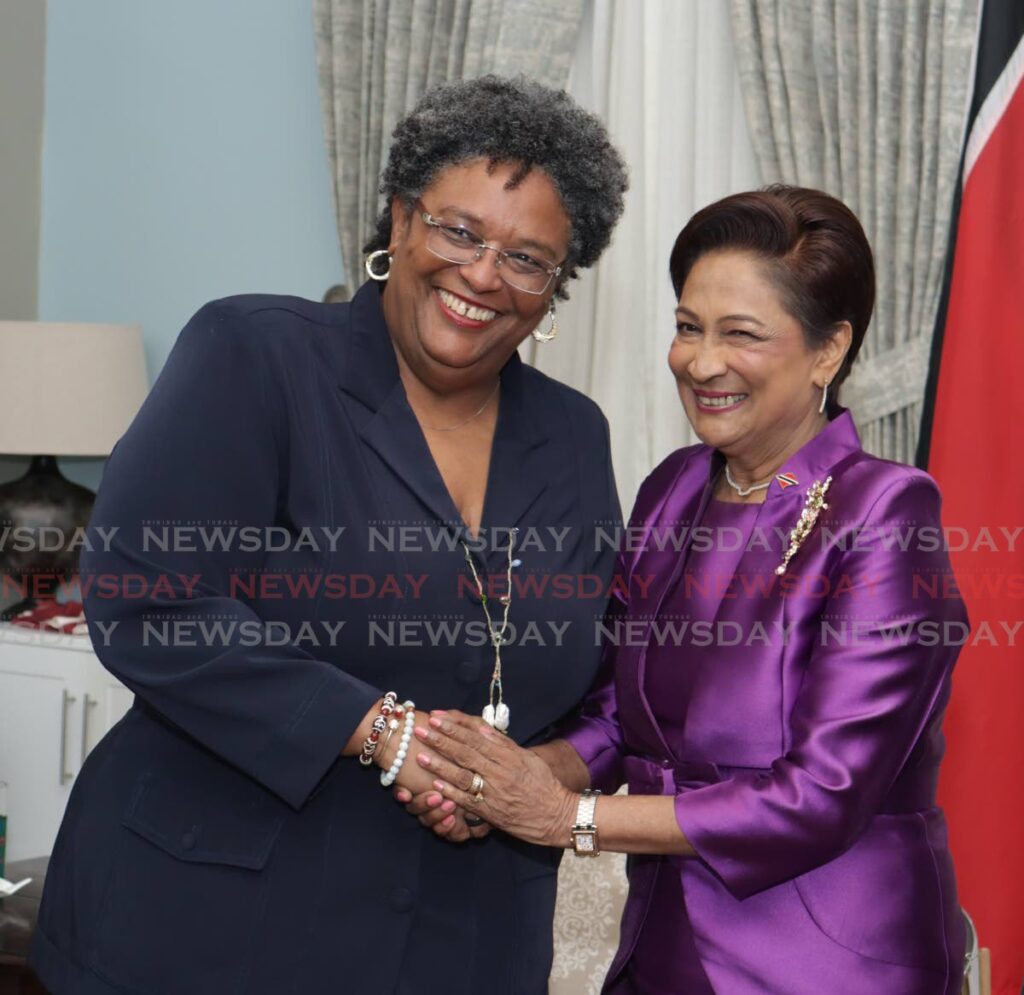
Mottley: US military threatening regional peace
Barbados Prime Minister Mia Mottley has strongly criticized recent US military airstrikes in the southern Caribbean, labeling them as a threat to regional peace. Speaking at the Barbados Labour Party’s annual conference on October 25, Mottley emphasized that disputes should be resolved through the United Nations rather than unilateral military actions. Her remarks were later shared by former Trinidad and Tobago Prime Minister Dr. Keith Rowley on his Facebook page on October 26. Mottley argued that extra-judicial killings, even of suspected criminals, violate the rule of law and undermine regional stability. She urged the US to share intelligence with Caribbean nations if there is an immediate threat, stressing that dialogue and negotiation are essential to prevent conflicts. Mottley’s comments came shortly after an Al Jazeera report where Trinidad and Tobago’s Defence Minister Wayne Sturge defended the US actions, stating that the US has the prerogative to interpret and act against perceived terrorist threats in international waters. Mottley countered that almost all wars in history have been resolved through dialogue, advocating for preemptive discussions to avoid violence.
-

West Indies grab 1-0 T20 series lead against Bangladesh
The West Indies cricket team secured a commanding 1-0 lead in their three-match T20 series against Bangladesh with a hard-fought 16-run victory in the opening game on October 27 in Chattogram. Opting to bat first, the West Indies openers, Alick Athanaze and Brandon King, laid a solid foundation with a 59-run partnership. However, their progress was cautious, with boundaries proving elusive. Athanaze departed for 34 off 27 balls, followed by King for 33 off 36 deliveries, leaving the team at 82/3 by the 13th over. Captain Shai Hope and former skipper Rovman Powell then took charge, accelerating the innings with a flurry of boundaries. Their unbeaten partnership of 83 runs propelled the West Indies to a competitive total of 165/3 in their allotted 20 overs. Hope finished with 46 not out, while Powell remained unbeaten on 44. Taskin Ahmed was the standout bowler for Bangladesh, claiming 2/36. In reply, Bangladesh started aggressively but lost early wickets, including Tanzid Hasan and captain Litton Das. Despite a valiant effort from Tanzim Hasan Sakib, who scored 33 off 27 balls, Bangladesh faltered, bowled out for 149 in 19.4 overs. The West Indies’ bowling attack, led by Jason Holder (3/31) and Jayden Seales (3/32), proved decisive. Akeal Hosein also contributed with 2/22. The second match of the series is scheduled for October 29.
-
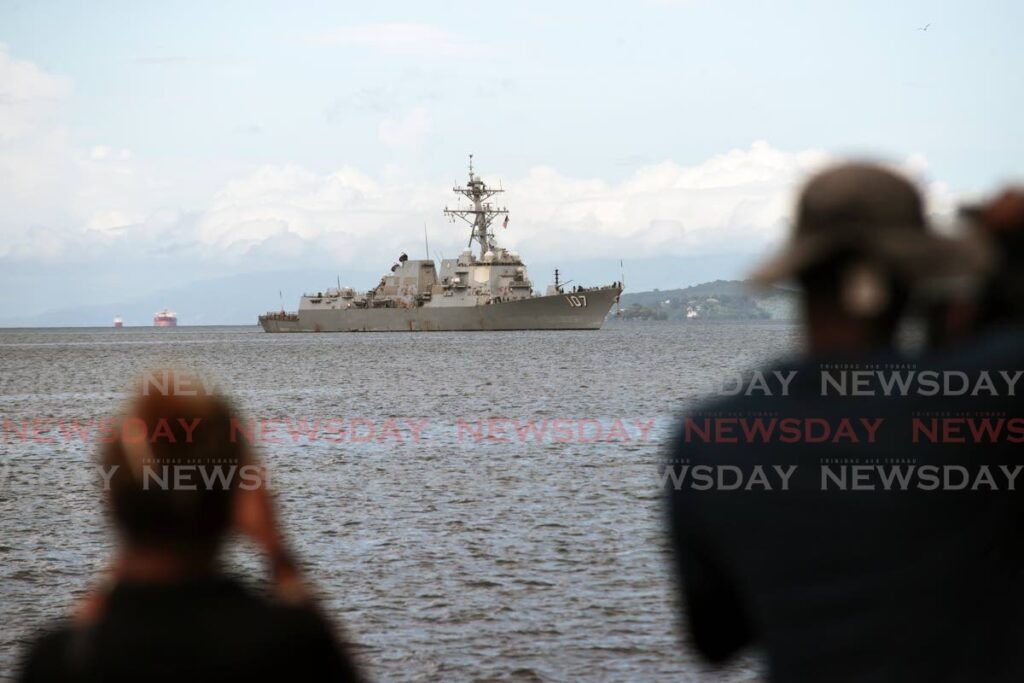
‘Warship not just here for training’ – public worried about possible Gravely fallout
The US naval vessel USS Gravely arrived at the Port of Spain on October 26, drawing curious onlookers to the waterfront. The warship, escorted by tugboats and Coast Guard vessels, docked at approximately 9:30 am as part of a joint training exercise with the Trinidad and Tobago Defence Force. The exercise, scheduled to conclude on October 30, involves approximately 60 members of the TT Defence Force, including infantry officers, medics, engineers, and Special Forces troops, alongside members of the 22nd US Marine Expeditionary Unit.
Security was heightened at the port, with marked and unmarked police vehicles and officers in both uniform and plain clothes patrolling the area. While onlookers at ground level struggled to view the vessel due to obstructing fences and a moored tug, guests at the Hyatt hotel enjoyed an unobstructed vantage point.
The arrival of the USS Gravely comes amid escalating tensions between the US and Venezuela. The US has recently claimed to have destroyed 11 vessels in regional waters, killing 49 alleged drug traffickers. President Donald Trump has labeled regional drug traffickers as ‘narco terrorists’ and approved covert military operations in Venezuela, with considerations for targeting land-based drug trafficking hubs.
TT Prime Minister Kamla Persad-Bissessar has welcomed the US Navy’s presence, praising their efforts against drug traffickers and asserting that the region is ‘not a zone of peace.’ However, some citizens expressed concerns over the potential fallout if the US and Venezuela engage in conflict. One onlooker warned that TT’s alignment with the US could make the country a target for Venezuela, emphasizing the need for transparency from the government.
Despite differing opinions on the warship’s presence, all onlookers shared a common sentiment: they have no plans to leave Trinidad and Tobago, regardless of the potential consequences. ‘This is my country,’ one man stated, ‘Why should I leave?’
-

What are prisons for?
The purpose and efficacy of prisons in Trinidad and Tobago have come under intense scrutiny, particularly in light of the country’s chronic delays in the justice system. Debbie Jacob, a long-time advocate and educator within the prison system, has highlighted these issues, drawing parallels to the systemic racial injustices in the United States as described in Michelle Alexander’s seminal work, *The New Jim Crow: Mass Incarceration in the Age of Colorblindness*. Alexander’s book, which has influenced legal education and advocacy in the U.S., argues that prisons serve as a modern form of racialized social control—a perspective that resonates with Jacob’s observations in Trinidad and Tobago.
Jacob began teaching at the Youth Training Centre (YTC) in 2010, where she encountered young men aged 24-26 still awaiting trial in a facility designed for 16-18-year-olds. The delays in the justice system have only worsened, with many individuals losing over a decade of their lives waiting for their day in court. This prolonged uncertainty often forces the accused to plead guilty, undermining the very essence of justice. In 2010, 67% of the prison population was on remand, a figure Jacob fears has since increased, placing a significant financial burden on taxpayers for housing, feeding, and transporting these individuals.
Despite some progress, such as the introduction of electronic filing and virtual courtrooms under former Chief Justice Ivor Archie, systemic delays remain a defining feature of the judiciary. Jacob questions the integrity of investigations and the ease with which individuals are incarcerated, often without solid evidence. Her concerns are compounded by the low murder detection rate and the police’s decision to create their own prison system, further eroding public trust.
Jacob’s work underscores a pressing need for reform. She challenges the judiciary to address these delays and ensure that prisons serve their intended purpose—rehabilitation and justice—rather than perpetuating a cycle of injustice and inefficiency.
-

NLCL Nation’s Cup to kick-off Xmas holidays
Trinidad and Tobago’s premier youth football academies and clubs are preparing to showcase their talent against Caribbean rivals at the NLCL Nation’s Cup – International Holiday Fun Festival. Scheduled to take place from December 19 to 21 at the Manny Ramjohn Stadium in Marabella, this event promises to be a thrilling showcase of young footballing talent. The tournament will feature competitions in four age categories: Under 9, Under 11, Under 13, and Under 15, with participants vying for cash prizes, trophies, and medals. Organized by the Next Level Foundation, the event builds on the success of previous NLCL Community Cup tournaments. Bermudez Biscuit Company’s Dixiee returns as an official sponsor, alongside key supporters such as Next Level Consulting Ltd, Agostini Ltd, Point Lisas Nitrogen Ltd, and First Citizens. Notable youth clubs like City FC, Cox Coaching School, Creek Sports & Cultural Club, Dunstan Williams Soccer Academy, and Union Hall United have already confirmed their participation. Beyond the matches, attendees can enjoy live performances, DJs, a Family Fun Zone, and complimentary samples from vendors. Brian K Jordan, foundation chairman, emphasized the event’s focus on community engagement and youth development. Germaine Jordan, tournament chairperson, encouraged additional sponsors and teams to join, highlighting the importance of investing in young footballers. For further details, interested parties can visit NLCL Community Cup’s social media pages or contact the organizers directly.
-

A short column about killing
The government of Trinidad and Tobago (TT) has sparked widespread debate and criticism for its aggressive policies centered around state-sanctioned killing. Since assuming office six months ago, Prime Minister Kamla Persad-Bissessar has prioritized executions, advocating for the resumption of the death penalty for prisoners on Death Row. This stance has been further reinforced by Defence Minister Wayne Sturge’s promotion of ‘shoot first, kill first’ legislation, framed as a stand-your-ground policy. Most recently, the PM has aligned TT with the United States’ controversial strategy of targeting small boats in the Caribbean Sea, a move that has been described by international observers as a ‘kill them all violently’ approach to foreign policy. Critics argue that these measures lack empirical evidence to support their efficacy. The global trend has shifted away from the death penalty, with studies showing it does not deter crime. Similarly, stand-your-ground laws in the U.S. have led to increased violence rather than reduced crime. The U.S. government’s tactic of extrajudicial killings at sea to combat drug trafficking has also been widely criticized as ineffective and counterproductive. Mexico’s ongoing cartel violence, with over 30,000 homicides annually, serves as a stark reminder that murder does not equate to peace. The TT government’s reliance on such medieval solutions raises questions about its legitimacy and effectiveness. As the U.S. reportedly destroys nine small boats, killing 37 people, including two TT citizens, the Prime Minister has yet to define what constitutes success in this brutal anti-drug policy. Attorney General John Jeremie’s lamentation of TT’s high murder rate and near ‘state of anarchy’ further highlights the irony of a government attempting to curb violence through more violence. This approach not only undermines the social contract but also risks plunging society into deeper chaos, as even political philosopher Thomas Hobbes acknowledged that a government’s legitimacy hinges on its ability to protect, not threaten, its citizens.
-

Ramkissoon elected TTCB treasurer, John remains 2nd VP
Stephen Ramkissoon has successfully retained his position as treasurer of the Trinidad and Tobago Cricket Board (TTCB) following the organization’s annual general meeting (AGM) and elections held on October 25 at the National Cricket Centre in Balmain, Couva. Ramkissoon, who assumed the role earlier this year after his predecessor Kiswah Chaitoo was ousted in a motion of no confidence, will now serve a full four-year term. He secured the position with a decisive 29-12 victory over Central Sports owner Richard Ramkissoon, who is no relation. The elections also saw Kerwin John, head of the Tobago Cricket Association, retain his role as second vice-president after defeating Rajendra Mangalie 27-13. Additionally, Avinash Suruj of the Central Zone was elected third vice-president, outpacing veteran administrator Parasram Singh 29-12. Five new members—Ravi Teeluck, Anand Rampersad, Ann Brown John, Frank Simmons, and Mitra Ragoonanan—joined the executive with membership status, while Sharaz Mohammed of the Secondary Schools Cricket League fell short with only ten votes. Azim Bassarath, who has led the TTCB since 2009, retained his presidency uncontested. However, this marks his final term due to recently amended term limits. Altaf Baksh and Henry Chase were also elected unopposed as first vice-president and general secretary, respectively. Ammar Samaroo, secretary of the TTCB elections committee, confirmed the process was seamless, stating, ‘Everything went extremely smoothly and according to plan.’
-

CWU disagrees with JTUM’s budget endorsement
The Communications Workers’ Union (CWU) has publicly distanced itself from the Joint Trade Union Movement’s (JTUM) endorsement of the 2026 national budget, asserting that it cannot support a fiscal plan that prioritizes financial stability over the immediate needs of workers. In a statement released on October 24, the CWU emphasized its independence and dissenting views on the budget, despite remaining a member of JTUM. The union criticized the government’s focus on balance sheets, arguing that the budget fails to address the rising costs of living, stagnant wages, and the struggles of working-class citizens. The CWU also highlighted the lack of meaningful provisions to restore workers’ purchasing power, which has been eroded by inflation and currency devaluation. Additionally, the union condemned the government’s neglect of the productive sector, pointing to insufficient allocations for manufacturing, agriculture, and industrial diversification. CWU Secretary General Joanne Ogeer clarified that the union’s stance was issued to correct misconceptions after parliamentary discussions referenced its earlier budget analysis. Ogeer reiterated the CWU’s commitment to holding any government accountable, regardless of its affiliation with JTUM or political parties.
-

Jamaicans brace for Hurricane Melissa
As Hurricane Melissa approaches Jamaica, residents and government agencies are intensifying preparations for the anticipated landfall of the Category 3 storm, expected on October 28. The eastern parishes of St. Thomas and Portland have already experienced early effects, including flooding, strong winds, and storm surges. With winds reaching 145 miles per hour, Melissa poses a significant threat to the island, as well as neighboring Cuba and Haiti.