
The highly anticipated second practice match between the Trinidad and Tobago Red Force Super50 Cup squad and the Trinidad and Tobago Bolivarian XI was abruptly called off due to persistent rain at Queen’s Park Oval in Port of Spain on November 5. Despite the Red Force posting an impressive total of 358/5 in 44.2 overs, the weather intervened, cutting short the day’s play. After winning the toss and electing to bat first, the Super50 team showcased their batting prowess. Middle-order batsman Jyd Goolie was the standout performer, delivering a blistering 151 not out off just 81 balls, including 22 fours and five sixes, before retiring. Captain Joshua Da Silva also contributed significantly with a solid 89 off 54 balls, featuring seven fours and seven sixes. Opener Navin Bidaisee added a steady 71 from 80 balls. However, with Joshua James (18 not out) and Bryan Charles (5 not out) at the crease and just over five overs remaining, heavy rain forced the match to be abandoned. Earlier, Goolie and Bidaisee had built a formidable 133-run partnership, while Da Silva and Goolie added 113 runs together. In the first practice match on November 3, the Super50 team secured a five-wicket victory, chasing down a revised target of 304 after the Bolivarian XI had posted 317/9 in 44 overs.
标签: Trinidad and Tobago
特立尼达和多巴哥
-

TTMA unveils plans for convention centre, exports, SMEs
The Trinidad and Tobago Manufacturers’ Association (TTMA) recently hosted its annual President’s Dinner and Awards at the Hyatt Regency in Port of Spain, celebrating the resilience, innovation, and economic contributions of the nation’s manufacturing sector. The event, held on November 5, 2025, highlighted the industry’s pivotal role in national development, with TTMA President Dale Parson emphasizing its employment of over 60,000 people and its status as a key economic stabilizer. Parson also revealed that the TTMA, in partnership with the government, raised over $5 million in goods and cash within 24 hours to support Jamaica’s recovery efforts following Hurricane Melissa. The manufacturing sector accounts for approximately 18% of Trinidad and Tobago’s Gross Domestic Product (GDP), making it the second-largest employer after the state. Small and medium-sized enterprises (SMEs) were recognized as the backbone of the industry, comprising nearly 65% of manufacturers nationwide. Parson outlined initiatives to enhance SME export readiness, including participation in trade conventions, international missions, and collaboration with the Eximbank. Looking ahead, the TTMA has proposed redeveloping the Caroni Racing Complex into a world-class convention center, aiming to position Trinidad and Tobago as a regional manufacturing and trade hub. The event also featured calls for deeper bilateral collaboration between Trinidad and Tobago and Guyana, with Guyana Manufacturing and Services Association President Rafeek Khan urging the resolution of trade barriers to unlock regional opportunities. Trade Minister Satyakama Maharaj commended manufacturers for their role in economic diversification, announcing ambitious targets to expand exports by $5 billion and attract $9 billion in investments over the next five years. The evening concluded with awards recognizing industry leaders, including Angostura Ltd, which won Exporter of the Year (Large Category), and Novo Farms Ltd, honored as Manufacturer of the Year (Medium Category).
-

The struggles to establish a regional air carrier
In a decisive move to safeguard over 700 jobs and maintain vital air connections across the Caribbean and the eastern United States, the Trinidad and Tobago (TT) government, under the leadership of Premier Dr. Eric Williams, took control of British West Indian Airways (BWIA) in 1961. This action was prompted by the British Overseas Airways Corporation’s (BOAC) proposed austerity measures, which threatened significant staff retrenchments and disruptions to regional air services. Premier Williams, addressing the House of Representatives on March 23, 1962, highlighted the government’s intervention to acquire BWIA, emphasizing the need to preserve employment and sustain air links. BOAC, in a letter dated June 16, 1961, valued BWIA at £1,034,036 (BWI$5,445,726), but independent technical advice was sought to facilitate negotiations. The TT government engaged C.S. Sundaram, a consultant from the International Civil Aviation Organisation (ICAO), whose report on September 27, 1961, influenced the decision to acquire BWIA on October 3, 1961. The TT government’s acquisition plan included purchasing BWIA as a going concern, negotiating pooling arrangements with BOAC, and offering BOAC a 20% equity stake. The final agreement, concluded on October 7, 1961, saw BOAC agree to the acquisition for $2.5 million, less than half the initial valuation. This strategic move underscored the TT government’s commitment to regional connectivity and employment stability, independent of broader federal plans.
-

TTFA, Ato Boldon plan relief efforts for Jamaica
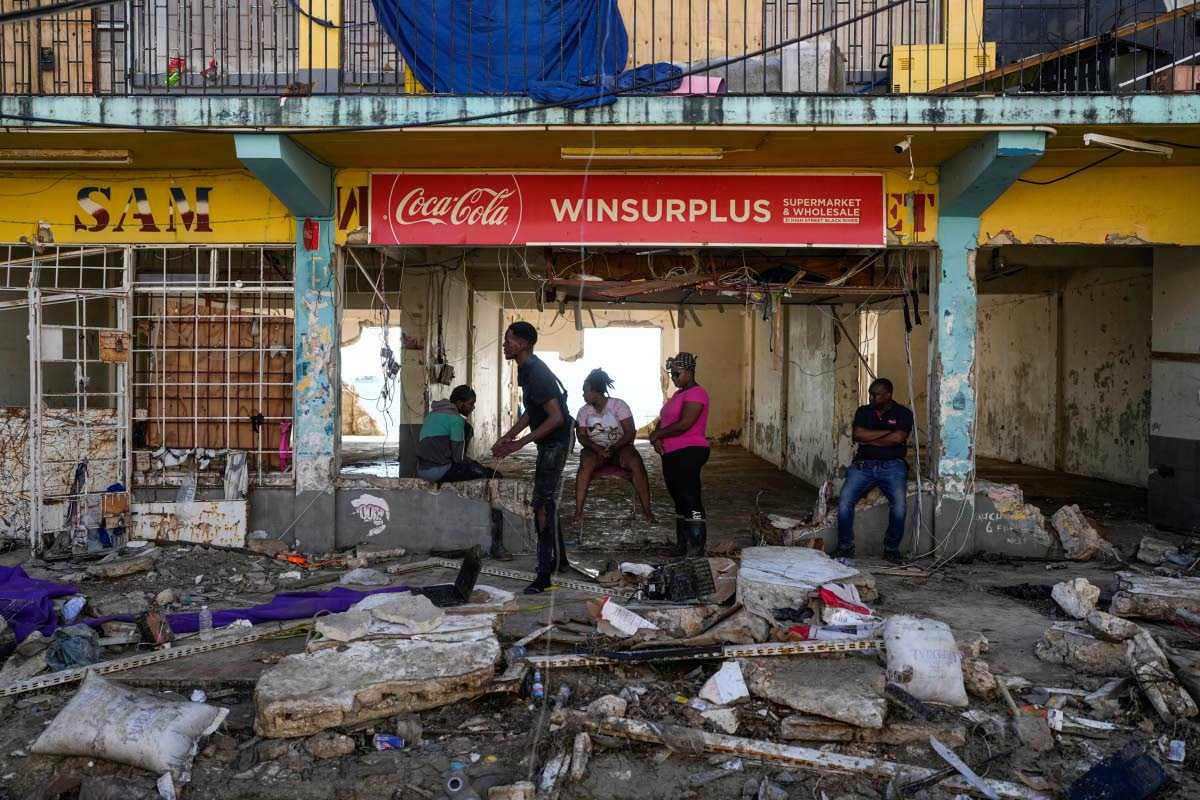
In the wake of Hurricane Melissa’s catastrophic impact on Jamaica, the Trinidad and Tobago Football Association (TTFA) and Olympic legend Ato Boldon have stepped up to spearhead relief efforts. The Category 5 storm, which struck on October 28, unleashed winds exceeding 185 mph, causing widespread devastation and leaving numerous communities in ruins. The death toll in Jamaica has surpassed 30, with Haiti also reporting over 40 fatalities.
-

Come clean on centre
A recent review of the Draft Estimates for the Development Programme 2026 has unveiled a troubling policy change that has sparked widespread concern. The Infrastructural Development Fund, which previously allocated $15 million for the Construction of a Socially Displaced Assessment Centre, has now completely defunded the project, reducing its allocation to $0.00. This abrupt decision jeopardizes the future of a $50 million facility that was intended to offer a lifeline to the nation’s most vulnerable populations. The center, designed to accommodate at least 200 homeless individuals, aimed to provide essential services such as healthcare, job training, and support to help them reintegrate into society. Its defunding raises serious questions about the government’s commitment to addressing homelessness and social displacement. Richard Ramcharitar, in a letter to the editor, has called on the Minister of People, Social Development and Family Services, Vandana Mohit, to clarify the future of this project. He questioned whether this move reflects a broader policy shift away from prioritizing the needs of the socially displaced. The former administration had previously highlighted a 13.4% increase in homelessness since 2011, with hundreds of citizens living on the streets. The complete elimination of funding for this critical initiative signals a concerning neglect of civic responsibility and social justice. The public is demanding transparency and accountability from the government regarding this decision.
-

Nakhid wants six-month SSFL season
The Secondary Schools Football League (SSFL), a cornerstone in nurturing young football talent, is under scrutiny for its limited three-month duration. David Nakhid, Parliamentary Secretary in the Ministry of Sport and Youth Affairs and former national football captain, has voiced concerns that this short season stifles the potential of emerging players. Speaking on TV6’s Morning Edition on November 5, Nakhid emphasized the need for innovation in Trinidad and Tobago’s football system, drawing parallels to transformative changes in countries like Germany and Belgium during the 1990s. He highlighted the importance of integrating technology and extending the SSFL season to six months, a proposal supported by SSFL President Merere Gonzales. Nakhid underscored the league’s significance, noting its role in securing scholarships for students to attend US universities and its widespread engagement among parents, students, and stakeholders. He envisions a system where more young footballers gain recognition from international scouts, thereby enhancing their opportunities for both athletic and academic advancement.
-

Is AI taking our jobs or not?
The rise of artificial intelligence (AI) is fundamentally transforming the global workforce, challenging traditional job structures and reshaping industries. While the phrase ‘AI won’t take your job – but someone using AI will’ offers a sense of optimism, the reality is far more complex. Companies worldwide are increasingly citing AI as a reason for cutting thousands of white-collar roles. Amazon’s CEO, Andy Jassy, recently highlighted that AI enables teams to achieve more with fewer people, signaling a shift in workforce dynamics.
Jobs are not monolithic but rather collections of tasks. Research from McKinsey & Company reveals that AI can perform 30 to 70 percent of these tasks, altering the economic viability of many roles. When AI handles half of a job’s workload more efficiently, companies face three choices: eliminate the role, merge it with another function, or redesign it into an AI-assisted position. This gradual erosion of tasks is particularly evident in routine cognitive work, such as data entry, report writing, and document review, which AI now manages with near-professional precision.
Gartner predicts that by 2026, 20 percent of organizations will use AI to flatten their hierarchies, eliminating half of their middle-management layers. AI systems are now capable of handling coordination, analytics, and communication—functions traditionally overseen by managers. This shift is creating what McKinsey terms the ‘agentic organization,’ where small human teams supervise networks of AI agents, resulting in leaner companies and faster decision-making.
While AI is automating many tasks, it is also driving job transformation. In medicine, surgeons use AI to enhance decision-making during operations. In law, AI tools save lawyers an estimated 240 hours annually by handling contract analysis and legal research. In marketing, generative AI has reduced content creation costs by 30 to 50 percent. AI acts as a copilot, handling repetitive work so humans can focus on creativity and judgment. However, companies often fail to replace eliminated tasks with new creative roles, leading to workforce reductions.
AI is also reshaping income distribution. According to PwC’s Global AI Jobs Barometer (2025), industries like finance, IT, and professional services are experiencing productivity growth five times faster than sectors like manufacturing or transport. Workers with advanced AI skills command a 56 percent wage premium, while routine professional roles face decline. This dynamic is compressing the middle class and rewarding those who can direct, train, or govern AI systems.
One of the most pressing concerns is the hollowing-out of the career ladder. AI is automating entry-level tasks that once provided young professionals with learning opportunities. Simultaneously, firms are adopting ‘AI-first’ hiring policies, deploying automation before opening new roles. This trend raises questions about how the next generation of managers and specialists will be trained.
Governments are responding differently to these challenges. The European Union’s AI Act classifies workplace AI as ‘high-risk,’ demanding transparency and safety protocols, which slows innovation but protects workers. In contrast, Singapore is rapidly building an AI-fluent workforce through national upskilling initiatives and a government-backed ethics framework called AI Verify.
In conclusion, AI is not eliminating all jobs but is dismantling the structure of work as we know it. Tasks are being automated, hierarchies flattened, and entry points erased. The future will favor individuals and nations that master AI literacy, creative judgment, and the ability to design systems rather than merely operate within them. As companies in the Caribbean and beyond adopt digital tools more aggressively, the question is no longer if AI affects our jobs, but how quickly we adapt. When half of your tasks vanish, what remains is a test of the true value of the human element in your work.
-

7 new members appointed to NIF board as 4 resign
The National Investment Fund Holding Company Ltd (NIF) is undergoing significant changes as four board members have resigned, and seven new members have been appointed. The resignations, effective from October 28, include Chairperson Jennifer Lutchman, along with board members Nadira Lyder, Dexter Jaggernauth, and Cindy Pierre. The vacancies have been filled with the appointment of Dr. Sandra Sookram as the new chairperson, Patrice Jameela Ayoung-Chee as deputy chairman, and Aiden Boodoo, Shivanand Maharaj, Vandanna Singh-Maharaj, and Dexter V. Ragoonath as board members. The new board will serve a two-year term starting October 28. Established in 2018, the NIF was created to manage assets received by the government from Clico’s shareholdings, following a $4 billion government bailout in 2009. The fund has since repaid the bailout and made significant interest distributions, totaling $2.4 billion since its inception. Notable assets under the NIF include Republic Financial Holdings Ltd, One Caribbean Media Ltd, West Indian Tobacco Company Ltd, Angostura Holdings Ltd, and TT Generation Unlimited. The NIF has also made multiple coupon payments to bondholders, including a recent $9 million payment under the NIF 2 bond offer launched in 2022.
-
TTDRM 2026: Climate risk to regional readiness
As climate risks escalate globally, Trinidad and Tobago (TT) is spearheading a regional initiative to combat these challenges. The TT Disaster Risk Management Conference and Expo (TTDRM), themed ‘Resilience 360: Bridging Knowledge and Action,’ is set to take place from June 1-3, 2026. Organized by PODS Emergency Management Consultancy & Solutions, this event aims to transform climate warnings into actionable resilience strategies, fostering multi-stakeholder collaboration to bolster national preparedness. The conference builds on the success of TTDRM 2024, which emphasized a ‘whole-of-society’ approach, uniting government agencies, NGOs, private sector leaders, academics, and community stakeholders. TTDRM 2026 will focus on systemic risk, advocating for a shift from isolated hazard management to understanding interconnected risks. Drawing lessons from past disasters like Hurricane Flora in 1963, the event will address gaps in disaster risk reduction, particularly for SMEs and vulnerable populations. The conference will feature international and regional experts, including renowned meteorologist Brian Shields, and showcase innovative emergency management products. PODS Managing Director Stacey-Ann Pi Osoria has called for government representation at TTDRM 2026, stressing the need for political will to drive effective disaster risk management policies. TTDRM stands as a platform where local innovation meets regional readiness, ensuring communities are active participants in building resilience.
-

Cyclist Wallace motivated after World Track Champs debut
Trinidad and Tobago’s emerging track cycling sensation, Makaira Wallace, has described her inaugural appearance at the UCI Track Cycling World Championships in Santiago, Chile, as a profoundly inspiring and motivating experience. Competing for the first time as a senior rider, Wallace marked a significant milestone in her burgeoning career.