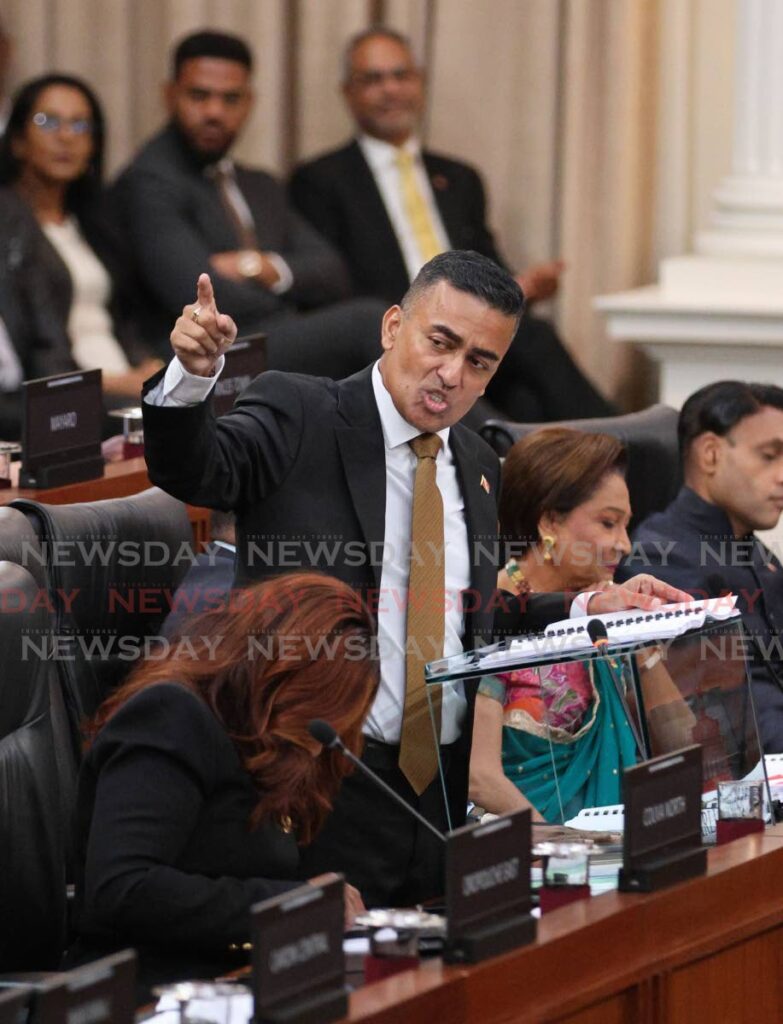
In a landmark parliamentary session on October 13, Finance Minister Davendranath Tancoo presented the 2025-2026 budget, marking the first budget under the UNC administration in a decade. The fiscal plan, described as bold and ambitious, hinges on sustained public investment, institutional reforms, and the preservation of social safety nets. Key highlights include an anticipated boost in staffing at the Board of Inland Revenue by February, a projected GDP growth by 2026, and a promised 10% salary increase for civil servants. Despite these optimistic measures, the budget reflects cautious optimism rather than radical economic transformation. Energy revenues, though declining, still account for 20% of total income, while diversification efforts remain modest, with token mentions of agriculture, university business labs, and renewable energy. The budget deficit stands at $3.89 billion, the lowest in years, though concerns linger over optimistic oil and gas price assumptions. Tancoo’s three-hour speech, marked by directness and enthusiasm, avoided excessive criticism of the previous PNM administration while acknowledging structural economic challenges. The budget balances short-term gains, such as increased education spending and VAT reductions on select items, with potential drawbacks like higher duties on cigars and alcohol, increased NIS rates, and new levies on private enterprises. The absence of clarity on the Petrotrin refinery’s future suggests the budget is part of a broader, long-term strategy.
标签: Trinidad and Tobago
特立尼达和多巴哥
-
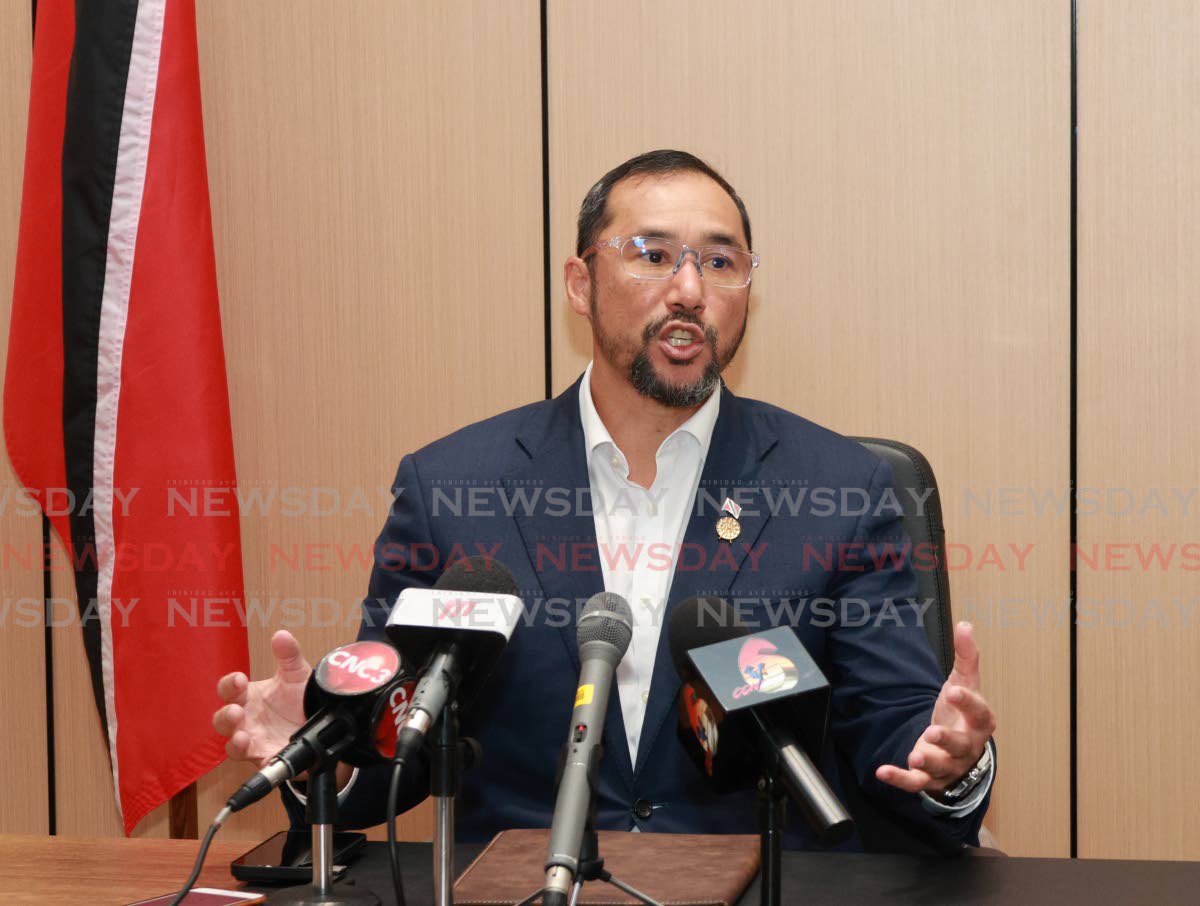
Young: Budget unrealistic, expect raid on H&S Fund
Former Energy Minister Stuart Young has sharply criticized the 2025/2026 budget presented by Finance Minister Davendranath Tancoo, labeling it as a ‘smoke and mirrors’ strategy. Young expressed concerns over the government’s potential raid on the Heritage and Stabilisation Fund to cover revenue shortfalls. The $59.232 billion budget, announced on October 13, is projected to fall short by $3.865 billion in revenue. Key measures include a $1 per litre reduction in super gasoline prices, a revised 10% salary increase for public servants, an electricity surcharge for commercial and industrial customers, a landlord tax, and an asset levy on banks and insurance companies. Young, in a Facebook post on October 14, supported the gasoline price cut but condemned the budget as ‘populist’ and warned of rising inflation and job losses. He questioned the government’s optimistic oil price projection of US$73.25 per barrel, which is 40% higher than global forecasts, and predicted serious revenue shortfalls. Young also criticized the lack of new energy initiatives, the closure of employment programs like URP and CEPEP, and the potential economic impact of new taxes on banks, insurance companies, and landlords, which he argued would lead to higher costs for consumers. Additionally, he raised concerns about the government’s plan to appoint majority directors at Republic Bank, warning against interference in critical financial institutions.
-
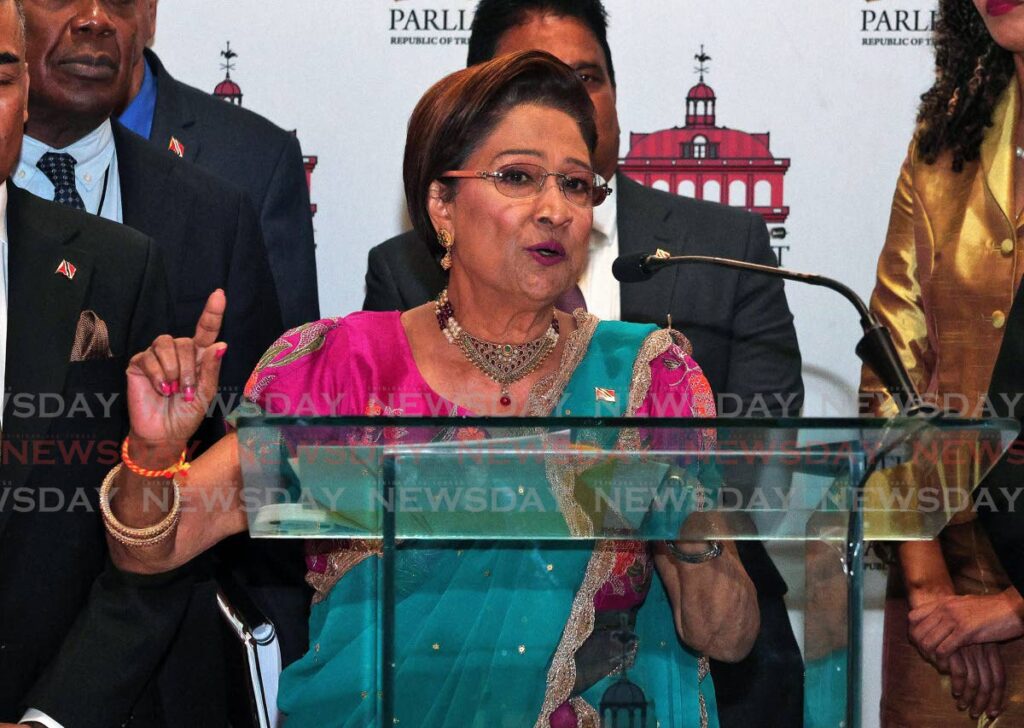
PM on UNC govt’s first budget – ‘All about fairness and equality’
Prime Minister Kamla Persad-Bissessar emphasized fairness and equality as the cornerstone of her UNC government’s 2025-2026 budget during a press briefing at the Red House rotunda on October 13. The fiscal package, presented by Finance Minister Davendranath Tancoo, introduced several measures aimed at rebalancing economic sectors and ensuring accountability. Persad-Bissessar defended a 0.25% levy on the assets of banks and insurance companies, alongside a landlord business surcharge on undeclared rental properties, clarifying that this was not a property tax but a mechanism to protect both landlords and tenants. She stressed that the budget was not about taxing individuals but about fostering accountability. The Prime Minister highlighted a reduction in the price of super gasoline by $1 per liter, which she said would save consumers $500,000 annually. Additionally, the removal of VAT on agricultural inputs was framed as a move to empower farmers. Persad-Bissessar contrasted her government’s $3 billion budget deficit with the former PNM administration’s $16-$18 billion deficits, attributing the improvement to diligent management. She also announced a 3% increase in National Insurance Scheme (NIS) contributions, expected to boost the National Insurance Board’s (NIB) annual collections by 23%. The PM urged citizens to consider private pensions, which are tax-free, unlike government pensions. She warned that without immediate action, the NIS would face collapse, leaving no funds for pensions or benefits. Persad-Bissessar praised Tancoo’s allocation of $2.96 billion for the Tobago House of Assembly’s development plan, along with an additional $763 million through various ministries, totaling $3.7 billion or 6.3% of the national budget. Responding to a reporter, she identified 8,000 public sector vacancies and promised better job opportunities.
-

Budget shifts gear on auto sector
The 2025/2026 national budget of Trinidad and Tobago has been hailed as ‘for the people’ by Visham Babwah, president of the TT Automotive Dealers Association (TTADA). The budget introduces significant policy shifts aimed at making vehicle ownership more affordable while addressing loopholes that have allegedly drained foreign exchange reserves. Finance Minister Davendranath Tancoo announced a series of tax reforms in the automotive sector, balancing environmental responsibility, economic prudence, and public accessibility. One of the most notable changes is the introduction of new taxes on luxury electric vehicles (EVs), effective January 1, 2026. Tancoo emphasized the government’s support for EV adoption to reduce carbon emissions but highlighted the misuse of tax exemptions for high-end models. Under the new regime, EVs with a cost, insurance, and freight (CIF) value exceeding $400,000 will attract a ten per cent customs duty, a 12.5 per cent VAT, and a tiered motor vehicle tax, expected to raise $40 million annually. Mid- and lower-priced EVs will continue to benefit from tax relief, promoting clean energy alternatives for the average citizen. Additionally, tax concessions for returning nationals, including exemptions from motor vehicle tax, VAT, and customs duty, will be removed, aligning them with other vehicle importers. The government also revised the age limit on used car imports, increasing the permissible age for private vehicles from three to six years and for light commercial vehicles from seven to ten years. Babwah welcomed these changes, noting they followed detailed consultations with TTADA. The budget also introduced increased fines for road safety and environmental protection, including higher penalties for careless driving and driving under the influence. While no new investments were made in compressed natural gas (CNG), Babwah cautioned against revisiting past initiatives that failed to yield long-term benefits. He also welcomed the government’s $1 reduction in the price of super gasoline, highlighting past unfulfilled promises to reverse fuel price hikes. Babwah described TTADA’s engagement with the government as collaborative, emphasizing their commitment to policies supporting the automotive industry, consumer protection, and environmental sustainability.
-

AI and education
Artificial Intelligence (AI), a transformative technology that simulates human learning, decision-making, and creativity, has evolved significantly since its inception in the 1950s. By the 1980s, machine learning introduced ‘expert systems’ that leveraged historical data. The 2010s marked the rise of deep learning, enabling machines to mimic human brain functions. This technological leap was driven by major corporations seeking to enhance efficiency and productivity, particularly through the vast data generated by social media platforms. AI’s unique ability to reshape societies, economies, and education systems sets it apart from traditional digital technologies, but it also raises critical ethical and social challenges, including fairness, transparency, privacy, and accountability. As AI becomes increasingly integrated into education, systems worldwide are grappling with its implications. Educators emphasize that AI should support, not replace, human decision-making and intellectual development, while respecting human rights and cultural diversity. In the absence of a national policy framework, UNESCO’s AI competency frameworks for students and teachers provide essential guidance. These frameworks focus on fostering a human-centered mindset, ethical AI use, foundational AI knowledge, and system design. For teachers, the framework emphasizes lifelong professional development, responsible AI use, and innovative teaching methods. The overarching principle is that AI should amplify human judgment, creativity, and empathy, not replace them. Schools are advised to develop their own AI policies, ensuring robust privacy safeguards and accountability mechanisms to prevent misuse of personal data and protect civil liberties.
-

TTSPCA welcomes animal shelter tax concession
In a significant move to support animal welfare, the Trinidad and Tobago government has announced tax concessions for corporate and individual contributions to registered animal shelters. Finance Minister Davendranath Tancoo unveiled this initiative during the national budget presentation on October 13 at the Red House. The proposal includes amendments to the Corporation Tax Act and the Income Tax Act, allowing companies and individuals to claim deductions for their donations to approved shelters. Companies can deduct up to 15% of their chargeable profits or $100,000 annually, while individuals can claim up to 20% of their total income or $20,000 per year. These changes, set to take effect on January 1, 2026, aim to bolster the efforts of shelters in controlling stray populations, promoting spaying and neutering, and enhancing public health and environmental sanitation. Sita Kuruvilla, chairman of the TT Society for the Prevention of Cruelty to Animals (TTSPCA), expressed optimism about the new policy, highlighting its potential to attract more support and reduce the financial burden on shelters. The TTSPCA, which faced imminent closure in September 2024 due to funding shortages, hopes this initiative will encourage more donations and ensure the sustainability of their operations.
-

Business chambers welcome budget presentation
In the wake of the 2025/2026 budget presentation, Dianne Joseph, President of the TT Coalition of Services Industries (TTCSI), emphasized the need for the government to prioritize implementation over mere promises. While applauding initiatives such as the removal of VAT on basic food items and the establishment of a $1 billion National Investment Fund Holding Company Ltd, Joseph cautioned that past governments have struggled with execution. She stressed that without the right teams and strategies in place, the budget’s ambitious goals may remain unfulfilled. Joseph highlighted ongoing issues with online business registration, noting that despite promises, many members still face bureaucratic hurdles. She called for accountability and strategic planning to ensure the budget’s success. The American Chamber of Commerce of TT (Amcham TT) and other business associations welcomed aspects of the budget, particularly enhancements to the Customs and Excise Division and potential reforms to the VAT system. However, they emphasized the importance of inter-agency coordination and the establishment of oversight mechanisms to ensure lasting impact. Kiran Singh, President of the San Fernando Chamber of Commerce, praised the reduction in super gas prices, which he said would benefit the MSME sector by reducing transportation costs. However, concerns were raised about proposed rental taxes and electrical surcharges, which could increase costs for landlords and tenants. The TT Chamber of Industry and Commerce also highlighted measures to boost non-energy exports, including investment in agriculture and the establishment of an Export Academy. Overall, while the budget has been well-received, business leaders are calling for effective implementation to translate promises into tangible benefits.
-

Tunapuna Chamber welcomes ‘economic fairness’ budget
The Greater Tunapuna Chamber of Industry and Commerce (GTCIC) has expressed its support for the government’s emphasis on ‘economic fairness’ and fiscal accountability in the 2026 national budget. However, the business lobby group has raised concerns about the persistent liquidity and competitiveness challenges faced by small and medium-sized enterprises (SMEs), calling for immediate and practical solutions. In a statement following Finance Minister Davendranath Tancoo’s budget presentation, GTCIC President Ramon Gregorio acknowledged the budget’s focus on tax modernization, institutional renewal, and digital transformation as steps toward reform. Yet, he emphasized the need for ‘concrete, time-bound measures’ to address foreign exchange shortages, improve SME financing, and bolster business confidence. Gregorio stated, ‘The business community seeks accountability matched by delivery – a Trinidad and Tobago where entrepreneurship thrives, forex flows freely, and SMEs drive inclusive growth.’ The chamber welcomed the reduction in super gasoline prices as a relief measure for transport and manufacturing sectors, potentially lowering logistics costs and inflation. It also praised initiatives in the energy sector, such as the Dragon Gas project and expanded exploration, as crucial for stabilizing foreign exchange inflows. Additionally, the GTCIC commended the creation of an employment fund and the replacement of CEPEP and URP with formal, productivity-driven jobs, viewing these as steps toward long-term economic restructuring. Gregorio highlighted the government’s digitization efforts, including the National Payment and Innovation Company of TT’s online payment system and the ‘Anansi’ virtual assistant, as tools to reduce bureaucracy and corruption. However, the chamber urged the government to ensure transparent and equitable forex distribution, especially for manufacturers reliant on imported raw materials. It also called for direct SME funding and credit guarantees, beyond recent reforms to the Export Academy and Eximbank. On tax reform, the GTCIC stressed the need for detailed consultation with small businesses to avoid disruptions in pricing and compliance systems. It also emphasized the importance of sustained crime reduction for investor and business confidence. The GTCIC expressed its willingness to collaborate with the Ministry of Finance, the Ministry of Trade and Industry, and the newly established Private Sector Organisation of TT (PSOTT) to translate policy intentions into measurable outcomes. ‘We stand ready to collaborate to ensure that policies translate into tangible results for business owners, workers, and consumers alike,’ the statement concluded.
-

India beat Windies by seven wickets to win Test series 2-0
India secured a commanding 2-0 Test series victory over the West Indies with a seven-wicket win in the second and final Test at the Arun Jaitley Stadium in New Delhi on October 14. The hosts wrapped up the match in just over 17 overs on the fifth day, showcasing their dominance throughout the series. The West Indies, despite a valiant effort on day four with centuries from John Campbell (115) and Shai Hope (103), were unable to defend their total of 390 after being asked to follow-on. India, set a modest target of 121, cruised to victory with KL Rahul (58 not out) and Sai Sudharsan (39) leading the charge. Roston Chase (2/36) provided some resistance for the visitors, but it was insufficient to halt India’s march to victory. The Indian team celebrated their triumph with the trophy, marking another milestone in their cricketing journey. Meanwhile, the West Indies, under coach Daren Sammy, now turn their attention to a challenging ODI and T20 series against Bangladesh, set to begin on October 18 in Dhaka.
-
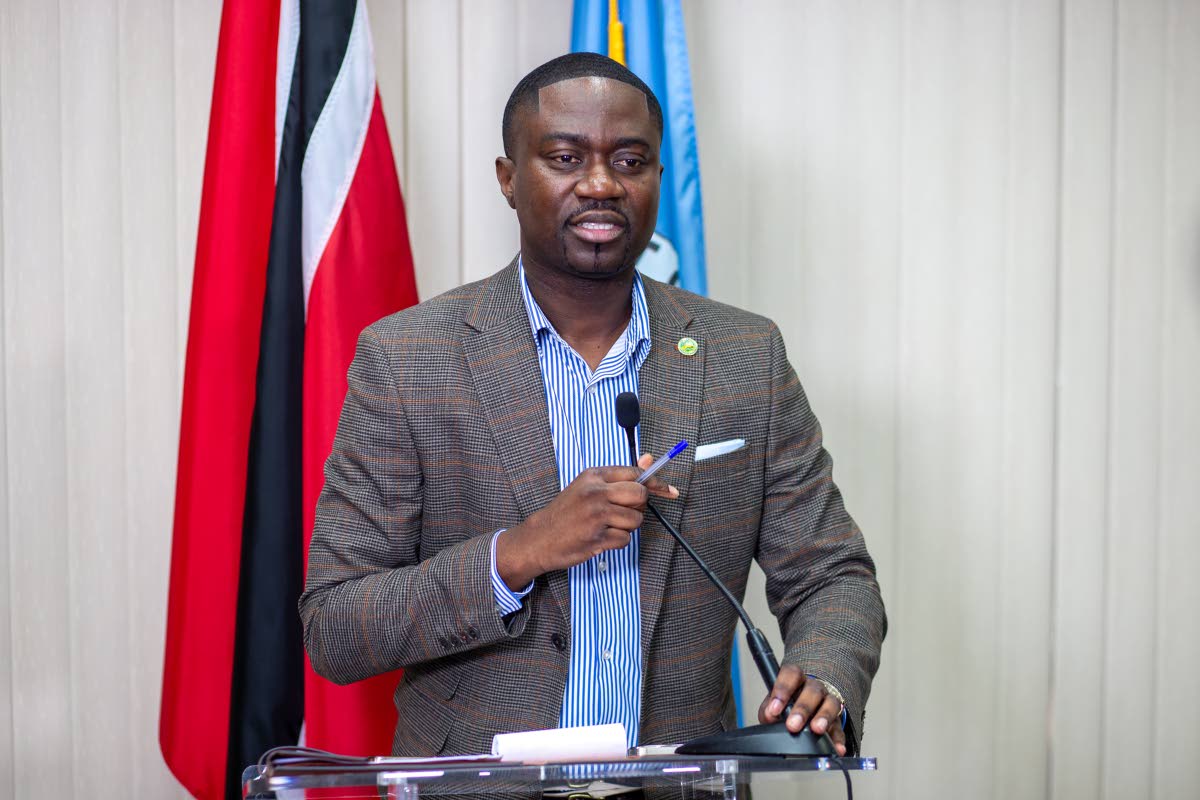
Chief Sec: A step in the right direction
Tobago has been allocated a substantial $3.72 billion in the 2025-2026 national budget, a development hailed as a “step in the right direction” by Chief Secretary Farley Augustine of the Tobago House of Assembly (THA). Speaking after the budget was presented in the House of Representatives on Monday, Augustine emphasized that this allocation signifies that for every $100 spent on national development, $5 will be directed to Tobago. This marks a significant increase from previous budgets, where the highest allocation was $4.37. Augustine noted that the THA had requested 5.9% of the national budget in June, and while the current allocation falls slightly short at 5%, it reflects improved communication and cooperation with the central government. Augustine commended the government for its willingness to engage in dialogue, even in times of disagreement, and for considering Tobago’s needs in national policy. He described the allocation as a tangible demonstration of the central government’s commitment to Tobago’s development. THA Secretary of Finance, Trade, and the Economy, Petal Ann Roberts, expressed excitement about the budget, stating that it provides an opportunity to accelerate Tobago’s progress and transform it into “the greatest little island on the planet.” The allocation of $3.72 billion, close to the $3.71 billion requested in June, is expected to enable significant advancements in Tobago’s development, marking a new momentum for the island.