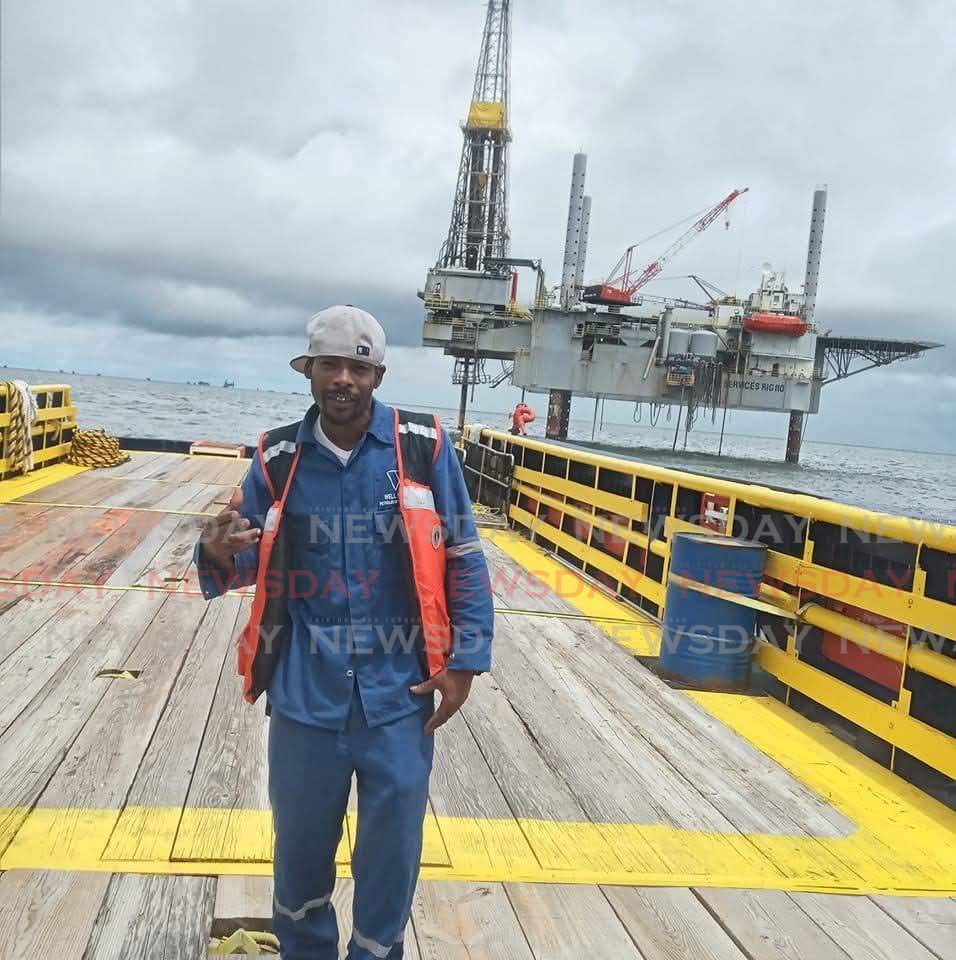
After nearly 11 months of uncertainty, Candacy Phillip and her family are finally seeing a glimmer of closure as efforts to retrieve the remains of her husband, Pete Phillip, have commenced. Pete, an employee of Well Services Petroleum Co Ltd, went missing after the Heritage East Soldado Field rig partially collapsed on December 22, 2022. Presumed dead by the company four days later, his body has remained unrecovered due to the unstable structure of the rig. Candacy, who gave birth to their son Javon months after the tragedy, expressed that even if only his clothing is found, it would provide the family with the closure they desperately need. ‘I’m hoping they find at least the clothes he wore during his last hours,’ she said tearfully. The recovery operation, led by a US-based marine salvage contractor, is now underway, focusing first on stabilizing the rig to ensure safety and environmental protection. Pete’s sister, Paula Baxam, remains hopeful that enough of his remains will be found to hold a proper funeral. The family has endured months of delays, including bureaucratic hurdles and safety concerns, but now awaits the outcome of this critical operation. Meanwhile, the Phillip family’s plight echoes that of others, such as Coast Guard Able Seaman Kieron Simon, whose body remains lost at sea after a counter-narcotics operation in February.
标签: Trinidad and Tobago
特立尼达和多巴哥
-

Kangaloo signs FATF Act into law
President Christine Kangaloo has enacted a series of legislative measures aimed at aligning Trinidad and Tobago with international financial and tax regulations. The newly signed laws, published in the TT Gazette on November 16, include the Miscellaneous Provisions (Financial Action Task Force Compliance) Act, 2025, along with specific sections of related acts from 2024 and 2020. These laws, effective from November 17, amend key legislation such as the Prevention of Corruption Act, Anti-Terrorism Act, and Mutual Assistance in Criminal Matters Act. Attorney General John Jeremie emphasized the significance of these reforms, noting that Trinidad and Tobago had previously avoided severe financial repercussions after being removed from the FATF grey list in 2020. Despite progress, the country remains on the EU’s list of non-cooperative tax jurisdictions, alongside nations like Panama and Russia. The government plans to introduce further legislation to address remaining FATF recommendations, with Trinidad and Tobago set to undergo assessment by the Caribbean Financial Action Task Force in March 2026.
-

A journey Down Memory Lane
Former Calypso Queen Tameika Darius recently hosted a heartfelt concert, ‘Reflections 2, Down Memory Lane,’ to honor her mother, Angela ‘Angie’ Darius, for her unwavering support and contributions to the family’s musical legacy. The event took place on November 9 at the Little Theatre, Southern Academy of the Performing Arts (SAPA-South), and featured a medley of songs penned by Angie, performed by her daughters and grandson. Tameika, who began her calypso journey at the age of five, was joined by her sister Makeda Darius, also a former Calypso Queen, and her son Xhaiden Darius, the reigning Junior Calypso Monarch. The concert highlighted the family’s deep gratitude for Angie’s love and dedication, with performances including Xhaiden’s ‘The Right to Play,’ Tameika’s ‘Who’s De Man,’ and Makeda’s ‘My People Arise.’ The evening also featured notable artists like Vaughnette Bigford, Roderick ‘Chuck’ Gordon, Renee Fortune, and Freetown Collective’s Muhammad Muwakil, who captivated the audience with their renditions of classic and contemporary calypso hits. The event concluded with a collaborative performance of Muwakil’s 2025 hit ‘Take Me Home,’ featuring Xhaiden, leaving the audience inspired and moved by the Darius family’s musical journey and their tribute to a matriarch who has shaped their artistic paths.
-
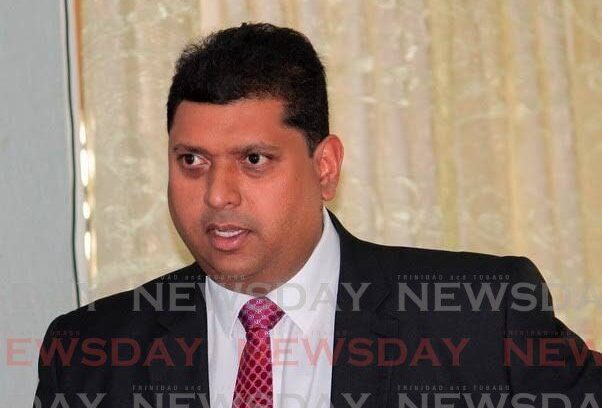
Ramnarine condemns deepfake videos
Former Trinidad and Tobago Energy Minister Kevin Ramnarine has publicly denounced the creation and dissemination of three digitally manipulated videos featuring his image and voice. These videos, which promote a fraudulent ‘government investment platform,’ were reportedly generated using advanced deepfake AI technology. Ramnarine disclosed the issue in a statement on November 11, revealing that he had also encountered a doctored newspaper article falsely using his name and likeness to endorse the platform.
Ramnarine has taken decisive action by filing formal reports with the Police Service and Facebook. He has also issued multiple disclaimers on his Facebook and LinkedIn accounts to alert the public. In some instances, Facebook has removed the manipulated videos. The videos in question were created by altering footage from three public events where Ramnarine spoke: in May 2019, July 2020, and March 2025. The latter two events were campaign meetings for the United National Congress (UNC).
The former minister urged the public to report any sightings of these videos on social media. He emphasized that this is not an isolated incident, as other senior government officials and private sector leaders have also fallen victim to similar deepfake manipulations. Ramnarine described this as a ‘unfortunate abuse of technology’ and called for the development of a robust policy and legislative framework to address such issues.
The fraudulent videos and articles, which falsely attribute authorship to Newsday reporters, have been posted on a counterfeit version of the Newsday website. The videos also feature members of other media houses, further complicating the situation. Newsday has reported the matter to the police, underscoring the growing threat of deepfake technology in spreading misinformation and fraud.
-

Alette Liz Williams launches The Media-Ready Masterclass
For nearly two decades, communications strategist Alette Liz Williams has been a driving force behind the scenes, helping organizations in Trinidad and Tobago and beyond achieve credible media exposure. Her expertise has bolstered the visibility of prominent entities such as the Pan American Development Foundation (PADF), PAHO/WHO, the Bocas Lit Fest, First Citizens, and Conference Connection (Suriname). Williams, who also serves as an adjunct lecturer at COSTAATT and the UWI Arthur Lok Jack Global School of Business, has emerged as a trusted authority in visibility strategy. She is the lead communications strategist for Iconiq Creative, a US-based agency, and her recent feature in Black Entrepreneur Magazine underscores her growing influence in the field. Now, Williams is taking her expertise public with the launch of The Media-Ready Masterclass, a virtual training session designed to help executives, brands, NGOs, and communications teams understand the enduring importance of earned media and the challenges organizations face in securing it. The session, scheduled for November 20 from 9 am to 12 pm via Zoom, will offer participants downloadable templates, a one-week replay, and access to a live Q&A. Williams emphasizes the widening gap between online content production and genuine visibility, noting that many teams focus heavily on social media and digital tactics without grasping the true value of earned media. ‘The return on investment is richer when a newsroom, station, or journalist chooses to feature your work,’ she explains. ‘That level of credibility cannot be replicated. It changes how the public sees you and how you see yourself.’ Williams also advocates for responsible advertising as a way to support the media landscape, highlighting its measurable impact on public trust and brand value. The masterclass will guide participants through frameworks to identify exposure-limiting gaps, understand journalistic newsworthiness, and position stories to align with editorial needs. ‘I’ve spent most of my career preparing other people for interviews, features, and major announcements,’ Williams says. ‘This masterclass is about giving people the tools to earn that kind of attention deliberately, not accidentally.’ Through her company, Outright Concepts Ltd, Williams has helped clients secure over US$1 million in earned media coverage across local, regional, and international campaigns. ‘There are organizations doing exceptional work that the public never hears about,’ she says. ‘I want to change that.’ To register, e-mail connect@ocl.agency.
-

La Romaine man gets 5 years’ jail for 2 rounds of ammo
A La Romaine resident, Anthony Ogeer, has been handed a five-year prison sentence with hard labor after pleading guilty to possessing two rounds of .38-caliber ammunition discovered at his Pond Street residence in 2023. The sentencing was delivered by Justice Nalini Singh, who detailed the circumstances of the case. During a police search of Ogeer’s home, the ammunition was found concealed beneath a tabletop stove. While the Firearms Act mandates a minimum 20-year sentence for a first conviction on indictment, Justice Singh set a starting point of six years, citing the limited quantity of ammunition and the absence of a firearm as mitigating factors. However, Ogeer’s prior convictions, including four marijuana-related offenses, led to an increased sentence of nine years. The judge highlighted Ogeer’s escalating criminal behavior, noting that the current offense occurred while he was on bail for a similar charge in January 2023. Despite this, the 2025 conviction was not considered an aggravating factor. Reductions were granted for Ogeer’s remorse and early guilty plea, resulting in the final five-year term. The court also ordered the forfeiture and destruction of the ammunition, disqualification from holding a firearm license, and notification of relevant authorities regarding the conviction.
-
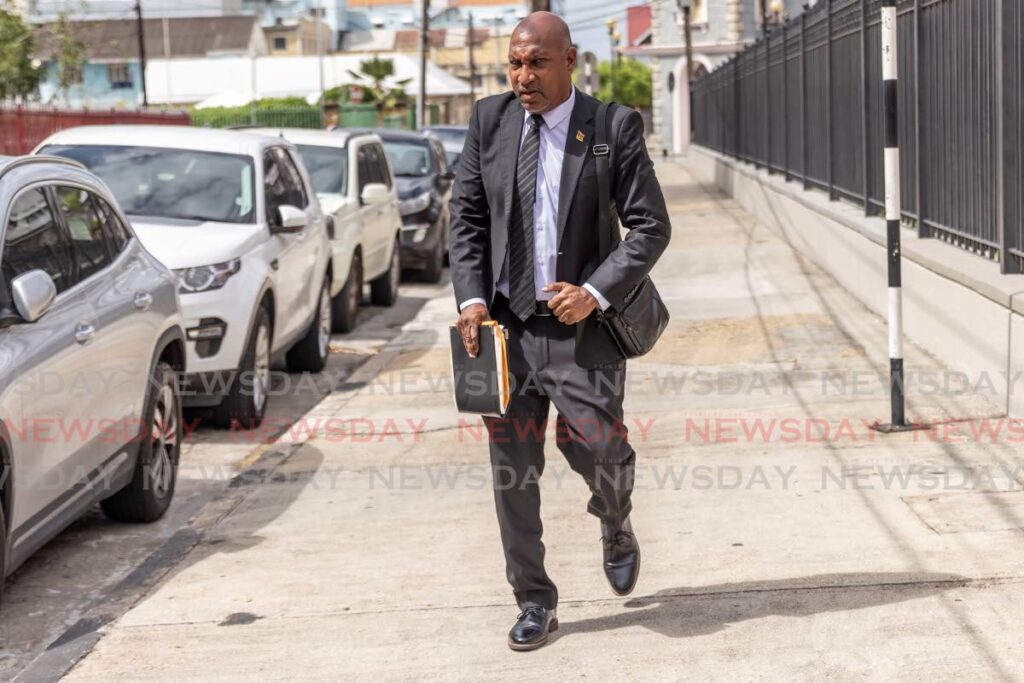
The social media government
In a striking shift from traditional parliamentary discourse, Senator Anil Roberts has taken to his daily blog to level accusations against the family of St Vincent and the Grenadines Prime Minister Ralph Gonsalves. This unconventional approach, characterized by short video clips produced over morning coffee, marks a bold new venue for government communication. Roberts is not alone in this endeavor; Phillip Alexander, a fellow Minister in the Housing Ministry, has similarly used social media to voice contentious opinions, including those targeting Venezuela’s executive vice president, Delcy Rodriguez. These online rants have drawn rebukes from the Prime Minister, yet they continue unabated, reflecting a broader trend of politicians leveraging social media to bypass traditional journalistic scrutiny. The Prime Minister, Kamla Persad-Bissessar, has not enforced her public demand for Alexander to ‘stay in his zone,’ suggesting a tacit acceptance of this new communication methodology. This shift towards social media as a primary tool for political communication is not without consequences. The pursuit of viral spread often replaces reasoned debate with theatrics, as seen in Homeland Security Minister Roger Alexander’s inflation of a plastic bag for local media. This trend not only leaves the public uninformed but also fosters an environment ripe for misinformation and idle speculation, ultimately devolving political discourse into dissonance and despair.
-
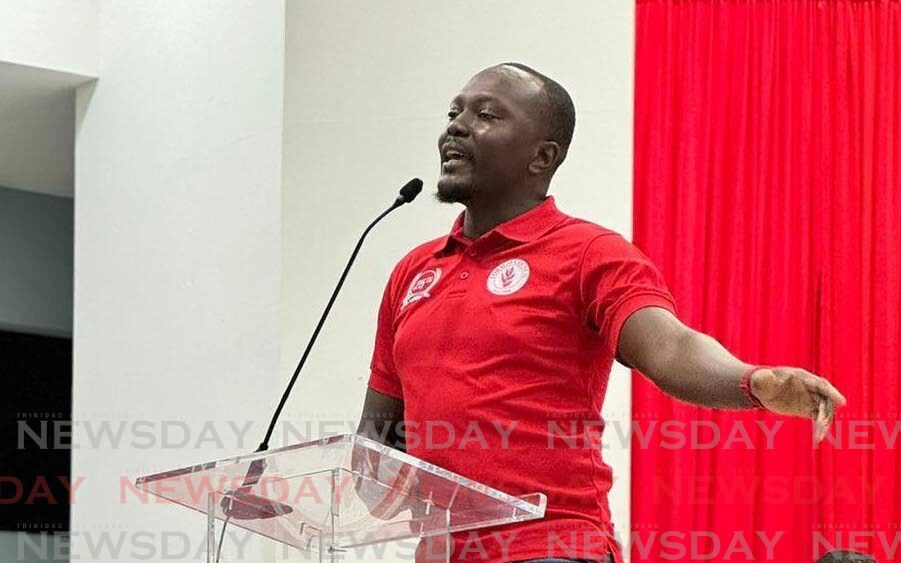
Dennis: Trinidad contractors bring ‘goodies’ for Tobagonians ahead of THA poll
In a recent address to supporters at the Patience Hill Community Centre, Tobago, PNM Tobago Council political leader Ancil Dennis made startling allegations against Trinidad-based contractors hired by the Tobago House of Assembly (THA). Dennis claimed that these contractors have diverted funds intended for road construction to purchase ‘goodies’ for voters ahead of the upcoming THA elections, scheduled between January 12 and February 12. He warned that these items, including household appliances and food vouchers, are being imported from China and other places to influence voter support. Dennis urged Tobagonians to consider the long-term impact of their vote, emphasizing that the next four years could significantly affect future generations. Deputy Chief Secretary Dr Faith Brebnor, when contacted for comment, dismissed the allegations, suggesting that the PNM might be projecting its own intentions onto others.
-
The past week in local sports
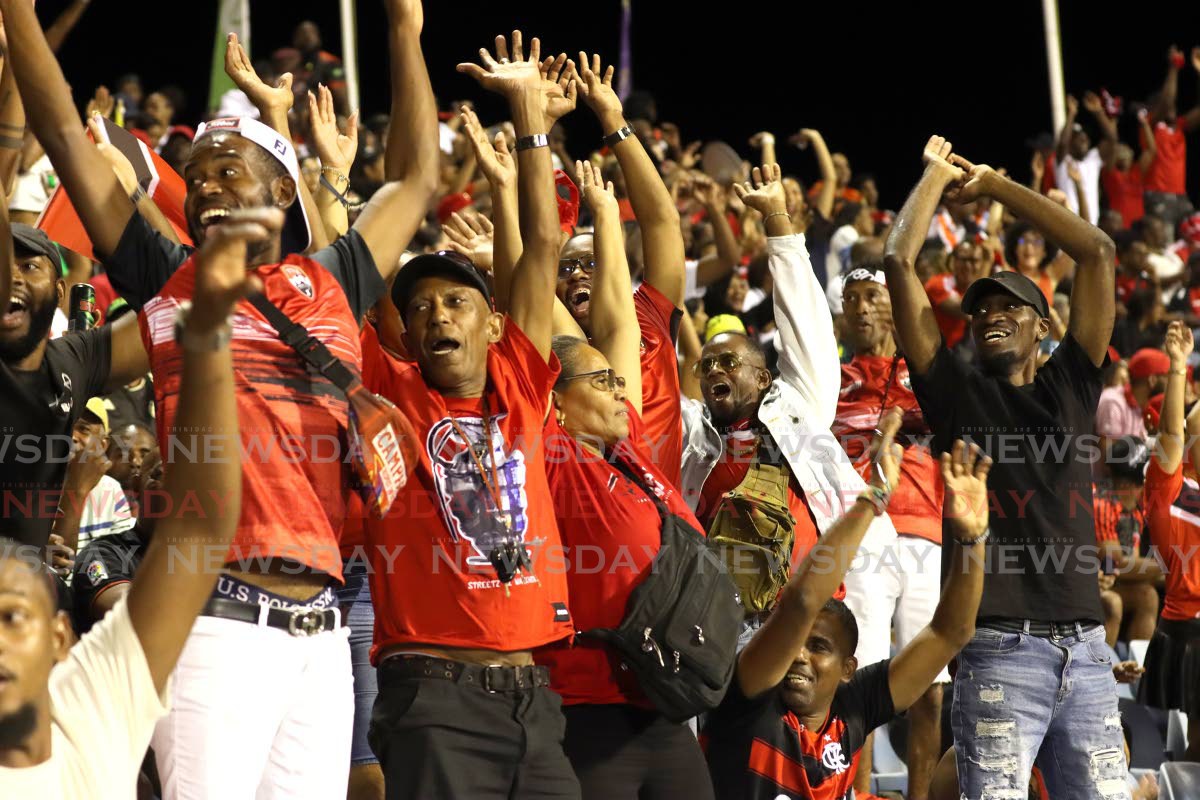
The sports community in Trinidad and Tobago has been buzzing with activity, showcasing a mix of competitive matches and community-driven events. On November 13, the Hasely Crawford Stadium in Mucurapo witnessed an intense World Cup qualifying match between Trinidad and Tobago (TT) and Jamaica. TT defender Deron Payne demonstrated exceptional skill, effectively screening the ball from Jamaica’s Renaldo Cephas, much to the delight of the roaring home crowd. The match was a testament to the passion and dedication of both teams as they vied for a spot in the prestigious tournament. Meanwhile, the Eastern Regional Indoor Complex in Tacarigua hosted the Schools 3×3 Basketball tournament on November 14. A standout moment saw a Hillview College player skillfully navigating between two Trinity College defenders, highlighting the young athletes’ talent and determination. Beyond competitive sports, the community came together for meaningful causes. On November 15, the TT Cancer Society and Republic Bank organized the Bubbles for Life 2025 walk at the Brian Lara Cricket Academy in Tarouba, raising awareness and funds for cancer research. The following day, the Harvard Club on Serpentine Road, St Clair, was the starting point for the 7 to 70 7K event, which brought together runners and walkers of all ages to promote health and wellness. These events underscore the unifying power of sports in Trinidad and Tobago, blending competition, camaraderie, and community spirit.
-
Tobago casino robbed, bandits flee by boat
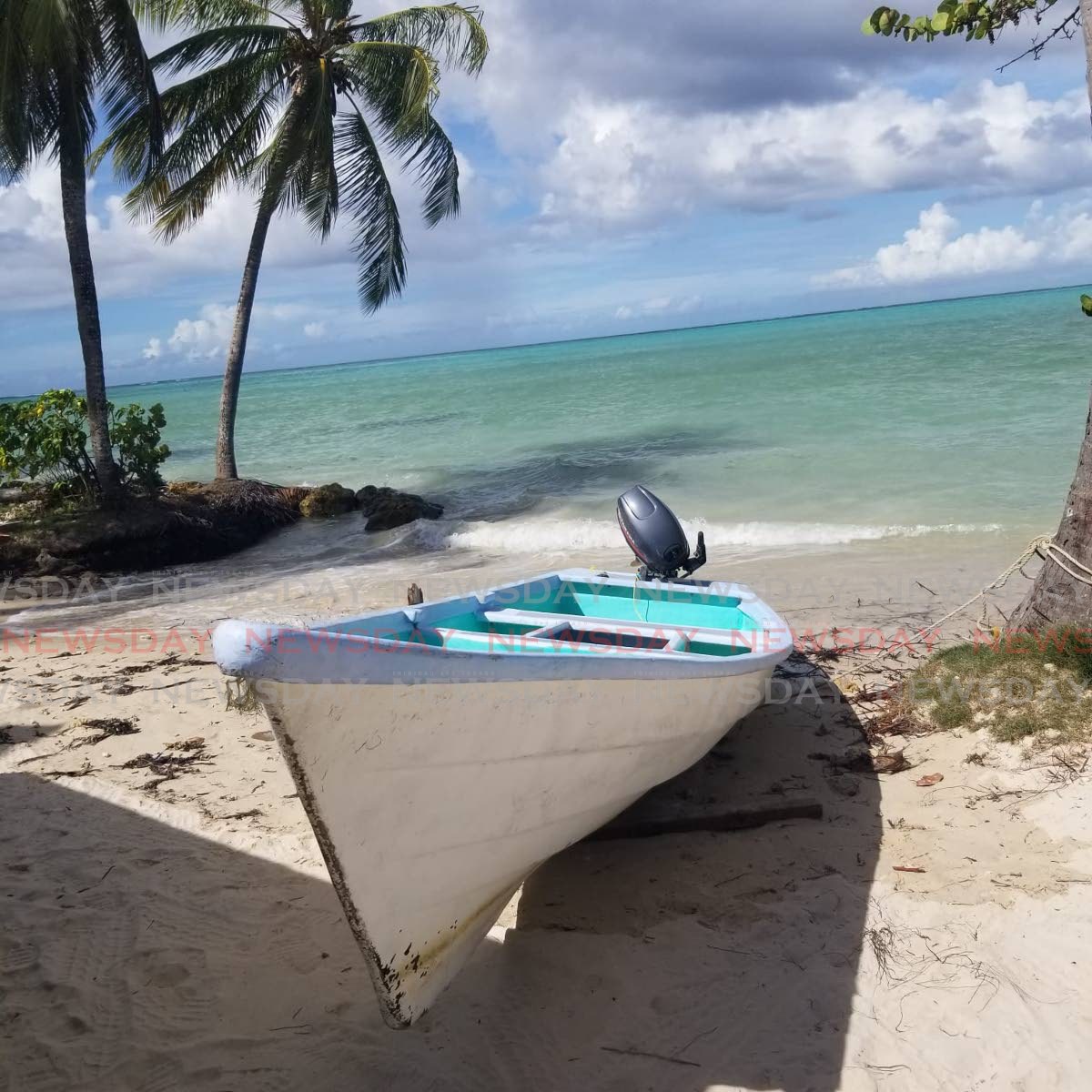
In a bold and meticulously planned robbery, two armed and masked individuals targeted the Royal Ton Casino in Crown Point on the morning of November 17. The incident unfolded shortly after 8 am when the assailants confronted casino employees, leading to a tense exchange of gunfire with security personnel. The robbers managed to escape with an undisclosed sum of cash, fleeing to a nearby beach where they boarded a waiting pirogue. The vessel, later discovered abandoned at Pigeon Point beach, has been seized by police as crucial evidence in the ongoing investigation. Authorities have confirmed the arrest of one individual who is currently assisting law enforcement in their efforts to apprehend the remaining suspects. The case has drawn significant attention due to the audacity of the crime and the use of a maritime escape route, highlighting the evolving tactics of criminal enterprises in the region.