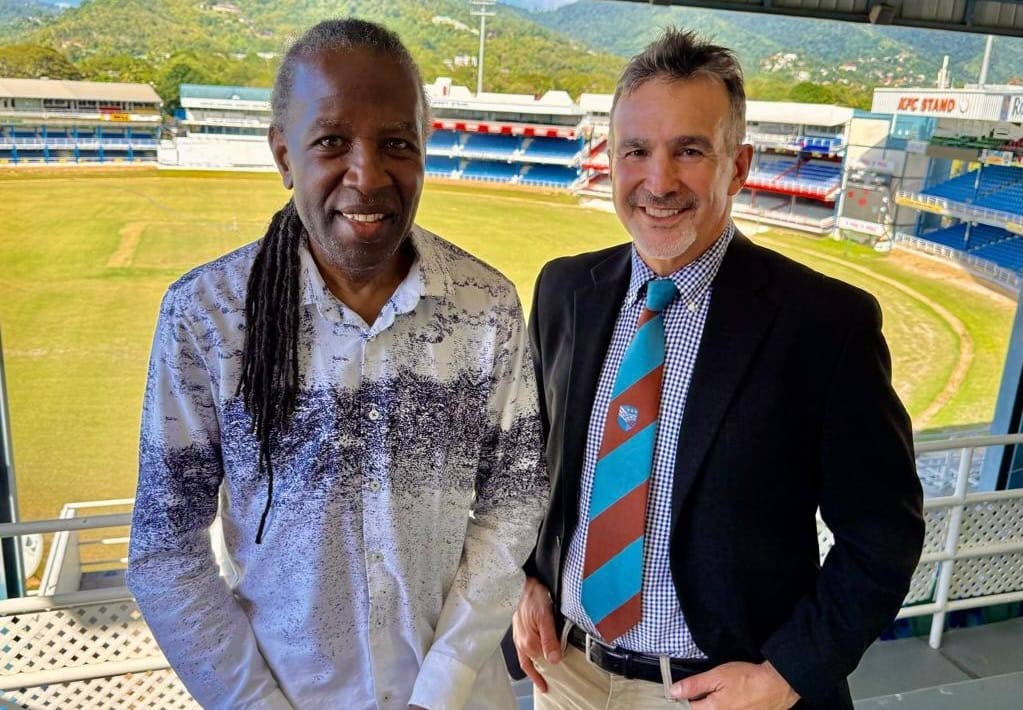
The TT Promoters Association (TTPA) is set to engage in crucial discussions with the Ministry of Culture and Community Development on November 21, following the government’s recent ban on major venues for Carnival fetes and concerts. This decision, announced by Prime Minister Kamla Persad-Bissessar, targets government-managed sporting facilities, including the Brian Lara Cricket Academy, Hasely Crawford Stadium, and Jean Pierre Complex, restricting their use to a nine-day window during Carnival week. The move aims to mitigate noise pollution, with events now mandated to operate strictly between 12 noon and 10 pm. Carnival 2026 is scheduled for February 16 and 17. TTPA president Robert Thompson revealed that a membership meeting will precede the government discussions to consolidate promoters’ perspectives, with a public media release expected thereafter. Prominent figures like Randy Glasgow have advocated for dialogue with the Prime Minister, proposing financial bonds as a deterrent against noise violations. Meanwhile, private venues such as Queen’s Park Oval (QP) have expressed willingness to collaborate with promoters. QP president Dr. Nigel Camacho emphasized the venue’s commitment to accommodating events within regulatory frameworks, despite challenges like residential proximity and parking constraints. Camacho highlighted the need for a balanced approach, respecting both Carnival traditions and community well-being, while ensuring competitive pricing for venue rentals. This development presents an opportunity to harmonize cultural festivities with environmental and social considerations.
标签: Trinidad and Tobago
特立尼达和多巴哥
-
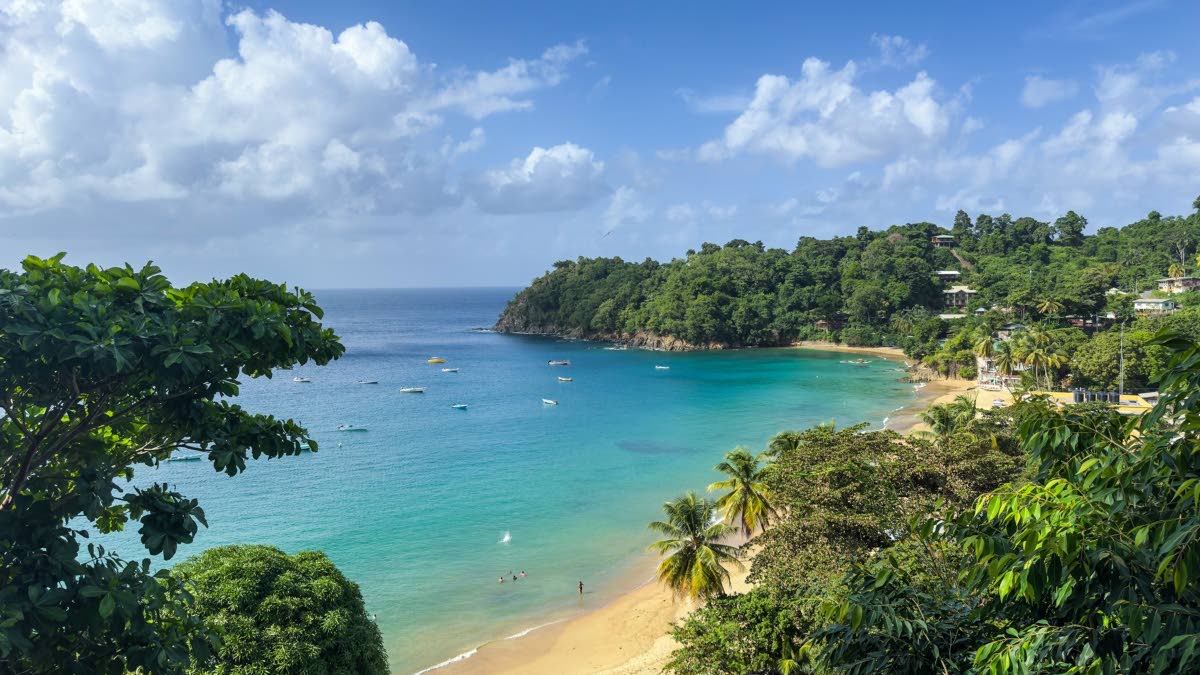
Between the Main Ridge and the beach
Nestled in the picturesque hillside above the authentic Caribbean fishing village of Castara, Tobago, Castara Retreats offers more than just a scenic escape. This boutique eco-lodge, established 25 years ago, has evolved into a model of regenerative tourism, blending sustainability with community engagement and environmental restoration. With 17 self-catering units, a Caribbean Kitchen restaurant, and a wellness space connected by tropical garden footpaths, the retreat provides a unique experience that immerses visitors in nature and local culture. Accommodations, crafted from local cypress and cedar, resemble treehouse sanctuaries, offering panoramic views of Castara’s Big Bay and the Main Ridge Forest Reserve. At its core, Castara Retreats is not just about hospitality; it’s about fostering meaningful connections between visitors, the environment, and the community. Regenerative tourism, a concept gaining traction globally, goes beyond sustainability by actively improving destinations. Castara Retreats exemplifies this through initiatives like interpretive walks led by local guides, pollinator sanctuaries, and partnerships with community entrepreneurs. The retreat’s ‘no fences’ policy encourages guests to explore the village, support local businesses, and engage with traditions like handmade fishing nets and communal bread baking. Additionally, Castara Retreats collaborates with the Environmental Research Institute of Charlotteville, channeling tourist dollars into conservation and community projects. Recognized with the Green Key eco-label for its transparency and commitment, Castara Retreats is setting a benchmark for ethical tourism in an era of climate risk and shifting consumer values. By prioritizing small-scale, eco-friendly, and community-rooted practices, Castara Retreats is not only preserving Tobago’s natural beauty but also ensuring its sustainable future.
-
bpTT completes Cypre project, ready to ‘unlock TT’s energy future’
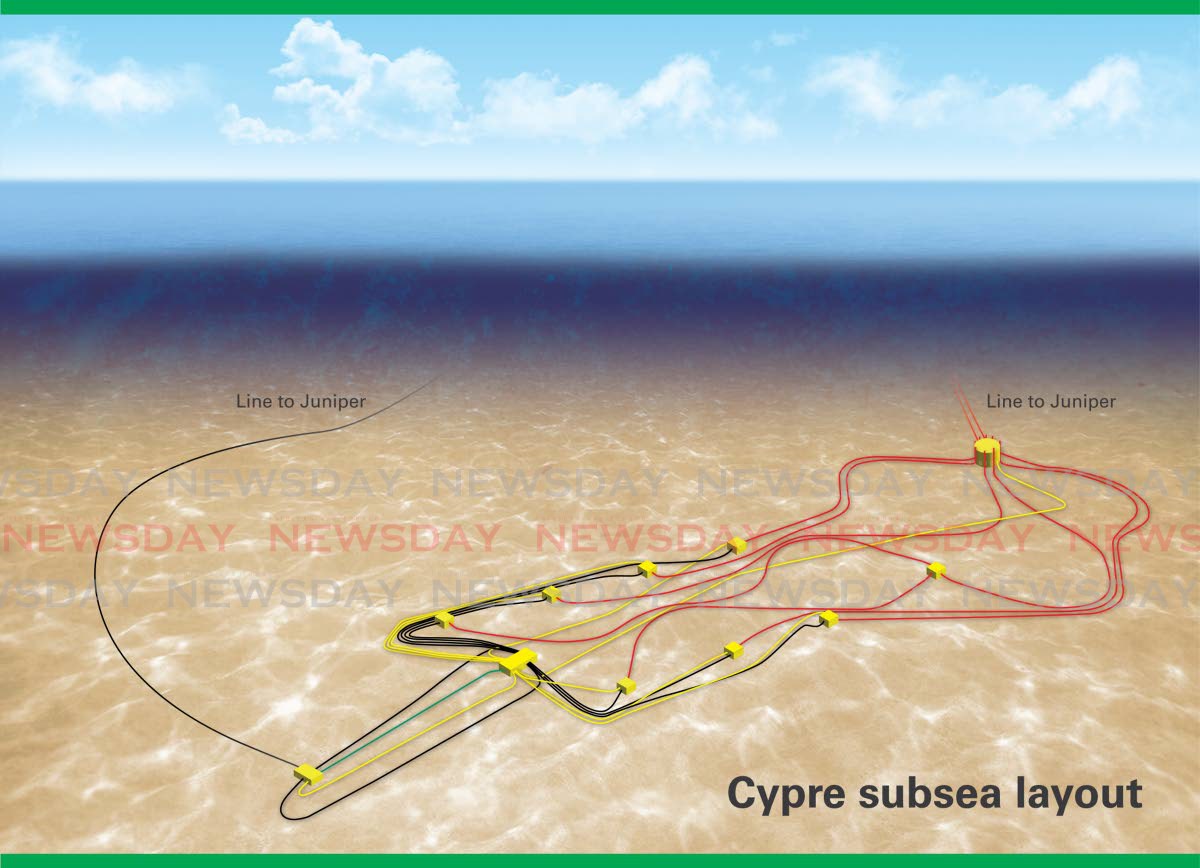
BP Trinidad and Tobago (bpTT) has announced the successful completion of its Cypre gas field development, marking a significant milestone in the region’s energy sector. The project, which involved drilling seven wells tied back to the existing Juniper platform, achieved first gas delivery in April 2025. The final three wells were drilled, completed, and commissioned recently, bringing the entire development to fruition. At its peak, Cypre is expected to produce approximately 45,000 barrels of oil equivalent per day, equivalent to 250 million standard cubic feet of gas daily. This makes Cypre bpTT’s third subsea development. David Campbell, bpTT president, emphasized the project’s success as a testament to the company’s commitment to maximizing production from the Columbus Basin and its ongoing investment in Trinidad and Tobago’s energy sector. The Cypre gas field, located 78 kilometers off the southeast coast of Trinidad in the East Mayaro Block, is entirely owned by bpTT, a joint venture between bp (70%) and Repsol (30%). Former Energy Minister Stuart Young lauded the project’s completion, highlighting its importance in offsetting the natural gas decline in the region. The development, negotiated between 2017 and 2023, underscores bpTT’s dedication to unlocking Trinidad and Tobago’s energy future.
-

CoP: Delay in TTPS promotions hurting Trinidad and Tobago
The promotion processes within the Trinidad and Tobago Police Service (TTPS) remain in a state of uncertainty as appellate courts deliberate on two separate cases involving senior and junior officers. On November 18, Justices of Appeal Prakash Moosai, Mira Dean-Armorer, and Eleanor Donaldson-Honeywell reserved their decision on an appeal challenging a 2024 High Court ruling. The court had found that the TTPS unlawfully used a departmental order in promotion assessments for at least 30 constables and unreasonably delayed interviews for advancement to corporal. A separate appeal, impacting inspectors seeking promotion to Assistant Superintendent of Police (ASP), has been adjourned indefinitely. Police Commissioner Allister Guevarro acknowledged the adverse effects of these stalled promotions in a November 19 media statement. He emphasized the loss of hundreds of years of combined expertise and millions of dollars in succession planning investments, as experienced officers reach mandatory retirement age without promotion opportunities. Guevarro expressed empathy for affected officers and citizens, stating that the nation is deprived of their skills and experience during a critical time. Despite the challenges, he reaffirmed the TTPS’s commitment to transparency, accountability, and justice. The legal disputes stem from a 2024 ruling by Justice Westmin James, who condemned the Promotion Advisory Board for improperly applying criteria outside the Police Service Regulations and delaying interviews for over a decade. James ordered the board to create a revised Order of Merit List using lawful criteria and awarded damages to affected officers. The ongoing appeals continue to disrupt the TTPS’s ability to address staffing and leadership needs effectively.
-
Trinidad and Tobago among five finalists: Costa Rica wins Solve for Tomorrow programme
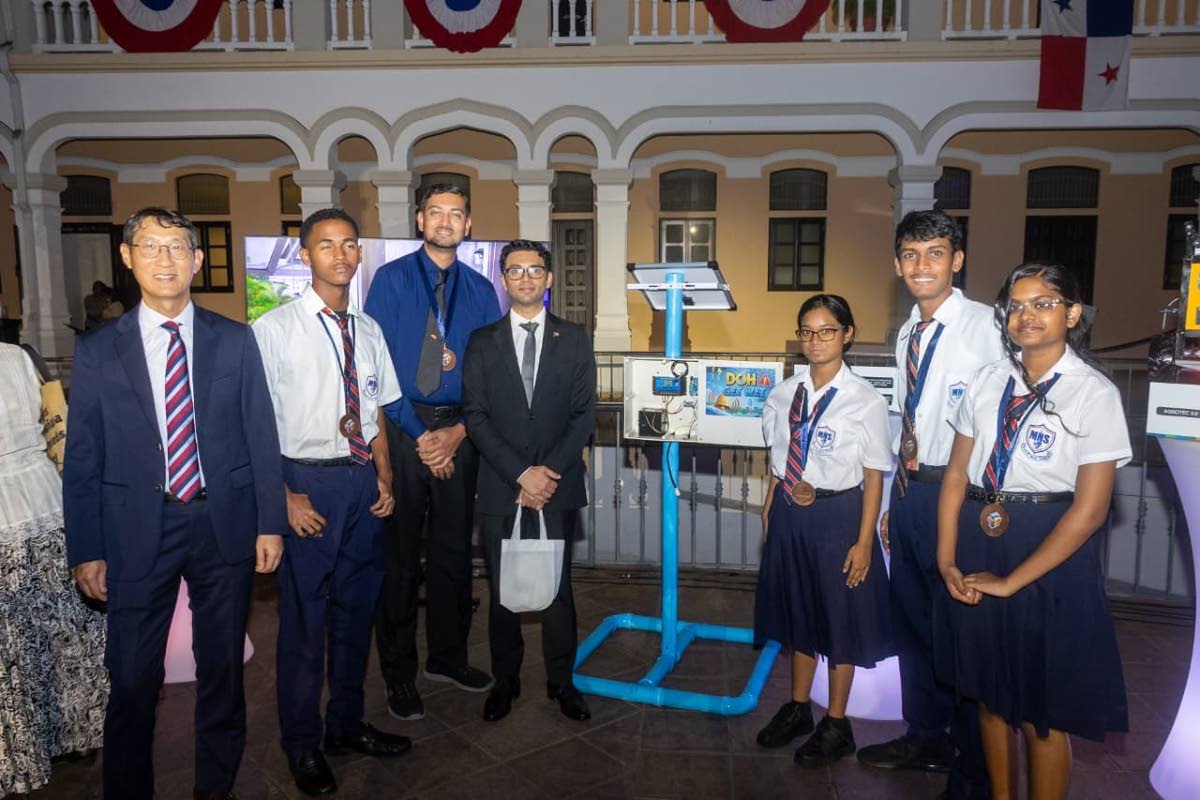
Costa Rican students Steven Alpízar, Sebastián Pastrana, Esteban Canales, and Luis Ureña, along with their teacher Jeisson Córdoba from Colegio Técnico Profesional Don Bosco, have been crowned Regional Champions of Samsung Latin America’s 2025 Solve for Tomorrow (SFT) educational programme. Their winning project, AgroTico Smart, is an advanced agricultural platform designed to tackle the unique challenges faced by farmers in the Chorotega and Huetar Norte regions. Utilizing IoT sensors, AI, and satellite data, the system delivers personalized recommendations to farmers via SMS and web applications. It also includes a distribution model, technical support, and training for local technicians, making it a comprehensive solution for agricultural innovation. The announcement was made on November 13 during a ceremony attended by Jason Kim, President of Samsung Electronics SELA, who praised the students for their creativity and dedication. María Fernanda Hernández, Samsung’s corporate citizenship manager for Central America, the Caribbean, Ecuador, and Venezuela, highlighted the programme’s success in fostering youth innovation and building a brighter future for the region. Over 3,000 project ideas were submitted from 12 countries, with more than 10,000 participants involved. The programme also provided over 12,000 hours of training in essential 21st-century skills and cutting-edge technologies. Among the finalists was the team from Marabella North Secondary School in Trinidad and Tobago, whose solar-powered flood early-warning system, Doh Get Wet, demonstrated significant potential in addressing community flooding risks. Samsung also awarded special recognitions to Ecuador and Paraguay for their outstanding contributions.
-

High Court rules in ANSA Merchant Bank’s $30m fraud case
In a landmark ruling, the High Court has adjudicated on the $30 million fraud case involving ANSA Merchant Bank (AMB) and its former employees. Justice Frank Seepersad, in a comprehensive 100-plus page judgment, dismissed claims against four former employees but found former business development officer Dwayne Rojas guilty of breaching contractual and fiduciary duties. Rojas was implicated in a fraudulent loan scheme, colluding with roll-on/roll-off car dealers to defraud the bank of $30 million over two and a half years. The scheme involved falsified job letters and fabricated vehicle documents, with non-existent vehicles listed as loan collateral. Justice Seepersad ruled that Rojas knowingly processed fraudulent applications, causing substantial financial loss to AMB. The court also dismissed cases against Zaria Sankar, Reyvaan Rampersad, Kerry Ramsaroop, and Adriana Ramsingh, citing insufficient evidence of wrongdoing. However, summary judgments were granted against five roll-on/roll-off companies, ordering them to repay $24 million. Justice Seepersad criticized AMB for targeting junior staff while neglecting to hold senior officers accountable. He highlighted the bank’s inadequate internal controls and risk management practices, which facilitated the fraud. The judge recommended that the case be forwarded to the Director of Public Prosecutions and the Commissioner of Police for potential criminal charges. Additionally, he urged the Minister of Trade, Industry, and Tourism to review the operating licenses of the implicated dealerships. The ruling underscores the need for stricter financial oversight and accountability in the banking sector.
-

Molino: I gave my all for the badge
Trinidad and Tobago’s senior men’s football team captain, Kevin Molino, has officially concluded his international career after a 2-2 draw against Bermuda in their final FIFA 2026 World Cup qualifier on November 18. The match, held at the Hasely Crawford Stadium in Mucurapo, Port of Spain, marked the end of a remarkable journey for the 35-year-old playmaker, affectionately known as ‘Nash.’ Molino, who initially retired from international football in September 2023, made a brief return last October to participate in the 2025 CONCACAF Gold Cup and the World Cup qualifying campaign. Despite the team’s inability to secure a victory in his farewell match, Molino expressed profound gratitude for his 15-plus years representing Trinidad and Tobago. Over his career, he earned over 70 caps and scored 27 goals, leaving an indelible mark on the national team. Molino and veteran goalkeeper Marvin Phillip, 41, were honored by the Trinidad and Tobago Football Association (TTFA) and the Minister of Sport and Youth Affairs for their contributions. In a heartfelt social media post, Molino thanked his teammates, coaches, and fans for their unwavering support, stating, ‘Playing for TT has been one of my greatest blessings – an honor and privilege that I will forever be proud of.’ Molino’s career highlights include two appearances at youth World Cups and a pivotal role in leading the Defence Force team to the TT Premier Football League title in the 2024/25 season. As he closes this chapter, Molino reflected on the highs, lows, and lessons of his journey, expressing pride in representing his country with ‘heart, respect, and fire.’
-

Speyside win, Mucurapo West into SSFL premier division
While the national men’s football team captured the spotlight on November 18, the Secondary Schools Football League (SSFL) showcased the future stars of the sport in a series of intense matches. The First Citizens Boys’ ‘Big 5’ championship division playoffs and zonal intercol games provided thrilling action, with young athletes demonstrating their skills and determination. In the Big 5 tournament, Speyside Secondary secured their first win with a 2-1 victory over Palo Seco Secondary. Despite trailing after a goal from Kashaun Phillip, Speyside turned the game around with late strikes from Ajani Stewart and Shaquan Charles. This win propelled Speyside to third place in the standings, with Hillview College leading the pack with a perfect record and Mucurapo West Secondary in second. Speyside still has two matches remaining, facing Mucurapo and Presentation College Chaguanas, with the top three teams earning promotion to the premier division. Meanwhile, in a rescheduled premier division match, Trinity College Moka and Scarborough Secondary played to a 2-2 draw, leaving Scarborough fighting to avoid relegation. The league’s disciplinary committee is set to address St Augustine Secondary’s no-show against Signal Hill Secondary, which could impact their premier division status. In zonal intercol action, Chaguanas North Secondary avenged their earlier loss to Presentation with a 3-0 victory, while Carapichaima East Secondary advanced to the final with a 1-0 win over Carapichaima West Secondary.
-

Steelpan and Powder Parade goes east
The Steelpan and Powder Parade (Eastern Region) unfolded in a burst of color and rhythm on November 15, showcasing the rich cultural tapestry of Tunapuna. The event commenced at El Dorado Road, Eastern Main Road, and culminated at the Republic Bank Exodus panyard, drawing crowds of enthusiastic spectators and talented performers alike. Among the standout bands were the Tunapuna Tipica Steel Orchestra, Simple Song Steel Orchestra, Bp Renegades Steel Orchestra, Massy Trinidad All Stars, Curepe Scherzando Steelband, Pamberi Steel Orchestra, and First Citizens Supernovas, each delivering electrifying performances that captivated the audience. Newsday photographer Faith Ayoung immortalized the festivities, capturing moments of joy, creativity, and cultural pride. From young pan enthusiasts reveling in the music to a moko jumbie tossing powder into the air, the parade was a testament to the enduring legacy of steelpan music in Trinidad and Tobago. Josiah Austin, chairman of the Tunapuna/Piarco Regional Corporation, also addressed the gathering, emphasizing the importance of preserving and celebrating this unique art form. The event not only entertained but also fostered a sense of community and cultural identity, leaving attendees with lasting memories of a day filled with music, dance, and tradition.
-
Senator Nakhid unveils DNA grassroots football league
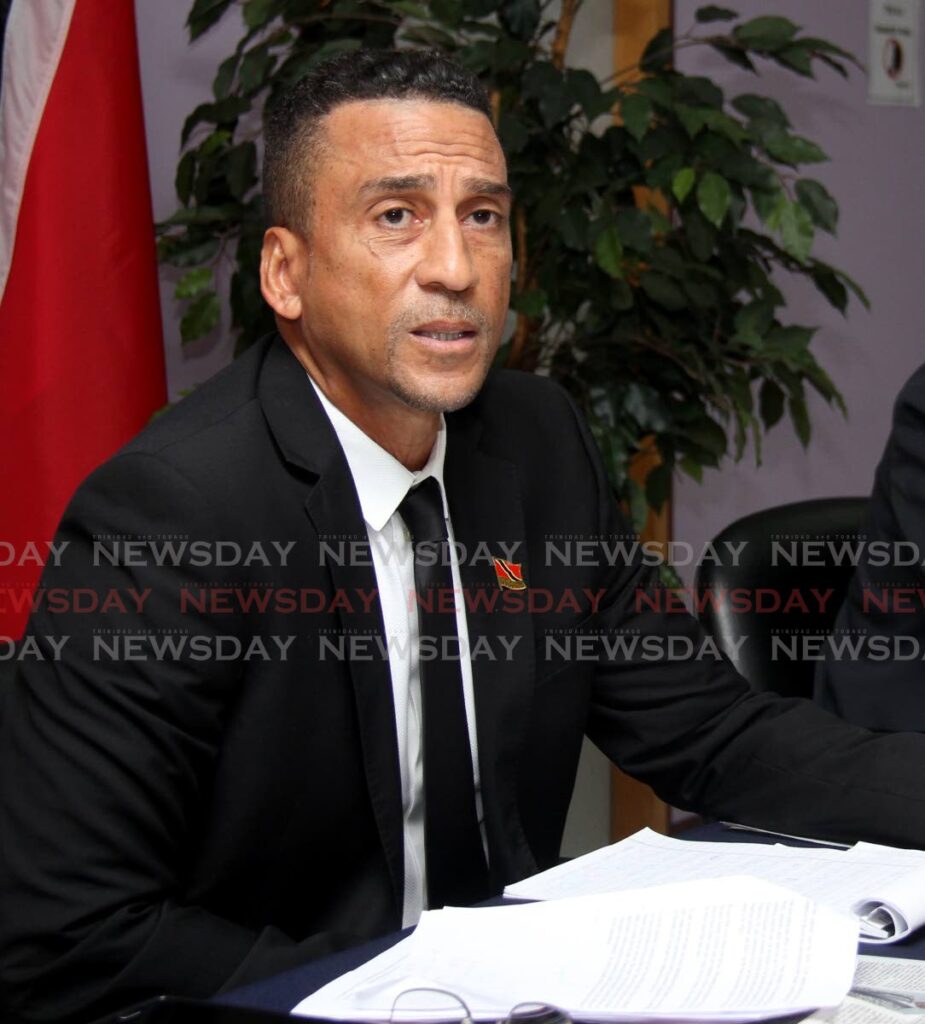
The DNA East/West Corridor Football League has been officially launched as a groundbreaking nationwide grassroots football initiative, supported by government ministries, corporate sponsors, and state broadcaster TTT. Conceptualized by Senator David Nakhid and businessman John Aboud, the league aims to reconnect football with local communities, create development pathways for young players, and offer substantial prize money at the grassroots level. Scheduled to begin on December 6, the league anticipates participation from over 48 teams, with top prizes of $120,000, $75,000, and $50,000 for the top three teams. Post-tournament, an all-star team will be selected for an international exposure trip to Spain. Nakhid described the league as a modern evolution of the historic Eddie Hart League, which began in 1967. The initiative has garnered immediate support from Prime Minister Kamla Persad-Bissessar and features experienced personnel such as former national player Travis Mulraine as director of operations and entertainment producer Randy Glasgow. The league also serves as a crime prevention program, fostering community engagement and reducing crime through sports. Primary sponsor John Aboud emphasized the role of sports in uniting communities and pledged organizational and financial support. The league’s medical team will provide health screenings for players, addressing physical and mental health needs. Minister of Defence Wayne Sturge highlighted the league’s potential to combat gang recruitment by restoring a sense of belonging among young men. TTT, the official broadcast partner, aims to showcase untapped talent and promote community development. Organizers expect full registration by the end of the week and believe the league will serve as a model for reviving national community football.