标签: Trinidad and Tobago

特立尼达和多巴哥

  • What are prisons for?

    What are prisons for?

    The purpose and efficacy of prisons in Trinidad and Tobago have come under intense scrutiny, particularly in light of the country’s chronic delays in the justice system. Debbie Jacob, a long-time advocate and educator within the prison system, has highlighted these issues, drawing parallels to the systemic racial injustices in the United States as described in Michelle Alexander’s seminal work, *The New Jim Crow: Mass Incarceration in the Age of Colorblindness*. Alexander’s book, which has influenced legal education and advocacy in the U.S., argues that prisons serve as a modern form of racialized social control—a perspective that resonates with Jacob’s observations in Trinidad and Tobago.

    Jacob began teaching at the Youth Training Centre (YTC) in 2010, where she encountered young men aged 24-26 still awaiting trial in a facility designed for 16-18-year-olds. The delays in the justice system have only worsened, with many individuals losing over a decade of their lives waiting for their day in court. This prolonged uncertainty often forces the accused to plead guilty, undermining the very essence of justice. In 2010, 67% of the prison population was on remand, a figure Jacob fears has since increased, placing a significant financial burden on taxpayers for housing, feeding, and transporting these individuals.

    Despite some progress, such as the introduction of electronic filing and virtual courtrooms under former Chief Justice Ivor Archie, systemic delays remain a defining feature of the judiciary. Jacob questions the integrity of investigations and the ease with which individuals are incarcerated, often without solid evidence. Her concerns are compounded by the low murder detection rate and the police’s decision to create their own prison system, further eroding public trust.

    Jacob’s work underscores a pressing need for reform. She challenges the judiciary to address these delays and ensure that prisons serve their intended purpose—rehabilitation and justice—rather than perpetuating a cycle of injustice and inefficiency.


  • NLCL Nation’s Cup to kick-off Xmas holidays

    NLCL Nation’s Cup to kick-off Xmas holidays

    Trinidad and Tobago’s premier youth football academies and clubs are preparing to showcase their talent against Caribbean rivals at the NLCL Nation’s Cup – International Holiday Fun Festival. Scheduled to take place from December 19 to 21 at the Manny Ramjohn Stadium in Marabella, this event promises to be a thrilling showcase of young footballing talent. The tournament will feature competitions in four age categories: Under 9, Under 11, Under 13, and Under 15, with participants vying for cash prizes, trophies, and medals. Organized by the Next Level Foundation, the event builds on the success of previous NLCL Community Cup tournaments. Bermudez Biscuit Company’s Dixiee returns as an official sponsor, alongside key supporters such as Next Level Consulting Ltd, Agostini Ltd, Point Lisas Nitrogen Ltd, and First Citizens. Notable youth clubs like City FC, Cox Coaching School, Creek Sports & Cultural Club, Dunstan Williams Soccer Academy, and Union Hall United have already confirmed their participation. Beyond the matches, attendees can enjoy live performances, DJs, a Family Fun Zone, and complimentary samples from vendors. Brian K Jordan, foundation chairman, emphasized the event’s focus on community engagement and youth development. Germaine Jordan, tournament chairperson, encouraged additional sponsors and teams to join, highlighting the importance of investing in young footballers. For further details, interested parties can visit NLCL Community Cup’s social media pages or contact the organizers directly.

  • A short column about killing

    A short column about killing

    The government of Trinidad and Tobago (TT) has sparked widespread debate and criticism for its aggressive policies centered around state-sanctioned killing. Since assuming office six months ago, Prime Minister Kamla Persad-Bissessar has prioritized executions, advocating for the resumption of the death penalty for prisoners on Death Row. This stance has been further reinforced by Defence Minister Wayne Sturge’s promotion of ‘shoot first, kill first’ legislation, framed as a stand-your-ground policy. Most recently, the PM has aligned TT with the United States’ controversial strategy of targeting small boats in the Caribbean Sea, a move that has been described by international observers as a ‘kill them all violently’ approach to foreign policy. Critics argue that these measures lack empirical evidence to support their efficacy. The global trend has shifted away from the death penalty, with studies showing it does not deter crime. Similarly, stand-your-ground laws in the U.S. have led to increased violence rather than reduced crime. The U.S. government’s tactic of extrajudicial killings at sea to combat drug trafficking has also been widely criticized as ineffective and counterproductive. Mexico’s ongoing cartel violence, with over 30,000 homicides annually, serves as a stark reminder that murder does not equate to peace. The TT government’s reliance on such medieval solutions raises questions about its legitimacy and effectiveness. As the U.S. reportedly destroys nine small boats, killing 37 people, including two TT citizens, the Prime Minister has yet to define what constitutes success in this brutal anti-drug policy. Attorney General John Jeremie’s lamentation of TT’s high murder rate and near ‘state of anarchy’ further highlights the irony of a government attempting to curb violence through more violence. This approach not only undermines the social contract but also risks plunging society into deeper chaos, as even political philosopher Thomas Hobbes acknowledged that a government’s legitimacy hinges on its ability to protect, not threaten, its citizens.

  • Ramkissoon elected TTCB treasurer, John remains 2nd VP

    Ramkissoon elected TTCB treasurer, John remains 2nd VP

    Stephen Ramkissoon has successfully retained his position as treasurer of the Trinidad and Tobago Cricket Board (TTCB) following the organization’s annual general meeting (AGM) and elections held on October 25 at the National Cricket Centre in Balmain, Couva. Ramkissoon, who assumed the role earlier this year after his predecessor Kiswah Chaitoo was ousted in a motion of no confidence, will now serve a full four-year term. He secured the position with a decisive 29-12 victory over Central Sports owner Richard Ramkissoon, who is no relation. The elections also saw Kerwin John, head of the Tobago Cricket Association, retain his role as second vice-president after defeating Rajendra Mangalie 27-13. Additionally, Avinash Suruj of the Central Zone was elected third vice-president, outpacing veteran administrator Parasram Singh 29-12. Five new members—Ravi Teeluck, Anand Rampersad, Ann Brown John, Frank Simmons, and Mitra Ragoonanan—joined the executive with membership status, while Sharaz Mohammed of the Secondary Schools Cricket League fell short with only ten votes. Azim Bassarath, who has led the TTCB since 2009, retained his presidency uncontested. However, this marks his final term due to recently amended term limits. Altaf Baksh and Henry Chase were also elected unopposed as first vice-president and general secretary, respectively. Ammar Samaroo, secretary of the TTCB elections committee, confirmed the process was seamless, stating, ‘Everything went extremely smoothly and according to plan.’

  • CWU disagrees with JTUM’s budget endorsement

    CWU disagrees with JTUM’s budget endorsement

    The Communications Workers’ Union (CWU) has publicly distanced itself from the Joint Trade Union Movement’s (JTUM) endorsement of the 2026 national budget, asserting that it cannot support a fiscal plan that prioritizes financial stability over the immediate needs of workers. In a statement released on October 24, the CWU emphasized its independence and dissenting views on the budget, despite remaining a member of JTUM. The union criticized the government’s focus on balance sheets, arguing that the budget fails to address the rising costs of living, stagnant wages, and the struggles of working-class citizens. The CWU also highlighted the lack of meaningful provisions to restore workers’ purchasing power, which has been eroded by inflation and currency devaluation. Additionally, the union condemned the government’s neglect of the productive sector, pointing to insufficient allocations for manufacturing, agriculture, and industrial diversification. CWU Secretary General Joanne Ogeer clarified that the union’s stance was issued to correct misconceptions after parliamentary discussions referenced its earlier budget analysis. Ogeer reiterated the CWU’s commitment to holding any government accountable, regardless of its affiliation with JTUM or political parties.

  • Jamaicans brace for Hurricane Melissa

    Jamaicans brace for Hurricane Melissa

    As Hurricane Melissa approaches Jamaica, residents and government agencies are intensifying preparations for the anticipated landfall of the Category 3 storm, expected on October 28. The eastern parishes of St. Thomas and Portland have already experienced early effects, including flooding, strong winds, and storm surges. With winds reaching 145 miles per hour, Melissa poses a significant threat to the island, as well as neighboring Cuba and Haiti.

  • PNM Tobago urges Barbados PM to speak with Persad-Bissessar

    PNM Tobago urges Barbados PM to speak with Persad-Bissessar

    Amid escalating geopolitical tensions in the Caribbean, PNM Tobago leader Ancil Dennis has called on Barbados Prime Minister Mia Mottley to engage in dialogue with Trinidad and Tobago’s Prime Minister Kamla Persad-Bissessar, urging for “cool heads” to prevail. Dennis likened the current conflict involving the US, Venezuela, and Trinidad and Tobago to a game of all-fours, cautioning that while Persad-Bissessar may feel empowered, the situation remains unpredictable. His appeal follows Venezuela’s accusation that Trinidad and Tobago is collaborating with the CIA, a claim that arose after the USS Gravely, a US warship, arrived in Trinidad for a five-day military exercise with the TT Defence Force. The Ministry of Foreign Affairs defended the visit, stating it aims to combat transnational crime and enhance security cooperation. Dennis emphasized the Caribbean’s historical commitment to peace, rooted in its struggles against colonization and its dedication to sovereignty and non-interference. He highlighted the region’s preference for cultural and sporting rivalries over militarized conflicts, warning against the dangers of being drawn into external wars. Dennis urged Mottley to remind Persad-Bissessar of the Caribbean’s values, advocating for diplomacy and creative solutions to regional challenges. He concluded with a call for unity, stressing that the Caribbean’s strength lies in its ability to prioritize peace over conflict.

  • Foster care – is it worth it?

    Foster care – is it worth it?

    In a recent commentary, Denelle Singh, an attorney at law, highlighted the critical issue of the low rate of applicants for foster care in Trinidad and Tobago. The manager of the Foster Care Unit at the Children’s Authority had previously raised concerns about this alarming trend, pointing out widespread confusion between foster care and adoption. Many potential foster parents are deterred by the lengthy approval process, which spans four to five months, ensuring that applicants are both physically and emotionally prepared for the role. However, the need for foster care is urgent. Children’s homes in TT are often over capacity, leaving many children without a safe and stable environment. These children are often removed from their homes due to neglect, abuse, or socioeconomic challenges, and without foster care, they face an uncertain future. Foster care offers a temporary, family-based solution that provides individualised attention, emotional bonding, and a sense of normalcy, which institutional care often lacks. It also allows time for birth families to address their issues, with the goal of possible reunification. The foster care system not only benefits the children and foster families but also strengthens communities and contributes to national progress. By empowering ordinary citizens to take an active role in child welfare, TT can disrupt cycles of adversity and create a brighter future for its most vulnerable citizens. The Foster Care Unit provides comprehensive support to foster parents, ensuring that children thrive in a nurturing environment. Strengthening the foster care system is not just a moral imperative but a societal one, as it shapes future citizens who can contribute positively to national development.

  • Trinidad and Tobago queens shine in South Korea

    Trinidad and Tobago queens shine in South Korea

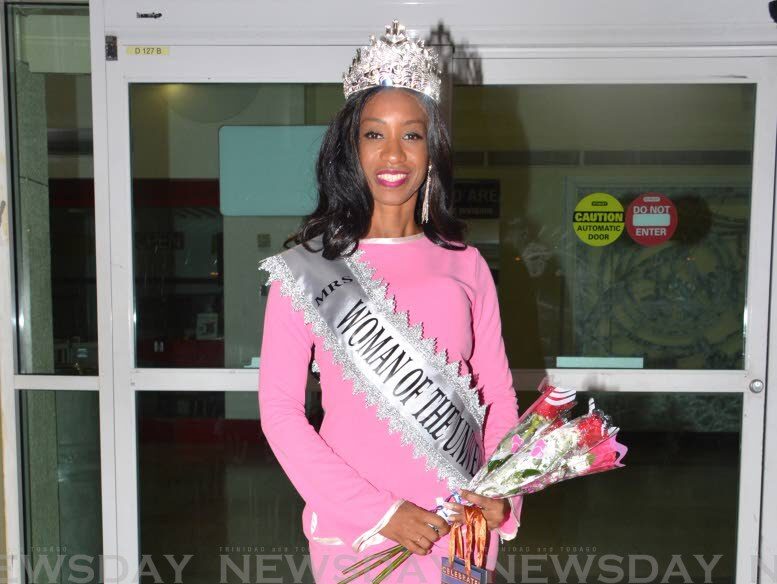
    Meguella Simon, a multifaceted talent from Trinidad and Tobago, has added another remarkable achievement to her illustrious career by securing the position of second runner-up at the 48th Mrs Woman of the Universe pageant held in South Korea on October 18, 2025. This prestigious event, which celebrates married, widowed, or single mothers aged 18-55, saw Simon break barriers as the first black woman to rank in the top five in the competition’s 48-year history. Alongside her pageant success, Simon was also crowned Mrs Superstar, a testament to her diverse talents and contributions to the arts, education, and community service. Simon, a teacher with two master’s degrees in education and Carnival studies, has previously made history as the first virtual Calypso Queen and has excelled as an actress, pannist, radio announcer, and model. She also served as the former president of the Lions Club of San Fernando. Reflecting on her journey, Simon described the experience as a transformative learning opportunity, emphasizing her commitment to using her platform to empower others. She expressed pride in representing Trinidad and Tobago and hinted at future participation in pageants, though her immediate focus is on preparing for Carnival 2026. This year’s event also featured two other Trinidadian delegates: Candace Picton-Friday, who earned the title of Mrs First Lady, and Aliana Seepersad, who won Best National Costume in the Miss Woman of the Universe category. Local director Alveada Meah praised the trio for their grace and excellence, highlighting their role in placing Trinidad and Tobago on the global stage. The pageant continues to inspire women worldwide, with applications now open for the next edition.

  • Tobago in the 1820s

    Tobago in the 1820s

    The island of Tobago, once a possession of the English monarch, faced a series of tumultuous events that shaped its history and socio-economic landscape. One of the most pressing concerns for landowners was the persistent threat of a French takeover, which haunted the island from 1763 and materialized in 1781 and 1802. This fear was finally laid to rest in 1815 with the signing of the Treaty of Paris, which solidified Tobago’s status as a British colony. However, this resolution did not alleviate all challenges, as the island grappled with the growing anti-slavery movement and the declining performance of its sugar industry, a cornerstone of its economy.

    In an effort to stabilize the island’s affairs, the administration appointed Charles Alfred Francklyn as the agent for Tobago in 1820. Tasked with overseeing sugar sales, procurement of essential goods, and legal matters, Francklyn’s role was pivotal. Yet, the changing ownership of estates amid the intensifying anti-slavery movement, exemplified by the 1823 rebellion in British Guiana, added to the instability. The plantocracy, burdened by economic realities and unable to sustain their lavish lifestyles, faced further decline.

    Another significant development was the construction of a courthouse in 1821, a project overseen by a committee of council and assembly members. This initiative highlighted the island’s efforts to establish a formal legal system. Meanwhile, the allocation of land to poor settlers, including figures like John Burnett and William Sloane Wilson, revealed the complexities of land ownership and social stratification.

    The labor of enslaved Africans played a crucial role in Tobago’s economy, not only in estate work but also in defense and other services. However, the compensation for their labor was paid to their owners, not the workers themselves, a practice that underscored the inhumane nature of slavery. After Emancipation, planters claimed a shortage of labor, yet the value of the work done by enslaved Africans far exceeded what they were willing to pay freed individuals.

    Despite efforts to address financial deficits through taxation on enslaved individuals, merchants, and alcohol, Tobago’s economy remained unstable. The decline in sugar production and the increasingly volatile atmosphere on plantations mirrored broader regional unrest, leaving the island’s future uncertain.