标签: Trinidad and Tobago

特立尼达和多巴哥

  • PSA President’s response to CPO offer: We want the cash

    PSA President’s response to CPO offer: We want the cash

    A significant dispute has emerged between Trinidad and Tobago’s Public Services Association (PSA) and the Chief Personnel Officer (CPO) regarding the payment structure of a $3.8 billion backpay settlement for public service workers.

    PSA President Felisha Thomas has taken an unequivocal stance against the government’s proposal to distribute the substantial backpay amount through a combination of cash and non-cash benefits. Thomas maintains that her mandate from union members requires full cash payment without alternative compensation mechanisms.

    The conflict intensified following December 2 statements from CPO Daryl Dindial, who outlined the government’s position that the massive payout needed careful financial management. Dindial explained that while a $500 million ‘advance on arrears’ would be distributed before December 23, the complete $3.8 billion settlement remains subject to ongoing negotiations regarding disbursement methods and timing.

    Dindial emphasized fiscal responsibility, stating: “We need to ensure the public doesn’t perceive government borrowing $3.8 billion as reckless. The government operates responsibly and has provided the CPO with broad negotiation guidelines.” He further noted that Finance Minister allocations hadn’t specifically provided for these arrears, requiring the ministry to identify appropriate funding sources.

    Thomas vehemently rejected these explanations, citing contradictory statements from Finance Minister Davendranath Tancoo, who told reporters on November 26 that the government indeed possessed sufficient funds for the payment. This contradiction prompted Thomas to question: “Is the CPO lying, or is he calling the finance minister a liar?”

    Despite the payment method disagreement, both parties confirmed that negotiations continue productively. The PSA and CPO have already reached agreement on multiple components including a ten percent wage increase for 2014-2019 periods, cost of living adjustments, new salary structures effective January 2014, and various allowance enhancements covering meals, housing, transportation, and vehicle provisions.

    Thomas affirmed that negotiation processes remain uninterrupted, noting: “I see nothing affecting negotiations. Both parties have their positions and we engage in discussion.” Further negotiations regarding the complete arrears payment are scheduled to resume in January.


  • UWI spotlights production of its high-quality field station milk

    UWI spotlights production of its high-quality field station milk

    The University of the West Indies (UWI) St. Augustine’s Faculty of Food and Agriculture (FFA) has showcased its advanced dairy production system through a special digital publication released during World Quality Week 2025 (November 10-14). The publication highlights the institution’s commitment to agricultural excellence through its vertically integrated milk production process at the Valsayn Field Station.

    Under the guidance of Dr. Martin Hughes, Deputy Dean of Farms, the FFA maintains complete oversight of the production chain—from pasture management to bottled milk distribution. The operation begins with carefully nurtured mulato grass, specifically cultivated for its nutritional richness, which forms the primary diet for the dairy herd. The faculty recognizes that animal welfare directly impacts product quality, implementing comprehensive veterinary monitoring and maintaining pristine living conditions for the cattle.

    The milking process incorporates rigorous hygiene protocols aligned with Good Manufacturing Practices (GMPs). Stockmen meticulously sanitize both udders and equipment before each milking session. Following extraction, milk undergoes immediate pasteurization in a dedicated facility where precise temperature controls eliminate pathogens while preserving nutritional integrity and flavor profiles.

    Quality verification continues with laboratory testing that confirms both pasteurization effectiveness and nutritional composition. The bottling process occurs in sanitized environments designed to prevent contamination, with finished products rapidly moving to refrigerated storage until distribution.

    The FFA’s publication emphasizes that quality represents an institutional culture rather than mere compliance. This philosophy aligns with the 2025 World Quality Week theme ‘Quality: Think Differently,’ positioning the milk as an exemplar of preventive, data-driven agricultural science. Consumers can purchase the premium dairy product at UWI Field Station sales offices and select local supermarkets.

  • The saga of CL Financial

    The saga of CL Financial

    The protracted liquidation saga of Caribbean conglomerate CL Financial has reached a critical juncture, with mounting calls for restoring shareholder governance after more than a decade under court-appointed supervision. The company’s dramatic collapse in 2009 during Trinidad and Tobago’s liquidity crisis created one of the region’s most complex corporate failures, prompting unprecedented state intervention that continues to reverberate through Caribbean financial markets.

    Since January 2009, CL Financial has operated under the control of liquidators who have managed asset dispositions and operational decisions. However, growing concerns about transparency, accountability, and shareholder rights have sparked legal challenges and intensified demands for governance normalization. Recent developments, including the abandoned sale of Trincity Mall after shareholder legal intervention, highlight the escalating tensions between current oversight and ownership rights.

    Three fundamental arguments drive the movement for governance restoration. First, the extraordinary duration of liquidation—exceeding fifteen years—represents an unreasonable suspension of democratic corporate governance. Second, multiple court cases have revealed concerning transparency gaps, including questions about liquidators’ remuneration and asset valuation methodologies. Third, shareholder groups led by major stakeholders like Dalco Management have demonstrated increasing capacity and willingness to assume governance responsibilities.

    The case for shareholder restoration hinges on fundamental corporate principles: capital providers should retain governance rights through elected directors. While the initial crisis justified extraordinary measures to protect depositors and policyholders, the current phase requires normalized governance structures. A transition plan could maintain liquidators for asset realization while empowering shareholder-elected boards for strategic oversight, balancing creditor protection with ownership rights.

    Critics who cite ongoing stability concerns must acknowledge that perpetual external control undermines market confidence and corporate recovery prospects. The Caribbean financial ecosystem deserves resolution mechanisms that respect both crisis management necessities and long-term governance norms. CL Financial’s path forward should embrace modern corporate governance, independent auditing, and transparent operations to restore market confidence and enable strategic repositioning.

    This governance transition represents more than procedural change—it signifies the restoration of fundamental investment principles and offers a template for resolving complex corporate failures while respecting shareholder rights across emerging markets.

  • Naparima College hosts Paradise Parang on December 5

    Naparima College hosts Paradise Parang on December 5

    San Fernando prepares for an immersive cultural experience as Naparima College presents its acclaimed NAPS Paradise Parang event on December 5th. The Offside Restaurant and Bar will transform into a holiday celebration venue starting at 8 PM, featuring an innovative blend of traditional parang music with contemporary interpretations.

    This year’s musical lineup showcases exceptional talent including Jerome “Rome” Precilla with his pioneering soca-parang fusion, Timothy “Baron” Watkins performing cherished Christmas classics, and acclaimed ensembles Viva Jesús and Fuego Caribeño presenting authentic parang traditions. The event has evolved into a signature celebration on the school’s annual calendar, offering attendees an early immersion into the holiday spirit.

    Beyond musical entertainment, the event serves a significant philanthropic purpose. Proceeds from ticket sales directly support educational initiatives and development programs for Naparima College students. This alignment with the institution’s “Putting Students First” philosophy ensures that community enjoyment translates into tangible educational benefits.

    Devin Kissoon, Vice-President and Chairman of NAPS’ events committee, emphasized the dual purpose of the celebration: “We’ve created an experience that honors our cultural heritage while building meaningful support systems for current students. The event strengthens connections between alumni, parents, and the broader community while directly funding student resources and enhancement programs.”

    The Paradise Parang represents how cultural preservation and educational advancement can harmoniously coexist, transforming musical celebration into a vehicle for positive community impact and student development.

  • Ex-World Cup goalkeeper Shaka Hislop reveals cancer battle

    Ex-World Cup goalkeeper Shaka Hislop reveals cancer battle

    Former Trinidad and Tobago international goalkeeper Shaka Hislop, now a prominent ESPN football analyst, has publicly disclosed his ongoing struggle with prostate cancer through a heartfelt social media video shared on December 3.

    Hislop revealed that his diagnosis came approximately 18 months ago during a routine annual medical examination. Subsequent medical investigations, including an MRI and biopsy, confirmed the presence of an aggressive form of prostate cancer. By mid-2025, the cancer had metastasized to his pelvic bone, necessitating an intensive treatment regimen that recently concluded with over seven weeks of radiation therapy.

    In his moving testimony, the former professional athlete emphasized the critical importance of regular health screenings, particularly for men over 50. He specifically highlighted the increased risk for men of African descent, recommending they begin prostate-specific antigen (PSA) testing as early as age 40.

    The football community has rallied in support of Hislop, with nearly 400 messages of encouragement appearing online by midday on December 4. Hislop’s distinguished career included memorable performances for Trinidad and Tobago’s national team during the 1990s and 2000s, most notably his exceptional showing against Sweden in the 2006 FIFA World Cup where he secured a 0-0 draw despite his team playing with ten men for half the match.

    Hislop concluded his message with a note of determination, stating: ‘The journey continues,’ demonstrating his resolve to battle the illness with the same perseverance he displayed throughout his athletic career.

  • Tershawna Glasgow tops Japanese speech contest

    Tershawna Glasgow tops Japanese speech contest

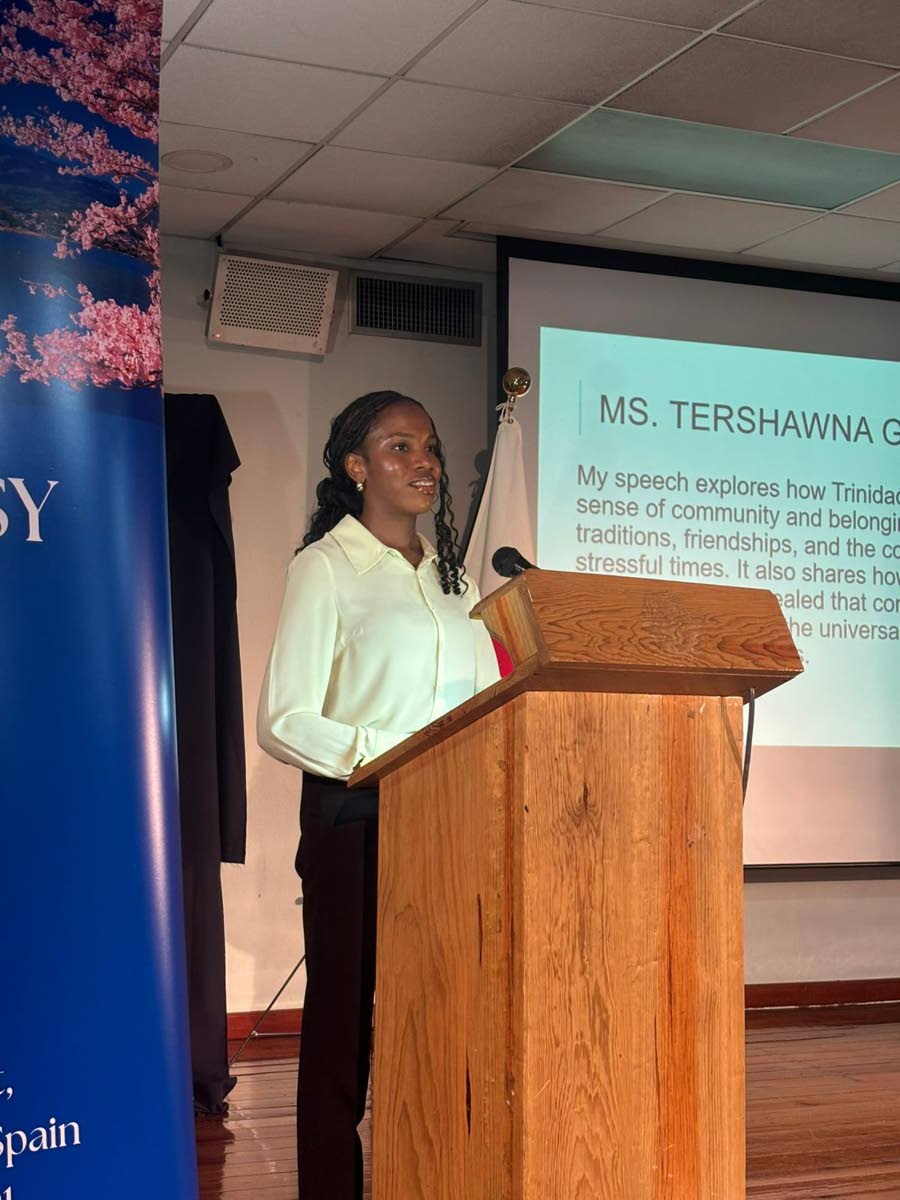
    The eighth annual Japanese Speech Contest, a collaborative initiative between the Embassy of Japan and the Centre for Language Learning at the University of the West Indies, St. Augustine Campus, successfully convened on November 29. Held at the CLL auditorium, the event underscored the growing cultural and educational exchange between Japan and Trinidad and Tobago.

    Japanese Ambassador Dr. Akima Umezawa inaugurated the proceedings with a keynote address emphasizing the contest’s pivotal role in fostering bilateral relations. He articulated that the platform significantly contributes to the proliferation of Japanese language acquisition and cultivates a deeper appreciation for Japanese cultural nuances within the local community, according to an official media release.

    The ambassador extended profound appreciation to key sponsors—Caribbean Gas Chemical Company (CGCL), Hachidorikai (the Japanese Ladies’ Association of Trinidad and Tobago), and More Vino Restaurant—for their sustained patronage. Their consistent support, particularly in endowing special prizes to laureates, has been instrumental in the event’s continued success over eight consecutive years.

    This year’s competition featured six participants: five competed in Category I, designed for learners at The Japan Foundation’s A1/2 standard with 100-200 study hours, while one contender participated in Category II, targeting A2 standard and above with over 200 study hours.

    An esteemed panel of adjudicators, comprising Ambassador Umezawa, Keio KATO (CEO of Caribbean Gas Chemical Limited), and Asahi Kunito (Japanese Language Education Advisor from The Japan Foundation in Mexico), evaluated the speeches.

    Tershawna Glasgow clinched first place in Category I with her presentation ‘How Curry Shaped My Life,’ while Ambika Ramdass secured second place with ‘How Anime Impacted My Life.’ Ariel Procope received the Recognition Award in Category II for her discourse on ‘Nature: Positive Impact of Mangroves.’

    Preceding the speech contest, the Japan Cultural Association of Trinidad and Tobago orchestrated a ‘Japan Day’ exhibition. The event offered immersive experiences in both traditional and contemporary Japanese culture, including art demonstrations and interactive workshops, providing the public with a holistic cultural encounter.

  • Watson Duke’s PSA pension dispute goes to trial in 2027

    Watson Duke’s PSA pension dispute goes to trial in 2027

    A protracted legal battle between former Public Services Association (PSA) president Watson Duke and the trade union over pension entitlements will proceed to trial in May 2027. Justice Marissa Robertson has established May 17-18, 2027, as the designated trial dates during a status hearing on December 4.

    Duke initiated litigation in June 2024, alleging the PSA violated his employment contract by withholding pension benefits following his December 2021 resignation. His departure from the union presidency coincided with his brief tenure as Tobago House of Assembly deputy chief secretary. The former labor leader contends this resignation should not disqualify him from receiving his pension.

    The legal journey has encountered multiple judicial reviews. Duke previously secured an injunction from Justice Frank Seepersad, who ruled without PSA’s representation, granting temporary financial relief based on Duke’s claims of severe hardship including mortgage defaults and $130,000 credit card debt.

    However, the PSA successfully challenged this injunction, presenting evidence that Duke had received a $203,850 gratuity in March 2023 and had alternative pension options through his prior employment with the Water and Sewerage Authority (WASA). Justice Robertson overturned the injunction, a decision subsequently upheld by the Appeal Court.

    The Appellate Court, while acknowledging minor procedural errors in Robertson’s ruling, affirmed that her overall judgment was sound. Justice Eleanor Donaldson-Honeywell noted the PSA would face irrecoverable financial harm if forced to pay pending trial, particularly given uncertainties about Duke’s ability to repay should he ultimately lose his case.

    Notably, the court did reverse one element of Robertson’s order requiring Duke to repay $18,875 received during the injunction period, citing lack of procedural foundation for this requirement.

    Legal representation includes Kelvin Ramkissoon for the PSA and Farai Hove Masaisai for Duke. The former union president has submitted three witness statements supporting his claim as the case advances toward its 2027 trial date.

  • PNM senator: Stand-your-ground law won’t protect people

    PNM senator: Stand-your-ground law won’t protect people

    In a contentious Senate session on December 2, 2025, Temporary Opposition Senator Sanjiv Boodhu delivered a comprehensive critique of the proposed Home Invasion (Self-Defence and Defence of Property) Bill, challenging its fundamental effectiveness in addressing criminal activities. Speaking during parliamentary debates, Boodhu—who also serves as a deputy political leader for the PNM—directly contradicted government assertions that the legislation would empower citizens to protect themselves during home invasions.

    Boodhu systematically dismantled claims made by Government Senator Dr. Natalie Chaitan-Maharaj, arguing that the bill’s purported benefits would only apply to the limited segment of the population with legal access to firearms. ‘This legislation, despite its accompanying messaging, provides no mechanism for law-abiding citizens to legally obtain firearms,’ he emphasized, highlighting what he characterized as a critical flaw in the proposed law.

    The opposition senator further challenged the government’s foundational premise that existing laws are insufficient to address home invasion crimes, noting that Attorney General John Jeremie, SC, had previously referenced relevant legislation that has been operational since 1971. ‘I cannot comprehend what insufficiency or ambiguity exists in a 54-year-old legal framework,’ Boodhu stated, adding that he was unaware of any instances where law enforcement encountered difficulties in charging individuals for home break-ins.

    Boodhu presented a detailed analysis of the home invasion process, identifying multiple stages including victim surveillance, execution of the crime, escape evasion, and monetization of stolen goods. He acknowledged the severity of crimes committed during such invasions, including ‘violent assaults, robberies, larceny, and sexual offenses,’ but maintained that the proposed legislation fails to address any of these criminal elements.

    The senator criticized the bill for lacking provisions to enhance police capabilities in intelligence gathering, communication interception, or specialized unit formation. ‘It provides no assistance to law enforcement in intercepting criminal communications during any stage of home invasions,’ he noted. Additionally, Boodhu warned that the legislation would potentially exacerbate case backlogs within the criminal justice system rather than alleviating them, with his sole positive acknowledgment being the previous administration’s elimination of preliminary inquiries to reduce judicial congestion.

  • PM to PNM: Tell Trinidad and Tobago, how long was radar compromised?

    PM to PNM: Tell Trinidad and Tobago, how long was radar compromised?

    Prime Minister Kamla Persad-Bissessar has launched a forceful counteroffensive against opposition criticism regarding the installation of U.S. radar systems, accusing the former People’s National Movement (PNM) government of deliberate security negligence that enabled criminal operations for over a decade.

    In a December 3rd statement, the Prime Minister reframed the national security debate by challenging the PNM to disclose how long they had been aware of Trinidad and Tobago’s compromised radar capabilities. Rather than addressing opposition concerns about sovereignty, Persad-Bissessar shifted focus to what she characterized as systemic security failures during PNM’s tenure.

    The newly operational radar at ANR Robinson International Airport in Tobago represents a significant upgrade in surveillance capabilities, specifically targeting narcotics trafficking, arms smuggling, and unauthorized migrant movements from Venezuela. Another complementary system is scheduled for installation in Trinidad, creating comprehensive coverage previously unavailable to national security forces.

    Persad-Bissessar presented a damning chronology of PNM’s governance, linking the party’s period in power to what she described as ‘horrendous’ crime statistics: over 5,000 murders, widespread sexual violence, and rampant violent robberies. She attributed these security failures to deliberate tolerance of drug cartels and sanction-evading Venezuelan criminal networks.

    The Prime Minister’s challenge includes four specific demands: disclosure of when PNM first learned of radar system vulnerabilities, publication of names of businessmen with dual affiliations to PNM and drug cartels, explanation of why previous radars failed to detect illegal ship-to-ship oil transfers, and clarification whether current anti-American rhetoric stems from criminal pressure rather than national interest concerns.

    This confrontation occurs amid escalating tensions between the United States and Venezuela, with Washington accusing Caracas of narco-terrorism activities. The Prime Minister characterized PNM’s questions about the new radar as a ‘desperate’ attempt to obtain sensitive security information that could benefit criminal financiers associated with the opposition.

  • Dieffenthaller remembered as forever changing local TV/film

    Dieffenthaller remembered as forever changing local TV/film

    The Anchorage in Chaguaramas provided a poignant seaside backdrop on December 2nd as Trinidad’s creative community gathered to honor the life and legacy of acclaimed television and film producer Danielle Dieffenthaller. The memorial service, held eight days after her passing following a prolonged battle with renal failure, transformed into a vibrant celebration of her transformative impact on Caribbean storytelling.

    The evening unfolded with atmospheric soca melodies blending with heartfelt tributes from those whose lives she touched. Moko Jumbies—traditional stilt dancers—added cultural resonance to the gathering, symbolizing the spiritual elevation Dieffenthaller brought to Trinidad’s creative landscape.

    Antoinette Hagley, Dieffenthaller’s lifelong friend since their ‘tween years at St. Joseph’s Convent, Port of Spain, delivered moving reflections on her friend’s extraordinary character. She described the filmmaker as ‘a force with whom to reckon’ whose formative years in Africa expanded her vision of Trinidad’s beauty and potential. ‘She saw real excerpts of Trinidad in various things that she experienced even when she went to other countries,’ Hagley recounted.

    The memorial highlighted Dieffenthaller’s pioneering work on ‘Westwood Park,’ the groundbreaking television series she produced against significant financial constraints. Hagley shared anecdotes of their resourceful beginnings: ‘We did the pilot with no money. Danielle told me to use my convent accent and ask people to use their houses to shoot.’ Despite initial criticism about portraying bourgeois Trinidadian life, Dieffenthaller believed every story deserved telling and every social layer intersected beautifully.

    Media producer Georgia Popplewell contextualized Dieffenthaller’s dual legacy: her creative achievements and relentless advocacy for developing Trinidad’s self-sustaining film industry. ‘She turned out 100 episodes of Westwood Park and got them aired through the region, New York and London,’ Popplewell noted, describing the series as ‘one of the longest running and most successful indigenous television series ever produced in the English-speaking Caribbean.’

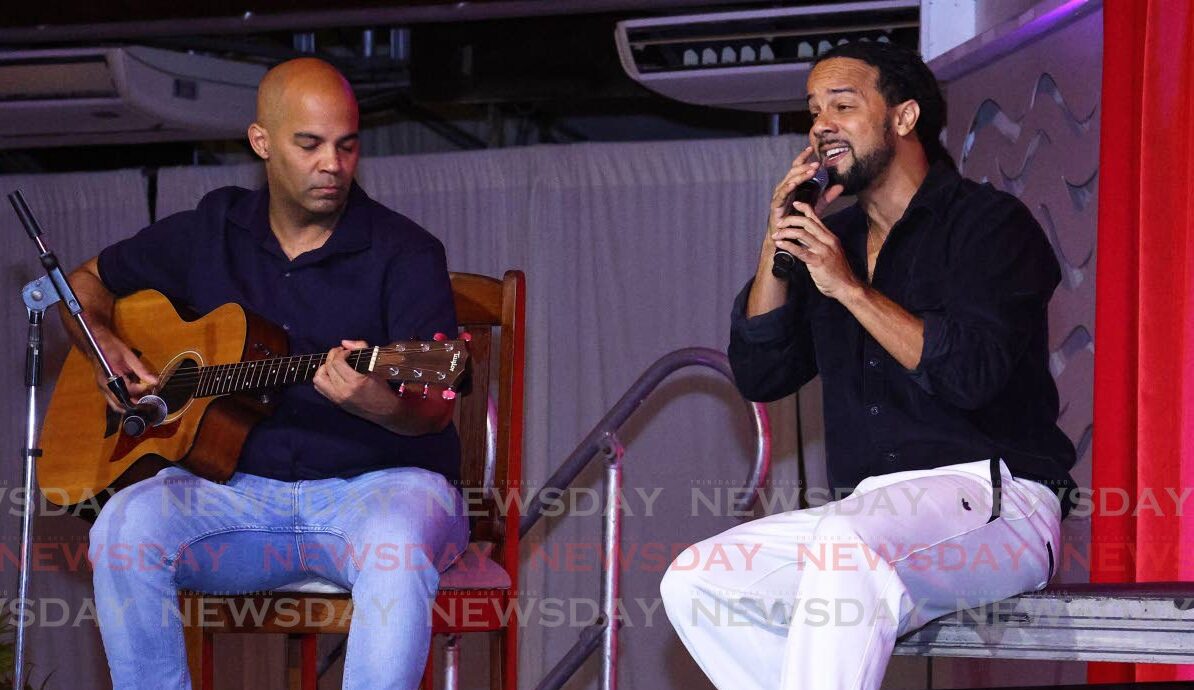
    The ceremony culminated with musical tributes from her brothers, soca artists Kees and Jon Dieffenthaller, who honored their sister’s memory through song. Attendees left with renewed inspiration from Dieffenthaller’s mantra: ‘Don’t work for the sake of working—do the things that bring you joy and passion.’