标签: Trinidad and Tobago

特立尼达和多巴哥

  • Tobago East MP say US radar ‘necessary’

    Tobago East MP say US radar ‘necessary’

    A significant national security discussion has emerged following the installation of advanced radar systems at Tobago’s ANR Robinson International Airport. Tobago East MP David Thomas has characterized the implementation as “necessary” security infrastructure, while opposition voices express deepening concerns about transparency and regional geopolitical implications.

    MP Thomas, drawing upon his four decades of fire service experience, emphasized that the radar constitutes standard protocol for international airport security upgrades. “Airports represent critically sensitive zones requiring sophisticated protection measures,” Thomas stated during a November 28 parliamentary briefing. He acknowledged public apprehension but attributed this to unfamiliarity with specialized security procedures rather than any unusual circumstances.

    The parliamentarian addressed specific concerns regarding Tobago House of Assembly Chief Secretary Farley Augustine’s reported lack of prior knowledge about the installation. Thomas suggested information dissemination occurs through appropriate channels and timing, assuring that necessary details would reach relevant parties when operational requirements permit.

    Regarding potential implications for regional tensions between the United States and Venezuela, Thomas provided unequivocal rejection: “Of course not.” He clarified that the technology primarily serves narcotics trafficking interdiction efforts, as previously confirmed by Prime Ministerial statements. Thomas emphasized that certain national security particulars must remain classified to maintain operational effectiveness.

    Conversely, Opposition MP Stuart Young articulated “serious concerns” regarding the government’s transparency and geopolitical balancing act. Young referenced previous successful navigation of complex international relationships during the Trump administration, questioning why current leadership appears less forthcoming about military-grade equipment deployment.

    Young highlighted the particular sensitivity of Venezuela’s proximity as Trinidad and Tobago’s closest neighbor, noting the visible Venezuelan coastline from local ports. He expressed apprehension about energy infrastructure vulnerability, specifically mentioning oil platforms situated approximately 60 miles offshore.

    The opposition parliamentarian called for immediate transparency from Prime Minister Rowley and Defense Minister Wayne Sturge regarding the radar’s strategic purpose and operational parameters. Young emphasized that while the United States remains a crucial ally and trading partner, the government must maintain careful diplomatic equilibrium with neighboring nations.

    Both political representatives agree on the critical importance of national security while diverging significantly on implementation transparency and communication protocols. The development underscores the complex intersection of airport security modernization, regional geopolitics, and public accountability in Caribbean international relations.

  • Women Warriors confident of strong Concacaf W Qualifiers start

    Women Warriors confident of strong Concacaf W Qualifiers start

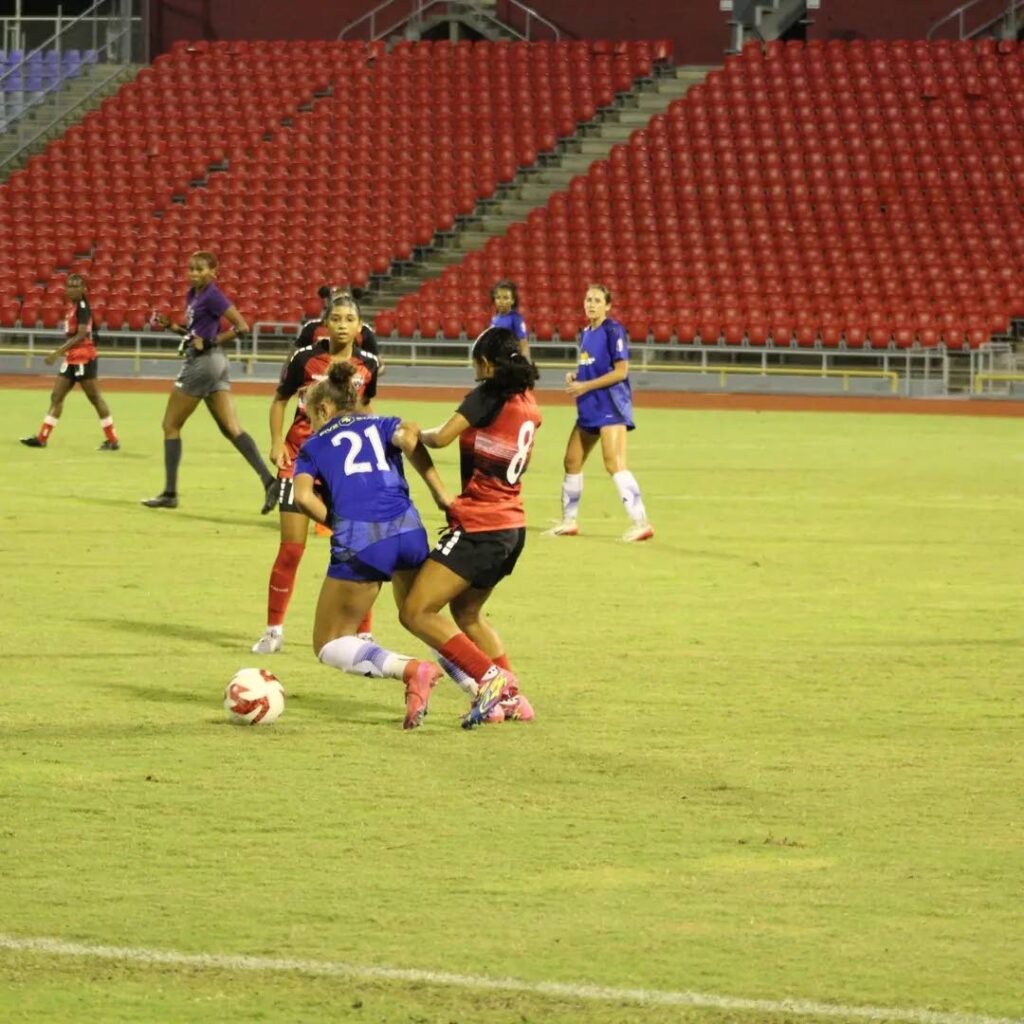
    A revitalized Trinidad and Tobago senior women’s football squad embarks on their CONCACAF Women’s Qualifiers campaign with unwavering confidence, targeting a victorious start against Barbados this Sunday at the Kensington Oval in Bridgetown.

    Under the guidance of newly appointed head coach Damian Briggs, the 23-member contingent arrives in Barbados on November 29 for final preparations. The team represents a strategic fusion of seasoned international veterans and promising new talent, all united in their quest for a positive result. Veteran striker Kennya ‘Yaya’ Cordner captains the squad, which features experienced players like midfielders Asha James (Defence Force) and Marie-Frances Serrant (Neom FC, Saudi Arabia), alongside newcomers poised for their international debut.

    Coach Briggs, who assumed leadership just two months ago, expressed strong belief in his team’s capabilities following an intensive pre-tournament camp. ‘Everyone’s buzzing with the belief that we can secure three points, or at minimum one. We’re confident that if we perform to our full potential, we’ll achieve a positive outcome,’ Briggs stated during final preparations at the TTFA technical centre in Couva.

    The squad composition reflects a deliberate recruitment strategy combining local TT Pro League standouts and overseas-based talents. Notable inclusions feature goalkeeper Akyla Walcott (Wheeling University), defender Cicely Spencer Wickham (Niagara University), and forward Gabrielle Williams (Sutton), among other international prospects identified through TTFA’s expanded scouting network.

    Briggs emphasized the importance of this recruitment approach: ‘To compete with the best teams, we must be hand-in-hand with recruitment efforts.’ He specifically credited TTFA’s director of women’s football Jinelle James and overseas contributors for their role in talent identification.

    While the team suffered a 4-1 friendly defeat to Jamaica in October during Briggs’ early tenure, the coach reframed this result as a valuable assessment tool rather than a setback. The match provided crucial insights into necessary tactical adjustments and team development areas. According to Briggs, the subsequent month has seen significant progression in both team chemistry and tactical understanding.

    The upcoming match against Barbados marks the first of three Group B qualifiers, with subsequent away fixtures against Honduras (March 4) and a home match against El Salvador (April 17). The group winner will advance to the CONCACAF W Championship, serving as the gateway to qualification for both the 2027 FIFA Women’s World Cup and the 2028 Olympic Games.

  • Maduro denounces US threat to close Venezuelan airspace

    Maduro denounces US threat to close Venezuelan airspace

    Venezuela’s government has issued a forceful condemnation of what it characterizes as a “colonialist threat” against its national sovereignty, denouncing recent statements from the United States as an illegal and unjustified aggression. The administration of President Nicolás Maduro released an official statement on November 29th vehemently rejecting a social media message disseminated by US President Donald Trump earlier that day.

    The Venezuelan government accused Trump of attempting to “extraterritorially apply the illegitimate jurisdiction of the US in Venezuela” through what it described as an unprecedented effort to issue commands regarding Venezuelan airspace. The statement characterized this as a hostile, unilateral act incompatible with fundamental principles of International Law, representing part of a sustained policy of aggression with colonial ambitions toward Latin America and the Caribbean.

    Venezuela’s response specifically referenced Article 2, paragraph 4 of the United Nations Charter, asserting that Trump’s statements constitute an explicit threat of force that is clearly prohibited under international law. The controversy stems from Trump’s message on X (formerly Twitter) calling on all airlines, pilots, and traffickers to consider the airspace above and surrounding Venezuela “closed in its entirety.”

    The Venezuelan government emphasized its absolute sovereignty over national airspace under standards established by the International Civil Aviation Organization (ICAO) and the 1944 Chicago Convention, which explicitly recognizes each state’s exclusive authority over its territorial airspace. The Bolivarian government warned it would not accept orders, threats, or interference from any foreign power, stating that no external authority has the right to block or condition the use of Venezuelan airspace.

    In response to the escalating tensions, the US government has unilaterally suspended Venezuelan migrant flights that were regularly conducted as part of the Plan Vuelta a la Patria (Return to the Homeland Plan), which had previously facilitated 75 flights repatriating 13,956 Venezuelans.

    The diplomatic clash occurs amid increased US military presence in the region, with several airlines recently halting flights to Venezuela following warnings from US aviation authorities about “heightened military activity.” The US has characterized its military buildup as part of counter-narcotics operations, while Venezuelan officials consistently deny involvement in criminal activities and accuse the US of attempting to overthrow their government.

    President Maduro, speaking through his Telegram account on November 29th, reaffirmed Venezuela’s commitment to sovereignty, stating: “We have a glorious and unique history; we were free because we were united under a single command,” while expressing confidence that “the times of the Greater Homeland will return.”

  • The woman who chose her own mother

    The woman who chose her own mother

    In the tranquil village of Alensdale, Toco, 91-year-old Elsie London continues to operate her namesake café, a local institution known for its coconut drops, sweetbread, and bottled preserves. Five years after our initial encounter, Ms. London remains seated in her favorite chair, greeting visitors with characteristic warmth and occasional mischievous laughter.

    Despite scaling back her culinary activities, she continues weekend baking—producing cakes, bread, and kuchela mango that remain in high demand. Her infamous humor surfaced when discussing homemade wine, as she recounted a neighbor’s mock outrage about supplying sugarcane for her babash production: “He bawl out, ‘Ms. Elsie! I must bring cane for you to make that?’ He say dais jail!”

    Beneath the laughter lies profound emotional depth. Without prompting, London revealed a childhood trauma that has shaped her entire existence: “My mother, Kathy, give me away when I was six years old.” The recollection remains painfully vivid despite decades passing. Confronting her mother about the abandonment, young Elsie recognized what she believed to be “fake cry” before walking away with no possessions or plan.

    Her salvation came through neighbor Theresa, who immediately embraced the child despite already raising four biological children. Their exchange established a new foundation: “‘Where yuh going?’ I say, ‘Ah come home.’” Theresa’s practical concern—asking about meals and bathing—defined true motherhood for London: “You hear what a mother does ask if she care? That is a mother.”

    Theresa became London’s legitimate guardian, arranging schooling and eventually presiding over her marriage ceremonies. This adoption forged London’s fierce independence and perspective on relationships: “No man eh having me so! I had a mind of meh own.” She revealed having been married twice—to George Byron (deceased at 89) and another previously undisclosed spouse.

    Even at 91, London maintains sharp political awareness, analyzing US-Venezuela tensions through a fisherman’s lens: “A fishing boat doh have three engines.” Her wisdom reflects lived experience—interpreting politics with the same clarity developed through surviving childhood abandonment.

    Ultimately, Elsie London’s story transcends personal history to explore motherhood’s essence. Her resilience demonstrates how familial bonds are forged through choice rather than biology, embodied by Theresa’s simple declaration to a six-year-old: “Well, yuh home.”

  • Sturge: US radar to track drug drones

    Sturge: US radar to track drug drones

    Tobagonian authorities have publicly addressed the controversial installation of advanced US military radar technology at the ANR Robinson International Airport, asserting the system will serve exclusively for domestic security operations rather than offensive capabilities against neighboring nations.

    During a comprehensive media briefing in Calder Hall on November 29, Chief Secretary Farley Augustine and Defense Minister Wayne Sturge provided unprecedented details about the strategic partnership with United States forces. The officials revealed the radar system—identified as the AN/TPS-80 ground/air task-oriented radar (G/ATOR) manufactured by Northrop Grumman—represents a critical component in combating sophisticated transnational crime networks.

    Minister Sturge disclosed alarming intelligence regarding escalating aerial smuggling operations, noting a dramatic increase in unauthorized flights and drone activities transporting narcotics and firearms into Trinidad and Tobago. “The presence of US military assets in the southern Caribbean since late August has already produced measurable success in reducing maritime drug trafficking,” Sturge confirmed, indicating that criminal organizations have subsequently shifted to aerial smuggling routes.

    The defense minister emphasized the system’s technical capabilities for 360-degree surveillance, describing its critical role in detecting illegal aircraft, coordinating air defense operations, and supporting counter-trafficking initiatives. Both officials explicitly denied any possibility of Trinidadian territory being utilized for offensive operations against Venezuela or other nations, noting the United States possesses sufficient naval assets—including the USS Gerald Ford aircraft carrier—to conduct independent military operations without requiring Tobagonian support.

    Augustine acknowledged the complex geopolitical landscape, stating: “While Trinidad and Tobago cannot influence US presidential decisions, we maintain absolute sovereignty over how our territory is utilized. I will not endorse any installation designed for offensive operations against other nations.”

    In a demonstration of Tobago’s diplomatic neutrality, Augustine announced the simultaneous invitation of both US Chargé d’Affaires Jenifer Neidhart de Ortiz and Venezuelan Ambassador Álvaro Sánchez Cordero for upcoming Tobago Day celebrations. “This gesture underscores our commitment to peaceful coexistence with all nations,” Augustine affirmed. “We are not at war with anybody.”

    The briefing addressed previous transparency concerns regarding US military presence, with officials clarifying that marines remained beyond their scheduled departure to complete civil engineering projects and technical installations, all conducted under existing Status of Forces agreements originally established under former Prime Minister Keith Rowley.

  • Unions reject Elder’s comments, demand fair negotiations for all

    Unions reject Elder’s comments, demand fair negotiations for all

    Trinidad and Tobago’s labor movement has united in condemnation of Minister Clyde Elder’s controversial statements suggesting unions that accepted the previous administration’s 4% wage offer should not expect parity with the Public Services Association’s recently secured 10% increase. The Minister of Public Utilities’ remarks, made outside Parliament on November 28, have ignited fierce criticism from multiple trade organizations representing public sector workers.

    Prison Officers’ Association president Gerard Gordon denounced the comments as divisive and historically ignorant, revealing that many unions signed previous agreements under duress. ‘The Special Tribunal of the Industrial Court threatened to impose a ten-year judgment if matters proceeded fully,’ Gordon explained. ‘For small organizations, this coercive environment left little meaningful choice but to accept inadequate offers.’

    The Trinidad and Tobago Registered Nurses Association announced plans to restart negotiations dating back to 2014, with president Idi Stuart demanding clarification from Prime Minister Kamla Persad-Bissessar and Finance Minister Davendranath Tancoo on whether Elder’s position reflects official government policy. Stuart warned that linking wage settlements to political alignment would represent ‘the final nail in the coffin’ for collective bargaining.

    Communications Workers’ Union secretary general Joanne Ogeer highlighted the dangerous precedent of political loyalty influencing labor negotiations, noting that Elder himself had previously accepted a 5% settlement for TSTT workers who haven’t received increases since 2019. The Estate Police Association joined the chorus of disapproval, emphasizing that all state workers deserve equal consideration amid rising living costs, regardless of their union’s administrative decisions or political affiliations.

    The growing controversy threatens to undermine industrial peace, with multiple unions characterizing the minister’s stance as a betrayal of the government’s own manifesto commitments to fair wage policies for all public sector employees.

  • How men feel when paternity tests come back negative

    How men feel when paternity tests come back negative

    Two Trinidadian men have come forward with harrowing accounts of legal battles and emotional distress after discovering children they believed to be their biological offspring were not theirs genetically. Their stories emerge amid startling statistics from the Fathers’ Association of TT revealing one in three paternity tests administered by a local lab disproved biological fatherhood.

    Jervon Thompson, now 45, recounted how he enthusiastically signed his ‘son’s’ birth certificate in his early twenties despite the mother’s objections. For seven years, he fulfilled paternal duties until their separation triggered court-ordered maintenance payments. When Thompson later arranged direct payments outside court systems, an arrest warrant was issued for non-payment through official channels. His wife’s intuition eventually prompted a paternity test that revealed zero biological connection. Despite this, Thompson continued caring for the now-24-year-old man he still considers his son, though he endured years of legal battles totaling $35,000 in alleged maintenance debt before the case was dismissed.

    Simon Harry’s ordeal began in 2011 when he temporarily housed a pregnant coworker’s relative. Suspecting non-paternity from the outset, his requests for testing were denied. Eleven years later, he discovered newspaper notices seeking his whereabouts for maintenance claims filed by the child’s grandmother. Court proceedings resulted in a $50,000 maintenance order for a child he had never met. After coincidentally meeting the now-23-year-old woman believed to be his daughter, genetic testing confirmed his longstanding suspicions. Harry now fights to dismiss accumulated debts and arrest warrants, noting the profound emotional impact on all involved.

    Both cases highlight systemic issues in Trinidad’s family court systems, where magistrates often presume male guilt in maintenance cases. The men described being treated as ‘deadbeat dads’ despite evidence of deception, with Harry noting the ordeal destroyed multiple relationships including his marriage. Thompson emphasized the enduring parental bond despite biological reality: ‘He’s not mine – but between me and him, we don’t study that.’

    The mothers’ roles differed significantly—Thompson’s accuser actively pursued payments despite knowing the truth, while Harry’s case involved a grandmother pursuing claims without the biological mother’s knowledge. Both men advocate for mandatory paternity testing in maintenance cases to prevent similar injustices.

  • San Juan East Side secures first Carnival 2026 title with Single Pan victory

    San Juan East Side secures first Carnival 2026 title with Single Pan victory

    In an electrifying display of musical excellence, San Juan East Side Symphony has secured its unprecedented ninth victory in the Single Pan Panorama competition. The triumphant moment unfolded in the early hours of November 30 at Port of Spain’s iconic Queen’s Park Savannah, marking the first major championship of Carnival 2026.

    The defending champions, performing in the penultimate position of the 25-band lineup, delivered a masterful rendition of Machel Montano’s ‘Jumbie’ arranged by the renowned Duvone Stewart. Their performance earned a commanding 285 points from the judges after six hours of continuous musical performances that began the previous evening.

    La Creole Pan Groove from Diego Martin mounted a formidable challenge, finishing a mere three points behind with 282 points. Their arrangement of the late Ken ‘Professor’ Philmore’s 1990 composition ‘Pan By Storm’, arranged by Dejean Cain and vocalized by Keith ‘Designer’ Prescott, captivated the audience during their position 20 performance.

    San Juan Chord Masters Steel Orchestra claimed third position with 280 points for their interpretation of Montano’s ‘Showdown (Band meet Band)’ arranged by Andre White. Tobago’s Metro Stars Steel Orchestra secured fourth place with 277 points despite bringing composer Akhenaton ‘Yung Bredda’ Lewis to the stage for their performance of ‘Kettle Pot’.

    The competition featured notable achievements including a fifth-place tie between New Age Trendsetters and Hope Pan Groovers, both scoring 274 points. Protective service bands demonstrated strong showings with Trinidad and Tobago Prisons Service Steel Orchestra taking seventh place (273 points) and TT Police Steel Orchestra securing eighth (270 points). The event concluded with a ninth-place tie between Epic Koskeros Steel Orchestra and D’Original Woodbrook Modernaires Steel Orchestra at 269 points each.

  • Maps of the mind – Adeline Gregoire’s art explores Caribbean movement

    Maps of the mind – Adeline Gregoire’s art explores Caribbean movement

    Visual artist Adeline Gregoire has launched her debut solo exhibition, “Vanishing Lines/Lignes de Fuite,” at Loftt Gallery in Woodbrook, presenting an innovative collection that reimagines Caribbean landscapes through abstract cartography. The exhibition, which opened November 15 and runs through November 30, represents a significant departure for Gregoire, who has built her career primarily as a curator and interpreter of others’ work until now.

    Gregoire describes the collection as “different types of maps, cartographies of ‘the islands’” that explore profound questions of “history, movement and survival.” Rather than presenting literal geographical representations, her works serve as conceptual mappings that layer references to memory, migration, and colonial histories within abstracted Caribbean landscapes.

    The French portion of the exhibition’s title, “Lignes de Fuite,” translates to “lines of flight”—a concept Gregoire employs to examine both physical and metaphorical escape routes. She draws direct parallels between historical marronnage (the escape of enslaved people during colonial times) and contemporary experiences of migration, displacement, and the pursuit of self-determination.

    “So many of us are the direct descendants of our maroon ancestors,” Gregoire observes. “And so many of us are not free. We are the runaways of our present time.”

    Her artistic process involves innovative techniques including ripping materials, distressing paper, exposing works to the elements, compression, layering, erasing, and scraping—methods that physically echo the themes of erosion, memory, and transformation explored in the content. The resulting works feature richly textured, tactile surfaces that invite both visual and conceptual engagement.

    Notable pieces include “Somewhere in Between, Nou La,” which Gregoire describes as “a sort of three-dimensional landscape where you’re supposed to see mountains, coastline and colonial histories all at once,” and “Geographies,” which incorporates thread to suggest connections across spaces divided by man-made borders.

    The exhibition benefits from the curatorial expertise of Célia Potiron, a Martinique-born writer and curator based in Paris whose background in Caribbean literature and postcolonial research adds significant depth to the presentation. Gregoire emphasizes the value of this collaboration, noting that Potiron’s “disinterested perspective helped situate the exhibition within wider Caribbean and postcolonial contexts.”

    Visitor response has been overwhelmingly positive, with many attendees spending extended periods engaging with individual works and participating in dialogues about their interpretations. Gregoire has enhanced the gallery experience with a curated soundtrack that adds another sensory layer to the exhibition.

    While the current exhibition concludes on November 30, Gregoire plans to continue developing these themes in her future work, describing this show as “a stage in an ongoing conversation” about Caribbean identity, history, and landscape.

  • Couva Carnival teams up with Joylanders for epic 2026 launch

    Couva Carnival teams up with Joylanders for epic 2026 launch

    COUVA, TRINIDAD – The Couva Carnival Committee (CCC) has announced a strategic partnership with former Panorama medium band champions Couva Joylanders Steel Orchestra to inaugurate the 2026 Carnival season with enhanced cultural programming. The official launch event is scheduled for Saturday, December 6, at 4 PM at the Couva Joylanders panyard on Railway Road, offering free admission to the public.

    This collaboration signifies a deliberate effort to integrate the steelpan—Trinidad and Tobago’s national instrument—more deeply into Central Trinidad’s Carnival traditions. CCC Chairman Ramchand Rajbal Maraj emphasized the cultural significance, stating, “Couva Joylanders has established an outstanding reputation for excellence. Since pan represents a fundamental pillar of Carnival, we believed it essential for them to assume a more substantial role in our celebrations.”

    Richard Gill, Executive Manager of Couva Joylanders, welcomed the initiative as a mutually beneficial development. “Our members are enthusiastic about collaborating with Couva Carnival to create additional platforms for pan enthusiasts to appreciate this art form. Beyond the launch, we plan to perform at multiple events throughout the season,” Gill confirmed. The steelband, which secured the Panorama medium band championship title in 2020, will headline the December launch alongside former National Calypso Monarch Terri Lyons, with additional performances by artists including Wacka Man and Johnny Ramnarine.

    The committee extends an invitation to mas camp leaders and J’ouvert bands to exhibit costume designs and sketches for the 2026 season during the launch event, fostering an immersive Carnival atmosphere. Chairman Maraj promised that the 2026 celebrations would surpass previous years in spectacle and energy, though he acknowledged significant financial challenges. “While we receive annual funding from the National Carnival Commission, it remains insufficient to cover our complete budget. We consequently rely heavily on the generosity of both public and private sector partners,” Maraj disclosed.

    Notably, the 2026 Carnival schedule features an expanded roster of events, including the Miss Central Trinidad Queen Pageant screening on January 3, calypso competitions on January 11, and the main Carnival events from February 12-17. The pageant finals coinciding with Valentine’s Day on February 14 will reportedly feature special surprises for attendees.