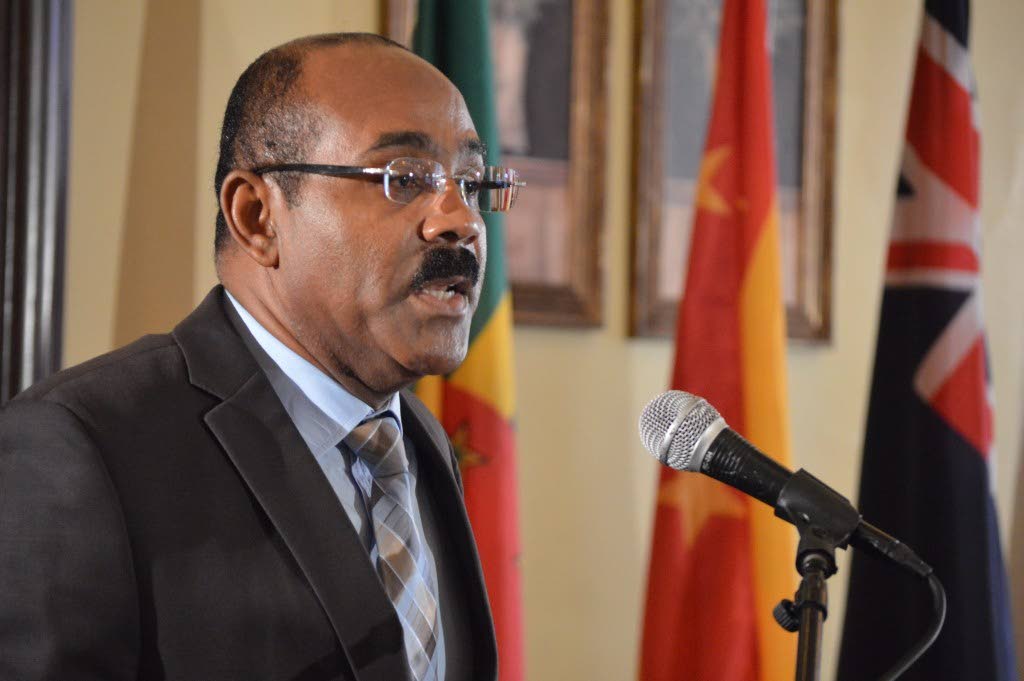
标签: Trinidad and Tobago

特立尼达和多巴哥

  • PM to PNM: Tell Trinidad and Tobago, how long was radar compromised?

    PM to PNM: Tell Trinidad and Tobago, how long was radar compromised?

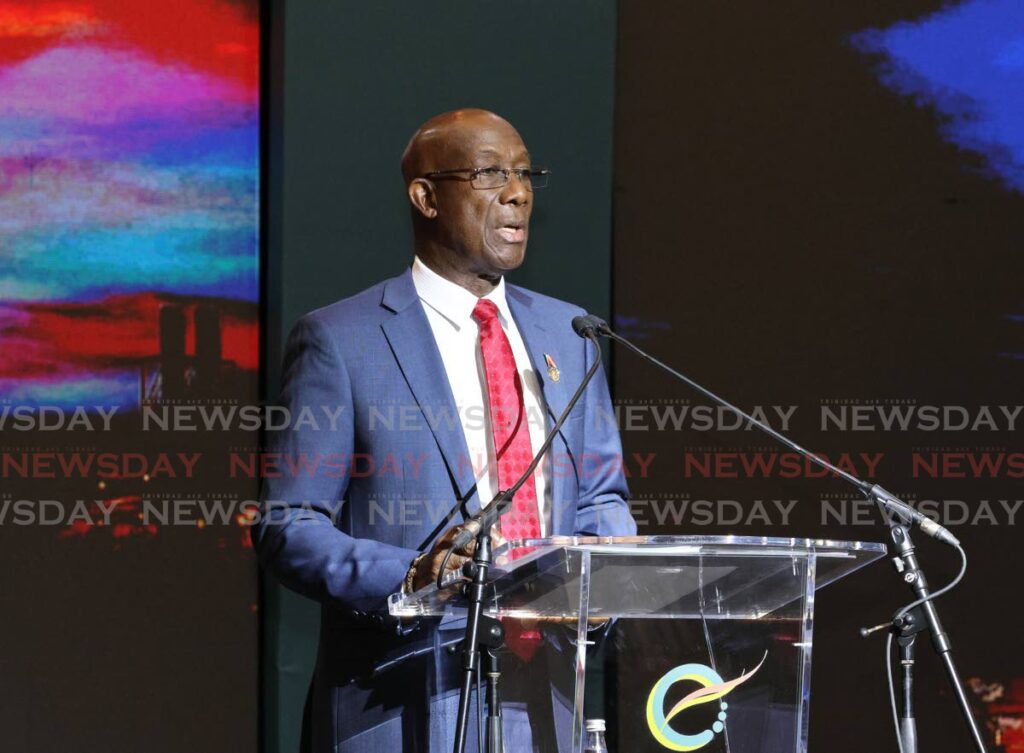
    Prime Minister Kamla Persad-Bissessar has launched a forceful counteroffensive against opposition criticism regarding the installation of U.S. radar systems, accusing the former People’s National Movement (PNM) government of deliberate security negligence that enabled criminal operations for over a decade.

    In a December 3rd statement, the Prime Minister reframed the national security debate by challenging the PNM to disclose how long they had been aware of Trinidad and Tobago’s compromised radar capabilities. Rather than addressing opposition concerns about sovereignty, Persad-Bissessar shifted focus to what she characterized as systemic security failures during PNM’s tenure.

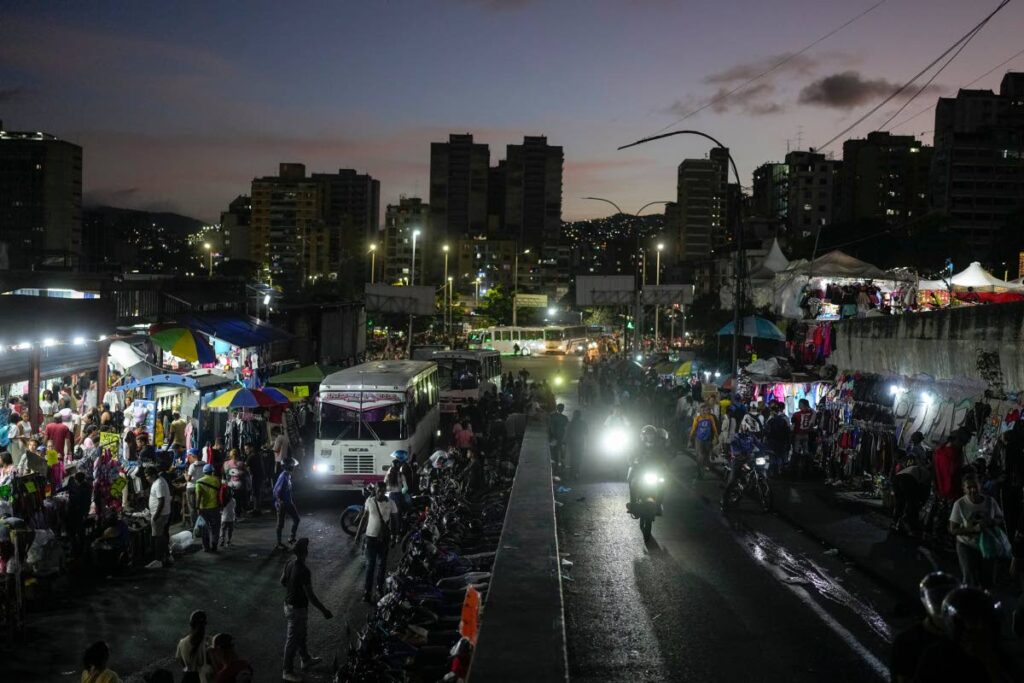
    The newly operational radar at ANR Robinson International Airport in Tobago represents a significant upgrade in surveillance capabilities, specifically targeting narcotics trafficking, arms smuggling, and unauthorized migrant movements from Venezuela. Another complementary system is scheduled for installation in Trinidad, creating comprehensive coverage previously unavailable to national security forces.

    Persad-Bissessar presented a damning chronology of PNM’s governance, linking the party’s period in power to what she described as ‘horrendous’ crime statistics: over 5,000 murders, widespread sexual violence, and rampant violent robberies. She attributed these security failures to deliberate tolerance of drug cartels and sanction-evading Venezuelan criminal networks.

    The Prime Minister’s challenge includes four specific demands: disclosure of when PNM first learned of radar system vulnerabilities, publication of names of businessmen with dual affiliations to PNM and drug cartels, explanation of why previous radars failed to detect illegal ship-to-ship oil transfers, and clarification whether current anti-American rhetoric stems from criminal pressure rather than national interest concerns.

    This confrontation occurs amid escalating tensions between the United States and Venezuela, with Washington accusing Caracas of narco-terrorism activities. The Prime Minister characterized PNM’s questions about the new radar as a ‘desperate’ attempt to obtain sensitive security information that could benefit criminal financiers associated with the opposition.

  • Dieffenthaller remembered as forever changing local TV/film

    Dieffenthaller remembered as forever changing local TV/film

    The Anchorage in Chaguaramas provided a poignant seaside backdrop on December 2nd as Trinidad’s creative community gathered to honor the life and legacy of acclaimed television and film producer Danielle Dieffenthaller. The memorial service, held eight days after her passing following a prolonged battle with renal failure, transformed into a vibrant celebration of her transformative impact on Caribbean storytelling.

    The evening unfolded with atmospheric soca melodies blending with heartfelt tributes from those whose lives she touched. Moko Jumbies—traditional stilt dancers—added cultural resonance to the gathering, symbolizing the spiritual elevation Dieffenthaller brought to Trinidad’s creative landscape.

    Antoinette Hagley, Dieffenthaller’s lifelong friend since their ‘tween years at St. Joseph’s Convent, Port of Spain, delivered moving reflections on her friend’s extraordinary character. She described the filmmaker as ‘a force with whom to reckon’ whose formative years in Africa expanded her vision of Trinidad’s beauty and potential. ‘She saw real excerpts of Trinidad in various things that she experienced even when she went to other countries,’ Hagley recounted.

    The memorial highlighted Dieffenthaller’s pioneering work on ‘Westwood Park,’ the groundbreaking television series she produced against significant financial constraints. Hagley shared anecdotes of their resourceful beginnings: ‘We did the pilot with no money. Danielle told me to use my convent accent and ask people to use their houses to shoot.’ Despite initial criticism about portraying bourgeois Trinidadian life, Dieffenthaller believed every story deserved telling and every social layer intersected beautifully.

    Media producer Georgia Popplewell contextualized Dieffenthaller’s dual legacy: her creative achievements and relentless advocacy for developing Trinidad’s self-sustaining film industry. ‘She turned out 100 episodes of Westwood Park and got them aired through the region, New York and London,’ Popplewell noted, describing the series as ‘one of the longest running and most successful indigenous television series ever produced in the English-speaking Caribbean.’

    The ceremony culminated with musical tributes from her brothers, soca artists Kees and Jon Dieffenthaller, who honored their sister’s memory through song. Attendees left with renewed inspiration from Dieffenthaller’s mantra: ‘Don’t work for the sake of working—do the things that bring you joy and passion.’

  • Couva Police Council deepens ties with central communities

    Couva Police Council deepens ties with central communities

    In a strategic move to fortify community relations, the Couva Police Station Community Council (CPSCC) has successfully orchestrated a youth football tournament that brought together young athletes from across central Trinidad. The event, held at Caldrac Grounds in California on November 30, served as both a sporting competition and a crime prevention initiative.

    Bishop Ezekiel Clarke, CPSCC president, emphasized the dual purpose of the sporting venture: ‘Our youth represent one of our primary focus groups. This tournament isn’t just about football—it’s about steering young people away from criminal pathways and nurturing them into exemplary citizens.’ Clarke shares leadership responsibilities with Inspector Khan of the Couva Police, both envisioning expanded volunteer services in the coming years.

    The CPSCC operates as an elected advisory body comprising both law enforcement officials and civilian representatives. Its mandate encompasses providing advisory support to police, organizing community enrichment programs, promoting culturally sensitive engagements, and supporting crime prevention efforts across multiple communities including Couva, Lisas Gardens, California, Dow Village, and several other regions.

    Golden Tigers Football Academy from Dow Village, California, dominated the competition under coach Edna St. Louis, securing championship titles in both Under-17 and Under-13 divisions. The academy’s Kern Pollard claimed Under-17 Most Valuable Player honors, while teammate Elijah Austin achieved a remarkable double victory in the Under-13 category, earning both MVP and Top Scorer awards.

    Organizers extended gratitude to the events committee, volunteers, sponsors, coaches, parents, and community residents whose collective efforts ensured the tournament’s resounding success. The event demonstrated how athletic competition can serve as a powerful vehicle for community building and youth development.

  • CGWTU wants clear timeline on agreed wage increases

    CGWTU wants clear timeline on agreed wage increases

    The Contractors and General Workers Trade Union (CGWTU) has issued a formal demand for immediate clarity and accountability regarding protracted delays in implementing wage increases and arrears for daily-rated workers at the San Fernando City Corporation. Union President General Ermine De Bique Meade characterized the ongoing postponements as completely unacceptable in a December 3rd statement.

    The dispute centers on collective agreements signed back on April 24th covering the periods 2014-2016 and 2017-2019. According to the union, the Chief Personnel Officer (CPO) provided firm assurances that new wage rates would be implemented by August with outstanding arrears settled before Christmas. Neither commitment has been fulfilled to date.

    The CPO’s explanations for the delay have evolved over time, initially citing administrative transition issues, then awaiting the national budget, and finally claiming no directive had been issued by the Finance Minister even after budget delivery. The union condemns these shifting justifications as a pattern of systematic delay and excuses that has left workers in financial limbo.

    Complicating matters further, the San Fernando City Corporation allegedly never received signed agreements or implementation instructions from the CPO’s office. The union itself had to provide these documents to the corporation’s CEO just four weeks ago.

    The situation highlights apparent disparities in treatment between worker groups. While the Public Services Association (PSA) secured a ten percent increase with expedited processing on December 2nd, CGWTU-represented workers continue waiting for resolutions dating back over a decade. President Meade emphasized this contrast, noting her union’s outstanding agreements significantly predate those of other labor groups currently negotiating for the 2020-2022 period.

    The union specifically referenced the Finance Minister’s own budget presentation pledge to ratify April-signed agreements for various public sector groups including both Port of Spain and San Fernando City Corporations. Workers now await concrete action matching these political assurances.

  • Same-day surgeries at Couva Hospital – SWRHA hiring more nurses

    Same-day surgeries at Couva Hospital – SWRHA hiring more nurses

    The South West Regional Health Authority (SWRHA) has initiated a strategic recruitment drive to bolster nursing staff at Couva Hospital and Multi-Training Facility, supporting the recent launch of same-day surgical services. This development marks a significant step in the phased reactivation of the healthcare institution.

    During Tuesday’s public board meeting at SAPA, SWRHA Chairman Anil Gosine confirmed that 40 nurses have already undergone interviews, with additional hires planned throughout the coming months. The initiative received financial backing from the Ministry of Health, which committed funding for the initial cohort of nursing professionals.

    Despite SWRHA’s substantial operational involvement – including commissioning work completed during 2014-2015 – Chairman Gosine clarified that the authority functions in a supportive capacity rather than assuming full management control. “South West has been doing much of the groundwork,” Gosine noted, “but the facility ultimately operates under the Ministry of Health’s direct supervision.”

    The current nursing contingent at Couva Hospital remains modest, with approximately 15 nurses stationed on-site. This expansion comes as same-day surgeries commenced on November 28, representing the initial phase of the hospital’s operational rollout.

    In parallel developments, SWRHA officials revealed they are evaluating the feasibility of integrating a scaled-down burns treatment service into the hospital’s surgical program. Dr. Anand Chattergoon, SWRHA Director of Health, explained the complexities of maintaining specialized burn care capabilities, citing Trinidad and Tobago’s average of just two severe burn cases annually.

    “Severe burns require specially trained doctors and nurses whom we currently lack,” Dr. Chattergoon stated. “Medical professionals with these specialized skills tend to seek opportunities elsewhere due to insufficient case volume to maintain their expertise.”

    The existing burns ward adequately handles superficial cases, while critical third-degree burn patients are transferred via airlift to Jackson Memorial Hospital in Miami, Florida. This protocol ensures patients receive optimal care despite local resource constraints.

    The conversation around burn services gained additional urgency due to proximity to petrochemical and heavy-industrial operations in Point Lisas, highlighting the need for comprehensive emergency medical preparedness in the region.

  • High Court judge renews call for in-person trials, open justice

    High Court judge renews call for in-person trials, open justice

    In a landmark judicial declaration, Justice Frank Seepersad has established that Trinidad and Tobago’s judiciary will fully revert to in-person proceedings as the standard operating protocol. This decisive shift comes after the fourth postponement of a civil case originally scheduled for December 3 at the Waterfront Judicial Centre, highlighting systemic concerns with virtual litigation platforms.

    Justice Seepersad articulated profound reservations regarding witness credibility assessment, evidence integrity preservation, and the noticeable deterioration of legal advocacy in digital environments. The jurist emphasized that fact-intensive trials require physical presence for proper evaluation of nuanced testimonial cues—including subtle facial expressions, nervous mannerisms, and evasive behaviors—all of which become compromised through electronic mediation.

    Technical deficiencies present significant obstacles to justice administration, with frozen screens, audio dropouts, and undetected signal failures undermining accurate evidence documentation. These technological shortcomings frequently escape detection by judicial support officers during proceedings. Unlike criminal divisions utilizing court-marshal-supervised virtual access centers, civil divisions operate without equivalent controlled conditions.

    Remote settings introduce additional evidentiary concerns, as the judiciary cannot guarantee witness independence from off-camera prompting or assistance. This loss of procedural control jeopardizes testimony authenticity and creates unauthorized recording risks absent in physical courtrooms.

    The qualitative decline in legal advocacy represents another critical consideration. Lawyers demonstrate reduced dynamism and persuasiveness in virtual formats, where the essential human energy exchanged in physical settings becomes entirely lost. Witness testimony from domestic or professional environments—described as ‘busy spaces’ rarely conducive to legal solemnity—further compromises courtroom formality and focus.

    While Trinidad and Tobago remains among few jurisdictions continuing virtual trials post-pandemic, Chief Justice Ronnie Boodoosingh has prioritized reopening court facilities. The Port of Spain Magistrates’ Court exemplifies these challenges, remaining under repair with escalating costs four years after closure.

    Justice Seepersad reaffirmed commitment to open justice principles, noting that physical hearings enable public access without the approval processes that frequently result in denied virtual access. Media access links are systematically provided by judicial direction, contrasting with often-denied permission requests in virtual proceedings.

    The court will maintain virtual capabilities for procedural matters and case-management conferences, but evidentiary hearings and trials will require physical attendance. The adjourned civil matter has been rescheduled for April 2026, allowing transition to the new in-person litigation paradigm.

  • PNM warns Kamla to ‘cool it’ on rhetoric or face legal action

    PNM warns Kamla to ‘cool it’ on rhetoric or face legal action

    Trinidad and Tobago’s political climate has reached a boiling point as the opposition People’s National Movement (PNM) issued a stern warning to Prime Minister Kamla Persad-Bissessar to cease what they characterize as inflammatory rhetoric. The confrontation emerged following the Prime Minister’s social media statements and subsequent press release alleging PNM connections to narcotics trafficking networks and pedophilia rings.

    Opposition Leader Pennelope Beckles, addressing journalists on December 3, denounced the allegations as baseless distractions from government shortcomings. ‘These are exceptionally serious claims that demand substantiation,’ Beckles stated. ‘I am formally exploring all legal avenues, including defamation proceedings, should these accusations persist without evidence.’

    The political leader refuted suggestions of anti-American sentiment within the PNM, highlighting instead the United National Congress’s historical opposition to critical crime legislation. ‘Records show the UNC repeatedly blocked anti-money laundering measures, Proceeds of Crime Act enhancements, mutual legal assistance frameworks, bail reform, and specialized court establishments,’ Beckles noted.

    Opposition Senator Dr. Amery Browne characterized the Prime Minister’s approach as ‘intellectual laziness’ with dangerous real-world consequences. Browne revealed that following previous criticisms of the administration, he and his family received direct death threats from UNC supporters. A 48-year-old Diego Martin man now faces multiple criminal charges related to these threats.

    ‘We are witnessing the emergence of politics fueled by hatred and division,’ Browne expressed. ‘When leadership employs reckless language without factual foundation, it inevitably influences impressionable supporters toward potentially harmful actions.’

    Diego Martin North/East MP Colm Imbert joined the call for moderated discourse, referencing the Prime Minister’s previous parliamentary threat to ‘cuff him down’ and recent claims by Attorney General John Jeremie regarding opposition firearms. ‘The overwhelming majority of PNM parliamentarians do not possess firearms,’ Imbert countered. ‘Such statements unnecessarily endanger public figures and should be immediately retracted.’

    The opposition collectively urged governmental focus on substantive crime prevention rather than what they deem unsubstantiated character attacks, signaling escalating tensions in Trinidad and Tobago’s political landscape.

  • Imbert: Expired drugs is a ‘big problem’ in Trinidad and Tobago

    Imbert: Expired drugs is a ‘big problem’ in Trinidad and Tobago

    Opposition Parliament Member Colm Imbert has characterized the proliferation of expired pharmaceuticals within Trinidad and Tobago’s healthcare system as a substantial national concern. The revelation emerged during the opposition’s weekly media briefing on December 3rd, following Newsday’s report detailing parliamentary committee discoveries of $80 million worth of medicines deteriorating into uselessness over a decade in Ministry of Health storage facilities.

    Imbert, drawing upon his tenure as health minister between 2001-2003, emphasized that this wastage problem demands comprehensive investigation. He identified a structural challenge facing smaller nations: international pharmaceutical suppliers allegedly compel local agents to accept excessively large shipments that exceed practical consumption needs, making expiration inevitable.

    PNM political leader Penelope Beckles corroborated the systemic nature of these challenges after consulting former health minister Terrence Deyalsingh (2015-2025). Beckles noted the issues extend beyond expiration dates to include ongoing global debates about drug quality disparities affecting smaller island nations.

    Imbert further alleged the current administration plans to radically alter pharmaceutical procurement by abandoning local suppliers in favor of importing generic drugs from India through government-selected agents. He claimed, without disclosing sources, that traditional suppliers are being deliberately starved of payments under the pretext of being PNM-aligned, potentially redirecting the nation’s $1 billion pharmaceutical expenditure through new import channels.

  • Health ministry to expand efforts to combat HIV

    Health ministry to expand efforts to combat HIV

    The Trinidad and Tobago Ministry of Health has unveiled an ambitious expansion of its national HIV/AIDS response strategy, committing to significantly enhance prevention, testing, and treatment services throughout 2026. This renewed effort aligns with global World AIDS Day 2025 observances and the international theme of overcoming disruption through transformative approaches to epidemic control.

    Health Minister Dr. Lackram Bodoe confirmed the ministry will conduct a comprehensive review of current policies regarding pre-exposure prophylaxis (PrEP) and doxycycline prophylaxis (DoxyPEP) accessibility. These pharmaceutical interventions represent cutting-edge biomedical prevention methods, with CDC research indicating PrEP reduces sexual HIV transmission risk by approximately 99% when properly administered.

    The strategic enhancement will prioritize several key initiatives: broadening community-based testing capabilities, increasing availability of self-testing kits, ensuring immediate treatment initiation protocols, strengthening patient retention systems, and launching a substantial national campaign against stigma and discrimination. These measures will be complemented by targeted interventions for vulnerable demographics and expanded psychosocial support services for HIV-positive individuals.

    Trinidad and Tobago has demonstrated considerable progress in epidemic control, with most diagnosed individuals currently receiving antiretroviral therapy (ART) through the Medical Research Foundation TT and other clinical facilities. A significant majority have achieved viral suppression, effectively preventing disease progression and interrupting transmission chains.

    Recent innovations include the official introduction of HIV self-testing kits enabling private home testing and the establishment of specialized linkage teams featuring peer navigators, social workers, and psychological support staff to ensure continuous care engagement. The nation maintains free ART access and viral load monitoring services across all treatment centers.

    Prevention initiatives have intensified through expanded outreach targeting youth populations, high-risk groups, and ongoing efforts to eliminate mother-to-child transmission. The ministry has additionally amplified public education campaigns and workplace programs responding to reports of persistent stigma and discrimination.

    Health authorities have issued a rallying cry for collaborative action, urging citizens, community leaders, and stakeholders to unite in creating a stigma-free society where all individuals can access healthcare services with dignity and respect. The ministry reaffirmed its unwavering commitment to eliminating AIDS as a public health threat by 2030 through evidence-based interventions and strengthened civil society partnerships.

  • Nipdec, PSA settle on 5% salary increase

    Nipdec, PSA settle on 5% salary increase

    In a significant development for labor relations in Trinidad and Tobago, the National Insurance Property Development Company Ltd (Nipdec) has successfully concluded negotiations with the Public Services Association (PSA), resolving a longstanding collective agreement for permanent monthly paid workers. The settlement, finalized between PSA president Felisha Thomas and Nipdec chairman Vijay Gosyne, addresses compensation dating back to the period spanning January 1, 2014, through December 31, 2016.

    The breakthrough agreement implements a five per cent wage increase and provides accumulated back pay totaling $5,613,535.69. This financial package will benefit 57 individuals comprising both current and former personnel—specifically 28 existing employees and 29 who have since departed the organization.

    Nipdec’s leadership emphasized the agreement’s broader significance beyond financial compensation, characterizing it as a testament to the workforce’s dedication and a reinforcement of collaborative industrial relations. The company acknowledged the PSA’s constructive engagement throughout negotiation proceedings, highlighting the settlement as a milestone in strengthening institutional relationships with both employees and their union representation.

    The resolution aligns with government commitments to workforce welfare while supporting Nipdec’s strategic vision to position itself as the region’s premier project and procurement management agency. Company officials reiterated their commitment to maintaining principles of fairness, transparency, and respect in all employee-related matters, suggesting this agreement establishes a positive framework for future labor relations.