标签: Trinidad and Tobago

特立尼达和多巴哥

  • Owners hit 400% rise in gaming tax, warn: Bars face closure

    Owners hit 400% rise in gaming tax, warn: Bars face closure

    Trinidad and Tobago’s hospitality sector is facing what industry leaders are calling a “second pandemic” as the government proposes a massive 400% tax increase on amusement gaming machines. The planned hike would raise the annual tax per machine from $6,000 to $25,000, potentially devastating the country’s bar and restaurant industry.

    The TT Coalition of Bars and Restaurants (TTCOBAR) and the Barkeepers Owners/Operators Association of TT (BOATT) have issued a joint warning that this drastic measure could force widespread permanent closures of small and medium-sized establishments. According to industry representatives, many bars rely on gaming revenue to offset operational costs, pay staff salaries, and remain financially viable amid rising expenses for beverages and other commodities.

    BOATT president Satesh Moonessar revealed that the associations had previously met with government officials to discuss potentially reducing gaming taxes and implementing quarterly payment options. “We were under the assumption these requests were being considered,” Moonessar stated, expressing surprise that the government was instead moving forward with a substantial tax increase.

    The economic impact calculations are staggering: a modest bar operating ten gaming machines would see its annual tax liability surge from $60,000 to $250,000—an increase that often exceeds the net profit of many small establishments. Industry representatives estimate approximately 60% of the country’s 2,500 bars depend on gaming machine revenue to remain operational.

    Beyond the direct impact on bars, the associations warn of broader economic consequences including job losses, reduced tax revenue from various sources (VAT, NIS, PAYE, liquor licenses), and potential growth in illegal gaming operations. They emphasize that their position is not about defending gaming machines but about preserving jobs, businesses, and community gathering spaces.

    Both associations are now urging bar owners to contact their Members of Parliament, particularly those in government, to advocate for reconsideration and proper consultation before the proposed changes receive final parliamentary approval.

  • Government secrets

    Government secrets

    In a spirited defense of Trinidad and Tobago’s leadership, citizen Patricia Blades has voiced strong support for Prime Minister Kamla Persad-Bissessar and her United National Congress (UNC) administration through a published letter to Newsday. The correspondence comes as the government navigates complex governance decisions following their April electoral victory.

    The letter emphasizes the extraordinary challenges facing the administration in what the author describes as ‘a world gone mad,’ acknowledging the difficult choices required in the current global climate. Blades specifically addresses the proliferation of unverified information circulating through social media platforms, warning that even if government secrets were publicly exposed, the accuracy of such information would remain questionable.

    Blades characterizes the UNC’s position as facing a ‘damned if you do, damned if you don’t’ scenario, noting criticism from various sectors including Tobago representatives, opposition parties, and economic experts. Despite these multifaceted challenges, the author asserts that only Prime Minister Persad-Bissessar possesses the legitimate authority to act on behalf of the nation.

    The letter concludes with a personal appeal for divine support, expressing prayers for the Prime Minister to obtain both the strength and capability to properly execute her duties during this demanding period of national leadership.

  • Where’s theopen, honestengagement?

    Where’s theopen, honestengagement?

    Seven months into its administration, the current government faces mounting criticism for its failure to establish transparent governance practices and meaningful citizen engagement. Prominent voices in civil society are raising fundamental concerns about the administration’s communication style and decision-making processes, which many characterize as opaque, unilateral, and disruptive.

    A particularly troubling example cited involves the Tobago radar controversy, where the Prime Minister’s inconsistent explanations regarding national security matters have eroded public trust. The frequent shifts in official narratives have left citizens questioning whether critical decisions are being guided by a coherent and responsible strategic framework.

    Simultaneously, the cultural sector is experiencing significant distress due to the abrupt implementation of noise-pollution regulations affecting major events, including Carnival festivities. With merely three months’ notice before implementation, event organizers and businesses face unnecessary logistical and financial pressure. Stakeholders argue that any policy changes of this magnitude should have initiated multi-year planning discussions, ideally with implementation targeted for 2027 rather than immediate enforcement.

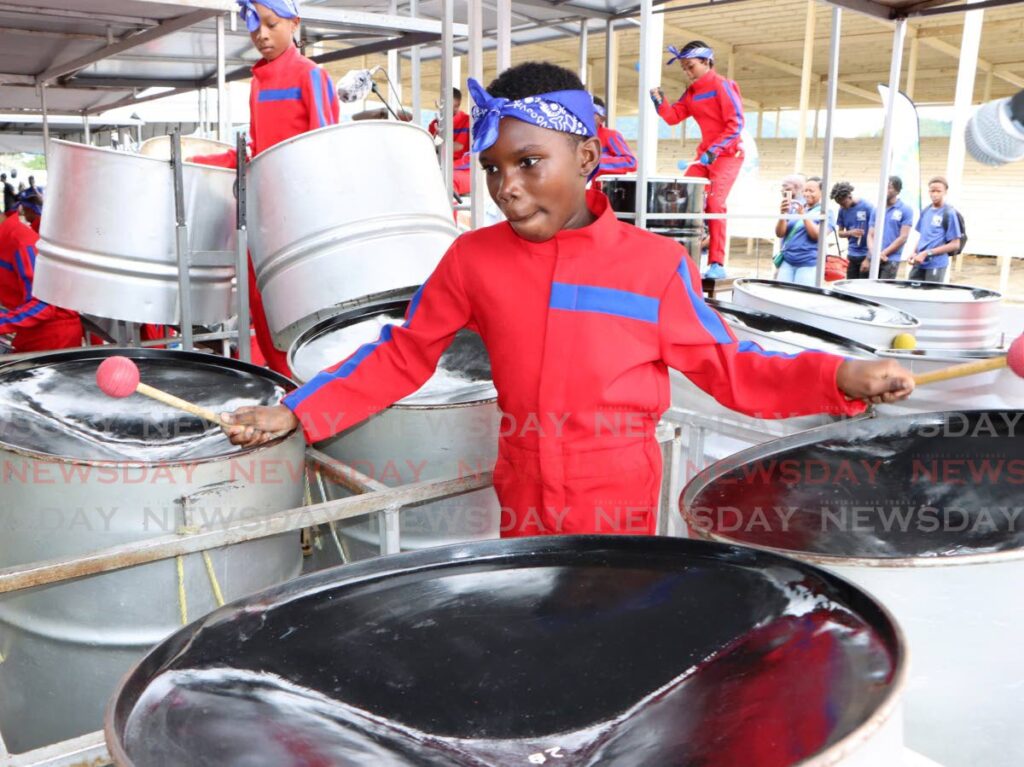
    The steelpan community represents another casualty of this governance approach. The unexpected withdrawal of state sponsorship from several steelbands—executed without prior consultation or warning—has jeopardized an essential component of the nation’s cultural identity. Even Pan Trinbago’s president, Beverly Ramsey-Moore, has publicly expressed dismay at the poorly timed and unilateral nature of this decision, noting that explanations only followed after the fact.

    These patterns demonstrate a governing methodology that prioritizes announcement over consultation, creating an environment where citizens feel treated as obstacles rather than partners in national development. As the administration approaches its eighth month in power, there remains a conspicuous absence of the clear communication and strategic direction that form the foundation of effective governance. While advocates acknowledge that course correction remains possible, they emphasize that transparent dialogue, honest leadership, and genuine citizen partnership must become immediate priorities.

  • TTEC workers to return after helping Jamaica restore power

    TTEC workers to return after helping Jamaica restore power

    PORT OF SPAIN – Following an extensive month-long deployment, members of Trinidad and Tobago Electricity Commission’s (TTEC) emergency response team are preparing to return home after significantly advancing power restoration efforts in hurricane-ravaged Jamaica. Utilities Minister Barry Padarath confirmed the anticipated December 10 return date pending final arrangements.

    The specialized contingent, which departed from Piarco International Airport on November 10, has been instrumental in recovering Jamaica’s electrical infrastructure devastated by Category 5 Hurricane Melissa. Their technical expertise and tireless efforts have yielded remarkable progress, with electricity restoration rates jumping from approximately 45% to 75% across the island nation.

    Minister Padarath revealed that prior to the team’s intervention, a staggering 55% of Jamaica remained without power following the October 28 catastrophe that claimed over 30 lives and prompted Prime Minister Andrew Holness to declare a national disaster zone. The TTEC team’s dedicated work has effectively reduced the outage percentage by approximately 35 points, bringing substantial relief to affected communities.

    The Jamaican government has expressed profound appreciation for the regional solidarity demonstrated through this crisis response. High-level communications between Prime Ministers Holness and Kamla Persad-Bissessar have underscored the continued commitment to bilateral support. Padarath emphasized that dialogue remains ongoing regarding additional assistance requirements before the team’s scheduled departure.

    The returning linemen and technical personnel will enjoy well-deserved reunions with their families ahead of the holiday season. Minister Padarath extended the nation’s gratitude, acknowledging that ‘no amount of compensation can truly reflect their work under such difficult circumstances.’ The successful mission stands as a testament to Caribbean cooperation in times of crisis, reinforcing the region’s collective resilience against natural disasters.

  • House heats up

    House heats up

    The Trinidad and Tobago Parliament demonstrates unprecedented legislative momentum as both the House of Representatives and Senate convene simultaneously for the second time within a week. This unusual frequency of concurrent sessions at the recently renovated Red House signals the Kamla Persad-Bissessar administration’s determined push to advance its comprehensive governance agenda.

    Despite government whip Barry Padarath and opposition whip Marvin Gonzales downplaying the significance of dual chamber meetings, statistical evidence reveals remarkable parliamentary activity. The current administration has conducted 27 legislative sessions across both chambers during its initial seven months—nearly matching the entire output of the first Keith Rowley administration during the same period. This accelerated pace becomes particularly notable considering the August recess that interrupted the government’s early months.

    Today’s parliamentary agenda features critical deliberations on the Finance Bill (distinct from the Appropriation Bill) and proposed amendments to the Virtual Assets and Virtual Assets Service Providers Bill. Simultaneously, senators continue examining the controversial Home Invasion (Self-Defence and Defence of Property) Bill, which cleared the House on November 26 with 23 supporting votes against 10 objections.

    The self-defence legislation has generated particular scrutiny after the Attorney General’s Ministry removed initial special majority requirements, raising concerns among lawmakers about potential dilution of the bill’s original intent. This development represents another crucial test of the government’s ability to fulfill campaign promises, following June’s successful passage of legislation revoking Stuart Young’s prime ministerial pension and October’s constitutional right to speedy trial declaration.

    The administration’s expansive legislative program has already produced significant reforms including abolition of the TTRA, modifications to the Children’s Life Fund, citizenship law revisions, FATF compliance measures, and enhanced powers for Justice of the Peace officials. However, opposition figures like Colm Imbert have expressed concerns about inadequate review periods for proposed legislation.

    While parliamentarians may consider dual sessions routine, citizens increasingly expect tangible results from their elected representatives, transforming these proceedings from ordinary parliamentary business into a critical measure of governmental effectiveness and promise-keeping.

  • Shai Hope, Kemar Roach shine, but Black Caps in control as 1st Test reaches climax

    Shai Hope, Kemar Roach shine, but Black Caps in control as 1st Test reaches climax

    In a display of resilience and skill, West Indies batsman Shai Hope crafted a magnificent fourth Test century while veteran bowler Kemar Roach achieved his 12th five-wicket haul during the fourth day of the opening Test against New Zealand at Hagley Oval, Christchurch on December 5.

    The Caribbean team faces a formidable challenge heading into the final day’s play, requiring 319 additional runs to achieve what would be a record-breaking victory against New Zealand’s imposing target of 531 runs. Despite the daunting task, West Indies concluded day four with renewed optimism thanks to an unbroken 140-run partnership between Hope (116 not out from 183 deliveries) and Justin Greaves (55 not out from 143 balls).

    This crucial fifth-wicket stand rescued the visitors from a precarious position of 72 for four, elevating them to 212 for four at stumps. Hope’s commanding performance featured 15 boundaries and one six, demonstrating exceptional composure throughout his innings. Greaves provided steadfast support with six boundaries in his measured approach.

    New Zealand’s victory pursuit encountered potential complications as pace bowler Nathan Smith was ruled out of further participation following his absence from batting in the second innings. Additionally, frontline seamer Matt Henry underwent hospital scans for a calf strain after delivering 11 overs on day four.

    Earlier in the day, New Zealand declared their second innings at 466 for eight, with Roach’s impressive figures of five for 78 highlighting the bowling attack. The 37-year-old’s achievement moves him to 291 Test wickets, marking a particularly significant accomplishment after being omitted from recent series against Australia and India.

    The final day’s play, scheduled for 6 pm TT time on December 5, will determine whether West Indies can complete an extraordinary comeback or if New Zealand will secure the victory.

  • Yung Bredda releases Coulda, set for SoDa event on December 6

    Yung Bredda releases Coulda, set for SoDa event on December 6

    Akhenaton ‘Yung Bredda’ Lewis has unleashed a transformative soca single titled ‘Coulda,’ delivering a potent message of personal accountability and moral clarity just as the Caribbean prepares for Christmas and Carnival celebrations. The track emerges during heightened geopolitical tensions between the US and Venezuela, offering listeners an uplifting alternative to current anxieties through its inspirational themes of choosing integrity over temptation.

    The artist describes ‘Coulda’ as profoundly autobiographical, reflecting his personal journey and the universal challenges faced by youth navigating difficult environments. ‘This narrative resonates deeply with those confronting daily choices that test their core values and upbringing,’ Lewis explained, emphasizing the song’s relevance for young people from disadvantaged backgrounds.

    Crafted by Juelio Nelson and recorded at Optimus Productions in San Fernando, the December 3rd release immediately ignited social media platforms, generating widespread discussion and overwhelmingly positive engagement. Its timing coincides with the launch of SoDa—an innovative cultural movement blending soca and dancehall music traditions.

    Yung Bredda is scheduled to debut ‘Coulda’ live at SoDa’s inaugural event on December 6th at Fuzion Nightclub in St. Ann’s. The event promises an unprecedented fusion of musical styles, described by organizers as ‘the definitive platform to experience Yung Bredda’s repertoire while celebrating Caribbean cultural synergy.’

    Event coordinator Jerome Antoine clarified that SoDa represents not merely a musical genre but a cultural phenomenon: ‘We’re bridging decades of musical heritage through collaborative events, recordings, and educational initiatives that highlight the complementary strengths of soca and dancehall.’ The movement aims to fill post-pandemic entertainment voids while educating audiences about the genres’ shared roots and distinct expressions.

    The evening will feature multiple artists representing both musical traditions, with DJ support from Travis World, Salty, DJ Prodigy, and official SoDa selector Lord Hype ensuring seamless transitions between live performances and curated soundscapes.

  • Cops charge two men, one year after $91m cocaine bust

    Cops charge two men, one year after $91m cocaine bust

    In a significant blow to narcotics trafficking operations, Trinidad and Tobago Police Service (TTPS) has successfully concluded a complex year-long investigation resulting in criminal charges against two individuals connected to a massive cocaine seizure at Piarco International Airport.

    The breakthrough stems from an intelligence-driven operation conducted by the Special Investigations Unit (SIU) on December 8, 2024, which uncovered 65 kilograms of cocaine concealed within the airport’s cargo area. The illicit substances, with an estimated street value of $91 million, were subjected to rigorous forensic examination by the Specialist Evidence Recovery Unit (SERU) and the Forensic Science Laboratory.

    Following meticulous investigative work, SIU officers executed a targeted operation in the Western Division on December 1, detaining three individuals for questioning. During these operations, authorities seized substantial amounts of multiple currencies totaling £7,005, €150, and TT$69,820 in suspected criminal proceeds.

    The Financial Investigation Bureau has initiated parallel proceedings under the Proceeds of Crime Act to trace and recover additional assets linked to the drug trafficking network.

    Two primary suspects have been formally charged with possession of cocaine for the purpose of trafficking. The accused appeared before the Port of Spain High Court North on December 4, where charges were laid indictably. Both defendants were remanded in custody after being denied bail.

    Police Commissioner Allister Guevarro praised the interagency collaboration that made the operation successful, noting involvement from SERU, IATF, NOTF, FIB, and CID/CRO units alongside external partners. “Their work demonstrates the strength of intelligence-driven policing and the power of collaboration,” Guevarro stated.

    The Commissioner issued a stern warning to drug traffickers: “Crime hides in cargo, but justice arrives in uniform; those who think they can outwit the TTPS will learn that intelligence is our weapon of choice, and every seizure is us reclaiming the future of Trinidad and Tobago.”

    Investigations into other aspects of the drug trafficking network remain ongoing, with additional arrests and charges anticipated.

  • Trinidad’s opportunity with Exxon to get local content right

    Trinidad’s opportunity with Exxon to get local content right

    In a landmark development for Caribbean energy markets, ExxonMobil has finalized a comprehensive production sharing contract for Trinidad and Tobago’s Ultra Deep 1 block (UD1), marking the largest multinational oil company’s strategic expansion beyond its Guyana successes. The agreement, signed just three months after Prime Minister Kamla Persad-Bissessar’s administration took office, covers 7,765 square kilometers of unexplored maritime territory—an area larger than Trinidad itself—positioned at the nation’s eastern maritime boundary near Barbados and Guyana.

    The contractual framework mandates accelerated exploration timelines, with 3D seismic acquisition scheduled for 2026 and initial drilling by 2028—exceptionally rapid deployment for deepwater operations. This urgency reflects Exxon’s regional operational advantages and the block’s strategic significance amid ongoing Venezuela-Guyana territorial disputes that create complex geopolitical dimensions for the project.

    Critical to the agreement’s implementation are robust local content provisions detailed in Article 39 of the production sharing contract, requiring preferential treatment for Trinidadian companies across supply chains, workforce development, and technology transfer. The contract stipulates that all tenders must be advertised, evaluated, and awarded within Trinidad, with mandatory high weighting for local value addition in evaluation criteria. Exxon must further ensure technology transfer in seven strategic areas including fabrication, seismic processing, maritime services, and business support functions.

    However, enforcement mechanisms remain problematic through the under-resourced Permanent Local Content Committee (PLCC), which lacks sufficient staffing, authority, and governmental support despite its mandate to monitor compliance. Industry analysts emphasize that strengthening the PLCC represents the most urgent reform priority, requiring no new legislation but rather political will and administrative reinforcement.

    The discovery of commercially viable reserves could prove transformational for Trinidad’s declining hydrocarbon sector, where oil production has dwindled below 50,000 barrels daily. Successful development might mirror Guyana’s spectacular output growth from zero to 900,000 barrels daily since 2019, potentially establishing a new Caribbean energy corridor alongside Suriname’s emerging developments.

  • Pan will always have a home at President’s House, says Kangaloo

    Pan will always have a home at President’s House, says Kangaloo

    In a powerful demonstration of cultural solidarity, Trinidad and Tobago’s President Christine Kangaloo has declared the President’s House a permanent home for the national steelpan instrument. The announcement came during the inaugural Steelpan Royale: An Evening of Elegance event held December 3 at the official presidential residence in St. Ann’s, addressing growing concerns over diminished state support for the traditional art form.

    The event, which assembled diplomats, regional leaders, industry captains, and cultural icons, served as both an artistic showcase and political statement. President Kangaloo emphasized the steelpan’s global stature and versatility, noting its capacity to ‘command any stage, anywhere in the world.’ Her remarks carried particular significance as five steelbands recently lost sponsorship from state energy companies, creating financial uncertainty within the community preparing for Carnival 2026’s costly Panorama competitions.

    The musical program featured extraordinary performances by pan legends Ray Holman, Len ‘Boogsie’ Sharpe, and Natasha Joseph, who demonstrated the instrument’s remarkable expressive range through solo selections. Their repertoire spanned Christmas classics including ‘Deck the Halls,’ ‘I’ll Be Home for Christmas,’ and ‘Little Drummer Boy,’ before transitioning into spirited collaborations featuring soca parang favorites like Baron’s ‘Come Go’ and Scrunter’s ‘Ma Jeffrey.’

    The evening culminated with The Lydians choir, under Dr. Edward Cumberbatch’s direction, delivering a show-stopping finale that merged a tassa-infused arrangement of the ‘Hallelujah Chorus’ with a stirring rendition of ‘Nessun Dorma,’ earning multiple standing ovations. With musical direction by maestro Pelham Goddard, the event reaffirmed the steelpan’s dual identity as both national treasure and global artistic force.

    As guests departed, President Kangaloo and her husband Kerwyn Garcia personally thanked attendees, extending seasonal greetings while reinforcing the message that despite funding challenges, the steelpan—born from struggle and creativity—remains firmly positioned at the nation’s highest seat of office.