标签: Trinidad and Tobago

特立尼达和多巴哥

  • Penny: Soon, population will say ‘enough is enough’

    Penny: Soon, population will say ‘enough is enough’

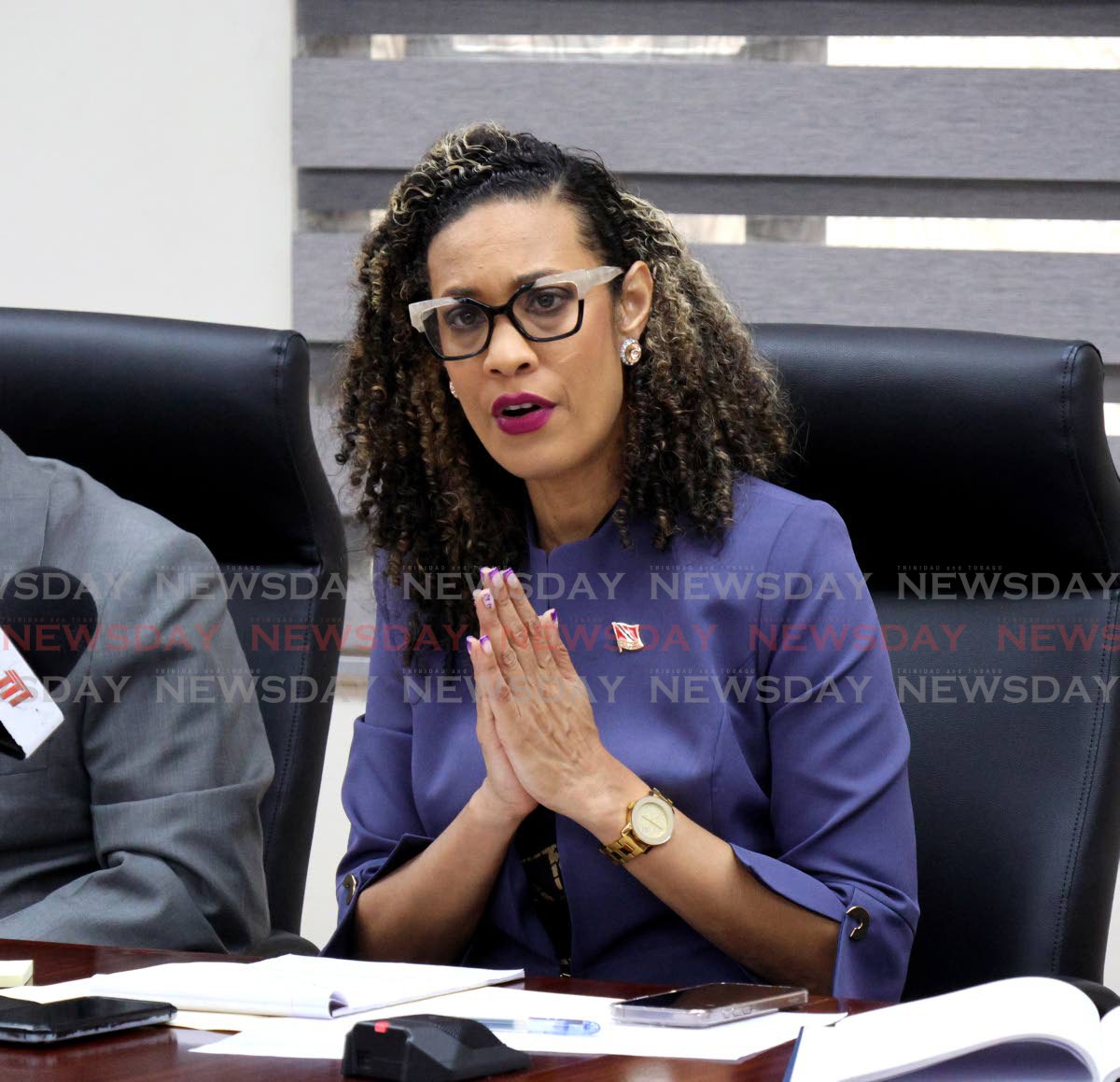
    In a forceful parliamentary address on January 16, Opposition Leader Pennelope Beckles issued a stark warning to Trinidad and Tobago’s ruling United National Congress (UNC) government, asserting that citizens are approaching a breaking point over unfulfilled election commitments. The Arima Member of Parliament delivered her critique alongside Opposition Chief Whip Marvin Gonzales during a press conference that highlighted growing discontent with the administration.

    Beckles directed pointed remarks toward Prime Minister Kamla Persad-Bissessar, challenging the government’s assumption that its 26-seat majority in the House of Representatives grants unlimited authority. “Don’t feel because you have 26 seats that you can do to the people as you feel!” she declared, emphasizing that electoral strength does not equate to unchecked power.

    The opposition leader accused the UNC of systematically misleading voters during the April 28 general election through empty promises that remain undelivered. She specifically cited assurances about job security for CEPEP and URP workers that allegedly vanished post-election, characterizing the government as fundamentally unconcerned with citizen welfare.

    Economic indicators reveal troubling trends, according to Beckles. She referenced reports from major fast-food chains like KFC noting decreased consumer spending, alongside numerous business closures contradicting government claims of presenting “the best budget ever.” Notable casualties include MovieTowne Tobago, Nutrien, Proman, D Bocas, Woodside, and RIK on Queen Street, Port of Spain, plus numerous small bars forced to shut down after liquor license fees skyrocketed from $1,500 to $9,000—a move Beckles described as “absolute wickedness.”

    The opposition leader questioned the government’s highly publicized national recruitment drive, demanding transparency about actual employment numbers generated. She further highlighted a 70% increase in natural gas prices and general inflation as evidence of deteriorating economic conditions.

    Beckles condemned the government’s tendency to blame the previous People’s National Movement (PNM) administration when facing difficulties, noting that even salary and pension delays are attributed to the opposition. She concluded by promising that a future PNM government would immediately review what she termed “foolish measures” implemented by the current administration.

  • Venezuelan ambassador: Region stands united for peace, sovereignty

    Venezuelan ambassador: Region stands united for peace, sovereignty

    Caribbean nations have demonstrated remarkable regional solidarity in response to what they characterize as unlawful US military actions against Venezuela. The First Regional Conference: The Voices of the Caribbean in Defense of Venezuela and International Law convened on January 19, bringing together over 180 political and civil representatives from across the hemisphere to address escalating tensions.

    The gathering, which included delegates from Trinidad and Tobago, Antigua and Barbuda, Barbados, Cuba, Jamaica, and numerous other Caribbean states, plus representation from Palestine’s Gaza Strip, focused on coordinating a unified response to the January 3rd military operation that resulted in the capture of Venezuelan President Nicolás Maduro and First Lady Cilia Flores.

    Venezuelan Ambassador to Trinidad and Tobago Álvaro Sánchez Cordero stated that the conference served as a platform to articulate coordinated proposals between social and solidarity movements throughout the Caribbean. Participants unanimously condemned the Trump administration’s military intervention, which reportedly resulted in over 100 casualties and what attendees labeled the ‘unlawful kidnapping’ of Venezuela’s constitutional leaders.

    The primary objectives emerging from the conference included establishing an international solidarity network to defend national sovereignty, developing actionable plans to influence foreign policy reformulation across participant nations, and creating legal instruments to preserve Caribbean unity and territorial integrity.

    Maduro and Flores, who appeared before a New York court on January 5th pleading not guilty to narcoterrorism and drug trafficking charges, are scheduled for their next court appearance on March 17th. Meanwhile, Venezuelan Vice President Delcy Rodríguez has assumed the role of interim president following Maduro’s capture.

    The conference represents the initial phase of coordinated activities that will include expert presentations on international law, analytical sessions, and thoughtful discussions aimed at maintaining regional stability against external threats.

  • Judge rules PM’s ‘administrative silence’ breached permanent secretary’s rights

    Judge rules PM’s ‘administrative silence’ breached permanent secretary’s rights

    In a landmark constitutional judgment, High Court Justice Westmin James has delivered a scathing rebuke of a sitting Prime Minister’s administrative conduct, ruling that prolonged silence on appointment recommendations constituted an unconstitutional violation of a senior public officer’s rights.

    The court upheld the constitutional claim brought by retired public service director John Edwards against the Attorney General, finding that the Prime Minister’s repeated failure to respond to Public Service Commission (PSC) consultations effectively created an illegal “de facto veto” that blocked Edwards’ career advancement unjustly.

    Evidence presented to the court revealed that between 2010 and 2013, Edwards received multiple recommendations from the PSC to act as Deputy Permanent Secretary. However, the Prime Minister failed to respond to three separate consultation requests in 2012 while approving other officers’ appointments within normal timeframes. This selective administrative silence continued until August 2013, when approval finally came—coinciding exactly with Edwards’ commencement of pre-retirement leave, rendering the authorization practically useless.

    Justice James determined that this conduct violated Sections 4(b) and 4(d) of the Constitution, pertaining to protection of the law and equality of treatment by public authorities. The ruling emphasized that while Section 121 grants the Prime Minister appointment veto power, this authority must be exercised rationally, independently, and without unreasonable delay.

    The court awarded Edwards $250,000 in damages—$100,000 as compensatory damages for distress and inconvenience, and $150,000 as vindicatory damages to underscore the seriousness of the constitutional breaches and deter future similar conduct by public authorities.

    Significantly, the judge rejected the State’s arguments regarding delay in filing the claim, accepting Edwards’ explanation that he only discovered the true reason for his non-appointment through Freedom of Information Act disclosures in 2022. The court recognized the case’s broader implications for constitutional governance and accountability, noting that permitting such administrative silence would enable executives to circumvent legal requirements and undermine independent constitutional bodies like the PSC.

    The judgment establishes crucial precedent regarding ministerial accountability and the limits of executive power, asserting that administrative silence cannot serve as an indirect veto mechanism without transparency or justification.

  • West Indies lose T20 series to Afghans

    West Indies lose T20 series to Afghans

    In a stunning display of cricketing prowess, Afghanistan secured a decisive 2-0 series victory against the West Indies with a commanding 39-run triumph in Dubai on January 21. This defeat marks another concerning setback for the Caribbean team, occurring merely weeks before the highly anticipated T20 World Cup.

    Afghanistan’s innings showcased remarkable resilience after an early stumble. Despite losing both openers within the powerplay period—Rahmanullah Gurbaz (1) and Ibrahim Zadran (22)—to the bowling of Shamar Joseph and Matthew Forde respectively, the middle order mounted an extraordinary recovery. The partnership between Darwish Rasooli and Sediqullah Atal proved particularly devastating, amassing 115 runs for the third wicket with aggressive strokeplay that included 13 boundaries between them.

    Atal eventually fell to Forde after scoring 53 from 42 deliveries, while Rasooli’s explosive innings of 68 from just 39 balls was terminated by Ramon Simmonds. A final flourish came from Azmatullah Omarzai, whose unbeaten 26 from 13 balls propelled Afghanistan to a formidable total of 189/4 from their allotted 20 overs.

    The West Indies’ response began disastrously, losing three key wickets—Alick Athanaze (8), Evin Lewis (13), and Johnson Charles (0)—within the first eight overs while managing only 38 runs. Shimron Hetmyer provided temporary hope with a blistering 46 from merely 17 deliveries, including six maximums, but his dismissal in the 14th over effectively ended the contest. Captain Brandon King offered resistance with a patient 50 from 41 balls, but the team ultimately collapsed to 150 all out in 18.5 overs.

    Afghanistan’s bowling attack demonstrated clinical efficiency, with Mujeeb Ur Rahman claiming impressive figures of 4/21 from his four overs. The teams are scheduled to conclude the series with a final match on January 22.

  • NGC, EOG sign gas supply agreement

    NGC, EOG sign gas supply agreement

    In a significant development for Trinidad and Tobago’s energy sector, the National Gas Company (NGC) has finalized a major natural gas supply arrangement with upstream producer EOG Resources Trinidad Ltd. The agreement, announced on January 16, represents a strategic move to ensure sustained and reliable gas delivery to the domestic energy market.

    NGC Chairman Gerald Ramdeen characterized the agreement as a milestone achievement that demonstrates the company’s determined efforts to collaborate with upstream partners in securing commercially viable natural gas supplies. This development follows closely on NGC’s recent acquisition of the Trinidad Region Onshore Compressor (TROC) asset, collectively forming part of a comprehensive strategy to stabilize gas availability and restore profitability to the company’s core operations.

    The successfully negotiated arrangement concludes what both parties describe as mutually beneficial terms. However, the announcement contained pointed criticism of previous energy policies, noting that the current administration has adopted a fundamentally different approach to gas allocation compared to the former government.

    Specifically, the release cited the bpTT Cypre project as an example of previous failed policy—a project delivering 250 million standard cubic feet of gas daily at peak capacity without guaranteeing any portion for domestic market needs. The new policy ethos embraced by both NGC and the Ministry of Energy and Energy Industries mandates that future natural gas exploration must include proportional allocations for domestic consumption.

    The additional gas supply will enable NGC to meet its contractual commitments to Atlantic LNG while simultaneously increasing availability for downstream customers. Negotiations were spearheaded by acting NGC president Edmund Subryan, supported by specialized legal and commercial teams, who continue to advance additional gas supply stabilization initiatives with board-level and ministerial support.

  • Financial unit, Inland Revenue agree to share info

    Financial unit, Inland Revenue agree to share info

    In a significant move to combat financial crimes, Trinidad and Tobago’s Financial Intelligence Unit (FIUTT) and the Inland Revenue Division (IRD) have formalized a renewed cooperation agreement through a memorandum of understanding signed this week. The agreement establishes an enhanced framework for intelligence sharing and collaborative action against financial offenses.

    The newly signed MoU replaces a previous arrangement dating back to 2010, signaling an upgraded approach to financial security. Under this partnership, both agencies will operate within their respective legislative mandates to voluntarily exchange critical financial intelligence or provide information upon formal request.

    Finance Minister Davendranath Tancoo characterized the agreement as “a critical pillar in the government’s approach in protecting the integrity of our financial system.” He emphasized that the collaboration creates “a formidable front against money laundering, terrorism financing and proliferation financing” by bridging the gap between financial intelligence gathering and tax administration.

    The FIUTT operates under specific legislation that empowers the unit to collect, analyze, and disseminate financial intelligence to law enforcement authorities, including the IRD. Meanwhile, the IRD maintains responsibility for investigating and prosecuting tax offenses and money laundering cases through civil, criminal, or administrative channels.

    This coordinated effort represents Trinidad and Tobago’s latest measure to strengthen its financial regulatory framework and combat increasingly sophisticated financial crimes that threaten economic stability.

  • Govt negotiates sale of CL Financial shares to Proman, ends Privy Council appeal

    Govt negotiates sale of CL Financial shares to Proman, ends Privy Council appeal

    The Trinidadian government has reached a landmark settlement to terminate a high-stakes Privy Council appeal concerning the controversial 2009 sale of CL Financial assets, a case described as posing a “serious threat to the country’s economic well-being.”

    The Office of the Attorney General announced on January 19 that the state, as majority shareholder and largest creditor of collapsed conglomerate CL Financial Ltd (CLF), has opted to discontinue the appeal process involving Proman Holdings Barbados Ltd. The decision follows extensive consultation with King’s Counsel in London regarding litigation risks and prospects before the nation’s highest appellate court.

    The dispute originated from a February 2009 purchase agreement where CLF, under then-chairman Lawrence Duprey, attempted to transfer a 51% stake in Clico Energy Company Ltd (now Process Energy Trinidad Ltd) to Proman for US$46.5 million. The transaction was subsequently invalidated by High Court Justice Devindra Rampersad in September 2021, who ruled the company had been “grossly undervalued.” This decision was later upheld by the Court of Appeal, which further characterized the transaction as fraudulent.

    Under the settlement, CLF—with court approval and agreement from its liquidator—will formally transfer the disputed shares to Proman Holdings Barbados Ltd. This compromise allows the government to recover significant funds while avoiding substantial financial and legal risks associated with continuing the litigation. The disputed judgment was valued at over TT$2 billion, encompassing both the original purchase price and dividends collected since 2009.

    Attorney General John Jeremie stated the settlement “balanced the national interest, the prospects of success and the need to protect public finances,” bringing finality to one of the most significant disputes arising from CLF’s collapse. The government has spent an estimated TT$28 billion rescuing CLF and its subsidiaries, with an additional TT$3-4 billion incurred in related legal and administrative expenses.

    In related developments, the Central Bank has sought an adjournment in its long-running lawsuit against former CLF directors, including Duprey (who died in August 2024), to review the newly published Coleman Commission report. Simultaneously, activist Kendal Dolly has filed Freedom of Information requests seeking transparency regarding the substantial legal fees incurred by the state throughout the protracted CLF litigation matters.

  • Holy Faith Convent, Penal – 2026 secondary schools’ Panorama champs

    Holy Faith Convent, Penal – 2026 secondary schools’ Panorama champs

    In a spectacular display of musical excellence, Holy Faith Convent Penal (HFCP) secured the secondary schools title at the National Schools’ Panorama Finals 2026 with a breathtaking performance at Skinner Park, San Fernando on January 19. The talented ensemble closed the competition with an electrifying arrangement of Kes and David Rudder’s 2012 hit “Live Yuh Life (Like Yuh Playing Mas),” earning a winning score of 274 points.

    Under the leadership of captain Amaya Cedeno and vice-captain Kai Cruikshank, with musical direction by Neil Simon and drill mastery by Lydia Seecharan, the HFCP steel orchestra delivered what education officials described as “a powerful and polished presentation” that captivated both judges and audience members. This victory continues the school’s remarkable competitive journey, having first entered the National Junior Panorama in 2024 and immediately claiming a maiden title with their performance of “Savannah Grass.

    The 2026 competition marked a historic milestone as the first time both primary and secondary school finals were held in south Trinidad. Education Minister Dr. Michael Dowlath hailed the event as significant, emphasizing that “music teaches, heals, and gives people a voice and identity.”

    NAPS Combined Steel Orchestra placed second with 270 points for their rendition of Aaron ‘Voice’ St Louis’s “Peace of Mind,” while Presentation College, San Fernando took third with 257 points. In the primary school category, St Margaret’s Boys’ Anglican Primary School successfully defended their title with Voice’s “Year for Love.”

    The Ministry of Education celebrated the achievements on social media, noting that “these victories are a testament to the dedication, discipline and musical excellence of the students, arrangers and supporters who worked tirelessly behind the scenes,” adding that “the future of pan is shining bright through these young musicians.”

  • Social media erupts over south school’s hair rules

    Social media erupts over south school’s hair rules

    A social media post exposing Fyzabad Secondary School’s hairstyle contract has ignited renewed debates about racial discrimination in Trinidad’s educational system. The document, circulated on January 17th, featured photographs exclusively depicting black women to illustrate ‘unacceptable’ hairstyles, prompting accusations of systemic bias in the multicultural nation.

    The controversial contract, requiring parental and student signatures, specified stringent grooming regulations under items 53 and 54 of the school’s 2026 rules. These provisions mandated that hair must not extend beyond ten inches below shoulder blades, prohibited pineapple buns exceeding three inches in height, and banned half-up, half-down styles. Accompanying visual examples solely featured black women sporting afros, braids, and other natural hairstyles, conspicuously excluding representations of Indian women despite Trinidad’s diverse demographic landscape.

    Social media commentary rapidly highlighted this omission, with users questioning why Indian hairstyles weren’t represented given their prevalence in Trinidadian society. The controversy intensified when an audio recording surfaced purportedly capturing the school principal threatening three-day suspensions for non-compliant students while defending against racial discrimination allegations.

    This incident echoes the 2023 Trinity College Maraval graduation controversy where 23 students were barred from crossing the stage due to hairstyle violations. That earlier incident prompted the Education Ministry to establish a National School Hair Code on July 6, 2023, which explicitly permitted locs, twists, plaits, afros, and cornrows while requiring individual schools to develop specific policies by October.

    In a January 19, 2025 statement, the Education Ministry clarified that the national code “does not prescribe or prohibit specific hairstyles,” instead emphasizing that school-level guidelines must be “reasonable, non-discriminatory, [and] respectful of students’ dignity.” Education Minister Dr. Michael Dowlath asserted that grooming guidelines must never “deny a child their right to education.”

    The Trinidad and Tobago Unified Teachers’ Association (TTUTA) president Crystal Ashe has urged ministerial intervention, stating that “responsibility for the current confusion rests primarily with the Ministry of Education” due to insufficiently clear national standards. Meanwhile, National Council Parent Teacher Associations president Walter Stewart warned against leaving hairstyle regulations to “subjective” principal interpretations, advocating for inclusive policy development involving cultural and religious groups.

  • Trinidad and Tobago Newsday – Tuesday January 20th 2026

    Trinidad and Tobago Newsday – Tuesday January 20th 2026

    The global dietary supplements industry, valued at approximately $170 billion, continues to experience unprecedented growth as consumers increasingly prioritize preventive health measures and personalized wellness regimens. This expansive market encompasses vitamins, minerals, botanicals, amino acids, enzymes, and various specialty products targeting specific health concerns ranging from immune support to cognitive enhancement.

    Market analysis reveals shifting consumer patterns with particular strength in immune-boosting formulations following recent global health challenges. The industry faces ongoing regulatory scrutiny regarding product safety, labeling accuracy, and substantiated health claims. Regulatory bodies worldwide are implementing stricter guidelines to address quality control issues and prevent misleading marketing practices that have historically plagued certain segments of the supplement sector.

    Scientific research continues to evaluate the efficacy of various supplements, with mixed results across different product categories. Medical professionals emphasize the importance of evidence-based usage, noting that while some supplements demonstrate clear benefits for specific populations, others lack robust clinical validation. Consumers are increasingly seeking third-party testing verification and transparent ingredient sourcing as quality assurance measures.

    The digital marketplace has dramatically transformed supplement distribution, with direct-to-consumer brands leveraging social media marketing and personalized subscription models. This evolution has created both opportunities for innovation and challenges regarding proper usage guidance and medical supervision. Healthcare providers recommend consulting qualified professionals before initiating supplement regimens, particularly for individuals with pre-existing conditions or those taking prescription medications.