标签: Trinidad and Tobago

特立尼达和多巴哥

  • Energy Minister, Perenco executives discuss Greater Angostura assets

    Energy Minister, Perenco executives discuss Greater Angostura assets

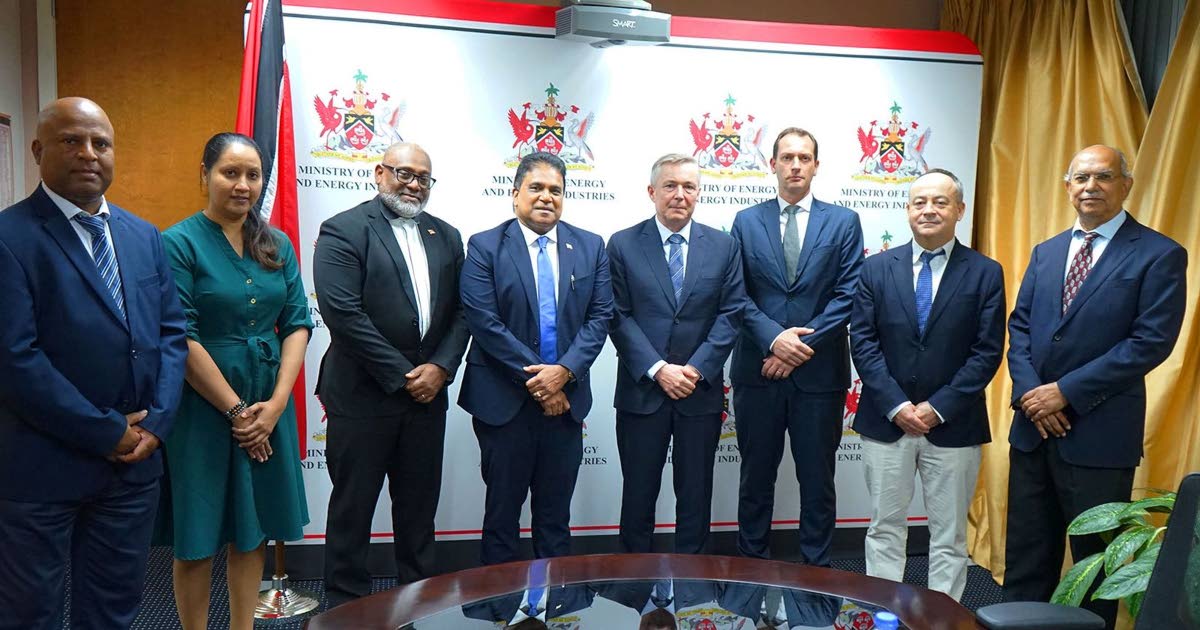
    In a significant development for Trinidad and Tobago’s energy sector, multinational oil and gas company Perenco convened high-level talks with Ministry of Energy and Energy Industries (MEEI) officials on January 14. The meeting centered on Perenco’s recent acquisition of Greater Angostura oil and gas assets and associated production facilities, marking a substantial investment in the country’s energy infrastructure.

    During the strategic discussions at the ministry headquarters, Perenco executives delivered comprehensive updates on operational advancements and outlined plans to enhance efficiency across their Trinidadian operations. The dialogue emphasized collaborative initiatives designed to sustain and strengthen investment in the nation’s critical energy sector.

    Energy Minister Dr. Roodal Moonilal expressed the government’s endorsement of Perenco’s initiatives to extend the productive lifespan of mature oil fields while fostering a favorable investment climate. The minister emphasized the administration’s commitment to supporting energy companies in maximizing Trinidad and Tobago’s hydrocarbon resources.

    Perenco detailed performance metrics from their existing operations, including the CAFI gas fields (Cashima, Amherstia, Flamboyant, and Immortelle) and revealed development strategies for the Onyx field situated within the Teak, Samaan, and Poui (TSP) area.

    The energy company’s delegation, led by CEO Armel Simondin, reaffirmed their commitment to maintaining close collaboration with MEEI as current projects progress and new opportunities materialize in the local energy landscape. The meeting participants included key figures from both organizations, underscoring the importance both parties place on this strategic partnership.
  • Trinidad and Tobago Newsday – Thursday January 15th 2026

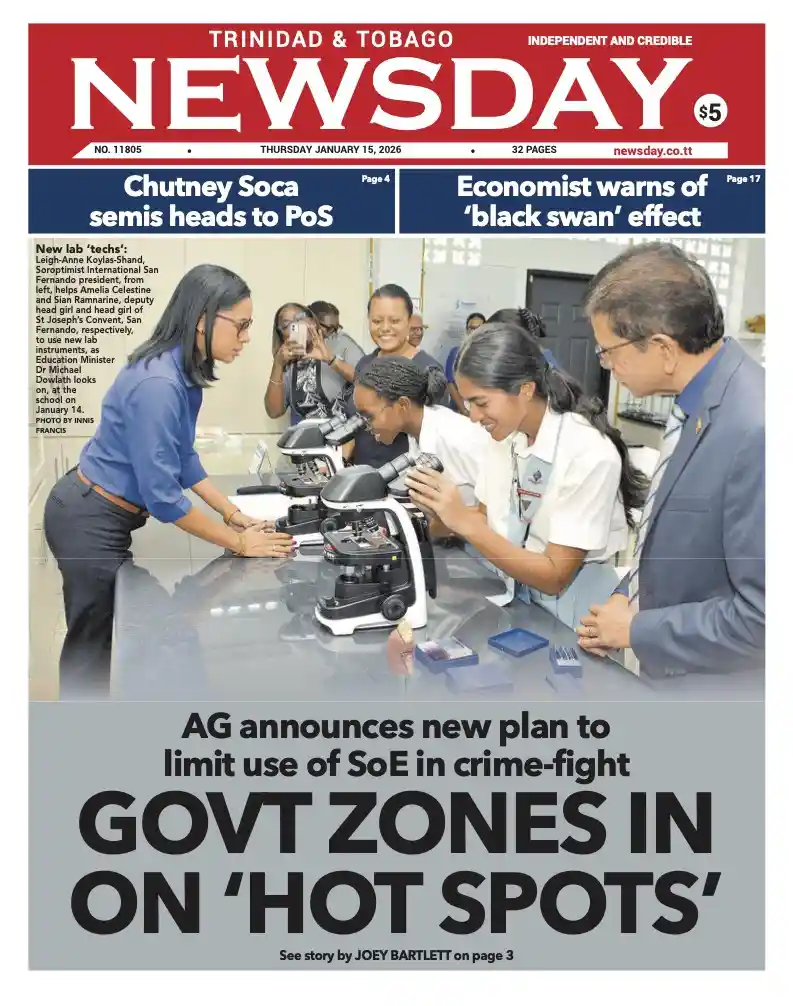
    Trinidad and Tobago Newsday – Thursday January 15th 2026

    The global dietary supplement market is undergoing significant transformation as regulatory bodies and health organizations intensify their examination of product safety and efficacy. This burgeoning industry, valued at over $150 billion worldwide, has experienced unprecedented growth driven by increasing consumer focus on wellness and preventive healthcare.

    Recent developments have highlighted critical challenges within the supplement sector, including quality control inconsistencies, misleading marketing claims, and potential interactions with prescription medications. Health authorities are now implementing stricter guidelines for supplement manufacturing, labeling requirements, and adverse event reporting systems to enhance consumer protection.

    The scientific community continues to debate the actual health benefits of various supplements, with some studies demonstrating positive outcomes while others show limited effectiveness. Medical professionals emphasize that supplements should complement rather than replace balanced nutrition and conventional medical treatments.

    Consumer education has become a priority, with health organizations developing resources to help individuals make informed decisions about supplement usage. The industry’s future will likely see increased transparency, improved quality standards, and more evidence-based approaches to product development and marketing.

  • CJ tackles backlog

    CJ tackles backlog

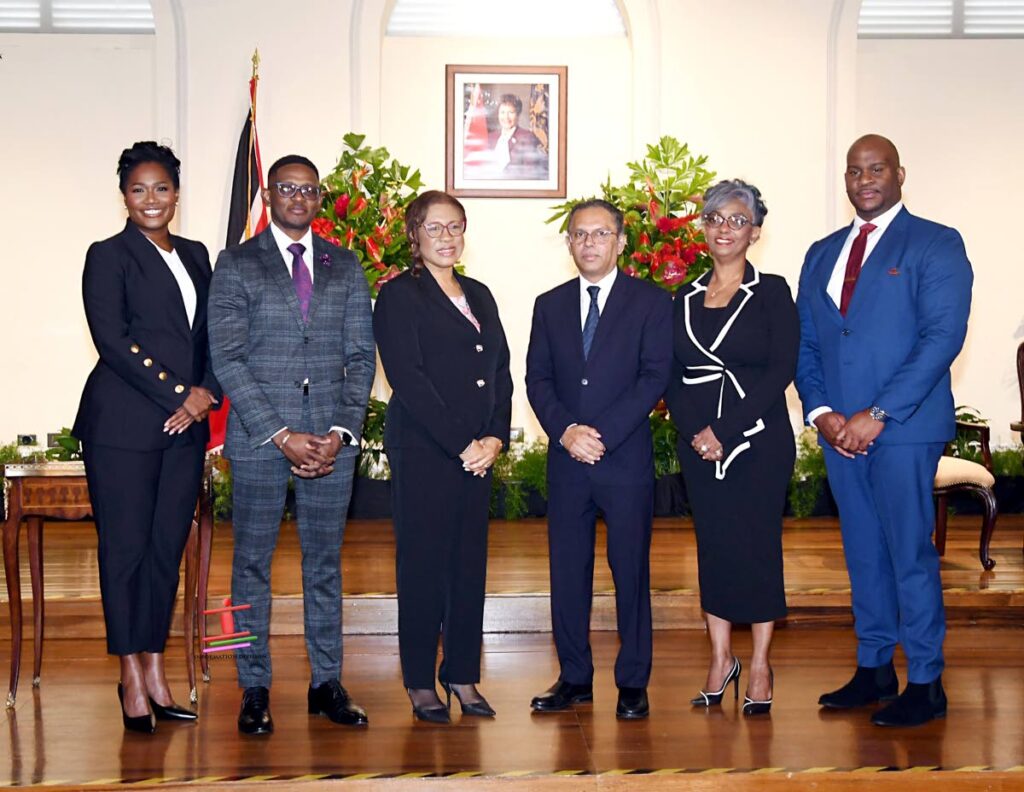
    In a significant move to tackle chronic judicial delays, Chief Justice Ronnie Boodoosingh has overseen the appointment of five new puisne judges to Trinidad and Tobago’s judiciary. The swearing-in ceremony, conducted by President Christine Kangaloo on January 13, marks a substantive response to growing concerns about case backlogs that have plagued the nation’s court system.

    The newly appointed justices—Trevor Jones, Raymond Roberts, Maria Busby Earle-Caddle, Josefina Baptiste Mohammed, and Sydelle Johnson—assume their roles amid systemic challenges that recently forced court administrators to manually count cases when activist Anthony Dopson requested backlog statistics. The absence of automated tracking systems highlighted the judiciary’s operational limitations, prompting commitments to strengthen data collection mechanisms.

    Justice Jones, speaking immediately after his inauguration at President’s House in St. Ann’s, emphasized his primary objective: addressing the overwhelming backlog through improved case management, streamlined procedures, and expanded judicial capacity. The complexity of the crisis spans all court divisions—civil, criminal, and family law—with some matters languishing for over a decade without indictments being filed.

    Structural complications have intensified the situation, including the elevation of criminal judges to the Court of Appeal without corresponding replacements at trial level. While the new appointments help address staffing gaps, judicial authorities acknowledge that personnel expansion alone cannot resolve deeply entrenched systemic issues.

    Complementary reforms are underway, including enhanced warrant powers for Justices of the Peace to reduce judicial workload. However, broader transformation requires modernization of court infrastructure, revision of antiquated procedures, and strategic prioritization of serious crimes over trivial matters. Although Chief Justice Boodoosingh has advocated returning to in-person proceedings, hybrid court formats remain essential for improving efficiency.

    The judiciary’s multifaceted challenge extends beyond courtrooms to include prison system overhaul to combat recidivism. While the path forward demands comprehensive reform, the bolstered bench represents a promising initial step toward restoring timely justice delivery.

  • Cricket facelift starts at QRC with 2026 season

    Cricket facelift starts at QRC with 2026 season

    Queen’s Royal College (QRC), historically renowned for its cricket excellence in Trinidad’s north zone, is embarking on an ambitious rebuilding mission in the Secondary Schools Cricket League (SSCL) premier I division. After securing promotion by winning the 2025 north championship division, QRC now prepares to compete against defending champions Presentation College Chaguanas and six other elite schools when the 50-over tournament commences on January 20.

    The institution boasts an impressive cricket heritage, having produced legendary West Indies wicketkeeper Deryck Murray during the 1950s-60s era, followed by standout performer Shirvan Pragg in the 1970s-80s. More recently, the school developed talents including former West Indies Under-15 captain Zaheer Ali, ex-Trinidad and Tobago cricketer Justin Guillen, and current national player Navin Bidaisee.

    Under the leadership of coach Calvin Phillip, QRC has initiated comprehensive reforms to revitalize its cricket program. Significant infrastructure improvements include upgraded practice nets on school grounds, while strategic partnerships with nearby TT Defence Force and The Harvard Coaching Clinic provide additional training facilities and pitch preparation support.

    Phillip acknowledges the challenges in rebuilding interest among students, noting that football and athletics typically attract more participation. However, he reports growing enthusiasm among junior forms, stating: ‘This marks the initial phase of our rebuilding journey. We’re cultivating a nursery of players from forms one through three to ensure long-term continuity.’

    Supported by team manager Curtis Roach and principal David Simon, the program demonstrates promising development. Phillip expresses confidence in his squad’s preparation and mentality: ‘The team possesses strong self-belief and our preparations have been well-organized. We aim to demonstrate that QRC remains committed to reclaiming its status among the nation’s top cricket programs.’

  • Government touts new anti-crime bill: Special zones for ‘hot spots’

    Government touts new anti-crime bill: Special zones for ‘hot spots’

    The Trinidad and Tobago government has announced a comprehensive legislative offensive against crime, revealing dramatic security improvements since taking office in April 2024. Minister of Land and Legal Affairs Saddam Hosein and Attorney General John Jeremie outlined their strategy during a January 14 media briefing at the United National Congress headquarters in Chaguanas.

    The administration’s centerpiece legislation, the Law Reform (Zones of Special Operations, Special Security and Community Development Measures) Bill, represents a targeted approach to combating crime in specific hotspots without implementing a nationwide state of emergency. This legislation builds upon lessons learned during previous security operations that successfully disrupted communication between incarcerated gang leaders and their external networks.

    Attorney General Jeremie emphasized the tangible results of these efforts: “The disruption yielded tangible benefits,” noting significant declines in murders, shootings, and violent crimes. The proposed zones would operate under strict judicial oversight with clearly defined procedures and time limits to ensure proportional responses to security threats.

    The government also responded to public concerns regarding traffic enforcement, announcing amendments to the Motor Vehicles and Road Traffic Act that would introduce a system of mandatory warnings for certain offenses while maintaining road discipline initiatives.

    Minister Hosein presented compelling statistics demonstrating the administration’s impact on public safety. Murder rates dropped 42% from 626 in 2024 to 369 in 2025, while gang-related murders plummeted from 273 to 108 during the same period. Security forces have seized 292 firearms and 4,341 rounds of ammunition since the implementation of their security measures.

    Additional legislative agenda items include amendments to the Tobago House of Assembly Act, expected to receive bipartisan support following recent elections. The government emphasized its commitment to transparency through voluntary media briefings, underscoring their dedication to accountability beyond constitutional requirements.

  • Management by neglect

    Management by neglect

    A scathing critique of Trinidad’s public service operations has emerged through a citizen’s letter to Newsday, highlighting severe systemic failures at the Licensing Office in San Fernando. The correspondence, submitted by Gordon Laughlin via email, paints a picture of institutional neglect that extends beyond licensing to immigration services, banking, and transportation infrastructure.

    The core issue identified revolves around chronic mismanagement rather than procedural penalties. Citizens reportedly face financial penalties for delays directly caused by institutional shortcomings, including critically understaffed offices, inadequate planning, and obsolete operational systems. The author describes a scene of profound dysfunction: a single cashier, one photographer, and merely one teller attempting to serve thousands of citizens.

    This operational crisis creates substantial economic repercussions, wasting valuable time, financial resources, fuel, and overall productivity. The letter argues that such systemic inefficiencies directly hinder national economic improvement and development. Rather than representing governance focused on progress, the current situation exemplifies what the author terms ‘management by neglect’—a pattern of administrative failure that permeates multiple public service sectors.

    The critique suggests that the fundamental problem stems from insufficient resource allocation coupled with a concerning lack of urgency in addressing these longstanding issues. The situation at the San Fernando office, documented photographically last Friday, serves as a microcosm of broader national service delivery challenges.

  • Holders Acono Sauce storm into Norman Windball semis

    Holders Acono Sauce storm into Norman Windball semis

    The 2025/26 Norman Windball Cricket League quarterfinals delivered thrilling performances and decisive victories, headlined by reigning champions Acono Sauce’s commanding advance. On January 11 at Buggy Haynes recreation ground in Tacarigua, Acono Sauce delivered an emphatic 85-run triumph against Supersonic to secure their premier division semifinal berth.

    Acono’s batting lineup demonstrated formidable power, amassing 148 for six within their allotted 12 overs. Opening batsman Hanuman Moonsammy spearheaded the charge with a explosive 63-run performance, receiving substantial support from Raj Persad (23), Sarvesh Dindial (21 not out), and Ariz Khan (17). Supersonic’s response proved inadequate as they struggled to 63 for seven, with only Christopher Calderon (16) and James Sooknarine (10) reaching double figures. Joshua Ramrattan’s bowling excellence (three for 15) effectively dismantled Supersonic’s batting order.

    CSK mirrored this dominance with a crushing 68-run victory against More Fire International. Avian Mejias and Imtiaz Mohammed both contributed 24 runs to establish CSK’s total of 109 for five. More Fire’s batting collapsed spectacularly, managing merely 41 for eight against CSK’s relentless bowling attack led by Keron Noreiga’s impressive three for five figures.

    The tournament witnessed contrasting contests as Big Drip Heavy Hitters edged Savannah Crew Sports by ten runs in a tense low-scoring encounter. Israel Mangaroo’s 35 runs propelled Heavy Hitters to 77 for seven, ultimately defending their total by restricting Savannah Crew to 67 for seven.

    Minibar Reload secured their semifinal position with a 22-run win over Poison Sports. Kadeem Williams (34 not out) and Kapil Harry (22 not out) orchestrated a crucial 54-run partnership to set a competitive target of 82 for three. Poison Sports faltered at 60 for five, overwhelmed by Kyle Dookran’s extraordinary bowling performance of three for two from just two overs.

    The competition’s best-of-the-rest bracket saw Knock Squad defeat Backyard Ballers by 31 runs on January 10, highlighted by Kelvin Danpatia’s spectacular six for 14 bowling figures. The tournament continues with best-of-the-rest semifinals scheduled for January 17-18, while premier division semifinals are set for January 25.

  • Mottley a sane,consistent voice

    Mottley a sane,consistent voice

    Barbados Prime Minister Mia Mottley has established herself as a principled voice for democratic values and social justice throughout the Caribbean region, drawing stark contrasts with previous generations of regional leaders. Her recent condemnation of both the kidnapping of Venezuelan President Nicholas Maduro by US forces and the delayed election results in Guyana’s March 2020 general election demonstrates her consistent commitment to institutional integrity.

    Unlike her Caribbean Community (CARICOM) predecessors who remained silent during decades of democratic erosion in Guyana from the 1950s through the 1990s, Mottley recognizes the essential relationship between strong democratic institutions and social justice. Historical Caribbean leaders often acquiesced to US gunboat diplomacy and interventionist policies that toppled elected governments without evidence of communist threats.

    The Guyanese people suffered particularly under this foreign policy approach, enduring a reign of terror that specifically targeted Indo-Guyanese communities. The subsequent dictatorship of Forbes Burnham created widespread suffering, reducing Guyana to the Western Hemisphere’s poorest nation—a tragedy that might have been prevented had regional leaders demonstrated Mottley’s courage earlier.

    This analysis connects current US foreign policy under President Trump to centuries of Western expansionism dating back to Alexander the Great and the Roman Empire, arguing that modern US imperialism continues this tradition by forcibly removing uncooperative regimes.

    The commentary calls for more citizens and leaders with Mottley’s moral fortitude to challenge injustice, noting that some Caribbean citizens ironically celebrate US military power. Mottley demonstrates that neither military nor economic supremacy is prerequisite for ethical leadership on the global stage.

    Had Mottley’s principles prevailed historically, the Caribbean might have avoided authoritarian figures like Dési Bouterse, Papa Doc Duvalier, Eric Gairy, Forbes Burnham, and Rafael Trujillo. The region could have developed into an enviable society rather than suffering the corruption and emigration that continues to affect many nations.

  • QPCC I, Magnolia win men, women’s Ventures Hockey crowns

    QPCC I, Magnolia win men, women’s Ventures Hockey crowns

    The Woodbrook Youth Facility witnessed thrilling conclusions to the Ventures International Indoor Hockey tournament on January 11th, with Queen’s Park Cricket Club I (QPCC I) and Magnolia emerging victorious in the men’s and women’s senior divisions respectively.

    In the men’s championship showdown, QPCC I delivered a commanding performance against TT Defence Force, securing a decisive 5-1 victory. Captain Jordan Vieira showcased exceptional leadership and skill, contributing four goals to his team’s triumph. The first half saw QPCC I establish overwhelming dominance with Vieira netting three goals and Evan Farrell adding another, creating an insurmountable 4-0 lead by halftime. Though Defence Force managed to score through Tarrell Singh in the second period, Vieira’s additional goal ensured QPCC I maintained control throughout the match.

    The bronze medal in the men’s competition went to TT Police Service, who staged an impressive comeback against Malvern after initially trailing 1-2. The police squad demonstrated remarkable resilience with goals from Caleb Guiseppi, Jordan Reynos, Che Modeste, and Dwain Quan Chan, ultimately prevailing 5-2.

    Meanwhile, the women’s final provided equal drama as Magnolia clinched the 2026 title with a narrow 2-1 victory over Paragon. Savannah De Freitas opened the scoring in the 11th minute, followed by Robyn Dash extending the lead in the 22nd minute. Paragon captain Alanna Lewis managed to reduce the deficit just two minutes later, but her team couldn’t find the equalizer despite persistent efforts. The Police women’s team secured third place with a 4-2 win over GT Vibez, powered by Abosaide Cadogan’s impressive hat-trick and additional support from Kyona Sampson.

    The tournament also featured competitive action in the mixed veterans division, where Police claimed championship honors with a hard-fought 3-2 victory over QPCC. The match required extra time after ending regulation deadlocked at 2-2, with Wayne Legerton emerging as the hero by scoring the dramatic winner to complete his hat-trick and seal the championship for Police.

  • The eagle has landed

    The eagle has landed

    The trajectory of Venezuela’s Bolivarian Revolution exemplifies how ideological movements can deteriorate when leadership prioritizes dogma over populace welfare. Initially promising dignity and prosperity, the government gradually transformed into a rigid apparatus indifferent to citizen well-being, resulting in catastrophic economic collapse, severe shortages of essential commodities, rampant criminality, and a humanitarian disaster that triggered one of Latin America’s largest mass migrations with over 7.3 million citizens fleeing abroad.

    This crisis unfolded within the broader context of global power competition. Venezuela’s rejection of American influence and subsequent alignment with BRICS nations (Russia, China, Iran) created significant cultural, economic, and political upheaval throughout the Western Hemisphere. These geopolitical realignments often treated citizens as collateral, with BRICS partners demonstrating minimal concern for effective governance in allied nations, as evidenced by Trinidad and Tobago’s economic decline under similar affiliations.

    The Trump administration has introduced a distinct approach to this complex situation. Employing business-acquisition tactics rather than conventional diplomacy, the U.S. seeks to reclaim billions in historical investments in Venezuela’s energy infrastructure that were expropriated under Chavez. This strategy aims to achieve stability through controlled economic reengagement rather than destructive confrontation.

    Potential benefits include currency stabilization, job creation, restoration of public services, and the possible repatriation of displaced millions. A prosperous Venezuela would significantly enhance regional stability throughout the Caribbean basin. While geopolitical competition persists between American and BRICS influences, Venezuelans may finally experience tangible improvements from this recalibrated engagement strategy.