标签: Trinidad and Tobago

特立尼达和多巴哥

  • Cedar Grove Private School celebrates with A Christmas to Remember

    Cedar Grove Private School celebrates with A Christmas to Remember

    Cedar Grove Private School’s annual Christmas concert, aptly titled “A Christmas to Remember,” transformed into a spectacular showcase of youthful talent and seasonal cheer on December 9th at the Southern Academy for the Performing Arts (SAPA). The event brought together the entire school community for an evening that combined artistic expression with heartfelt celebration.

    The performance lineup featured students across all grade levels, from tentative preschoolers experiencing their first stage moments to self-assured fifth graders preparing to transition to secondary education. The program skillfully blended traditional and contemporary elements through music, dance, and theatrical presentations, demonstrating the institution’s longstanding dedication to integrating visual and performing arts into its educational framework.

    Among the most memorable segments were the youngest performers whose genuine enthusiasm captivated attendees. When occasional lyrics were forgotten, these children compensated with radiant smiles and spontaneous dance movements that generated waves of affectionate laughter and applause throughout the auditorium. Their colorful costumes—featuring Santa hats, angel wings, and elf outfits—added visual magic to the production.

    The event’s proceedings were gracefully guided by Head Boy Kiran Mahabir and Head Girl Kaithlyn Heeralal, while special greetings were delivered by Natasha Moonilal and Kristin Sobers. They represented their respective husbands, Government Ministers Dr. Roodal Moonilal and Sean Sobers, who were engaged in parliamentary debates concerning fireworks legislation designed to protect children, elderly citizens, and pets.

    School Supervisor Dr. Roydon Rampersad highlighted the institution’s exceptional academic achievements, noting Cedar Grove’s ninth-place national ranking among approximately 550 schools in Trinidad and Tobago based on Secondary Entrance Assessment (SEA) examination results. He emphasized the Christmas message of reflection, love, joy, and hope while congratulating students on their outstanding performances.

    The artistic presentations ranged from the Senior Dance Club’s graceful interpretation of “Ave Maria” to the Junior Dance Club’s energetic “Carol of the Bells.” Younger students delivered charming renditions of “Jingle Bells” and “Merry Christmas Everyone,” while the fourth-grade class presented a musical comedy segment. The keyboard club performed a festive medley, and the steelpan ensemble offered a moving interpretation of “O Holy Night.”

    Principal Dillan Daniel concluded the evening by thanking families and friends for participating in this celebration of joy, unity, and faith, reminding attendees of the seasonal call to support one another throughout the coming year.

  • Opposition Leader: Christmas a time for hope

    Opposition Leader: Christmas a time for hope

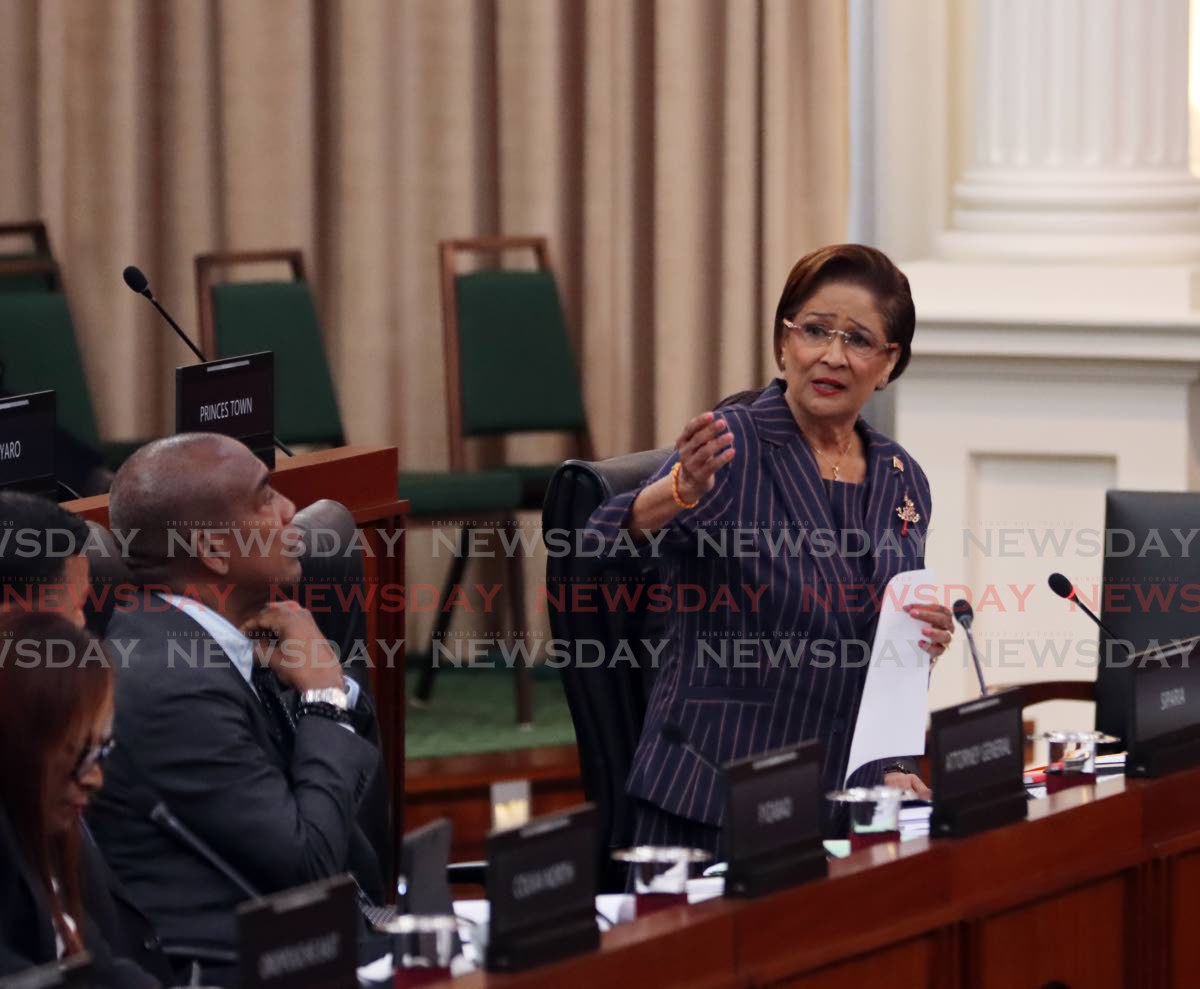
    In a solemn Christmas address to the nation, Opposition Leader Pennelope Beckles framed the holiday season as a critical moment for national renewal amid mounting economic pressures and regional diplomatic strains. Speaking against a backdrop of widespread economic anxiety, Beckles characterized the current period as one of ‘profound uncertainty’ with many families confronting job losses and persistent financial instability.

    The political leader highlighted specific economic concerns, noting that thousands of public sector workers from discontinued CEPEP, URP and Forestry Division programs found themselves unemployed following the April 28 general election. ‘The national mood is heavy,’ Beckles observed, ‘as the cost of living continues to rise and opportunity feels increasingly out of reach for far too many.’

    International economic assessments have reinforced these concerns, with major ratings agencies Moody’s and S&P revising Trinidad and Tobago’s economic outlook from stable to negative. Local business chambers have simultaneously raised alarms regarding ongoing foreign exchange complications.

    Beyond domestic economic challenges, Beckles addressed growing regional tensions, referencing the country’s delicate positioning between ‘powerful interests’—an apparent allusion to ongoing US-Venezuela military tensions in the Caribbean. The opposition leader criticized Prime Minister Kamla Persad-Bissessar’s administration for its supportive stance toward US military deployment and its condemnation of CARICOM members who questioned these developments.

    ‘There is also strain on our relationships within our region, CARICOM,’ Beckles noted, ‘arising from the unfortunate posture adopted by the Government of Trinidad and Tobago.’

    Despite these challenges, the opposition leader framed Christmas as an opportunity for national unity and active hope. Emphasizing that hope requires ‘courage, vigilance and a deep love for country,’ Beckles called upon citizens to ‘recommit ourselves to the work of rebuilding hope, not just for today but for generations to come.’ She urged citizens to choose ‘peace over discord and unity over division’ during the holiday season.

  • The Grinch steals Trinidad and Tobago’s heart this Christmas

    The Grinch steals Trinidad and Tobago’s heart this Christmas

    In an unexpected cultural shift, Trinidad and Tobago has embraced an unconventional Christmas icon—the Grinch—with a surprising twist beneath the green costume. Across supermarkets, malls, and holiday events, this once-villainous character now draws larger crowds than traditional festive figures, thanks to an unlikely performer: 33-year-old San Fernando resident Ayanna.

    By day, Ayanna balances roles as a wife, mother of two, and corporate manager. But when she dons the iconic green suit, she undergoes a complete transformation into Dr. Seuss’s mischievous creation. ‘As soon as I put the Grinch costume on, I become Mr. Grinch,’ revealed Ayanna, who maintains mystery by withholding her last name as part of her character’s allure.

    Her journey into character performance began during her industrial chemistry studies at UWI, where mascot work provided extra income. However, her Grinch portrayal stems from personal inspiration—she’s a self-proclaimed superfan of Jim Carrey’s iconic performance. ‘I wanted to embody his attitude and comedic genius,’ she explained.

    The art of Grinch portrayal requires meticulous preparation beyond mere costuming. Ayanna practices vocal modulation, develops mannerisms, and maintains physical conditioning for the demanding role. ‘I do practice runs imitating the voice, mannerisms, and unique style,’ she noted, adding that hydration and stretching are crucial for the physically intensive performances.

    Maxwell Pusey of Fancy Events, Ayanna’s employer, confirmed the Grinch’s surging popularity. ‘We’ve seen a significant increase in demand compared to previous years,’ he stated, noting the character’s introduction to their Christmas lineup four years ago was strategically intentional. Social media amplification through shareable content has further propelled the trend.

    The Grinch’s evolved perception—from villain to entertaining mischief-maker—has driven this popularity surge. Pusey emphasized that the character now represents ‘a unique mix of humour, surprise, and playful mischief’ that resonates across generations. Notably, clients increasingly book the Grinch alongside Santa Claus, creating a dynamic contrast that enhances event engagement.

    Ayanna’s performances require nuanced crowd reading, particularly with children. ‘Not every child responds well to him,’ she acknowledged, describing how she adapts based on reactions. Her most meaningful moment involved an autistic child who clung to her character throughout an event—a touching demonstration of the role’s impact beyond entertainment.

    The physical challenges include maintaining character integrity despite heat and restricted vision within the costume. Yet the greatest reward, Ayanna shared, is ‘being able to not be this serious individual that my day-to-day life requires’ and fulfilling her personal mission of creating ‘as much fun as possible.’

    As Trinidad and Tobago embraces this nontraditional holiday figure, the Grinch has found permanent cultural footing—not replacing Santa, but complementing him with playful mischief and unforgettable memories.

  • Petrotrin must be upgraded

    Petrotrin must be upgraded

    In a compelling analysis of Trinidad and Tobago’s energy sector, industry expert Gordon Laughlin argues that the modernization of the Pointe-a-Pierre refinery represents not merely an option but a critical strategic necessity for the nation’s economic future.

    The refinery, which ceased operations in 2018, previously positioned Trinidad as a regional energy powerhouse, supplying the entire Caribbean with a comprehensive range of refined petroleum products including LPG, unleaded gasoline, jet fuel, kerosene, diesel, fuel oil, bitumen, sulphur, and base lubricants. This capability ensured both national self-sufficiency and established Trinidad as a significant exporter within the region.

    Laughlin identifies three pivotal opportunities that a modernized facility could capture. First, the nation possesses the scientific and industrial capacity to develop high-value derivatives from its own Pitch Lake resources. Lake Asphalt already produces refined pitch and sealants for export, representing a niche, high-margin market that remains significantly underutilized despite its considerable potential.

    Second, any refinery reactivation must incorporate future-proof capabilities to process Guyana’s light sweet crude, currently among the hemisphere’s most sought-after commodities. Failure to develop this capacity would allow other nations to capitalize on refining and profiting from Guyana’s resources.

    Third, the facility requires capabilities to refine Venezuelan heavy crude. Despite its challenging composition, Venezuela’s proximity offers substantial freight savings, faster shipment turnaround times, and opportunities for blending or refining this crude for regional distribution. This would reposition Trinidad advantageously within the Caribbean energy logistics chain.

    Laughlin advocates for positioning the refinery as the Caribbean’s premier toll refining facility, blending hub, and finished products supplier rather than allowing other nations to seize these emerging opportunities. The commentary concludes that Trinidad has never lacked the talent, resources, or strategic location for such endeavors, but has instead faced a deficit of political will to realize this vision.

  • When sovereignty becomes a doormat

    When sovereignty becomes a doormat

    Prime Minister Kamla Persad-Bissessar of Trinidad and Tobago has ignited a firestorm of controversy by asserting that the United States possesses an unquestionable right to pursue its national interests—even when such actions adversely affect other sovereign nations—and that impacted countries must simply “accept the consequences.” While presented as a tough stance, legal experts contend this position is not only legally flawed but dangerously reckless for a small nation state.

    The core of the dispute centers on fundamental principles of international law. Sovereignty, contrary to the Prime Minister’s characterization, has never equated to unlimited freedom. Since the establishment of the post-1945 global legal order, sovereignty has existed within a framework designed to restrain powerful nations and protect vulnerable ones. The longstanding principle, repeatedly affirmed by the International Court of Justice, is that the freedom of any state ends where another’s begins.

    Actions such as economic coercion, extraterritorial punishment, and policy intimidation are not legitimate expressions of sovereignty but rather violations of it. The editorial argues that if powerful nations could freely impose their preferences on others based solely on might, international law would be rendered meaningless, replaced by pure hierarchy.

    The specific context involves U.S. criticism of Citizenship-by-Investment (CBI) programs. The contention is not whether the U.S. can regulate its own borders—a right acknowledged as undisputed—but whether it can penalize other countries for domestic policies that breach no international treaty or convention. This is framed not as legitimate border control but as interference disguised as security.

    In contrast to the Prime Minister’s stance, the Caribbean Community (CARICOM) delivered a response described as orthodox, restrained, and legally sound. CARICOM recognized U.S. sovereignty while formally requesting consultation, clarity, and respect for the rule of law. This approach is presented as the prescribed method for small states to navigate a rules-based international system.

    The editorial expresses particular alarm that this doctrine originates from a Prime Minister who holds the title of Senior Counsel, a position that should demand a higher standard of legal reasoning. The author condemns the underlying logic as “profoundly defective,” where sovereignty is mischaracterized as an unlimited license, coercion is rebranded as mere consequence, and international law is treated as optional etiquette.

    The author concludes with a stark warning: if the Prime Minister’s doctrine were correct, Trinidad and Tobago would itself have no protection against sanctions, blacklists, or financial pressure whenever it became inconvenient to more powerful nations. The piece ends with a powerful admonition: “Sovereignty is not a doormat. And TT should stop pretending that being trampled is a sign of strength.”

  • First step to ending domestic violence

    First step to ending domestic violence

    Trinidad and Tobago is confronting a severe psychological crisis manifesting through escalating murder-suicide incidents among intimate partners across all societal segments. This disturbing pattern reflects not merely criminal behavior but a profound societal despair—a spreading darkness where individuals perceive violence or self-destruction as their only escape from emotional agony.

    According to psychological experts, this crisis stems from a critical deficit in emotional resilience and healthy coping mechanisms. When individuals face rejection, abandonment, or overwhelming stress, their brains enter survival mode, releasing chemicals like cortisol, dopamine, and oxytocin that distort reality perception. Without proper emotional awareness, this can lead to:

    • Cognitive distortions and irrational decision-making
    • Intense attachments to unhealthy relationships
    • Emotional dependency masquerading as love
    • Misinterpreted fear as betrayal
    • Overwhelming hopelessness

    Current societal approaches emphasizing punishment and shame have proven inadequate. Advocates argue that prevention through education and emotional literacy is paramount. The solution requires understanding biological and emotional triggers—particularly how unprocessed trauma causes individuals to interpret ordinary events through lenses of fear, shame, or insecurity.

    For those exhibiting narcissistic traits, control becomes synonymous with safety, dominance with stability, and validation with oxygen. Losing relationship control can feel like psychological death, triggering extreme reactions.

    A comprehensive solution framework must include:

    1. Emotional literacy programs in schools teaching brain function and emotional regulation
    2. Trauma-informed interventions for both victims and perpetrators
    3. Accessible, stigma-free support systems for early intervention
    4. National conversations breaking silence around mental health
    5. Prevention-focused campaigns emphasizing education before crisis

    Without teaching citizens to understand their internal worlds—why they feel certain emotions and how to manage them healthily—the cycle of violence will continue across generations. The path forward begins with awareness, education, and collective action to build emotional resilience nationwide.

  • President Kangaloo: Be instruments of peace

    President Kangaloo: Be instruments of peace

    In her annual Christmas address to the nation, President Christine Kangaloo of Trinidad and Tobago delivered a powerful message advocating for peace and humanitarian values during times of global uncertainty. The presidential communication, disseminated on Christmas Eve, emphasized the enduring relevance of seasonal ideals despite contemporary challenges.

    President Kangaloo articulated that genuine peace transcends mere absence of conflict, representing instead the active presence of justice, compassion, and mutual respect within communities. “In a world frequently characterized by division and adversity,” she observed, “the Christmas message resonates with particular clarity: advocating for global harmony and benevolent intentions toward all people.”

    The timing of this message carries significant geopolitical context, following recent developments in the Caribbean region. The administration’s November decision to authorize United States military presence at ANR Robinson International Airport, including radar installation, has generated public discourse amid escalating tensions between the US and Venezuela in southern Caribbean waters.

    Beyond geopolitical considerations, President Kangaloo highlighted practical applications of goodwill through everyday actions. She identified empathetic listening, compassionate communication, forgiveness, and assistance to vulnerable populations as foundational to building harmonious societies. “These seemingly modest gestures,” she contended, “possess cumulative power to mend emotional injuries, renew optimism, and construct connections where division previously existed.”

    The head of state challenged citizens to embrace compassion rather than anger, pursue understanding instead of judgment, and seek reconciliation over bitterness. She urged population to transcend differences and acknowledge shared human dignity.

    President Kangaloo concluded with aspirational wishes for the season, expressing hope that peace and goodwill would evolve from abstract concepts into practical realities influencing daily decisions. She envisioned individual contributions bringing comfort to distressed persons, solace to those suffering, and cohesion to communities throughout Trinidad and Tobago and beyond.

  • Only love for Tobago: James Baird hopes to help Phoenix rise again

    Only love for Tobago: James Baird hopes to help Phoenix rise again

    In the volatile landscape of the TT Premier Football League (TTPFL), newly appointed head coach James Baird has experienced an immediate baptism of fire at 1976 FC Phoenix. The Scottish-born manager’s tenure began with contrasting results: an inaugural 2-1 victory against Point Fortin Civic on December 14 was swiftly countered by a 4-1 defeat to FC Eagles just one week later.

    This rollercoaster start leaves Phoenix precariously positioned in the 12-team league table, with their six-point tally from nine matches placing them merely two points above the relegation zone. The team’s inconsistent form prompted technical director Terry Williams to recruit Baird, seeking stability after Delroy Patterson’s troubled opening to the season.

    For the 42-year-old strategist, 2024 has proven particularly eventful. After briefly emerging from retirement to play for British Virgin Islands’ Wolues FC in July’s Caribbean Football Union Club Shield, Baird subsequently guided Eagles to avoid bottom-place humiliation in the previous TTPFL season before accepting his current role.

    Baird brings considerable international experience to the Tobago-based club, having featured as a goalkeeper across Scottish, Icelandic, American, and Trinidadian leagues before transitioning to coaching. His credentials include technical roles with the British Virgin Islands, Turks and Caicos, and the Trinidad and Tobago women’s national team, where he served as goalkeeper coach in 2021.

    Having resided in Trinidad for approximately a decade and married in Tobago, Baird expresses profound personal connections to the island. “Tobago means a lot to me. To coach a Tobago team is something special,” he revealed to Newsday. “They gave me an opportunity during a career downturn that ultimately redirected my professional trajectory.”

    Despite Phoenix’s challenging circumstances—having played the entire previous season without home matches—Baird maintains realistic ambitions for mid-table consolidation. “If we secure additional reinforcements during the upcoming transfer window, I believe we can push for mid-table positioning,” he stated, emphasizing that long-term development might require multiple seasons.

    The coach identifies psychological barriers as equally significant as tactical improvements, noting: “The players don’t fully comprehend their capabilities. We’ve competed closely against every opponent, with narrow margins determining outcomes.” He specifically highlighted defender Jeremiah Bristol, midfielder Antonio Pantin, veteran Trevin Caesar, and league-leading scorer Teejay Cadiz (eight goals) as key talents.

    Baird, who prefers to emphasize tactical acumen over his goalkeeping background, aims to implement an aggressive, high-intensity playing philosophy. With Phoenix’s scheduled Boxing Day fixture against Caledonia postponed, the team now looks toward 2026 as an opportunity to transform their faltering campaign and establish Tobago as a competitive force in Trinidadian football.

  • Chosen Few finish strong, land NCA GENESIS 3×3 basketball title

    Chosen Few finish strong, land NCA GENESIS 3×3 basketball title

    In a stunning display of resilience and skill, The Chosen Few quartet overcame early tournament adversity to capture victory at the New Chapter Global Sports Academy (NCA) GENESIS 3×3 Basketball Series. The dramatic finals unfolded on December 20 at Princess Royal Basketball Court in Arima, where eight carefully drafted teams competed in the fast-paced basketball format.

    The tournament journey proved particularly challenging for The Chosen Few—comprising Samuel Edwards, Matthias Phillips, Kai Sunich, and standout performer Jervais Edwards-Caracciolo—who concluded the group phase with a disappointing 0-3 record. Entering the knockout stage as considerable underdogs, the team miraculously found their rhythm and embarked on an impressive winning streak that ultimately propelled them to the championship match against The Mighty Men.

    Led by tournament Most Valuable Player Taalib Daniel, The Mighty Men established early dominance in the final, racing to a commanding 5-0 advantage. However, The Chosen Few mounted a spectacular comeback through enhanced defensive coordination and strategic offensive execution. The match evolved into an intense back-and-forth contest with both teams exchanging scores under mounting pressure.

    The game’s pivotal moment arrived with under three minutes remaining when Edwards-Caracciolo seized control, delivering a spectacular 14-point performance that shifted momentum decisively in his team’s favor. Their remarkable resurgence culminated in a 21-17 victory against the previously dominant opponents.

    Despite the loss, Daniel’s exceptional tournament performance deserved recognition, as he contributed 12 points during the final match and accumulated 49 points throughout the competition. In the third-place playoff, The Watchmen secured bronze medal honors with a 15-12 victory against The Ark Builders, powered by Antonio Vasquez’s 11-point contribution.

    The GENESIS tournament represents a strategic initiative by NCA to strengthen Trinidad and Tobago’s international presence in 3×3 basketball. Academy officials emphasized their commitment to developing young athletic talent through meaningful competitive exposure and creating structured pathways toward international competitions, including qualification for the 2026 FIBA 3X3 Under-18 World Cup.

  • Warrenville United lift east zone division two table tennis crown

    Warrenville United lift east zone division two table tennis crown

    In a thrilling conclusion to the 2025 East Zone Division Two table tennis championship, Warrenville United Table Tennis Club emerged victorious following a decisive 8-1 triumph over Arima Table Tennis Club. The final matches, held at Arima New Government Primary School on December 21, capped off an intense six-round, four-team round robin tournament that saw Warrenville and Hawks finish level on ten points each.

    The championship was ultimately determined by the slimmest of margins—superior win-loss ratio—with Warrenville’s record of 33 games won against 21 losses narrowly outperforming Hawks’ 30 wins and 24 losses. This mathematical advantage secured the title for Warrenville despite the points deadlock.

    Warrenville’s triumph was spearheaded by an exceptional team performance. Shahjahan Khan and Samir Hosein maintained perfect records in the final contest, both remaining undefeated throughout their matches. Triston Soomarie contributed significantly with two victories from his three encounters, demonstrating remarkable resilience after suffering a single defeat.

    The individual matches showcased exceptional skill and determination. Khan delivered particularly impressive performances, including a hard-fought five-set victory against Kenny Second (11-8, 5-11, 7-11, 12-10, 12-10) that demonstrated tremendous composure under pressure. Hosein’s consistent dominance was evident throughout his straight-sets victories against multiple opponents.

    Supporting players Jewel Serrette, Justin Bachan, and Adeeb Rajab provided crucial contributions during earlier rounds, building the foundation for Warrenville’s eventual championship success.

    In the final standings, Wasa secured third position with nine points (29 wins, 25 losses), while Arima finished fourth with seven points and a 16-38 win-loss ratio. Individual honors went to Wasa’s Joel Henry, who recorded the tournament’s highest individual match wins at 17, followed by Hawks’ Emmanuel Chuniesingh (16 wins) and Warrenville’s Khan (13 wins).