标签: Trinidad and Tobago

特立尼达和多巴哥

  • Inspired fireworks law

    Inspired fireworks law

    In a remarkable display of cross-party cooperation, Trinidad and Tobago’s Parliament has achieved a legislative breakthrough with the unanimous passage of comprehensive fireworks regulations. The newly enacted law, which amends the Summary Offences Act, represents a significant shift in the nation’s approach to pyrotechnic management after years of deliberation.

    The legislation establishes precise temporal restrictions for fireworks usage, permitting discharges exclusively during Old Year’s Night celebrations around midnight and on public holidays between 8 pm and 9 pm. The law designates extensive protection zones surrounding hospitals, zoos, animal shelters, agricultural facilities, forest reserves, national parks, and airports where fireworks are entirely prohibited.

    A revolutionary provision empowers citizens to actively participate in enforcement by legally authorizing them to record unauthorized fireworks discharges using mobile devices. This digitally captured evidence will be admissible in judicial proceedings, eliminating the requirement for law enforcement to witness violations directly.

    The regulatory scope has been substantially expanded to include various pyrotechnic devices such as crackers, while introducing first-time oversight of toy fireworks and noise-reducing variants. Access to permits will be restricted exclusively to adults, reflecting the legislation’s emphasis on responsible usage.

    The legislative process demonstrated exceptional political collaboration, with the governing UNC administration accepting amendments proposed by opposition PNM representatives. This consensus-built legislation originated from a Law Reform Commission document dating back to April 2020, transcending multiple governmental administrations.

    Implementation will commence following official proclamation by the Cabinet, allowing time for comprehensive public education initiatives and coordination with fireworks industry stakeholders. Additional government agencies including the Environmental Management Authority, Fire Service, and municipal corporations will be integrated into the enforcement framework under recently adopted amendments.

    While the legislation addresses discharge regulations rather than sales governance, and excludes certain sensitive locations like police stations and prisons from protection, it establishes a foundational framework for future refinement. The act’s successful passage provides a template for productive parliamentary cooperation in the nation’s 13th Parliament.

  • Teacher, student win Unsung Heroes programme

    Teacher, student win Unsung Heroes programme

    CIBC Caribbean has recognized two exceptional Trinidadians for their extraordinary community contributions through its revived Unsung Heroes programme. The awards ceremony on December 3 celebrated 80-year-old educator Marlene Gilbert as first-place winner and 16-year-old student leader Renalon Villafana as runner-up.

    Marlene Gilbert, affectionately known as ‘Aunty Marlene,’ continues her educational mission decades after retiring from Mucurapo Senior Comprehensive in 2000. Every Sunday, her Belmont residence transforms into a learning sanctuary where children as young as 11 travel from distant communities like Arima for extracurricular lessons. Her teaching approach emphasizes recognizing individual learning styles and unlocking potential that students themselves often overlook.

    Beyond her educational work, Gilbert serves as an active member of both St. Crispin’s Anglican Church in Woodbrook and the Netball Association of Trinidad and Tobago, dedicating herself to creating supportive environments for youth sports development.

    The second-place honoree, Renalon Villafana, has demonstrated remarkable initiative through multiple community projects. As student council president at Tabaquite Secondary, he organized a student-led outreach to the Ezekiel Home for Abandoned Children, personally fundraising when corporate donors were unavailable. His efforts provided gifts, snack hampers, and games for the children.

    Villafana further demonstrated leadership by coordinating two successful beach clean-ups at Mayaro Beach, personally securing sponsorships from local companies. His environmental activism mobilized increasing numbers of volunteers and earned recognition on his school’s official Facebook page. Recently, his accomplishments extended to winning his category in the Queen’s Commonwealth Essay Competition.

    Mahadeo Sebarath, CIBC Caribbean’s country head for Trinidad and Tobago, emphasized the timing of these awards during the season of giving. He noted that the recipients’ previously unrecognized efforts ‘create hope in every person you touch’ and deserved celebration.

    The Unsung Heroes programme, building on a legacy that ran from 2003-2013, identified 39 nominees across CIBC’s ten-member regional footprint this year. Both Trinidad winners are now considered for the Regional Unsung Heroes Award, which was ultimately claimed by Lucinda ‘Mini’ Smith of Tortola, British Virgin Islands.

    Both Gilbert and Villafana expressed deep appreciation for the recognition, with Gilbert noting that ‘getting something like this makes you feel good’ and Villafana describing it as ‘a touching acknowledgement.’ They pledged to continue their community work with renewed inspiration.

  • Why Tobago must welcome upgrades

    Why Tobago must welcome upgrades

    A significant public discussion has emerged regarding ongoing infrastructure enhancements at Tobago’s ANR Robinson International Airport, particularly concerning the involvement of foreign technical personnel. This development has generated substantial attention across social media platforms and community messaging channels, prompting both concern and calls for rational assessment.

    The situation involves two distinct operational components: civil engineering improvements to optimize airport accessibility and traffic management systems, alongside substantial upgrades to radar surveillance capabilities designed specifically to combat transnational criminal activities. These measures target drug trafficking networks and human smuggling operations that exploit Tobago’s maritime approaches.

    Government officials have emphasized the defensive nature of these enhancements. Prime Minister Keith Rowley personally briefed Tobago House of Assembly Chief Secretary Farley Augustine regarding the sensitive security aspects, demonstrating administrative transparency within operational security constraints. Subsequent face-to-face consultations in Tobago provided detailed technical specifications, including civil engineering diagrams clarifying road alignment and land ownership matters.

    The advanced radar systems specifically address emerging security challenges, enabling detection and interception of low-altitude aircraft and unmanned drones increasingly employed by traffickers. Defense Minister Fitzgerald Hinds and Chief Secretary Augustine have consistently characterized these installations as defensive tools for domestic law enforcement rather than instruments of foreign military strategy.

    From a geopolitical perspective, analysts note that Tobago’s strategic cooperation enhances regional security intelligence sharing while creating deterrence effects against criminal elements. The improved infrastructure simultaneously supports economic objectives through enhanced airport functionality, tourism facilitation, and transportation reliability—critical factors for Tobago’s tourism-dependent economy.

    While acknowledging legitimate public interest in operational transparency, government representatives stress the necessity of protecting sensitive security protocols. The administration has committed to providing appropriate oversight mechanisms and summarized versions of international cooperation agreements, redacting only operationally critical details.

    This balanced approach reflects democratic governance principles: ensuring public safety through modern security measures while maintaining accountability through reasoned public discourse and institutional oversight.

  • Debe Faith Centre spreads Christmas cheer to 600 children

    Debe Faith Centre spreads Christmas cheer to 600 children

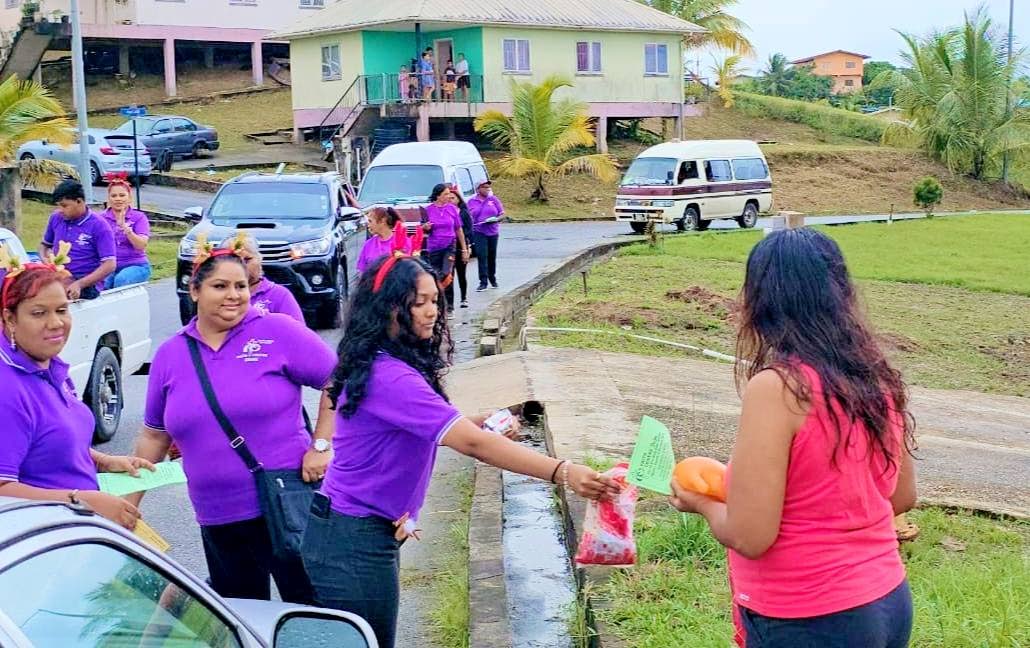
    Amidst persistent rainfall on December 7th, the Debe Faith Centre (DFC) successfully executed its inaugural Christmas toy distribution initiative, delivering festive cheer to approximately 600 children throughout multiple communities. The charitable endeavor extended across Debe Trace, Chester Street, Wellington Gardens, Ramsamooj Street, and Gandhi Village, with organizers emphasizing their mission of “sharing the love of Jesus” through tangible acts of kindness.

    Led by Reverend Rohan Kanhai and Pastor Tura Kanhai, the outreach operation featured a vibrant musical truck accompaniment alongside dedicated church volunteers. Despite challenging weather conditions, the team maintained unwavering commitment to their objective, ensuring comprehensive coverage of the designated areas and gift distribution to every child.

    The initiative represented the realization of a long-cherished aspiration for the religious leaders. Reverend Kanhai characterized the project as a spiritually-inspired undertaking, noting: “The Lord laid that upon my heart for us to do. We really wanted to bless the children in the community.” The program demonstrated particular inclusivity by incorporating Venezuelan migrant children among recipients, reflecting the church’s ongoing engagement with immigrant populations through regular services and activities.

    Beyond seasonal philanthropy, the Debe Faith Centre maintains an active community presence through weekly Bible studies, prayer sessions each Tuesday at 6 PM, Sunday School programming from 4:30-5:30 PM, and conventional Sunday services at 9 AM. Additional outreach efforts include clothing distribution drives and monthly family movie nights complete with refreshments and transportation assistance.

    Social media platforms have overflowed with commendations for the initiative, with Facebook users praising the “love, giving, family, and magic of the season” embodied by the effort. Established as an extension of the San Fernando Faith Centre under Apostle Carlyle Chankersingh’s leadership, the Debe branch has provided continuous community service for fifteen years.

  • TPP’s Pollard: I could have done more for Tobago

    TPP’s Pollard: I could have done more for Tobago

    In a remarkable admission of underperformance, Tobago People’s Party (TPP) candidate Ian “Whitey” Pollard has publicly conceded his failure to fully deliver on development promises for the Mason Hall North/Moriah electoral district. The Secretary of Settlements, Public Utilities and Rural Development offered his apology during a December 9th constituency meeting, marking a significant moment in Tobago’s political landscape.

    Pollard assumed full responsibility for the development shortfalls while simultaneously attributing the challenges to financial constraints imposed by what he termed “the wicked PNM regime” over the past three years and four months. This dual acknowledgment of personal responsibility coupled with political blame-setting creates a complex narrative of accountability in Tobago’s governance structure.

    The housing crisis emerged as a central issue, with discussions highlighting Tobago’s growing demand for diversified housing solutions beyond traditional single-family units. The TPP has leveled serious allegations against the PNM, accusing them of withholding funds from an Inter-American Development Bank loan specifically designated for the Riseland housing project—a claim that adds layers to the ongoing political friction.

    Prime Minister Kamla Persad-Bissessar’s November 4th announcement regarding the project’s imminent commencement contrasts sharply with Pollard’s portrayal of systematic fund withholding, creating competing narratives about the project’s status.

    With the January 12th elections approaching, Pollard delivered an impassioned plea for voter support, urging constituents to decisively remove the PNM from power. His appeal addressed potential voter apathy, acknowledging that internal governance realities often differ from campaign promises while maintaining that change must come through electoral participation rather than abstention.

    Pollard will face PNM’s Kwesi DesVignes, the former Secretary for Infrastructure, Quarries, and Environment, in what promises to be a closely contested battle that reflects broader political tensions affecting Tobago’s development trajectory.

  • A guide to local gifts: Shop unique treasures for Christmas

    A guide to local gifts: Shop unique treasures for Christmas

    As the festive season envelops Trinidad and Tobago, a compelling movement toward sustainable celebration and local economic support is gaining momentum. Beyond the imported commercial decorations and familiar Christmas carols, a deeper narrative about conscious consumption and community solidarity is emerging.

    While traditional economists highlight the seasonal boost in retail employment and tourism revenue—with Christmas accounting for nearly 20% of annual income in Western nations—this consumer frenzy carries significant drawbacks. Financial strain, environmental waste, and post-holiday economic slumps (extended locally until after Carnival in February) present substantial challenges, particularly for financially vulnerable families.

    In response, Trinidadians are rediscovering the exceptional quality of locally produced goods. The islands boast what many consider the world’s finest chocolate, derived from unique Trinitario cocoa beans. Artisans like Cocobel and Aripo’s Fina Dos Vistas transform this premium commodity into exquisite drinking chocolate and artisanal bars infused with local spices and fruits.

    The shift toward sustainability manifests through various gifting alternatives:

    Handcrafted items range from Chase Village pottery and custom leather sandals by Drag Brothers to wooden furniture crafted by Evan Samuel and Philip Arthur using fallen tropical hardwoods. Local artists like Catherine Dookie offer miniature architectural replicas, while ceramicists like Greta Joachim produce functional art pieces.

    Edible gifts showcase Trinidad’s culinary diversity: homemade pepper sauces, tamarind chutneys, Alicia’s eggless punches, and traditional ponche de creme. The practice of creating personalized hampers with local honey, sorrel, and fruitcakes supports both recipients and small producers.

    Living gifts represent perhaps the most sustainable option. Nurseries nationwide offer everything from ornamental petrea shrubs to productive citrus trees. Many families now gift seedlings or potted herbs instead of cut Christmas trees, creating lasting environmental benefits.

    Community-focused initiatives include grocery chains organizing donation programs for necessity hampers, while the Animal Welfare Network sells calendars to fund rescue operations. Pop-up markets provide platforms for micro-entrepreneurs offering unique, handmade products that rarely reach conventional retail spaces.

    This approach transforms Christmas from a period of excessive consumption into an opportunity to celebrate local craftsmanship, strengthen community bonds, and reduce environmental impact—all while enjoying what many consider the world’s finest chocolate, grown right in Trinidad’s rich soil.

  • Alexander: More radars needed across Trinidad and Tobago

    Alexander: More radars needed across Trinidad and Tobago

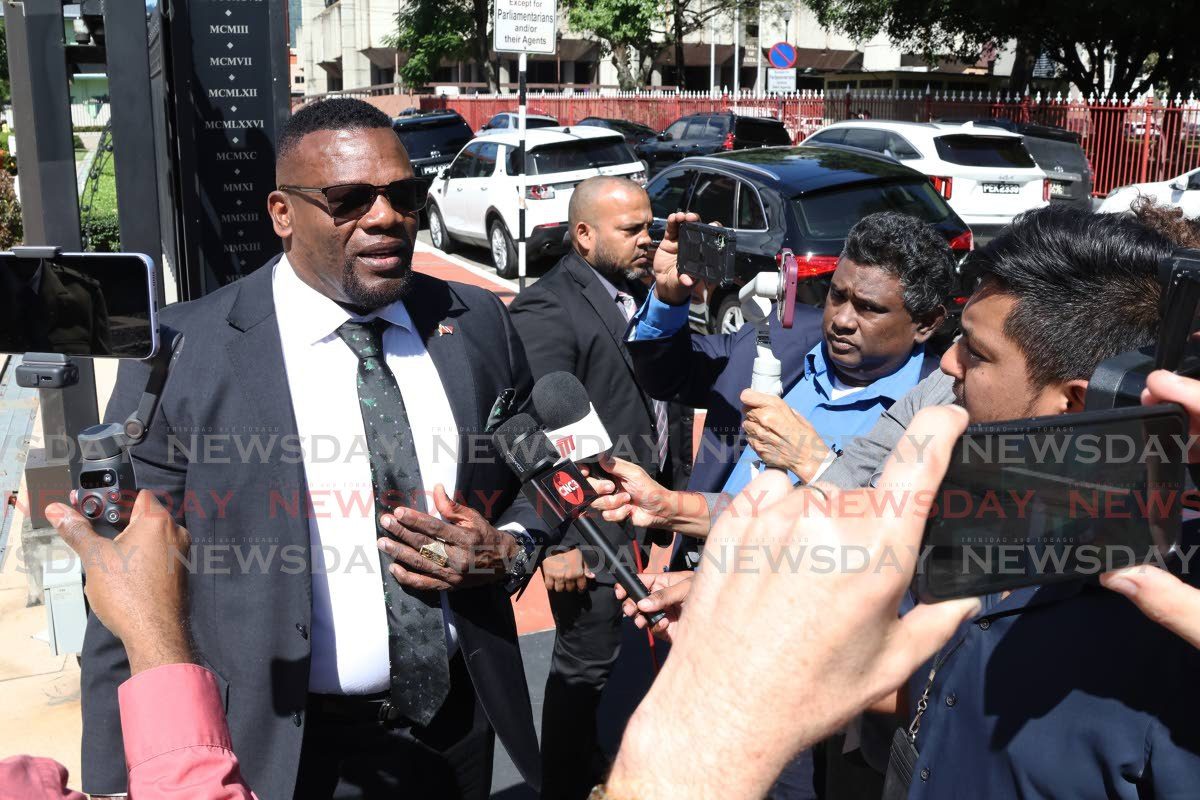
    Trinidad and Tobago’s Homeland Security Minister Roger Alexander has vigorously defended the recent deployment of radar technology in Tobago, asserting that additional systems should be implemented nationwide to enhance security measures. The minister’s comments came during a December 9 media briefing outside Parliament, addressing heightened security concerns following the abduction of businessman Derek Tardieu and his wife Clarabelle from their Monos Island residence on December 6.

    The couple remains missing with kidnappers demanding a $2.5 million ransom for their release. Minister Alexander emphasized that advanced radar technology could substantially improve protection for citizens residing in the archipelago’s outlying islands. “We must take a definitive stance against such criminal activities,” Alexander stated. “These perpetrators potentially arrived by vessel… to abduct citizens of our nation.”

    Rejecting a return to normalcy amid ongoing security challenges, Alexander revealed, “We witness similar incidents daily with unauthorized vessels entering our waters undetected. This precisely why we’re strategically deploying cutting-edge technology to prevent such occurrences.” The minister expressed personal commitment to encircling the nation with protective technologies if given sole authority.

    When questioned about potential United States military utilization of the radar system amid tensions with Venezuela, Alexander remained evasive, noting only that Trinidad and Tobago would “benefit from the situation” regarding foreign entities entering the country with malicious intent. Pressed on data-sharing arrangements, the minister described all operations as “joint ventures in and around TT” without providing specific details.

    Prime Minister Kamla Persad-Bissessar, separately addressing journalists, redirected technical inquiries to Defense Minister Wayne Sturge. While confirming Trinidadian military personnel access to radar data, she acknowledged unspecified external parties might have access but deemed such information potentially “too sensitive for public disclosure.” The Prime Minister emphasized that Minister Sturge possesses the comprehensive details regarding data-sharing protocols.

  • Trump announces new action against Maduro government: US forces seize oil tanker

    Trump announces new action against Maduro government: US forces seize oil tanker

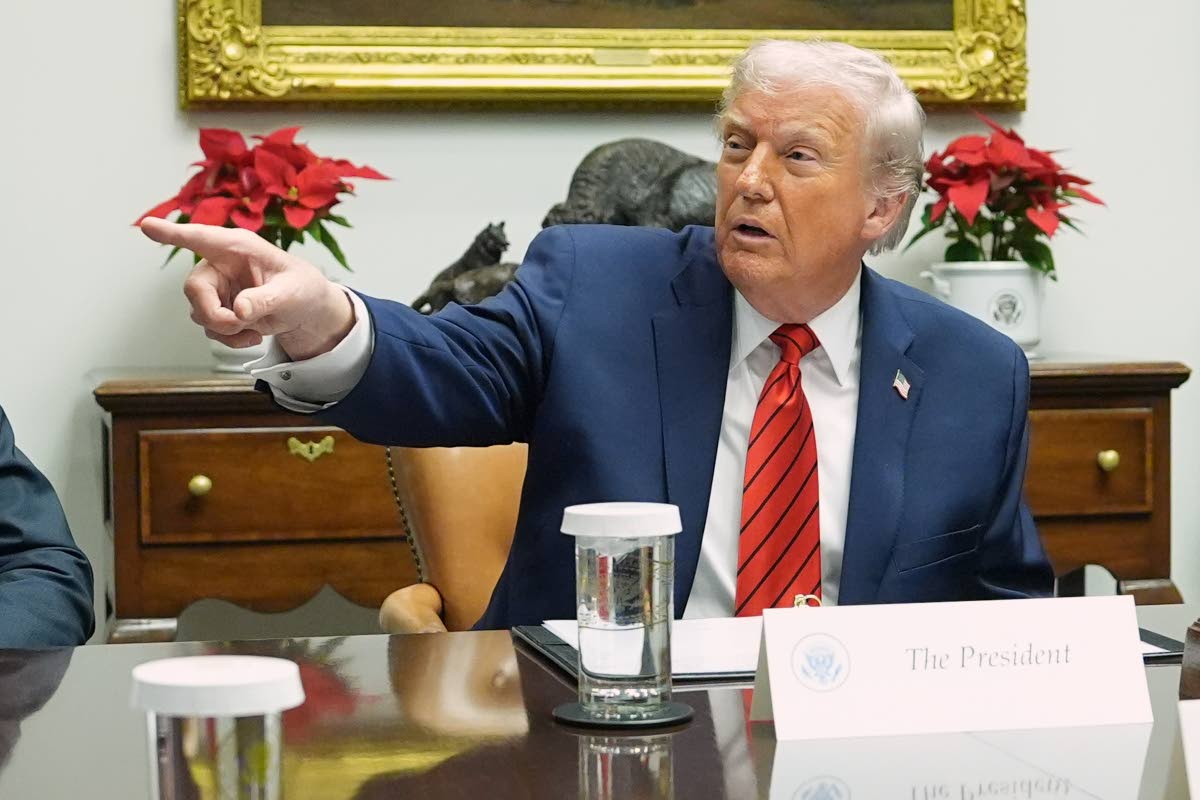
    In a significant escalation of maritime tensions, United States forces have intercepted and seized an oil tanker operating off the Venezuelan coastline. The operation, authorized by President Donald Trump’s administration, targeted a vessel allegedly involved in transporting sanctioned petroleum products. This decisive action occurs amidst deteriorating diplomatic relations between Washington and Caracas, with the U.S. maintaining that Venezuelan President Nicolas Maduro should face narcoterrorism charges.

    The seizure follows provocative military maneuvers by American fighter jets in the Gulf of Venezuela, representing the closest aerial approach since bilateral tensions began intensifying. Notably, the incident occurred merely one day after Trinidad and Tobago Prime Minister Kamla Persad-Bissessar publicly characterized unflagged vessels as ‘pirates’ operating outside international maritime protections.

    Prime Minister Persad-Bissessar has leveraged the incident to amplify previous allegations against political opponents, claiming the opposition PNM party seeks to compromise national security systems to benefit drug trafficking networks. She asserts that U.S.-installed radar systems in Tobago effectively monitor Venezuelan sanction-evasion activities and narcotics trafficking, making them targets for political sabotage.

    Venezuelan President Nicolas Maduro responded with belligerent rhetoric, warning his nation stands ‘prepared to break the teeth of the North American empire’ while commemorating a historical battle anniversary. Meanwhile, U.S. Attorney General Pam Bondi released operational footage showing military helicopters approaching the tanker and special forces boarding the vessel, alleging it transported prohibited oil from both Venezuela and Iran.

    The geopolitical implications extend beyond regional security, immediately impacting global energy markets. Oil prices registered increases following the seizure, with Brent crude rising 27 cents to $62.21 per barrel and West Texas Intermediate gaining 21 cents to $58.46.

    Legal experts including Defence Minister Wayne Sturge acknowledge that while unflagged vessels naturally raise security concerns, such status alone provides insufficient legal justification for seizure under international maritime law. Sturge noted intelligence considerations likely prevented full disclosure of operational evidence, complicating legal assessment of the action’s appropriateness.

    This incident represents the latest in approximately twenty counter-narcotics strikes conducted by U.S. forces in Caribbean and Pacific waters since September, resulting in over eighty fatalities. Critics continue questioning the legal basis for these operations, citing scant public evidence regarding drug transportation or immediate threats posed by intercepted vessels.

  • Windies fight back, but Black Caps take 41-run lead into day 3

    Windies fight back, but Black Caps take 41-run lead into day 3

    WELLINGTON – An electrifying day of cricket unfolded at Basin Reserve on December 11 as New Zealand established a precarious 41-run lead against West Indies in the second Test, with eleven wickets tumbling throughout the dramatic second day’s play.

    The hosts, resuming at 24/0 in response to West Indies’ first-innings total of 205, were eventually contained for 278 after a declaration, securing a 73-run advantage. The Black Caps’ batting effort was spearheaded by debutant Mitchell Hay, who showcased remarkable composure with an aggressive 61 runs from 93 deliveries. His maiden Test half-century proved instrumental in pushing New Zealand past the visitors’ initial score.

    West Indies’ pace attack demonstrated moments of brilliance, particularly during the morning session. Veteran seamer Kemar Roach (2/43) produced a magnificent delivery to dismiss captain Tom Latham for 11, while Anderson Phillip (3/70) claimed the prized wicket of star batsman Kane Williamson with an unplayable ball that shattered the off-stump. Williamson had been building momentum with 37 runs from just 46 balls.

    The post-lunch session saw immediate breakthroughs as Roach and first-Test hero Justin Greaves removed Rachin Ravindra (5) and Devon Conway (60) within three balls, reducing New Zealand to 117/4. A stabilizing 73-run partnership between Hay and Daryl Mitchell (25) followed before Phillip struck again, with wicketkeeper Tevin Imlach taking a sharp leg-side catch confirmed by review.

    Despite reaching tea at 200/5, New Zealand suffered another quick setback as Hay’s aggressive innings ended with a catch by Roach at fine-leg off Ojay Shields (1/50). The lower order contributed valuable runs, with Zakary Foulkes remaining unbeaten on 23 before the declaration at 278/9. The hosts were forced to bowl without pacer Blair Tickner, who dislocated his shoulder on day one.

    West Indies faced a challenging final session in their second innings, stumbling to 32/2 after opener John Campbell (14) was bowled by debutant Michael Rae. Nightwatchman Anderson Phillip fell for a duck to Jacob Duffy following a successful review. Brandon King (15*) and Kavem Hodge (3*) will resume the innings on day three with West Indies still trailing by 41 runs.

  • RHA employees to benefit from PSA wage hike

    RHA employees to benefit from PSA wage hike

    In a significant development for Trinidad and Tobago’s healthcare sector, the Public Services Association (PSA) has confirmed that all Regional Health Authority (RHA) employees will receive substantial financial benefits from the recently negotiated compensation package. The breakthrough agreement, finalized on December 2, guarantees a ten percent salary enhancement for healthcare workers across the nation’s regional health authorities.

    The PSA, recognized as the majority union for health ministry employees and RHA staff, clarified in its December 10 media release that the comprehensive compensation package encompasses three distinct employee groups: ministry workers stationed at RHAs, public service employees who transitioned to RHAs, and personnel directly hired by the regional authorities. This inclusive approach ensures salary parity throughout the healthcare workforce.

    Union president Felisha Thomas emphasized that once the memorandum of agreement (MoA) is formally executed for ministry officers and transferred staff, remaining RHA employees will automatically receive comparable adjustments. The PSA is now preparing to engage with RHA leadership to finalize similar agreements specifically addressing salary increases, allowances, and back pay for transferred workers.

    The association has proactively contacted all RHA chief executive officers, urging payment advances from the estimated $3.8 billion in retroactive payments before December 23. The landmark agreement covers bargaining periods from 2014-2016 and 2017-2019, featuring new salary implementations commencing January 2026 alongside retroactive allowances dating back to January 1, 2014.

    Prime Minister Kamla Persad-Bissessar previously noted that the effective compensation increase reaches approximately 15 percent when incorporating the consolidated Cost of Living Allowance (COLA) for both periods. The settlement represents approximately $420 million in additional annual expenditures alongside the substantial $3.8 billion retroactive payment obligation.