标签: Trinidad and Tobago

特立尼达和多巴哥

  • Restore timely negotiations

    Restore timely negotiations

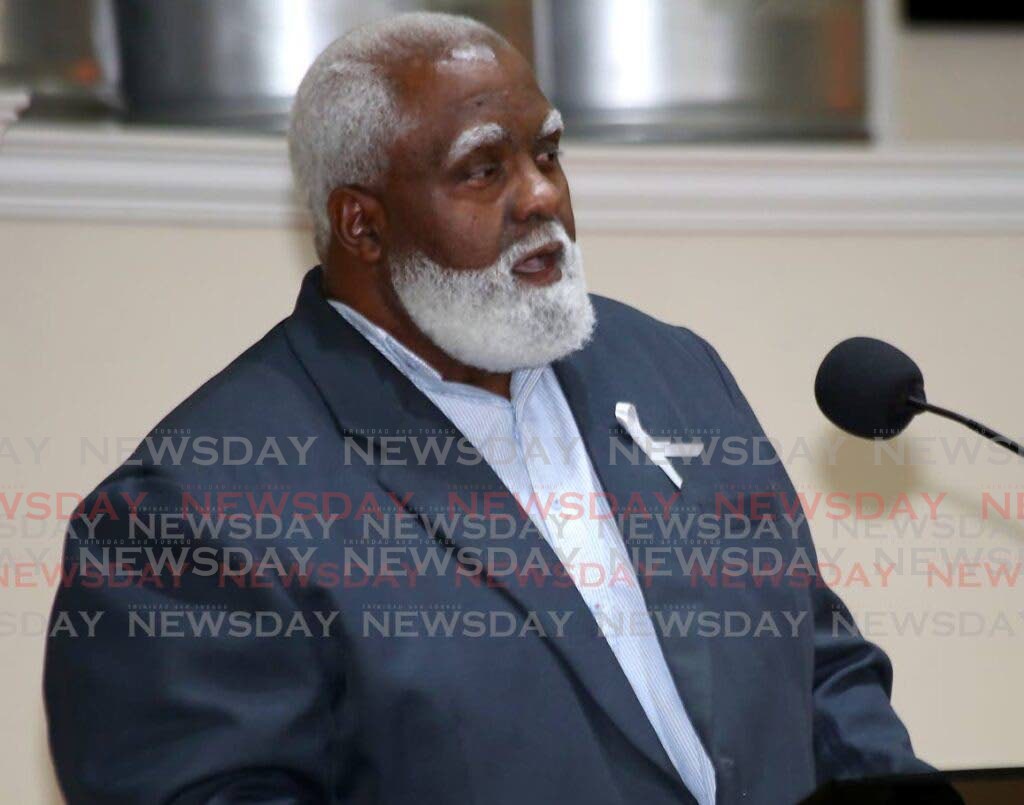
    The Estate Police Association (EPA) has issued a stark warning about the deteriorating credibility of Trinidad and Tobago’s industrial relations system due to persistently delayed wage negotiations. Association President Deryck Richardson revealed that unresolved negotiation cycles spanning from 2014-2016, 2016-2019, and the still-pending 2020-2025/26 period continue to severely compromise the collective bargaining process.

    The systemic delays have created a situation where wage settlements lose their real value due to inflationary erosion, forcing employees to prioritize back pay over meaningful improvements in living standards. Richardson emphasized that expired negotiation cycles fundamentally restrict both parties’ ability to implement substantive changes to collective agreements, as addressing past ‘lived realities’ becomes increasingly impractical once the relevant period has passed.

    A particularly concerning example emerges from the National Maintenance Training and Security Company, where years of delays may result in estate constables receiving no wage increases whatsoever. This stagnation places their basic compensation at par with security officers lacking police commissioner-issued precepts, while supervisors receive only minimal adjustments.

    The association notes that successive minimum wage adjustments have effectively overtaken earlier wage proposals, creating the false impression that workers have received adequate increases. Richardson clarified that the minimum wage represents merely a protective floor rather than a genuine assessment of officers’ skills, responsibilities, and risks.

    Compounding the problem, job evaluations across state companies and statutory bodies remain outdated, failing to reflect modern duties and expectations. The state’s continued reliance on antiquated assessment methods further undermines fair compensation practices.

    These negotiation delays also generate substantial back pay obligations that burden state finances and complicate long-term budgeting. The EPA emphasizes that timely settlements would enable responsible financial planning while ensuring workers receive increases when they actually matter.

    The association confirms it has submitted proposals to resolve all outstanding negotiation periods and now calls on the state to honor the collective bargaining process, return negotiations to proper timeframes, and restore real value to the nation’s estate police officers.

  • Cops seize $56m in ganja in Point Fortin

    Cops seize $56m in ganja in Point Fortin

    In a significant blow to narcotics trafficking networks, Trinidad and Tobago police authorities have intercepted approximately $56 million worth of marijuana in a remote forested area near Cap-De-Ville, Point Fortin. The operation, executed on December 11 between 4:30 PM and 8:30 PM, resulted in the confiscation of 23 substantial bales of the illicit substance.

    Commissioner of Police Allister Guevarro personally oversaw the strategic operation alongside Senior Superintendent Thompson, with coordination handled by Assistant Superintendents Forbes, Corrie, and Lewis. The multi-unit effort involved personnel from Special Branch South and the South Western Division, demonstrating coordinated law enforcement capabilities.

    Following the seizure, specialized crime scene investigators PC Telesford and PC Ramdass meticulously processed the remote location before transferring evidence to the Special Investigations Unit for comprehensive analysis and follow-up operations.

    Commissioner Guevarro emphasized the broader implications of such interventions, stating: ‘The value of these major seizures extends beyond monetary calculations to encompass the countless lives protected from narcotics devastation. While criminal networks profit from human suffering, our police service remains dedicated to dismantling their operations and stripping them of illegal revenues.’

    The Trinidad and Tobago Police Service reaffirmed its commitment to intelligence-driven anti-crime strategies targeting serious offenses and narcotics activities nationwide, signaling continued aggressive measures against organized crime syndicates.

  • A threat to democratic freedoms

    A threat to democratic freedoms

    A concerning democratic reversal is unfolding in Trinidad and Tobago as the current administration moves to regulate social media commentators, marking a stark departure from its previous stance while in opposition. This policy shift represents both profound hypocrisy and a fundamental threat to constitutional freedoms that form the bedrock of the nation’s democracy.

    During its opposition years, the United National Congress (UNC) actively championed social media as a vital platform for public discourse, even encouraging memes, caricatures, and criticism directed at the then prime minister and cabinet. Their Monday Night Forum served as a celebrated rallying point for dissent. Today, however, the same party condemns similar expressions as “reckless” and seeks to regulate what it once vigorously defended.

    This dramatic reversal reveals a troubling pattern where criticism appears valid only when directed at political opponents rather than being recognized as an essential democratic right. The government’s approach contradicts established democratic principles, particularly regarding free expression. Legal precedents from multiple jurisdictions demonstrate that when public officials create forums for public discourse—including social media pages—they cannot subsequently silence critics without violating fundamental rights.

    International legal perspectives reinforce these concerns. US courts have consistently ruled that when public officials utilize social media for governance purposes, the interactive portions of their accounts transform into “public forums” where censorship constitutes unconstitutional viewpoint discrimination. While these cases originate abroad, they articulate universal democratic values that should concern every Trinidad and Tobago citizen.

    Further alarm arises from the homeland security minister’s openness to collaborating with foreign governments to revoke visas of commentators disseminating “misleading” narratives. This development follows closely after the Prime Minister denied involvement in Gary Aboud’s visa troubles, suggesting either concerning coordination or visible disunity within government ranks.

    Equally troubling were the minister’s comments praising China’s social media control model, which prioritizes strict state censorship to maintain “social stability” and single-party narratives. This approach remains fundamentally incompatible with Trinidad and Tobago’s constitutional democracy, which explicitly guarantees freedom of thought, expression, and press.

    While the government cites legitimate concerns about online extremism, existing legal frameworks already provide sufficient remedies. Trinidad and Tobago law contains various statutes, common law offences, and civil remedies that render totalitarian-style censorship unnecessary. From preventative detention orders to established defamation laws, authorities possess adequate tools to address genuine threats without resorting to broad censorship that inevitably stifles legitimate criticism.

    The solution to challenging speech isn’t enforced silence but more speech. As late US Supreme Court Justice Louis Brandeis wisely counseled, the remedy for falsehood remains “more speech, not enforced silence.” Similarly, Dr. Eric Williams eloquently stated, “Let the jackass bray,” emphasizing that the most effective response to problematic speech is counterargument rather than government suppression.

    This assault on free expression coincides with troubling signs of press freedom erosion, recalling the 2013 attempt by the previous government to deny media access to crime statistics and criticize negative coverage. The current administration appears to be continuing this dangerous precedent rather than reversing it.

    Ultimately, a government that genuinely champions democracy cannot emulate the censorship practices of authoritarian regimes. However well-intentioned these measures might claim to be, historical precedent demonstrates that powers to silence critics, once established, inevitably expand beyond their original scope. Citizens across political affiliations must collectively defend the foundational principle that in a true democracy, every individual retains the right to criticize their government without fear of reprisal.

  • PBR compliance unit begins operations on December 15

    PBR compliance unit begins operations on December 15

    In a significant move to enhance traffic management and regulatory enforcement, Trinidad and Tobago’s Ministry of Transport and Civil Aviation has established a specialized Traffic Warden Priority Bus Route Compliance Unit. The official inauguration ceremony took place at the ministry’s headquarters in Port of Spain, presided over by Transport Minister Eli Zakour.

    The newly formed unit, which becomes fully operational on December 15, represents a strategic initiative to address persistent traffic challenges along the critical Priority Bus Route (PBR). Minister Zakour emphasized that the unit will provide dedicated, on-the-ground monitoring and traffic management at key points throughout the route, significantly improving oversight capabilities and facilitating smoother transit operations.

    The launch event witnessed the presence of prominent officials including Permanent Secretary Nicolette Duke and retired Senior Superintendent of Police Neville ‘Toco Burroughs’ Sankar, who serves as chief traffic warden. Duke reaffirmed the indispensable role of traffic wardens in maintaining order on the nation’s roadways and pledged the ministry’s full support for the unit’s operational duties.

    The Compliance Unit will work in coordination with enforcement agencies to conduct daily monitoring operations, ensuring that access to the Priority Bus Route remains restricted to authorized vehicles only. This specialized force is expected to substantially reinforce adherence to traffic regulations and strengthen overall compliance mechanisms along this vital transportation corridor.

  • Pirates of the Caribbean

    Pirates of the Caribbean

    In a significant escalation of hemispheric policy, the Trump administration has executed an unprecedented maritime seizure by capturing a Venezuelan oil tanker in Caribbean waters. This action directly implements the White House’s recently announced security strategy advocating renewed enforcement of the Monroe Doctrine to restore American dominance in the Western Hemisphere.

    The December 10 seizure occurred amid mounting international pressure regarding the administration’s controversial program of lethal strikes against vessels allegedly involved in drug trafficking. Administration officials justified the tanker interception by claiming involvement in transporting sanctioned oil to Iran, though President Trump remained ambiguous about the disposition of the confiscated cargo.

    Venezuelan authorities condemned the operation as “an act of international piracy,” characterizing it as both alarming and predictable given recent U.S. posturing. The incident appears strategically timed to redirect attention from potential war crimes allegations toward technical debates regarding maritime law and sanctions enforcement.

    The administration’s narrative has shifted noticeably from initial justifications centered on combating “narco-terrorism” toward emphasizing Iran’s regional influence and sanctions compliance. This rhetorical evolution coincides with longstanding suspicions that the administration ultimately seeks regime change in Caracas or control over Venezuela’s substantial oil reserves.

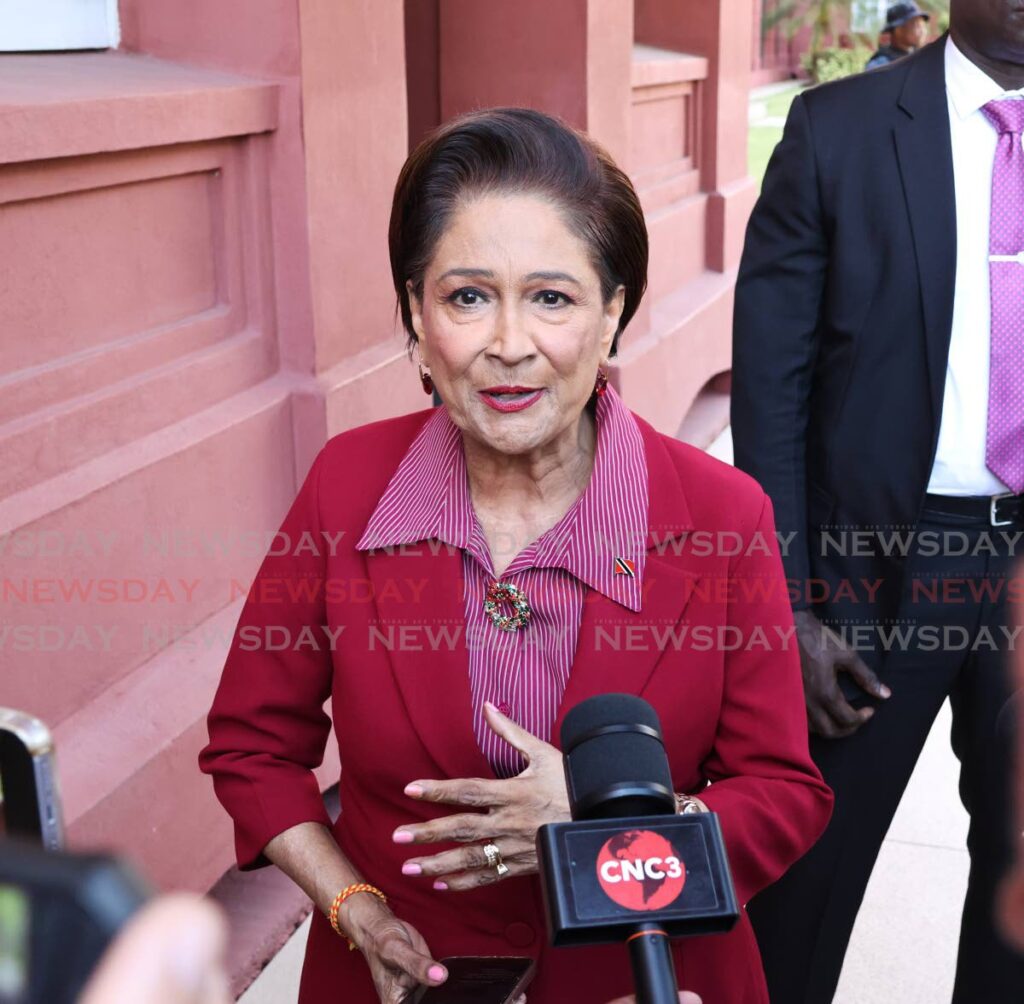
    Regional implications deepened when Trinidad and Tobago’s Prime Minister Kamla Persad-Bissessar attempted to deflect moral questions about possible citizen casualties from U.S. boat strikes by focusing instead on issues of vessel registration and piracy definitions. Her simultaneous acknowledgment that newly installed U.S. radar infrastructure in Tobago assists in detecting Venezuelan sanction-busting activities reveals deeper involvement in U.S. sanctions enforcement than previously acknowledged.

    These developments effectively draw Caribbean nations into the escalating confrontation between the Maduro regime and Republican Party foreign policy objectives. Analysts anticipate further escalation as President Trump faces mounting domestic pressures, including ongoing controversies surrounding his administration’s handling of the Jeffrey Epstein scandal.

  • Augustine proud of ‘reversal’ of Tobago murder rate

    Augustine proud of ‘reversal’ of Tobago murder rate

    In a recent political address, Tobago House of Assembly (THA) Chief Secretary Farley Augustine declared significant progress in combating the island’s crime epidemic under his Tobago People’s Party (TPP) administration. Speaking at a December 11th party gathering in Patience Hill, Augustine acknowledged the troubling legacy of 2023 recording 24 homicides—the highest in Tobago’s modern history—followed by 14 murders the previous year.

    Augustine emphasized that despite constitutional limitations placing national security under central government jurisdiction, the THA implemented independent strategies that have dramatically reduced violent crime. “We have successfully reversed the alarming murder trend through strategic investments in youth development and security infrastructure,” Augustine stated, contrasting Tobago’s improved statistics with other Trinidadian regions.

    The Chief Secretary revealed that Prime Minister Kamla Persad-Bissessar has endorsed his proposal for establishing a localized police force—a radical measure Augustine deems essential for Tobago’s unique security challenges. He criticized current maritime surveillance failures, citing instances where criminals escaped via watercraft without interception by Coast Guard vessels hampered by logistical constraints.

    Augustine’s address simultaneously served as an endorsement rally for Nigel Taitt, the TPP’s prospective candidate for Patience Hill/Signal Hill district. Taitt, who previously unseated former PNM Tobago Council leader Tracy Davidson-Celestine, currently oversees Food Security, Natural Resources, and Sustainable Development portfolios.

    The political leader confidently predicted electoral victory on January 12, 2026, asserting the TPP’s governance outperforms any previous four-year PNM administration. Taitt outlined forthcoming infrastructure projects including connector bridges, road paving initiatives, community center upgrades, and recreational facility construction, positioning himself as a hands-on public servant committed to district development.

  • Met Service: Expect a wet start for 2026 dry season

    Met Service: Expect a wet start for 2026 dry season

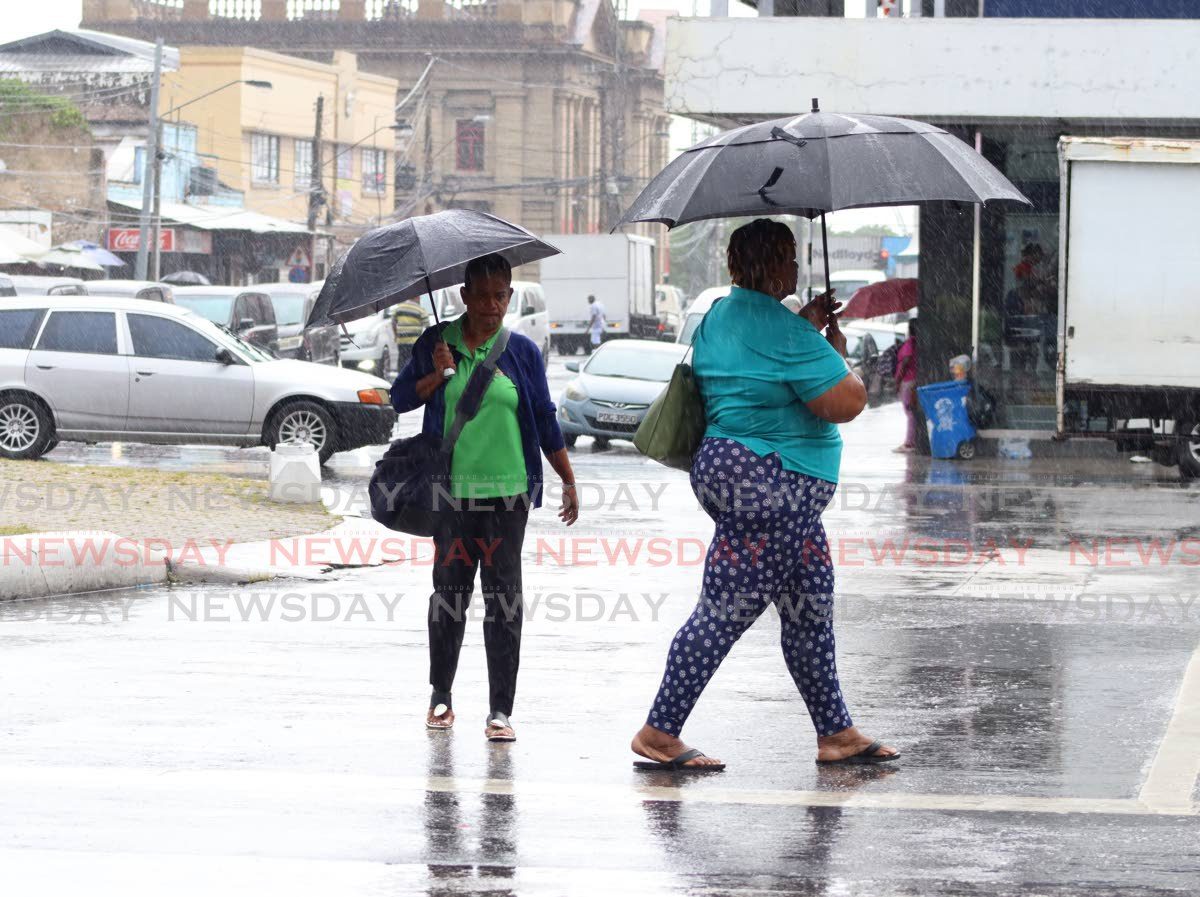
    Meteorological authorities in Trinidad and Tobago have released a comprehensive forecast indicating an atypical 2026 dry season characterized by near-normal to above-normal rainfall patterns alongside elevated temperatures. The analysis, presented by Acting Chief Climatologist Kaidar Kissoon during the 19th National Climate Outlook Forum, reveals significant deviations from historical seasonal norms.

    The climatic outlook stems from two primary factors: a weak La Niña system that emerged in October and unusually warm sea surface temperatures extending from Trinidad’s eastern waters into the tropical Atlantic. These conditions are projected to enhance moisture availability for cloud formation during January-May 2026, particularly influencing the season’s first half.

    Rainfall projections indicate a 56-76% probability of above-normal precipitation across most regions between January and March, with December 2025 and January 2026 expected to receive the bulk of rainfall. The nation anticipates approximately 97 dry days (recording less than 1.0mm rainfall), notably below the historical average of 108 dry days. Spatial distribution shows northern and eastern areas including Valencia, North Oropouche, and Sangre Grande in Trinidad, along with Charlotteville and Roxborough in Tobago, likely to accumulate between 540mm and 769mm. Conversely, northwestern Trinidad and southwestern Tobago may receive only around 266mm.

    Temperature projections suggest consistently above-normal readings both diurnally and nocturnally, with urban centers experiencing the most significant warming. Maximum temperatures may average 33.5°C in Trinidad and 32.5°C in Tobago during May, though brief cooler periods dipping below 20°C and 22°C respectively remain possible in January and February.

    The climatic conditions present a dual impact scenario: initial wetter periods may improve water reservoir levels and reduce fire risks while potentially increasing mosquito breeding activity. The latter dry period typically brings heightened fire hazards and air quality concerns. Officials recommend water conservation measures, public awareness campaigns regarding disease vector control, and enhanced contingency planning for respiratory health management.

  • PNM vows to enhance Argyle Waterfall, create jobs for Tobago

    PNM vows to enhance Argyle Waterfall, create jobs for Tobago

    In a strategic move ahead of Tobago’s January 12 House of Assembly elections, opposition leader Ancil Dennis has unveiled an ambitious employment manifesto targeting the island’s chronic unemployment crisis. The People’s National Movement (PNM) Tobago Council leader committed to generating 7,000 new jobs within four years if returned to power, addressing what he termed “deliberate economic neglect” by the current administration.

    Speaking at a December 11 rally in Roxborough/Argyle, Dennis—a former chief secretary—launched a scathing critique against the Tobago People’s Partnership (TPP) government, accusing them of diverting over $300 million in development funds to Trinidad-based contractors. He specifically referenced a stalled $30 million road project on Lammy Road awarded to an off-island contractor as emblematic of this problematic pattern.

    The opposition leader announced a transformative procurement policy mandating that all Tobago House of Assembly contracts must优先授予本地承包商 possessing relevant capabilities. “No contractor from outside Tobago should be building roads here when we have qualified local firms that can employ community members,” Dennis asserted, framing this approach as both economic justice and practical development strategy.

    Dennis projected that this localization initiative would immediately restore 2,000 jobs while creating thousands more through targeted investments in construction, tourism, and agricultural sectors. His rhetoric emphasized economic sovereignty, repeatedly promising to return “Tobago people’s money to Tobagonians’ pockets.

    Simultaneously, PNM candidate Shonae John outlined her vision for transforming Roxborough/Argyle’s economic landscape. She proposed developing Argyle Waterfall into a comprehensive tourist destination while establishing integrated agricultural-tourism linkages. Her innovative “farm-to-table food hub” concept would connect Lammy Road farmers directly with tourists and culinary facilities, creating an experiential tourism circuit complete with trained guides, lifeguards, and retail opportunities.

    The electoral battle lines are now clearly drawn, with the PNM advocating economic localization against the TPP’s development approach. Current area representative Watson Duke’s Progressive Democratic Party has withdrawn from the race to support the ruling TPP, whose candidate Orlando Kirk will directly challenge John’s bid to unseat the incumbent administration.

  • Victoria Deonarine’s record dive moves freediving into national spotlight

    Victoria Deonarine’s record dive moves freediving into national spotlight

    The sport of freediving in Trinidad and Tobago stands poised for transformative development following a pivotal meeting between national record-holder Victoria Deonarine and Minister of Sport and Youth Affairs Phillip Watts. The December 9 discussion at the ministry’s offices marked a potential turning point for the previously niche activity, now positioned for recognition as an official national discipline.

    The 18-year-old Williamsville student, accompanied by coaches Saif Mohammed and Danielle Bachew, detailed her recent athletic breakthrough at the Blue Element competition in Dominica. On November 21, Deonarine shattered her own national record by achieving a remarkable 45-meter dive, capturing ministerial attention and sparking institutional interest.

    Minister Watts, having monitored Deonarine’s performance during the international event, initiated the post-competition meeting where he committed substantive support for her international competitive aspirations. This institutional endorsement represents a significant advancement for both the young athlete’s career and the sport’s development within the Caribbean nation.

    Deonarine described the challenges previously facing freediving enthusiasts, including inadequate funding structures, underdeveloped club infrastructure, and limited training facilities. Her earlier application for Elite Athlete Assistance failed to materialize, forcing reliance on community donations from friends, family, and strangers to finance her Dominica participation.

    Training limitations further complicated her preparation. Requests to utilize the National Aquatics Centre proved unsuccessful, while corporate facilities required club affiliations impossible for unrecognized sports. Deonarine consequently conducts most depth training in northwestern peninsula waters capable of accommodating 40-plus meter dives, with alternative sites in Las Cuevas and Speyside, Tobago proving logistically impractical for regular training.

    The ministerial recognition effectively addresses these systemic barriers. Deonarine emphasized how this support “could make it a lot easier for me to compete in future competitions” while acknowledging Watts’ recognition of her “potential to be on that same level as international competitors.”

    Beyond personal athletic ambitions, Deonarine envisions broader developmental impacts. “This meeting basically takes one step to make the sport into a club or a community,” she noted, expressing particular enthusiasm about “the growth that the sport’s getting” through institutional validation.

    The St Stephen’s College student maintains ambitious objectives extending beyond national records to international competition and inspirational representation. “When people see TT athletes in these competitions,” she affirmed, “it means a lot for TT.” With ministerial support now secured, Trinidad and Tobago’s freediving community anticipates accelerated development and competitive emergence on the global stage.

  • Employees’ brave efforts to stop fire fail, Cipero St business gutted

    Employees’ brave efforts to stop fire fail, Cipero St business gutted

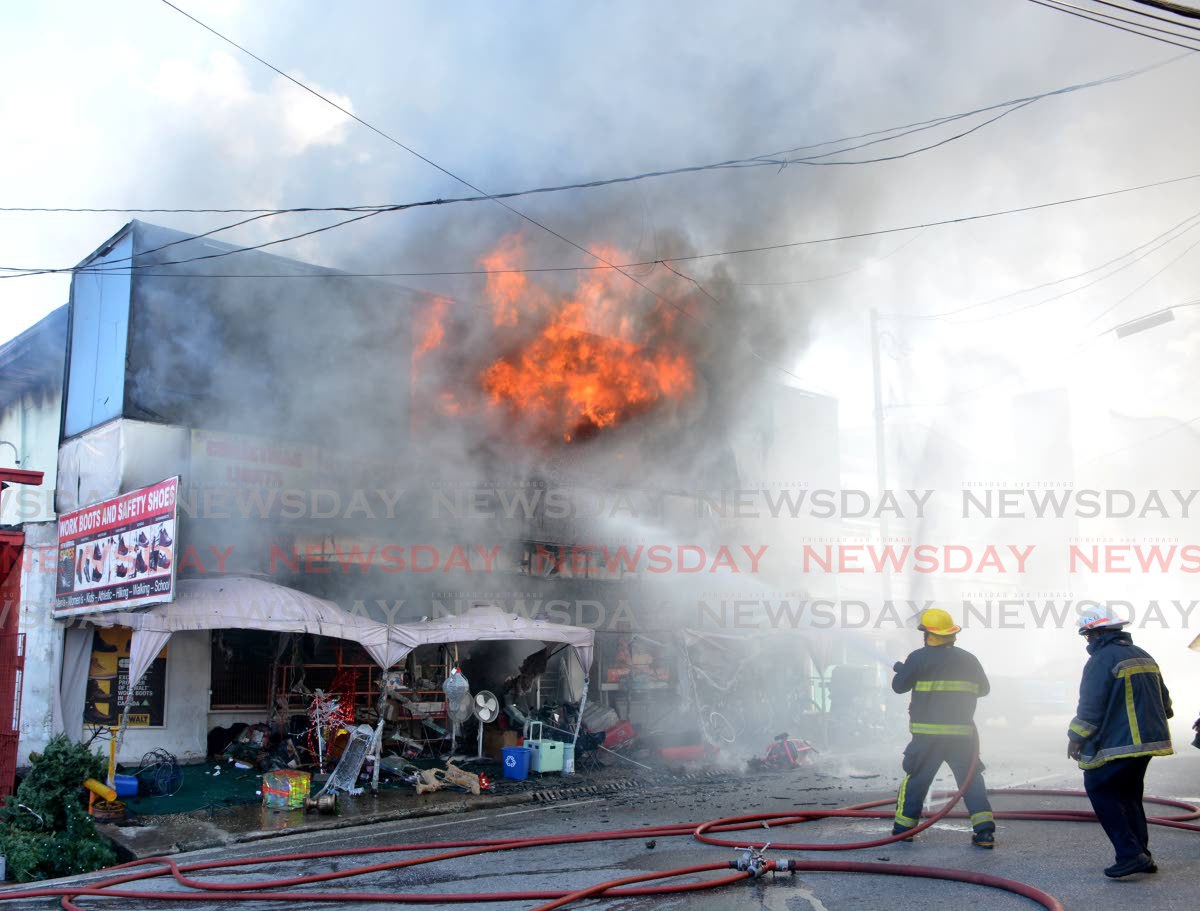
    A catastrophic fire has completely destroyed Product Central Trinidad, a major retail establishment on Cipero Street in San Fernando, despite valiant containment efforts by firefighters and local employees. The December 11 inferno, which began on the building’s upper level around 2 PM, rapidly escalated beyond control, culminating in the structural collapse of the second story and significant electrical hazards from arcing power lines.

    Eyewitness accounts reveal the immediate response from neighboring businesses, with Ramasir’s Sales and Service owner Chan Ramasir providing fire extinguishers and evacuating her staff upon noticing the initial flames. While security personnel facilitated building evacuations, some employees reportedly remained inside attempting to salvage merchandise before the situation became untenable.

    Firefighting operations faced substantial logistical challenges, including the temporary retreat of the initial response tender to replenish water supplies. The absence of a previously existing fire hydrant less than a block away on Sutton Street prompted concerns among observers, though municipal officials confirmed alternative water sources were available on Lawrence Street and at Cross Crossing.

    Local councilor Ryaad Hosein praised the fire service’s “excellent job” under difficult circumstances, while acknowledging the TT Electricity Commission’s prompt response to disconnect power despite complications from extensively damaged wiring.

    The economic impact is expected to be severe, with Greater San Fernando Area Chamber of Commerce president Kiran Singh emphasizing the immeasurable loss of Christmas inventory just two weeks before the holiday. The destruction of this vigorously operating business represents a significant blow to Cipero Street’s commercial district and its workforce, with numerous employees facing unemployment during the critical holiday season.

    The store’s owner, present at the scene, declined commentary while witnessing the devastating loss. This incident marks the second major structural fire in San Fernando within the week, following a December 9 blaze in Moody Stuart Street that left six residents homeless.