
In a thought-provoking presentation on November 19, 2025, legal scholar Carlo Jadnanansing unveiled his latest work, *On(t)roerend Goed*, a collection of 45 articles addressing Suriname’s complex property laws. The event, organized by the SJV, SJB, and Carlo Jad Fonds (CJF), highlighted Jadnanansing’s critique of the traditional interpretation of allodial property rights (aeeb) and his arguments for their continued legal relevance.
标签: Suriname
苏里南
-
Telesur vergroot internetcapaciteit met Orange
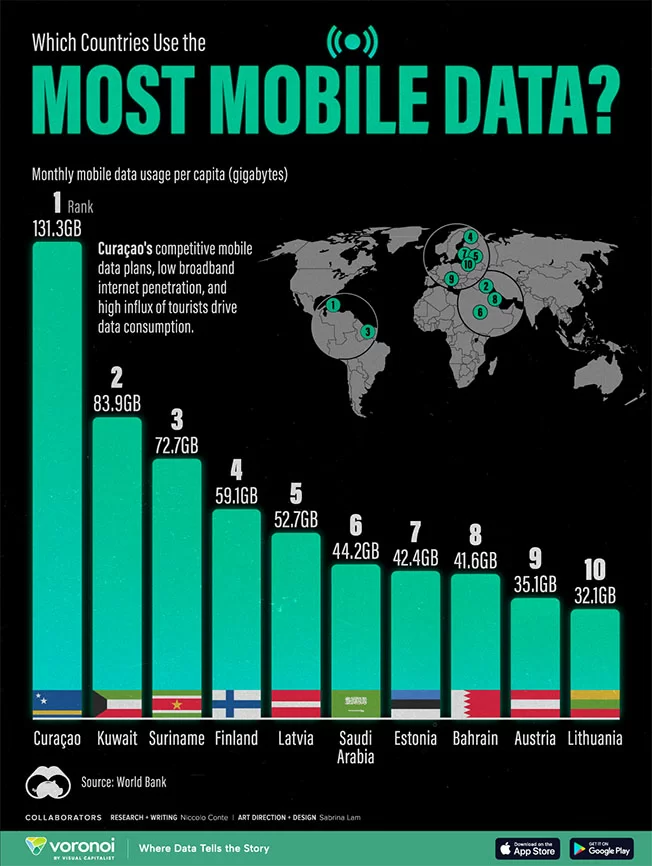
Suriname’s telecommunications company Telesur has joined forces with French telecom giant Orange to significantly enhance internet capacity in the country. This move comes in response to Suriname’s exceptionally high mobile data consumption compared to the region, driven by the burgeoning oil and gas industry and the increasing reliance on online and mobile transactions. International platforms like Facebook and TikTok have already established local servers in Suriname, which are heavily utilized. On Wednesday, two memoranda of understanding were signed between Telesur and Orange at the Courtyard Marriott. The first agreement focuses on Telesur purchasing additional capacity from Orange to support the growing oil and gas sector. The second agreement extends the collaboration on the Marowijne River data cable for another decade and includes plans to install a second river cable in the same region. Telesur’s director, Doric Ramlakhan, highlighted the nationwide surge in internet traffic, with user numbers in rural areas quadrupling since the introduction of 4G/LTE. The fiber-optic project is 70% complete, with over 60,000 households still awaiting the transition from copper connections to fiber. Foreign platforms have set up local servers to ensure continued access to services like Facebook during network outages. Beyond entertainment, including online gaming and streaming, there is a growing demand for business-oriented online services. Telesur plans to focus more on mobile payment systems, which are expected to grow rapidly due to the oil and gas industry’s expansion and increased tourism. According to the World Bank, Suriname ranked third globally in 2024 for mobile data usage, with an average of 73 GB per person, trailing Curaçao (131 GB) and Kuwait (84 GB). China leads in the number of internet users (1.3 billion), followed by India (1 billion) and the United States (324 million).
-

Atompai en Sardjoe vormen nieuwe top Melkcentrale NV
Monché Atompai has officially been appointed as the General Director of Melkcentrale NV, a prominent state-owned enterprise. Previously serving as the President-Commissioner, Atompai had been acting as the interim director following the suspension of the former CEO, Dewkoemar Sitaram. Sitaram remains under investigation in connection with a large-scale fraud case that has rocked the company. The investigation, led by the Criminal Investigations Unit of the Herman E. Gooding Police Bureau, has resulted in multiple arrests. The scandal came to light after an internal audit and a formal complaint filed by the Ministry of Agriculture, Livestock, and Fisheries. Preliminary findings suggest that substantial sums of money, amounting to over SRD 17 million, have been misappropriated from the company’s coffers since 2018. Meanwhile, Anuska Sardjoe has been appointed as the new President-Commissioner by the General Assembly of Shareholders, marking a significant leadership transition at Melkcentrale NV.
-
Regionale handel blijft groeien ondanks Amerikaanse tarieven
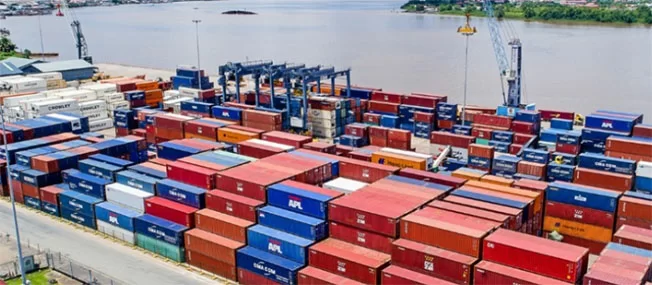
Despite the recent imposition of broad import tariffs by the United States, trade between Latin America and the Caribbean is projected to grow significantly in 2025, according to a report released by the United Nations Economic Commission for Latin America and the Caribbean (ECLAC). The report, presented on Wednesday, indicates that the impact of the US tariffs has been less severe than initially feared. The value of regional exports is expected to rise by 5% this year, up from 4.5% in 2024, driven by a 4% volume growth and a modest 1% price increase. Mexico, the region’s largest exporter, is also anticipated to see a 5% growth in exports. The limited effect of the US tariffs is attributed to strong demand in the early months of the year, with American companies accelerating imports and building inventories in anticipation of higher tariffs. Additionally, robust trade dynamics among Asian economies have contributed to global trade stability. However, ECLAC warns that the outlook for 2026 is less favorable, with growth in international goods trade expected to slow due to reduced inventory buildup and potential new trade tensions. The export of services from the region is projected to grow by 8% this year, slightly down from 9% in 2024. Between January and August, prices for key export commodities from the region rose by an average of 1.7%, compared to a 2.1% decline in the same period last year. ECLAC attributes the upward revision in expectations to the strong trade momentum in the first half of the year. Currently, the effective average US tariff on Latin American goods is 10%, seven percentage points lower than the global average. However, the commission cautions that this relatively favorable position could change quickly due to trade deficits and geopolitical developments. ECLAC advises regional countries to diversify their trade relationships and deepen regional integration to enhance economic resilience in a world where trade policy is increasingly used as a strategic tool.
-
Voetbal wordt leermiddel: Football for Schools van start
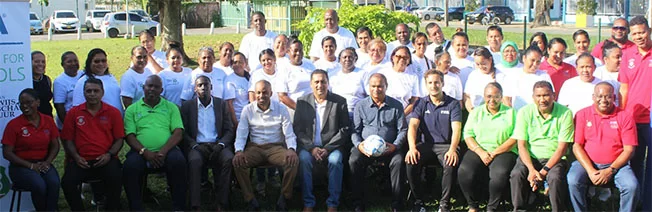
FIFA’s global Football for Schools initiative has officially expanded to Suriname, aiming to harness the power of football to foster not only athletic development but also essential social and life skills among young people. The program seeks to support schools in systematically integrating sports to promote personal growth, healthy behaviors, and active citizenship. By teaching students skills such as self-confidence, critical thinking, decision-making, teamwork, and respect, the initiative aligns with the goals of Suriname’s Ministry of Youth Development and Sports (JOS), which views sports as a vital tool for comprehensive youth development. Jason Menso, Deputy Director of Training, Information, and Sports Development at JOS, emphasized the strategic potential of football in education. ‘Football is accessible and immensely popular. It can be strategically used to empower young people, which is precisely what Football for Schools aims to achieve: developing life experiences and competencies through sport,’ he stated. The program focuses on equal opportunities for all youth, including girls, and encourages talent development and societal participation. It also contributes to social cohesion and healthier lifestyles within communities. ‘By placing schools at the center, this program makes sports widely accessible and leverages them as a powerful tool for positive youth development,’ Menso added. A two-day training session for physical education teachers recently commenced at the Owru Cul Sports Complex, preparing them to implement Football for Schools in various schools across Suriname. The training familiarizes teachers with the program’s methodology, practical approaches, and underlying values, enabling them to effectively guide students. According to FIFA, international research demonstrates that Football for Schools helps countries address social and economic challenges through sport, in alignment with sustainable development goals. In Suriname, the program is being executed by the Surinamese Football Association (SVB) in collaboration with FIFA and UNICEF.
-

EAS: Suriname heeft al fundament gelegd voor betrouwbare stroomvoorziening
The Energy Authority Suriname (EAS) has responded to recent reports of widespread power outages across multiple districts, acknowledging the concerns of citizens and businesses. The regulator emphasized the critical importance of a reliable electricity supply for the nation. Since 2021, the EAS has laid the groundwork for improved regulation and modernization of the sector, with significant preparatory work addressing current challenges. The EAS has three core mandates: advising the government, regulating the electricity sector, and promoting a safe, reliable, and affordable power supply. Additionally, it approves kWh tariffs, ensures compliance with laws, and encourages sustainable energy solutions. Following a recent outage earlier this month, the EAS received information from the EBS and highlighted the need for better preventive maintenance, timely inspections, infrastructure modernization, and more transparent public communication. A key part of the solution lies in the Electricity Sector Plan, submitted to the government in May 2025 for approval. This plan includes a 20-year strategic vision, a five-year investment roadmap, technical recommendations, improved tariff methodologies, and proposals for strengthening legal frameworks. The EAS is also collaborating with sector partners and the Inter-American Development Bank on projects to modernize regulations, enhance oversight, build capacity, and invest in sustainable energy. A transparent framework for renewable energy project tenders has already been developed. The EAS has prepared necessary analyses, frameworks, and recommendations for future working groups, enabling the country to build on existing efforts rather than starting anew. The authority stressed that electricity is a basic necessity and is ready to support the government and sector partners with data, policy proposals, and international best practices. The recent outage underscores the urgency of implementing the Electricity Sector Plan to ensure Suriname achieves a reliable, affordable, and sustainable energy supply.
-
Van Trikt in nieuw strafrechtelijk onderzoek gedagvaard door Openbaar Ministerie
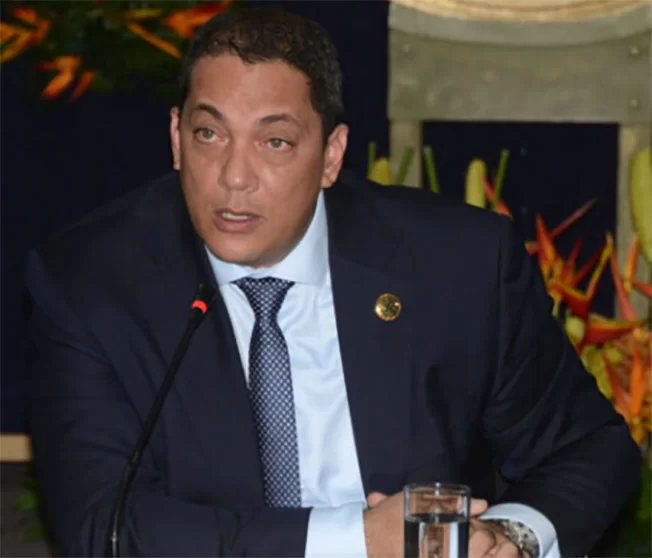
Robert van Trikt, the former Governor of the Central Bank of Suriname, has been summoned as a suspect in a new criminal investigation by the Public Prosecution Service (OM). He is required to appear before the examining magistrate on Wednesday, November 26. The allegations against Van Trikt include violating legal regulations, such as entering into agreements on behalf of or at the expense of the state or a state institution, as outlined in Article 13 of the Anti-Corruption Act. Additionally, he is accused of embezzlement of funds or valuable securities and fraud committed by a public official, involving a breach of a special duty or the misuse of power, opportunity, or means provided by his position. Van Trikt, who was previously convicted in a high-profile case related to the Central Bank of Suriname, is currently appealing this conviction. The appeal process is nearing completion, with Van Trikt having presented his final arguments, though the Court of Justice has yet to issue a ruling. Murwin Dubois, one of the lawyers involved in the case, expressed skepticism about the new investigation, suggesting it may be related to the use of cash reserves in 2019 during Van Trikt’s tenure. Dubois emphasized that multiple reports over the past five years have found no issues with the cash reserves. He also raised concerns about the principle of ne bis in idem, which prohibits prosecuting an individual twice for the same offense, noting that the new summons is based on the same legal provision as the ongoing case. Dubois questioned the basis of the judicial investigation, pointing out that no legal authority, including the Court of Audit, has raised concerns about the use of the cash reserves, even in the Central Bank’s annual report for the relevant period.
-

Column: Het vervolgingsrecht van OM – prerogatief of bron van ongelijkheid?
A concerning pattern has emerged within Suriname’s judicial system, as highlighted by the country’s Court of Audit. Over three consecutive years—2021, 2022, and 2023—the Court has documented significant irregularities in government operations. These are not mere administrative oversights but systemic violations, including the unlawful allocation of land, which have been explicitly labeled as illegal.
-
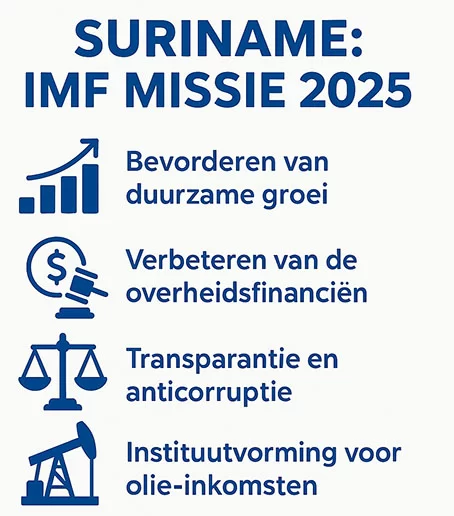
IMF ziet harde waarschuwing voor Suriname op weg naar 2028
Suriname, marking fifty years of independence, stands on the brink of a historic turning point, according to the International Monetary Fund (IMF). In its Staff Concluding Statement following the annual Article IV mission, the IMF highlights the nation’s progress in stabilizing its economy and strengthening institutions. However, with the imminent commencement of large-scale oil exploitation, the IMF emphasizes the urgent need for swift and targeted reforms to responsibly manage future revenues and improve citizens’ quality of life. The report warns that the hard-earned economic stability is showing signs of strain.
The IMF mission focused on economic developments, fiscal policy, the foreign exchange market, the role of state-owned enterprises, and preparations for expected revenues from the offshore oil field Block 58. While Suriname has a unique opportunity to transform its economy for future generations, the IMF cautions that delays in reforms could squander this potential.
Economic growth has remained modest but stable, with 1.7% in 2024 and 1.3% in 2025, projected to rise to nearly 4% by 2026. Despite a disappointing gold production this year, the development of the Block 58 oil project remains on track. The project’s construction phase will lead to increased imports and current account deficits from 2026 to 2028, financed by foreign investments. Oil production is expected to begin in 2028, potentially doubling the economy by 2030.
However, macroeconomic stability is under threat. Although Suriname achieved primary fiscal surpluses between 2022 and 2024, 2025 saw a deterioration due to election-related spending and a surge in overdue payments to suppliers. This has depleted government cash reserves and increased pressure on the exchange rate. Inflation rose from 6% to over 10% in 2025, prompting the Central Bank of Suriname to intervene in the foreign exchange market while allowing money supply growth to exceed targets.
The IMF stresses the need for robust fiscal discipline in 2026–2027, recommending measures such as restoring budgetary discipline, maintaining clear spending limits, strengthening public finances, and addressing supplier arrears. Social spending in education, healthcare, utilities, and infrastructure should be increased gradually to ensure effective implementation.
Key recommendations include restoring automatic electricity tariff indexing, phasing out subsidies, and reallocating resources to social programs and investments. The IMF also calls for stronger tax collection, addressing gold smuggling, and enhancing governance to ensure oil revenues benefit the population. Transparency in state-owned enterprises, stricter monetary policies, and operationalizing a legal framework for bank resolution are also urged.
The IMF concludes that timely and consistent reforms are essential for Suriname to leverage its oil revenues for sustainable development. The coming years will be pivotal in shaping the nation’s economic future.
-

Voorbij de vlag: de Onvoltooide Onafhankelijkheid
As Suriname marks 50 years of independence, the nation finds itself reflecting on the deeper meaning of freedom. The journey since 1975, when Suriname formally severed ties with its colonial past, has been one of both pride and introspection. Yet, the question lingers: what has been achieved with this hard-won independence? True liberation, it seems, demands more than political autonomy; it requires a transformation within the people themselves. The scars of slavery, indentured labor, and colonial exploitation remain etched in the national consciousness, symbolized by monuments like the statue of Kwakoe, whose broken chains still hang from his wrists. These remnants of history serve as a reminder that while the nation is free in name, it remains bound by the invisible chains of division, distrust, and complacency. The relationship with the Netherlands, though complex, persists through shared language, culture, and familial ties. Rather than dwelling on past grievances, the call is for Suriname to view the Netherlands as a partner in progress, fostering collaboration in trade, education, and sustainable development. The true battle for independence, however, lies within. It is a fight against the internalized colonial mindset that perpetuates inequality and corruption. The promise of oil revenues offers economic potential, but it is not a panacea for the nation’s structural challenges. Real change will only come when Surinamese society confronts its own shortcomings, embraces unity, and takes collective responsibility for its future. Fifty years of independence is not just a milestone but a call to action—a reminder that true freedom is a daily commitment, requiring courage, character, and the recognition that liberation begins with self-transformation.