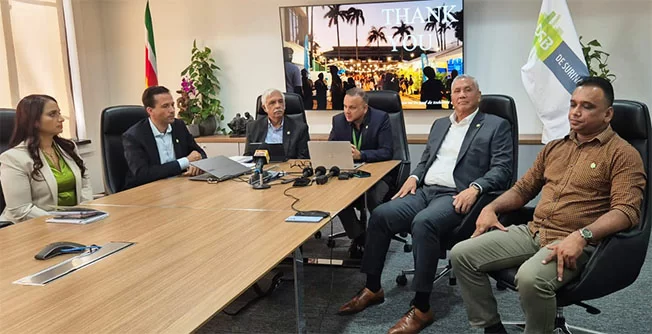
In a move that has sent shockwaves across Suriname, the Ministry of Land Policy and Forest Management (GBB) quietly issued a decree just days before the May 2025 elections, transferring ownership of the Leonsberg Pier and its surrounding land to a private individual, Sandiep Seemangal. This decision, seemingly routine on paper, has profound implications for the community, as the pier has long served as a vital public facility connecting Paramaribo and Commewijne, and a gateway to popular tourist destinations like Braamspoint and the mangroves. The privatization has left over 70 boat operators, fishermen, and tour guides in legal limbo, effectively barring them from using the pier they’ve relied on for decades. The Leonsberg Pier is more than just a docking point; it symbolizes free access to the river and the interconnectedness of Suriname’s communities. The timing of the transfer, finalized just days before the elections, has raised suspicions of last-minute political favoritism. Minister Stanley Soeropawiro and Assembly Member Bronto Somohardjo have both called for the land to be returned to the state, but reversing the decision will require a court order—a daunting task given the GBB’s backlog of nearly 900 lawsuits over disputed land claims. This incident is not isolated but reflects a broader erosion of integrity in governance, where public assets are increasingly privatized for political gain. The Leonsberg Pier case underscores the urgent need for systemic reform to protect public resources and restore trust in Suriname’s institutions. As the nation grapples with this crisis, the question remains: if even the river is no longer free, where does justice lie?
标签: Suriname
苏里南
-

Somohardjo: Genoeg is genoeg – misstanden bij gronduitgifte tarten elk fatsoen
In response to recent reports on Starnieuws regarding the allocation of land near the Leonsberg docking pier, Bronto Somohardjo, Chairman of the Permanent Committee on Land Policy and Forest Management (GBB) in the National Assembly, has summoned Ann Sadi, President of the Boat Owners Association, and her members for an urgent meeting. The discussion is scheduled to take place later today. Somohardjo expressed his frustration, stating, ‘The irregularities are becoming unbearable. The events of the past period defy all decency.’ He highlighted that ownership parcels have been leased, parking spaces of football clubs, public roads, and even nature reserves have been appropriated. ‘It is utterly scandalous and nauseating,’ he added. The parliamentarian emphasized that the recent allocation of the Leonsberg pier symbolizes deeper issues within the land allocation policy. ‘I meet people daily who come seeking their rights, crying and desperate. Enough is enough. The people demand action, not words,’ Somohardjo asserted. He expressed full support for President Jennifer Simons and Minister Stanley Soeropawiro in their efforts to return public facilities to the people. ‘Soft measures only worsen the problem. It’s time to correct what has gone wrong, protect the people, and confront the perpetrators,’ he stressed. Somohardjo mentioned that the Permanent Committee will consider legal steps to prevent public lands, bridges, and piers from falling into private hands without legal basis.
-

Elias, president-commissaris Staatsolie:
During the Annual General Meeting of Shareholders of Staatsolie, the Surinamese state-owned oil company, Rudolf Elias was officially appointed as the new President-Commissaris. The meeting, held at the Cabinet of the President, also confirmed the remaining members of the new Board of Commissioners (RvC). The newly appointed RvC includes Sergio Akiemboto, Aroon Samjhawan, Chantal Doekhie, Edgar Caffé, Ewald Poetisi, and Rudy Chin Jen Sem, succeeding the previous team led by Gonda Asadang, as reported by the Suriname Communication Service.
Elias, who served as the General Director of Staatsolie from 2014 to 2021, brings extensive experience to the role, strengthening the company’s strategic oversight during a critical phase of growth in both onshore and offshore oil and gas operations. The new board will collaborate with the executive team to ensure professional governance and sustainable value creation for Surinamese society.
Sergio Akiemboto, a member of the RvC, emphasized the importance of close cooperation between the board, the executive team, and the state as the primary shareholder. “The RvC represents the shareholder and safeguards the state’s direction and vision within Staatsolie. At the same time, our role is to oversee, monitor, and advise, enabling the executive team to fulfill its responsibilities effectively,” Akiemboto stated. He also highlighted the significance of transparency and sustainable development, noting that oil revenues should be used to strengthen other sectors such as education, agriculture, and tourism, fostering a resilient and diversified economy.
General Director Annand Jagesar reported that Staatsolie is performing strongly both financially and operationally. “Our production, refining, and offshore activities are on track. The Gran Morgu project, expected to enable Suriname to produce 220,000 barrels of oil per day by 2028, is progressing on schedule and within budget.” Jagesar added that the project will not only generate direct income through royalties and taxes but also contribute to local employment and business development. “Local content development is crucial. We aim for Surinamese workers and businesses to actively participate in this growing sector.”
-

Krijgsraad wil Rodney Cairo horen in strafzaak tegen Veira
In a significant development in the criminal case against Danielle Veira, former head of the Directorate of National Security (DNV), the President of the Military Court, Cynthia Valstein-Montnor, announced on Monday that she intends to hear Rodney Cairo, the aggrieved party in the case, at the next hearing. This decision follows the receipt of new information that necessitates Cairo’s testimony. The Military Court aims to expedite the witness examination to conclude the case before the year’s end. Initially, the prosecution’s closing argument by military auditor Romeo Rampersad was scheduled for Monday, but he requested a brief postponement due to the case’s complexity. This request was granted, and the prosecution will now present its closing argument on November 18. Veira is accused of ordering the abduction of military officer Cairo in April 2020. Veira claims that Cairo had been a ‘person of interest’ for years due to actions and statements that allegedly threatened national security. She denies any involvement in the abduction, stating, ‘I did not send anyone to Mr. Cairo. What happened in his home was a crime, and I was unaware of it, including the use of weapons; otherwise, I would have signed off on it. I only understood later what had occurred and that Cairo had been restrained.’ In an interview with DTV-Express, Cairo stated, ‘The only solution should be that one of us is removed, for Veira has started a war and must face the consequences.’ Veira’s defense team, comprising Derrick Veira and John Kraag, represented by Cedric Meijnaar, argues that Cairo’s statements could be interpreted as threats and believes he should be ‘thoroughly questioned.’
-

Trump: Dagen van Venezolaanse president Maduro zijn geteld
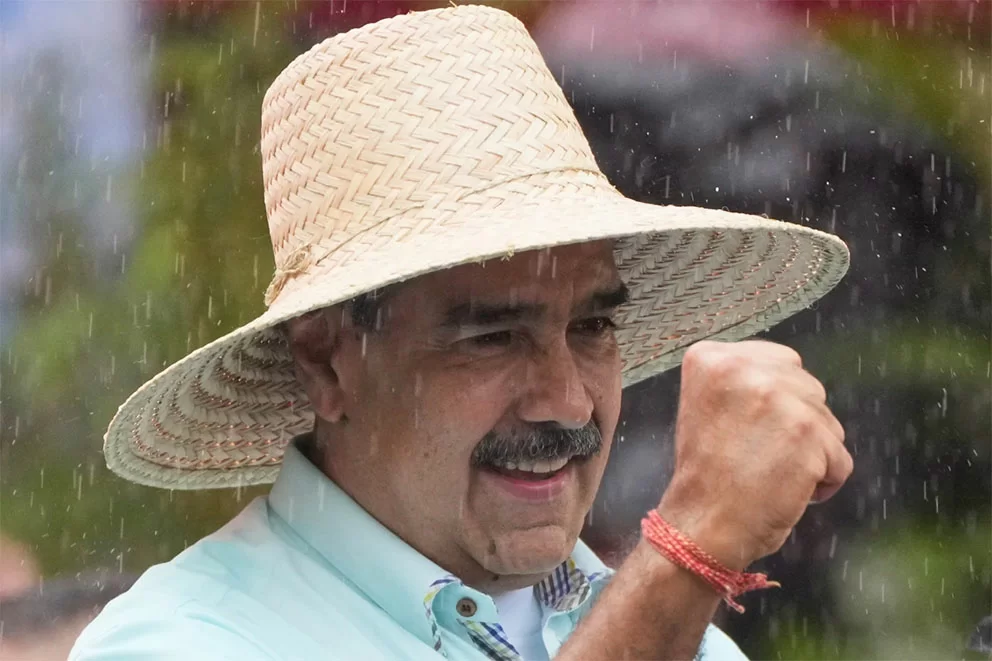
In a recent interview with CBS, U.S. President Donald Trump sent mixed signals regarding the possibility of a military intervention in Venezuela, while simultaneously dismissing talk of ‘war’ and issuing veiled threats against Venezuelan leader Nicolás Maduro. Trump warned that Maduro’s days as president are numbered, a statement made amidst the buildup of U.S. military forces in the Caribbean. The U.S. has conducted multiple strikes on alleged drug-smuggling vessels in the region, actions that United Nations officials and legal experts argue violate both U.S. and international laws.
When questioned about the potential for war with Venezuela, Trump responded, ‘I doubt it. I don’t think so.’ However, when asked if Maduro’s presidency was nearing its end, he stated, ‘I would say yes. I think so.’ American media outlets have reported that Washington is considering attacks on Venezuelan military installations as part of its war on ‘narco-terrorism.’ While Trump appeared to deny plans for such strikes, he did not entirely rule them out, stating, ‘I wouldn’t be inclined to say that I would do that,’ and ‘I’m not going to tell you what I’m going to do with Venezuela.’
Maduro, who faces U.S. charges of drug trafficking, has accused Washington of using the drug offensive as a pretext to impose ‘regime change’ in Caracas to seize Venezuela’s oil reserves. Over the past weeks, the U.S. military has carried out more than a dozen attacks on ships in the Caribbean and the Pacific, resulting in at least 65 deaths. These actions have drawn criticism from governments across the region.
The United Nations High Commissioner for Human Rights, Volker Türk, and human rights organizations have condemned the attacks, which began in early September, as ‘extrajudicial executions,’ even if they targeted known drug smugglers. Washington has yet to publicly provide evidence that the attacked vessels were involved in drug smuggling or posed a threat to the U.S.
-

4 kg goudroof zonder braaksporen bij Grassalco
In a shocking turn of events, over four kilograms of raw gold, valued at more than $400,000, have mysteriously vanished from the vault of state-owned mining company Grassalco N.V. The gold was discovered to have been replaced with counterfeit replicas, raising suspicions of an inside job. The discovery was made on October 13, but the incident was only officially reported to the Livorno police station on Friday. Investigators found no signs of forced entry, suggesting the theft was orchestrated internally. The counterfeit gold was systematically placed in the vault, indicating a well-planned operation. The police are treating the case as a high-priority investigation. Grassalco’s President-Director, Wesley Rozenhout, stated in an interview with DTV Express that he initiated an internal investigation immediately after the discovery. He informed President Jennifer Simons on October 29, following the completion of the final report. Rozenhout emphasized that he is responsible for general policy, not daily operations, and does not believe he should resign as the company’s head. The company’s management stressed that only authorized personnel have access to the vault. This incident comes amid a series of fraud and theft cases involving government-owned enterprises, including the Melkcentrale and several police stations.
-

Minister GBB: Aanlegsteiger Leonsberg ten onrechte uitgegeven als privéterrein
In a significant development, Minister Stanley Soeropawiro of Land Policy and Forest Management (GBB) has confirmed to Starnieuws that the Leonsberg pier, a vital transportation hub used daily by hundreds of passengers, was indeed sold as private property during the previous administration. ‘It is true: this pier was formally issued as a private parcel in the last governance period. That is a fact,’ stated Soeropawiro. ‘However, this is also one of the clearest examples of how misguided policies can directly harm public interest.’
The sale has dealt a severe blow to dozens of boat operators who rely on the pier for their livelihoods. Without access to the docking facility, these operators, who have long facilitated passenger transport between Leonsberg and Nieuw-Amsterdam—often maintaining the pier themselves—are now left stranded. The minister acknowledged their concerns, assuring that his ministry is actively working on a solution while further investigating the matter.
Soeropawiro emphasized that the sale of the pier is ‘one of many missteps we have encountered at the ministry.’ He highlighted the current government’s commitment, under President Jennifer Simons, to restore public facilities to the people. ‘The public deserves fair governance. Public land is not private property,’ he asserted. ‘Those who approved such transactions will be held accountable. This government will restore order—step by step, case by case.’
The minister vowed that the government will not allow public infrastructure to fall into private hands. ‘This marks the beginning of rectifying what was wrong,’ he concluded.
-

Oorzaak landelijke stroomstoring nog onduidelijk
A significant portion of Suriname experienced a widespread power outage on November 3, affecting not only the capital city of Paramaribo but also multiple districts across the country. The Energy Companies of Suriname (EBS) confirmed that the disruption was a nationwide issue, though the exact cause remains unidentified. According to EBS, the outage occurred suddenly and without warning. The blackout began at approximately 9:45 AM and was largely resolved within an hour, restoring electricity to most areas. Authorities are currently investigating the incident to determine the root cause and prevent future occurrences. This unexpected event has raised concerns about the reliability of the nation’s power infrastructure and its impact on daily life and businesses.
-

VS-Venezuela: toenemende spanning, maar nog geen directe aanval
Tensions between the United States and Venezuela have intensified following a significant increase in military presence in the Caribbean region. The deployment of warships, fighter jets, and thousands of troops to the Gulf of Venezuela and adjacent maritime areas has raised concerns. While Washington claims these movements are part of an international operation against drug trafficking, analysts perceive them as a political show of force targeting the regime of Venezuelan President Nicolás Maduro.
The Venezuelan government has condemned the actions as ‘border provocations’ and placed its armed forces on high alert. President Maduro warned over the weekend that the US is ‘playing dangerously with regional peace.’ Meanwhile, US President Donald Trump denied any plans for military strikes on Venezuelan territory, describing the activities as ‘preventive security patrols’ and ‘support for regional partners.’
Domestically, Venezuela is divided over the foreign pressure. Some opposition groups view the US presence as an opportunity to further isolate Maduro’s authoritarian rule, while others fear potential intervention could lead to national chaos.
Internationally, Russia has sharply criticized the US military buildup, labeling it ‘excessive power projection’ and pledging diplomatic support for Caracas. China and Iran have also strengthened their defense cooperation with Venezuela.
The escalating tensions have regional implications. Diplomats in the Caribbean are concerned about the security of trade and transport routes, as well as the potential increase in migration flows if the situation worsens.
Military observers note that Venezuela’s armed forces have been significantly weakened by years of economic crisis, corruption, and sanctions. In contrast, the US possesses overwhelming resources and infrastructure in the region, including reopened naval bases in Puerto Rico and the Caribbean.
For now, neither side appears to seek direct confrontation, but diplomatic and military tensions persist.
-

Trainingen museumwezen waardevol voor werkveld
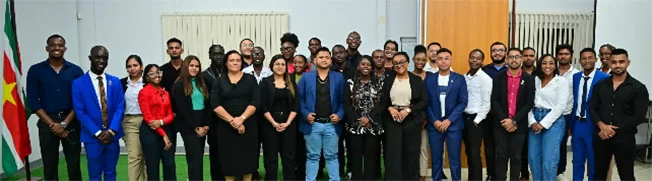
The training sessions conducted in October have proven to be immensely beneficial for employees and owners of museum institutions in Suriname. This was highlighted during the certification ceremony held last Friday, where 25 participants successfully completed the program. Artists Runaldo Klas, Jules Brandflu, and Sunil Puljun praised the training for offering fresh perspectives on heritage restoration and storage. Former museum director Elvira Sandie and VHJI Museum coordinator Sharon Pawiroredjo also expressed their satisfaction, emphasizing the practical applicability of the knowledge gained. The program, a collaborative effort between Suriname’s National Museum Commission (NMS) and the Netherlands’ Cultural Heritage Agency, concluded in the presence of Roseline Daan, NMS Chairperson and Director of Culture. Daan lauded the outcomes achieved after months of preparation. Participants delved into topics such as collection management, registration, conflicting value systems, sector organization, sustainability, and preventive conservation. The evaluation also revealed plans for museum institutions to unite, enhancing the structure and content of their work. The NMS is now focusing on follow-up activities and discussions with PURP regarding the rehabilitation of Building 1790, a ruin within the Zeelandia complex, envisioned as the site for a future national museum.