标签: Suriname

苏里南

  • Fransen met zoekactie bezig na bootongeluk Marowijnerivier

    Fransen met zoekactie bezig na bootongeluk Marowijnerivier

    A large-scale search and rescue operation continues along the Marowijne River near Grand-Santi following Sunday’s tragic boat capsizing that left four educators missing. The incident occurred when the vessel experienced engine failure and began taking on water before ultimately sinking.

    According to Mayor Félix Dada, the mechanical failure caused gradual flooding of the craft, leading to its submersion. Seven individuals, including the captain, were aboard at the time of the accident. These survivors were successfully rescued and have received medical treatment at Grand-Santi’s health and prevention center.

    The search efforts, involving approximately forty personnel from multiple emergency services, were temporarily suspended at nightfall Saturday but resumed at first light Sunday. The operation employs both helicopter surveillance and watercraft in a comprehensive effort to locate the missing teachers.

    The French Guiana prefecture has deployed specialized divers from the gendarmerie, fire department, and French armed forces. Regional military command has been notified of the developing situation, though specific details remain limited.

    Psychological support services have been provided to family members and other directly affected individuals since Saturday evening as the search continues without resolution.

  • Costa Ricanen naar de stembus

    Costa Ricanen naar de stembus

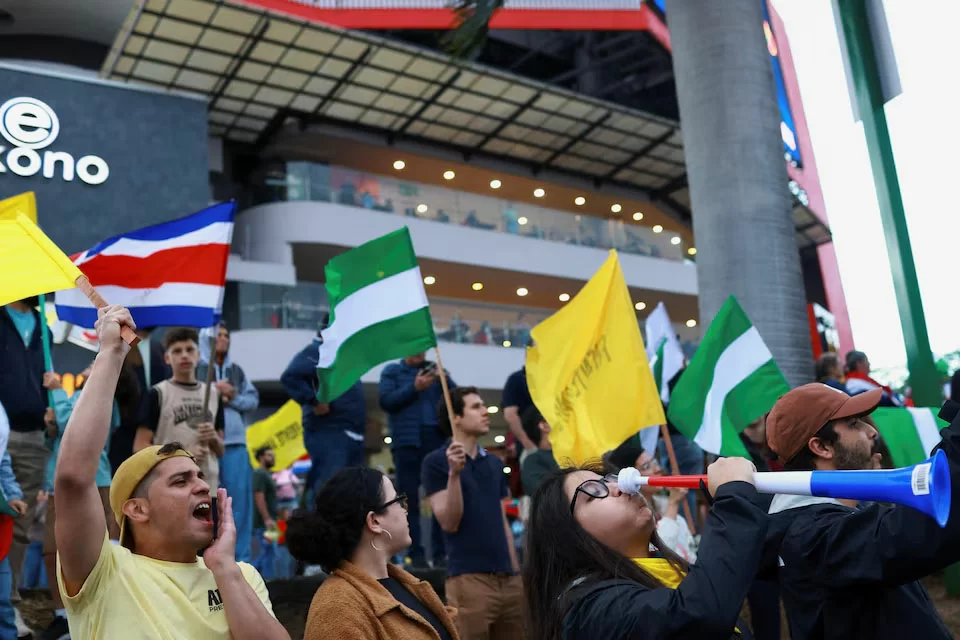
    Costa Ricans headed to the polls on Sunday for a pivotal general election that could determine the nation’s approach to escalating drug-related violence that has shattered its reputation as a peaceful tourist haven. Pre-election surveys positioned Laura Fernández of the Sovereign People’s Party (PPSO) as the clear frontrunner with just over 40% support, potentially securing an outright victory and avoiding an April 5 runoff.

    Fernández, protégé and former chief of staff to incumbent President Rodrigo Cháves, has campaigned on continuing her mentor’s hardline security policies and anti-establishment messaging. Her closest competitors in the 20-candidate field include centrist economist Alvaro Ramos, representing Costa Rica’s oldest political party, and progressive coalition candidate Claudia Dobles, a former first lady whose husband presided from 2018-2022. Both trail significantly in polls but remain potential contenders for a second round should Fernández fall short of the 40% threshold.

    The election occurs against a backdrop of record homicide rates and multiple corruption investigations that have tested public confidence. Despite these challenges, President Cháves maintains a 58% approval rating according to University of Costa Rica’s CIEP polls.

    Fernández has additionally requested voters grant her party 40 seats in the 57-seat legislative assembly, which would provide the supermajority needed to implement constitutional reforms. The current administration holds only eight seats and attributes legislative gridlock to this minority status.

    Approximately one-quarter of the 3.7 million eligible voters remain undecided, with the largest undecided bloc comprising young adults (18-34) from coastal provinces Guanacaste, Puntarenas, and Limón—regions hardest hit by drug violence.

    Polls opened at 6:00 AM local time and closed at 6:00 PM, with initial results expected before midnight. Although consecutive reelection is prohibited in Costa Rica, Fernández has pledged to include Cháves in her administration, positioning her candidacy as continuity of his populist mandate.

  • Maersk neemt tijdelijk beheer Panama-kanaalhavens over na rechterlijke uitspraak

    Maersk neemt tijdelijk beheer Panama-kanaalhavens over na rechterlijke uitspraak

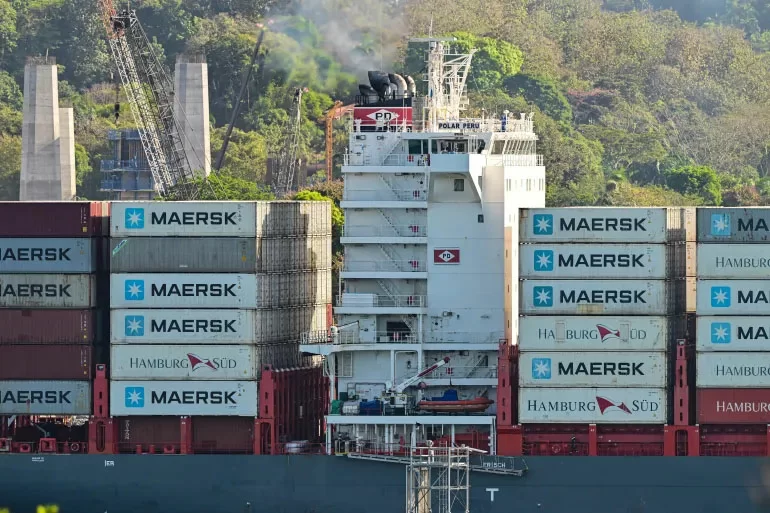
    In a significant geopolitical shift for global maritime trade, Danish shipping giant Maersk has assumed temporary control of two strategic Panama Canal ports after Panama’s Supreme Court invalidated concession contracts held by Hong Kong-based CK Hutchison. The ruling follows repeated warnings from former U.S. President Donald Trump regarding Chinese influence over the critical waterway.

    The Panama Maritime Authority (AMP) announced Friday that Maersk’s subsidiary APM Terminals will administer the Balboa and Cristobal ports, which occupy crucial positions at both Atlantic and Pacific entrances to the canal. These facilities handle substantial portions of global container traffic passing through the interoceanic corridor.

    CK Hutchison, operating through its local subsidiary Panama Ports Company (PPC), had managed these terminals since 1997 under a concession extended in 2021 for an additional 25 years. The court determined the contract exhibited “disproportionate bias” favoring the Hong Kong conglomerate, prompting its termination.

    The 82-kilometer artificial waterway processes approximately 40% of U.S. container traffic and 5% of global trade. Panama assumed full control in 1999 after the United States, which financed and constructed the canal between 1904-1914, transferred administration.

    The United States government welcomed the judicial decision, while Chinese Foreign Ministry spokesperson Guo Jiakun warned Beijing would “take all necessary measures to protect the legitimate rights and interests of Chinese companies.” PPC condemned the ruling as “lacking legal basis” and expressed concerns about potential impacts on thousands of Panamanian families’ livelihoods.

    Despite allegations, Panama continues to deny that China exercises control over the canal, which remains predominantly utilized by vessels from the United States and China.

  • Onderwijsbonden slaan alarm: leerkrachten kunnen niet langer rondkomen

    Onderwijsbonden slaan alarm: leerkrachten kunnen niet langer rondkomen

    Suriname’s education sector has reached a critical breaking point as teacher unions issue urgent warnings about unsustainable working conditions and severe compensation challenges. Three major educational organizations—the Federation of Organizations of Teachers in Suriname (FOLS), the Teachers’ Union (BvL), and the Alliance for Teachers in Suriname (ALS)—have collectively declared that educators can no longer sustain themselves on their current wages amid the country’s deteriorating economic climate.

    The alarming situation has resulted in widespread demotivation among teaching professionals, triggering a significant brain drain that has created critical shortages of qualified instructors across all educational levels. Basic, secondary, and vocational schools throughout the nation are experiencing severe staffing deficits that threaten the quality of education delivery.

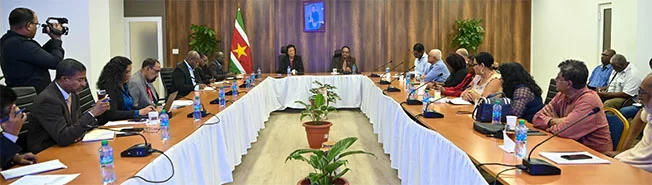
    In response to this escalating crisis, union representatives convened emergency talks on Friday with President Jennifer Simons at Ravaksur Plus. The high-level dialogue included the Ministers of Interior Affairs and Finance, along with a specially appointed committee of experts tasked with addressing the emergency.

    Following proposals from the Interior Minister, Ravaksur Plus will establish a dedicated working group incorporating representatives from FOLS, BvL, and ALS. This collaborative body will work alongside the presidential committee to comprehensively address all education-related challenges, including compensation structures and working conditions.

    The working group’s primary objective is to implement immediate relief measures to improve educators’ living and working circumstances while simultaneously restoring the teaching profession’s attractiveness. Several concrete agreements emerged from the urgent discussions:

    • All overtime payments for vocational teachers must be processed by Wednesday, February 4, 2026
    • Retired educators reactivated to address staffing shortages will receive outstanding payments by end-February 2026
    • All pending salary arrears for teaching staff will be settled promptly
    • Teacher unions must submit their complete package of demands by February 4, 2026

    Recognizing education’s fundamental role in developing critically-minded citizens, the unions expect the government to demonstrate urgent commitment to implementing comprehensive solutions that will restore stability to the education sector.

    The joint declaration received official endorsement from FOLS and its member organizations (SOB, KOB, COB, BLTO, IOB), alongside the Teachers’ Union (BvL) and the Alliance for Teachers in Suriname (ALS).

  • India AI  ziet Suriname als strategische partner in AI-ontwikkeling Global South

    India AI ziet Suriname als strategische partner in AI-ontwikkeling Global South

    Suriname stands at the forefront of an emerging technological partnership that could redefine its digital future, as India actively cultivates alliances with Global South nations to advance human-centric artificial intelligence frameworks. This strategic positioning comes ahead of the landmark India–AI Impact Summit 2026, scheduled for February 16-20 in New Delhi—the first global AI convening specifically focused on the Global South’s priorities.

    The summit represents a significant pivot in international AI discourse, shifting emphasis from purely safety-oriented discussions toward practical implementation, sustainable development, and measurable societal benefits. Core themes include ‘AI for All’ initiatives, female leadership in technology (‘AI by Her’), and youth-driven innovation ecosystems, collectively aiming to foster responsible and inclusive AI development.

    India’s relevance to Suriname stems from its distinctive approach to technological democratization. Unlike Western tech giants that typically operate closed systems and data monopolies, India has championed open-source AI models, data sovereignty, and affordable technological solutions. The nation now boasts approximately 16% of global AI talent and hosts the world’s fastest-growing community of AI developers, creating technologies specifically designed to function on low-cost devices with limited or unstable internet connectivity—conditions familiar to many Surinamese communities.

    This collaboration builds upon existing bilateral agreements, including a 2023 Memorandum of Understanding covering digital infrastructure and technological development. India’s proven digital platforms—such as the Aadhaar identity system and UPI payment network—offer tangible models for inclusive digitization that Suriname could enhance with AI integration. According to Indian Ambassador Subhash Gupta, this could translate to improved governance efficiency, enhanced public services, and greater financial inclusion.

    The partnership extends beyond government systems to address Suriname’s economic needs. As artificial intelligence disrupts traditional Business Process Outsourcing (BPO) sectors worldwide, India’s experience in retraining millions of workers for AI-driven roles—including data annotation, system monitoring, and quality control—could help Suriname future-proof its labor market. Additionally, Indian AI applications show particular promise for Suriname in agriculture (soil and pest analysis), healthcare delivery, judicial systems, climate services, disaster preparedness, education, and the emerging oil and gas sector.

    India’s Bhashini project, focusing on AI-powered multilingual translation, holds special significance for linguistically diverse Suriname, offering tools to bridge communication gaps across its multicultural society.

    Through participation in the New Delhi summit, Suriname gains not only access to cutting-edge technology and expertise but also a voice in shaping international AI ethics, regulatory frameworks, and responsible implementation guidelines. Ambassador Gupta emphasizes that this moment represents a critical strategic opportunity for Suriname to position itself not merely as an adopter of technology, but as an active co-creator of AI solutions that balance economic advancement with social inclusion.

  • RO ondersteunt jonge ondernemers via PKF Level-UP krediet

    RO ondersteunt jonge ondernemers via PKF Level-UP krediet

    Suriname’s National Development Bank (NOB) has officially launched the PKF Level-UP credit program, specifically designed to empower young entrepreneurs aged 18 to 27. The initiative, introduced on Friday, provides convertible loans from the Production Credit Fund (PKF) to support business establishment, financing, and expansion within the manufacturing and tourism industries.

    Named ‘Wan Okasi Gi Den Jongu Basi’ (An Opportunity for Young People to Advance), the program offers favorable-term microloans to both startup founders and existing young business owners. During the ceremonial launch event, President Jennifer Simons urged youth to actively leverage this opportunity, emphasizing the program’s potential to facilitate the transition from poverty to production and prosperity.

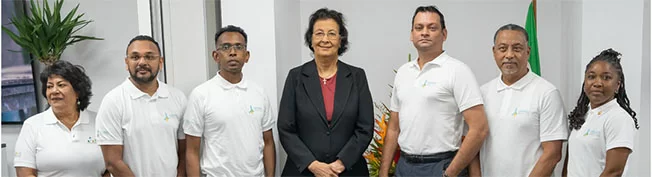
    The launch ceremony saw participation from key government officials including Finance and Planning Minister Adelien Wijnerman, Economic Affairs, Entrepreneurship and Technological Innovation Minister Andrew Baasaron, PKF board members, and NOB Director Sandy Cameron with her team.

    Managed collaboratively by the NOB and the PKF oversight board, the program receives crucial operational support from the Ministry of Regional Development (RO). Sharma Betterson-Leefland, PKF board secretary and RO representative, highlighted the ministry’s pivotal role in program success, noting that RO’s nationwide district presence enables effective outreach and education for young entrepreneurs about the Level-UP credit opportunities.

    Originally established in 2023, the PKF aims to stimulate growth and development among small and medium-sized producers of goods and services across all districts, excluding direct trade, agriculture, livestock, and fishing operations. However, businesses in these excluded sectors may qualify for funding when engaged in processing industries.

    The fund’s strategic objectives include enhancing production capacity, promoting exports, replacing imports, creating business spin-offs, and generating employment opportunities, with particular emphasis on strengthening the position of young Surinamese entrepreneurs in the national economy.

  • Venezuela kondigt amnestie aan voor politieke gevangenen

    Venezuela kondigt amnestie aan voor politieke gevangenen

    Venezuela’s interim President Delcy Rodríguez has unveiled a sweeping amnesty initiative that could secure freedom for hundreds of political detainees, marking the most significant conciliatory gesture since assuming power on January 3. The announcement came during a high-profile ceremony attended by judicial authorities, cabinet ministers, military leadership, and government officials.

    The proposed legislation, which will receive expedited consideration by the government-controlled National Assembly, aims to address long-standing demands from US-backed opposition groups. Rodríguez characterized the measure as a vital mechanism to ‘heal the wounds of political confrontations’ and restore justice and social cohesion within the nation.

    In a parallel reform, Rodríguez declared the imminent closure of Helicoide prison in Caracas—a facility repeatedly documented for torture and human rights violations. The notorious detention center will be converted into a recreational complex serving both police personnel and local communities.

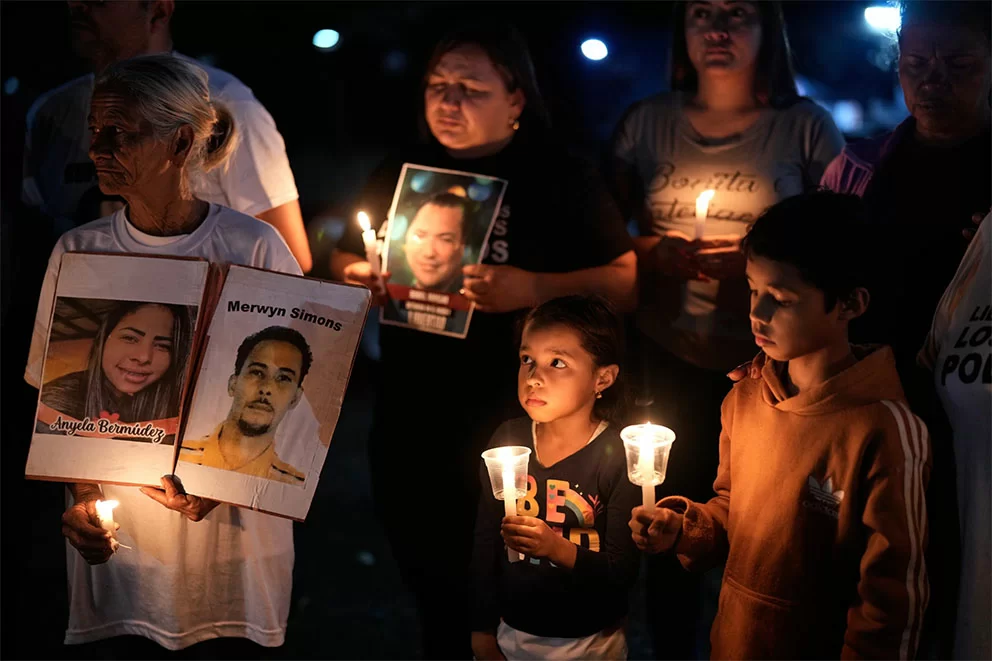
    The announcement unfolded amid mixed reactions. While government officials presided over the ceremony, including some accused by former detainees of involvement in prison abuses, relatives of political prisoners gathered outside correctional facilities livestreaming the proceedings and demanding immediate releases.

    Opposition leader and Nobel Prize recipient María Corina Machado expressed skepticism regarding the government’s sincerity, suggesting the move resulted from international pressure. She emphasized that political detainees have endured incarceration ranging from one month to 23 years under what she described as a ‘cruel repressive apparatus.’

    Human rights organization Foro Penal estimates 711 individuals remain imprisoned for political activities in Venezuela, with 183 already convicted. Notable cases include former parliamentarian Freddy Superlano, attorney Perkins Rocha, and former governor Juan Pablo Guanipa, a key ally of Machado.

    Critical details remain unclear as the government has not released specific eligibility criteria for the amnesty program. Rodríguez indicated the law would cover political violence offenses from 1999 to present, excluding those convicted of murder, drug trafficking, corruption, or human rights violations.

    The US State Department confirmed Friday that all known American detainees in Venezuela have been released and announced the arrival of new chief diplomat Laura Dogu to Caracas on Saturday.

    Despite earlier promises of releases, advocacy groups Provea and Foro Penal criticized the process for lacking transparency and proceeding too slowly. They emphasized that detainees are imprisoned unjustly for exercising internationally recognized rights protected by Venezuela’s constitution.

    Outside another Caracas prison, Edward Ocariz—who himself endured over five months’ detention following the 2024 presidential elections—joined families in demanding faster action. ‘We Venezuelans have suffered enough injustices and humiliations,’ Ocariz stated. ‘No one deserves this, yet the guilty continue governing Venezuela.’

  • Cubanen schakelen over op overlevingsmodus

    Cubanen schakelen over op overlevingsmodus

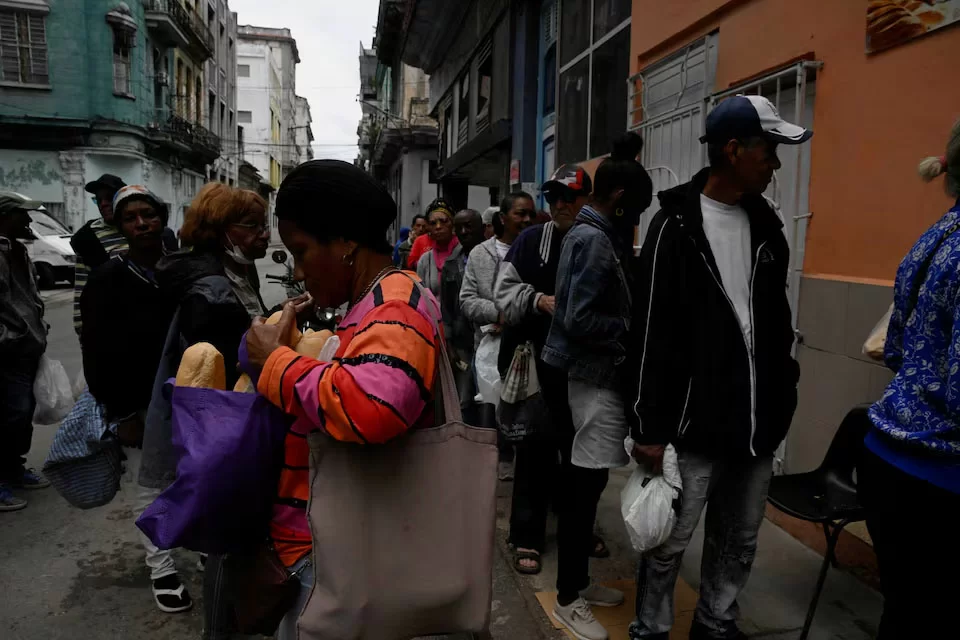
    Cubans across all social strata have shifted into survival mode as they confront prolonged power blackouts and skyrocketing prices for essential goods, fuel, and transportation. This escalating crisis unfolds amid heightened pressure from the United States on the communist-led island nation.

    Interviews conducted by Reuters with over thirty residents across Havana neighborhoods reveal a population pushed to its limits. Street vendors, private sector workers, taxi drivers, and government employees alike describe increasingly desperate circumstances as basic commodities become both scarce and prohibitively expensive.

    While rural regions have long endured Cuba’s fragile and aging energy infrastructure, the capital Havana had previously managed relative stability. Now, the city known for its classic 1950s automobiles and colorful colonial architecture faces imminent collapse due to critical fuel shortages. These shortages intensified following Venezuela’s and subsequently Mexico’s cessation of oil deliveries to the island.

    The economic pressure compounds as the Cuban peso has plummeted more than 10% against the dollar within three weeks, dramatically inflating food prices. “This puts me in an impossible situation,” explains Yaite Verdecia, a Havana homemaker. “No salary can keep up with this inflation.”

    Daily life has become consumed with securing basic necessities. Lengthy queues form for gasoline, and since the U.S. blocked Venezuelan oil exports to Cuba in December, nearly all fuel now sells at higher dollar-denominated prices—a currency most Cubans cannot access. Public transportation systems strain under reduced bus services and rising fares, forcing commuters to rely on costlier private taxis.

    Even electric vehicles, once promoted as solutions during fuel shortages, sit idle due to insufficient charging capabilities during frequent power outages. The electrical grid failures have additionally created hazardous urban conditions with malfunctioning traffic lights causing accidents.

    The Cuban government, tracing its roots to the 1959 revolution, has maintained control through strict repression and significant emigration that has diminished organized domestic opposition. While mass protests haven’t materialized, residents acknowledge the unsustainable reality. Mirta Trujillo, a street vendor, emotionally confessed: “I can no longer afford to eat. I’m not against my country, but I don’t want to die of hunger.”

    For older generations like 69-year-old housekeeper Julia Anita Cobas, who makes daily expensive commutes amid transportation cuts, resilience persists but hope dwindles. “We’ve always lived with hardships,” she notes, “but we’re still here.” Yet as 32-year-old Aimee Milanes summarizes: “We’re drowning, but we can’t do anything. It’s about survival. Nothing else.”

  • Betaald en gebouwd, maar geen eigendom; kopers vast door betwiste hypotheek

    Betaald en gebouwd, maar geen eigendom; kopers vast door betwiste hypotheek

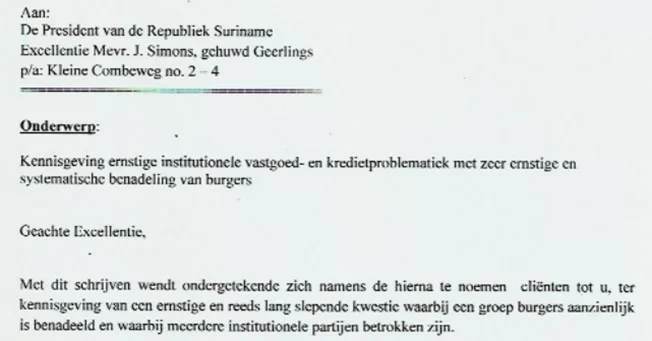
    A group of Surinamese citizens who purchased fully paid residential plots in a subdivision project along Frederikshoopweg have been stranded for years without proper ownership titles, prompting presidential intervention. The case, now before President Jennifer Simons, reveals a complex web of financial and legal irregularities involving major national institutions.

    Eleven affected buyers, represented by Vreden & Partners Legal Consultancy, detailed their plight in a formal communication to the presidency. These individuals acted in good faith, completed full payment for their parcels, and in some cases even constructed homes, yet remain unable to obtain legal ownership due to an unresolved mortgage encumbrance on the parent property.

    The core controversy stems from the mortgage’s questionable origination. In August 2010, The Surinamese Trust Company N.V., a subsidiary of De Surinaamsche Bank (DSB), issued a credit commitment on behalf of three parties including Assuria Damage Insurance N.V. However, the subsequent notarial deed registered the mortgage exclusively under Assuria Life Insurance N.V.—an entity conspicuously absent from the original credit agreement.

    Two years later in 2012, the mortgage underwent “rectification” with claims that the original creditor designation was erroneous. The buyers contend this explanation lacks credibility, noting that creditor identification constitutes a fundamental component of mortgage documentation. Their legal representatives suggest potential “deliberate retroactive structural modification” in official correspondence.

    The persistent mortgage blockage continues despite the Ministry of Public Works having approved the land subdivision in May 2011, legally converting the property into sixty individual plots. The involvement of heavily regulated institutions deepens the mystery: DSB operates as a systemically important bank under Central Bank of Suriname supervision, while Assuria represents one of the nation’s largest insurance groups and long served as DSB’s major shareholder. The State of Suriname itself holds shares in DSB.

    Given this institutional landscape, the buyers’ counsel argues that claims of ignorance or simple administrative error remain implausible. The emphasis falls on the stringent care and compliance obligations that life insurers and banks bear precisely for third-party protection.

    The Central Bank of Suriname has declined jurisdiction in the matter, compelling the homeowners to seek presidential assistance in directing relevant authorities to address the situation. Meanwhile, the affected citizens endure profound uncertainty—having invested financially and emotionally in properties that legally remain beyond their grasp.

  • Sapoen: Laat Grondwet keuze open voor hoogste instantie; ook investeringen in basis

    Sapoen: Laat Grondwet keuze open voor hoogste instantie; ook investeringen in basis

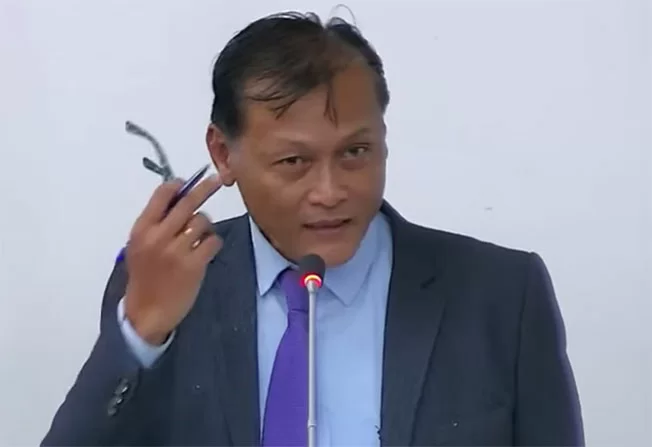
    In a landmark address to De Nationale Assemblee, Assembly Member Raymond Sapoen (NDP) positioned ongoing deliberations on judicial and prosecutorial reforms within the broader framework of constitutional governance. Emphasizing the Constitution’s role as the supreme law safeguarding civil rights and separation of powers, Sapoen characterized the current parliamentary deliberations as ‘historic’ for involving all state powers in modernizing Suriname’s justice system.

    Regarding the proposed cassation (supreme judicial) instance, Sapoen acknowledged widespread legal community support for a third judicial tier beyond appeals. He referenced societal concerns about judicial verdicts’ quality, independence, and reliability as drivers for reform. However, he criticized the explanatory memorandum accompanying the proposals as insufficient, stressing that such transformative changes require detailed justification regarding necessity and integration into Suriname’s legal architecture.

    Notably, Sapoen advocated for constitutional flexibility by defining the supreme judicial body as a ‘highest judicial instance’ for legal violation reviews without pre-committing to a specific model. This approach retains options for regional solutions like the Caribbean Court of Justice (CCJ), potentially with specialized Surinamese civil law chambers, though he emphasized this requires thorough study and political preparation.

    The parliamentarian raised substantive questions about proposed amendments to Article 139 concerning the Court of Justice’s oversight of case processing, demanding clarity on alternative supervisory models. He also highlighted constitutional inconsistencies in appointing prosecutors-general, noting discrepancies between constitutional provisions and 2024 judicial status legislation that must be resolved with constitutional primacy.

    On retirement age, Sapoen supported reinstating the pension age of 65 for standing magistrates (including prosecutors-general) as a systemic correction to reestablish functional distinction between prosecution and judiciary rather than personalizing the debate.

    While expressing theoretical support for a College of Prosecutors-General to mitigate concentration risks in small societies, he criticized the proposal’s lack of justification for member numbers and advocated odd-numbered compositions for decisiveness.

    Sapoen concluded by emphasizing that cassation establishment must not divert resources from strengthening first and second instance courts, maintaining that institutional capacity building remains a perpetual government obligation.