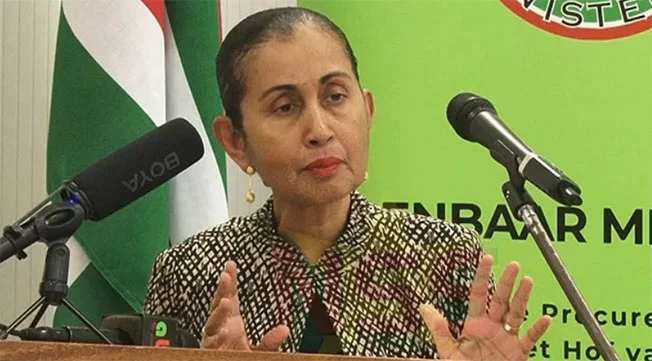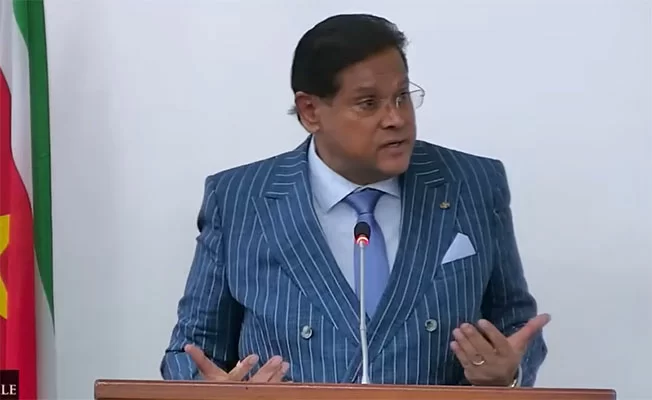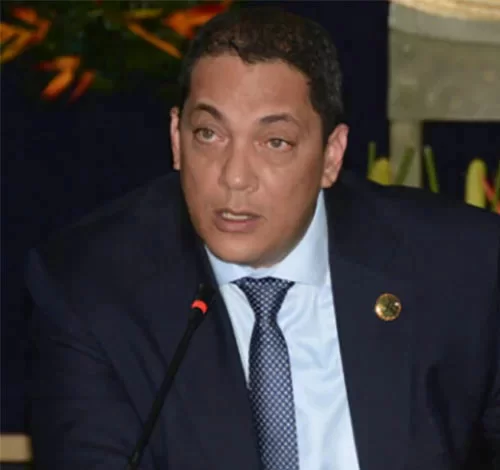
In a decisive move to revitalize its ailing health sector, the Surinamese government has embarked on a comprehensive reform agenda aimed at transforming healthcare from a reactive system to one that actively promotes and protects public health. President Jennifer Simons, in her recent annual address, emphasized the need for effective leadership and strategic appointments to drive this transformation. The recent appointments of Rudrakanth Oemraw as Director of the State Health Fund (SZF) and Quincy Joemai as Director of the Suriname Medicines Supply Company (BGVS) underscore the government’s commitment to placing skilled and ethical leaders at the helm of critical health institutions.
标签: Suriname
苏里南
-

Chevron start boringen in Blok 5 – nieuwe stap in offshoreontwikkeling
Chevron Suriname Exploration Limited has initiated drilling operations for the Korikori-1 exploration well in the northern section of Block 5, located approximately 78 kilometers off the coast of Suriname. This marks a significant milestone in the development of the Suriname-Guyana Basin. The drilling campaign, expected to last around ninety days, is being conducted using the Noble Regina Allen drilling platform, which arrived in the region earlier this month. The National Environmental Authority granted Chevron the necessary permits for these activities in late July 2025. The exploration aims to assess the presence, quality, and quantity of hydrocarbons in the subsurface. Upon completion of data collection, an initial evaluation of the area’s potential will follow. Supplies, including fuel and consumables, will be sourced from Surinamese port facilities, while personnel will be flown in from Paramaribo. This project is expected to create additional opportunities for local businesses and suppliers to engage in the growing offshore industry. Block 5, part of Suriname’s western shallow offshore region, covers an area of approximately 2,200 square kilometers, situated between 45 and 82 kilometers off the coast of the Nickerie district, at water depths ranging from 30 to 60 meters.
-

Dodelijk ongeval bij bouwwerkzaamheden in Latour
A devastating workplace accident occurred this morning at approximately 10:20 AM on Frederikshoopweg in the Latour district. During construction activities, a concrete wall collapsed onto a worker, resulting in a fatal outcome. Emergency services were dispatched immediately, but upon arrival, it was confirmed that the victim had already succumbed to his injuries. It is believed that the man died on the spot due to the severity of his wounds. Local authorities have launched an investigation to determine the exact cause of the incident and to ensure such tragedies are prevented in the future. The incident has raised concerns about safety protocols at construction sites, prompting calls for stricter enforcement of regulations.
-

Een land dat zijn boeren laat vallen, verliest zijn toekomst
The Surinamese government’s decision to withhold subsidies from rice farmers has sparked widespread concern, not only for the agricultural sector but for the entire nation. Rice fields in Nickerie, often referred to as the lungs of the country’s food supply, are under threat as the government turns its back on the very people who sustain the nation’s food security. Farmers in Nickerie are grappling with rising costs of fertilizers, fuel, labor, and maintenance, while fluctuating global market prices further exacerbate their struggles. These farmers are not just producers; they are the backbone of national food security, employment, exports, and economic stability. Without government support, they risk falling into a cycle of high-interest commercial loans, while cheap imported rice from Asia floods the local market. This could lead to reduced production, increased imports, higher consumer prices, and growing poverty in agricultural districts. The refusal to invest in farmers signals a dangerous shift towards dependency on foreign food chains, a risk Suriname cannot afford. In contrast, developed nations like the Netherlands, the U.S., and India prioritize agricultural subsidies to ensure food security and support sustainable production. Subsidies are not a handout but a strategic investment in irrigation, mechanization, storage, and efficiency. The government’s rigid stance, without offering alternative solutions, reflects shortsightedness rather than strength. True leadership involves investing in the sectors that keep the nation running. Suriname cannot rely solely on oil and mining; without agriculture, Nickerie, and the rice fields that have fed generations, the country risks losing its soul. It is time for the government to shift from distant policies to active engagement, recognizing that neglecting the rice farmer today will lead to scarcity on every plate tomorrow.
-

Adhin: Wet Staatsschuld basis voor striktere begrotingsdiscipline
The National Assembly has taken a significant step toward enhancing the financial governance of the state by approving amendments to the State Debt Law, according to Assembly Chairman Ashwin Adhin. The amendments, passed unanimously with 36 votes, aim to consolidate and professionalize the legal framework governing state debt. Adhin expressed gratitude to all members for their contributions, emphasizing their collaborative efforts in achieving a balanced approach. The revised law establishes strict conditions for exceeding the debt ceiling, requiring a debt strategy aligned with Article 15a. Additionally, the Minister of Finance & Planning must now submit an annual state debt plan alongside the state budget presentation. This provision links the budgetary cycle with debt management, reinforcing the Assembly’s oversight of the state’s macro-financial stability. Adhin highlighted the inclusion of a limited transition period in Article 28, which he described as a clear signal of budgetary discipline and timely debt normalization. The introduction of a Deputy Administrator-General at the State Debt Bureau was also noted as a crucial measure to ensure operational continuity and strengthen institutional capacity. Adhin stated that the law transforms debt management into a sustainable financial policy tool, guided by principles of transparency, parliamentary approval, and systematic debt reduction. However, he cautioned that the law addresses only the symptoms, not the root causes, of financial challenges. ‘The real solution lies in boosting production, exports, and revenue streams,’ Adhin asserted. ‘Only through the real economy can we achieve lasting financial sovereignty.’