标签: Suriname

苏里南

  • Agrarisch bedrijf Defensie krijgt impuls met nieuwe investeringen

    Agrarisch bedrijf Defensie krijgt impuls met nieuwe investeringen

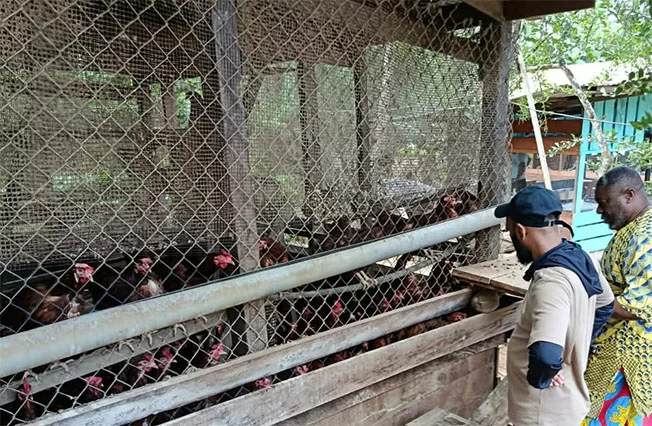
    In a significant move to bolster national food security and military self-sufficiency, Defense Minister Uraiqit Ramsaran personally oversaw the delivery of substantial agricultural resources to the Von Freyburg Defense Agricultural Enterprise in Saramacca on Tuesday. The deployment included fertilizers, operational equipment, and other essential supplies exactly one month after the minister’s initial inspection visit.

    The delivery fulfills Ramsaran’s previous commitment to modernize the defense agricultural sector. The occasion was marked symbolically by the planting of inaugural almond trees, initiating a comprehensive development project integrating recreation, education, and community engagement.

    ‘These represent not merely symbolic gestures but concrete investments toward establishing a modern, autonomous, and efficient agricultural center within our Defense infrastructure,’ Minister Ramsaran declared. ‘Today we advance further toward complete self-sufficiency—not as aspirational concept but as achievable objective through targeted actions and collective effort.’

    The minister outlined a vision for Von Freyburg to evolve into a multifunctional facility where both military personnel and civilians can learn, recreate, and take pride in developmental achievements. In collaboration with the Ministry of Agriculture, Livestock and Fisheries, greenhouse installations are scheduled for imminent implementation to facilitate modern, efficient cultivation methodologies.

    Ramsaran emphasized the triple focus on enhanced production output, superior quality standards, and increased operational independence. ‘Our objectives extend beyond agricultural production alone. We are creating an environment where recreation, education, and community development converge, thereby progressively building a stronger Defense institution,’ he concluded.

  • China en Latijns-Amerika: nieuwe samenwerking en duidelijke grenzen

    China en Latijns-Amerika: nieuwe samenwerking en duidelijke grenzen

    China has formally released its third comprehensive policy document outlining strategic engagement with Latin America and the Caribbean, emphasizing mutual cooperation in defending international justice and preserving the historical legacy of World War II victories. Vice Foreign Minister Cai Wei presented the framework on Wednesday, asserting that no external force can reverse the established course of history.

    The policy document establishes Taiwan matters as fundamental to China’s core interests, describing them as an absolute boundary that must not be crossed. It reaffirms China’s endorsement of the Latin American and Caribbean region as a Zone of Peace and supports nuclear non-proliferation efforts. The framework advocates for peaceful resolution of international disputes while explicitly rejecting external interference in regional affairs—an indirect reference to perceived U.S. involvement in Venezuela.

    This document continues the trajectory established by previous policy papers issued in November 2008 and November 2016, which significantly strengthened Sino-Latin American relations. President Xi Jinping has personally prioritized these ties, having visited the region six times while introducing innovative cooperation concepts and developmental initiatives.

    Current economic integration is substantial: 24 regional nations have joined China’s Belt and Road Initiative, with China standing as the second-largest trading partner for the region overall and the primary partner for nations including Brazil and Peru. As influential Global South actors, China and Latin American countries are collaborating to reform international governance systems and address pressing global challenges such as climate change.

    The new policy framework emerges amid unprecedented global transformations and emerging regional conflicts that introduce external uncertainties into China-Latin America relations. It outlines cooperative plans across forty domains including trade, investment, financial cooperation, scientific innovation, and climate response, serving as a strategic roadmap for a new era of partnership.

    China commits to supporting regional nations in pursuing independent development paths, emphasizing that these relationships are mutually beneficial, free from geopolitical manipulation, and not targeted against third parties. The document simultaneously rejects coercive diplomatic practices where nations impose their viewpoints pressure regional countries to take sides in international disputes.

  • Raadslieden in Pikin Saron zaak: Recht moet boven emoties staan

    Raadslieden in Pikin Saron zaak: Recht moet boven emoties staan

    In a significant judicial development, the Court of Justice of Suriname on December 9th suspended the pretrial detention of five Indigenous men from Pikin Saron, a decision their legal representatives describe as both legally necessary and constitutionally inevitable. Defense attorneys Pamela Karg, Murwin Dubois, and Milton Castelen successfully argued for their clients’ provisional release through a motivated petition filed October 21st, after previous requests had been denied.

    The case has emerged as one of Suriname’s most discussed criminal proceedings, stemming from a fatal incident during escalating tensions between Indigenous residents and outsiders allegedly entering their territory without community authorization. The defendants maintain they acted within a conflict situation arising from ongoing infringements on their residential and usage rights.

    Public prosecutors had vehemently opposed release, citing serious criminal allegations and potential societal concerns. However, the defense team successfully countered that pretrial detention under Surinamese law constitutes an extreme measure rather than punishment, only justifiable when specific risks exist—none of which applied to these defendants who had never attempted escape, witness tampering, or investigation obstruction.

    Human rights organizations have criticized the criminal prosecution as inseparable from underlying land rights struggles, considering the pretrial detention disproportionately applied. The defense highlighted broader context including substantial public support for the men, organizational capacity of Indigenous movements, and internationally recognized Indigenous rights.

    This ruling enables the five men to await their appeal in freedom, aligning with fundamental rule of law principles. The attorneys view the decision as transcending individual case outcomes—it represents a corrective within Suriname’s criminal justice system regarding practices conflicting with international obligations, particularly concerning pretrial detention application, procedural risk assessment, and treaty compliance.

    The defense specifically references Article 106 of Suriname’s Constitution, which prohibits application of national laws contradicting binding international treaties. Castelen expressed the collective position: ‘The Court’s decision confirms that legal provisions conflicting with treaty law cannot be blindly applied anymore.’

    This suspension of detention sends a principled signal that criminal justice measures must be based on legal norms applicable to all defendants rather than emotions, societal pressure, or traditional practices.

  • Geen begrotingsbehandeling in december: regering werkt aan aangepaste cijfers voor 2026

    Geen begrotingsbehandeling in december: regering werkt aan aangepaste cijfers voor 2026

    Suriname’s National Assembly has officially postponed deliberations on the 2026 national budget following critical consultations between Finance Minister Adelien Wijnerman and parliamentary committees. The joint session of the Permanent Committee for Finance and Planning and the State Expenditure Committee concluded that December consideration would be impossible due to ongoing fiscal recalibrations.

    Minister Wijnerman revealed that recently completed tax agency reforms have uncovered systemic irregularities and administrative backlogs within revenue collection systems. These findings necessitate significant revisions to projected tax income estimates, compelling comprehensive budget adjustments. The minister has already consulted with President Jennifer Simons regarding substantive reallocations primarily affecting education, agriculture, and tourism sectors.

    The restructuring focuses exclusively on project financing reconfigurations while maintaining unchanged allocations for goods and services. International organization contributions and the national debt management strategy will also undergo substantial revisions. Parliamentary committee chairs emphasized that both the amended budget proposal and modified debt plan must be formally submitted before legislative proceedings can commence.

    Notable attendees included Committee Chair Rabin Parmessar alongside members Asis Gajadien, Rossellie Cotino, Jennifer Vreedzaam, Ronny Asabina, Jeffrey Lau, Kishan Ramsukul, and Steve Reyme. Observers Stanley Betterson, Xiaobao Zheng, and Tashana Lösche monitored the proceedings that determined Suriname’s budgetary timeline shift into the new year.

  • Fernandes steunt kwetsbare baby’s met forse bijdrage aan Diakonessenhuis

    Fernandes steunt kwetsbare baby’s met forse bijdrage aan Diakonessenhuis

    In a significant boost to Suriname’s healthcare infrastructure, the Fernandes Social Foundation has contributed a generous €250,000 donation for the complete renovation of the neonatal intensive care unit at Diakonessen Hospital. The ceremonial handover took place at the Presidential Cabinet on December 10th, with Health Minister André Misiekaba formally accepting the contribution in the presence of President Jennifer Simons.

    This philanthropic initiative originated from Fernandes’ request during Suriname’s 50th anniversary of independence (Srefidensi), where the company sought Ministry-identified community projects requiring support. Among six healthcare projects proposed by the Health Ministry, the neonatal unit’s renovation was prioritized as most critical. The department has been temporarily closed despite growing demands for specialized post-natal care for vulnerable newborns.

    Minister Misiekaba characterized the donation as “a crucial contribution to healthcare,” emphasizing its direct impact on medical services for critically ill infants. “We are profoundly grateful to Fernandes Social Foundation. This project will substantially strengthen our neonatal care capabilities,” the Minister stated during the reception.

    Following the formal presentation, government representatives engaged in expanded discussions with Fernandes Group executives about broader socio-economic initiatives, including future sustainable waste management programs. President Simons reiterated her call for private sector involvement in national development projects.

    The Health Ministry maintains additional unfunded projects seeking corporate partnerships, including replacement of outdated cooling systems at Academic Hospital’s morgue (currently only 20-30% operational), renovation of the Public Health Bureau’s tuberculosis unit, upgrades to decentralized emergency posts, and enhancements to primary care facilities. While these projects weren’t selected in this funding round, the Ministry remains open to partnerships aimed at structurally strengthening Suriname’s healthcare system.

    Minister Misiekaba underscored that sustainable healthcare improvements require collaborative efforts between government and private entities, highlighting the Fernandes donation as a model for public-private cooperation in addressing critical medical infrastructure needs.

  • Landvreugd nieuwe voorzitter Onderhandelingsorgaan Overheid

    Landvreugd nieuwe voorzitter Onderhandelingsorgaan Overheid

    Suriname’s President Jennifer Simons has orchestrated a comprehensive overhaul of the Government Negotiating Body (OO), appointing former minister Delano Landvreugd as its new chairman. This strategic move completely replaces the team originally appointed in 2022, signaling a fresh approach to public sector labor negotiations.

    The OO serves as the government’s primary entity for negotiating both primary and secondary employment conditions with civil service trade unions. Its fundamental mission involves bridging the gap between union demands and the state’s financial and organizational capacities, ensuring balanced outcomes that serve both public servants and national interests.

    In a formal ceremony, President Simons alongside Interior Minister Marinus Bee expressed gratitude to the departing team for their dedicated service while extending best wishes to the incoming members. The leadership transition marks a significant shift in Suriname’s approach to public sector labor relations.

    Landvreugd emphasized to the Communication Service Suriname that the revitalized body will prioritize maintaining the nation’s economic and financial stability throughout negotiation processes. He characterized the new team as a strategic blend of young professionals and seasoned experts possessing extensive knowledge of public administration.

    “With this composition,” Landvreugd stated, “we anticipate that the OO can deliver solid results for the government through combined strengths.” The restructured organization is expected to bring innovative solutions to longstanding challenges in public sector labor negotiations while safeguarding national economic interests.

  • SEOB: Inflatie loopt verder op en begroting 2026 blijft kwetsbaar

    SEOB: Inflatie loopt verder op en begroting 2026 blijft kwetsbaar

    Suriname’s economic landscape is confronting significant challenges in 2025, according to the latest bulletin from the Suriname Economic Oversight Board (SEOB). The nation’s inflation rate climbed to 10.8% in August, primarily driven by the depreciation of the Surinamese dollar and an expanding money supply. The exchange rate continued its upward trajectory through September, reaching approximately SRD 38.4 per US dollar, further exacerbating market uncertainty and price pressures.

    Despite maintaining robust international reserves of approximately $1.55 billion—covering 7.2 months of imports and well exceeding the three-month benchmark—the SEOB warns that macroeconomic stability remains vulnerable due to escalating government deficits. The 2026 budget reveals a deficit of SRD 6.3 billion, representing about 3.5% of GDP. Should this shortfall be financed domestically, it could further increase money supply, intensifying both inflationary trends and exchange rate pressures.

    The national debt continues to substantially exceed statutory limits, standing at 88.3% of GDP according to international definitions, compared to the legal ceiling of 60%. In response, the SEOB advocates for proactive debt management strategies and divestment from loss-making state enterprises that require substantial subsidies.

    Suriname’s banking sector presents a mixed performance picture. While capital adequacy remains strong at 22.3%, non-performing loans have risen to 6.6%, indicating growing repayment difficulties among borrowers. High lending rates of 14.5% continue to discourage investment activity.

    The oversight board notes that the 2026 budget largely aligns with policy guidelines outlined in the annual address, particularly for ministries of Finance, Economic Affairs, Justice and Police, and Oil, Gas and Environment. However, weaker coherence is observed in sectors including Health, Land Policy, and Public Works.

    Key recommendations from the SEOB include:
    – Implementing stronger fiscal discipline and enhanced budget transparency
    – Establishing a modern investment framework modeled after Argentina’s RIGI system
    – Promoting export growth and economic diversification beyond the mining sector
    – Strengthening risk management protocols within the banking industry
    – Enhancing operational capacity of the Tax Administration, Customs, and ministerial departments
    – Improving coordination between monetary and fiscal policies to stabilize exchange rates

    The board concludes that Suriname’s economic recovery remains fragile, emphasizing that consistent policy implementation and clear communication are essential to maintain market confidence.

  • Guyana tekent exploratiecontract met Cybele Energy voor ondiepwaterblok S7

    Guyana tekent exploratiecontract met Cybele Energy voor ondiepwaterblok S7

    In a landmark development for South America’s emerging energy hub, Guyana has inked a significant petroleum agreement with Ghana’s Cybele Energy Ltd., marking the first African energy company to secure an offshore oil block outside Africa. The signing ceremony, held Tuesday at Pegasus Suites in Georgetown, featured Natural Resources Minister Vickram Bharrat and Cybele CEO Beatrice Mensah-Tayui formalizing the production sharing agreement (PSA) for shallow water Block S7.

    The $17 million signing bonus agreement follows Guyana’s standardized fiscal framework implemented since 2023, featuring 10% royalty on production, 10% corporate income tax, 65% cost recovery ceiling, and profit oil sharing between the state and operator. Minister Bharrat emphasized these terms strike an improved balance between investor incentives and national revenue compared to earlier contracts.

    Block S7 represents a pure exploration play with no discovered reserves or existing production. The initial five-year phase will focus exclusively on seismic studies and geological evaluations, with no mandatory drilling requirements for the first three years. Drilling commitments will only trigger based on technical results from these preliminary assessments.

    The agreement culminates three years of technical data analysis and market access negotiations by Cybele Energy. The achievement has been hailed in Ghana as a strategic breakthrough demonstrating the global expansion capabilities of African energy firms, particularly noteworthy as it’s led by a female CEO.

    This partnership aligns with Guyana’s broader sector diversification strategy, complementing ExxonMobil’s deepwater operations by intentionally attracting new entrants and regional players to develop shallow water blocks. The approach aims to maximize both economic returns and opportunities for local enterprises in one of the world’s fastest-growing oil provinces.

  • Nieuwe bedrijfsdirectory stimuleert samenwerking Suriname–Guyana

    Nieuwe bedrijfsdirectory stimuleert samenwerking Suriname–Guyana

    PARAMARIBO – The fourth edition of Who’s Who in Suriname Business was officially unveiled at Royal Torarica during a high-profile gathering that brought together business leaders, diplomatic missions, investors, and regional partners. This comprehensive directory, developed with strategic support from the Suriname-Guyana Chamber of Commerce (SGCC), has established itself as a vital platform for enhancing corporate visibility, business profiling, and cross-border collaboration throughout the Guiana Basin region.

    Minoushi Filemon, SGCC Membership Lead, emphasized during the launch ceremony that the publication is evolving into an essential strategic tool for companies seeking to strengthen their market positioning. The directory serves dual purposes by simultaneously assisting international investors in identifying reliable local partners while enabling Surinamese entrepreneurs to expand their regional footprint.

    Keynote speaker and publisher Vishnu Doerga highlighted the critical importance of developing strong English-language business propositions as Suriname continues to emerge as a significant opportunity hub within the rapidly developing Guiana Basin. Doerga stated, ‘If you don’t tell your own story, others will tell it for you. This directory provides businesses with a credible platform to make their capabilities visible and accessible to potential partners.’ He further emphasized that digital, economic, and professional bridges between Suriname and Guyana are fundamental prerequisites for sustainable regional growth.

    Guyanese Ambassador to Suriname, Virjanand Depoo, commended the professional standards of Suriname’s business community, describing the directory as a milestone achievement that underscores the private sector’s maturity and readiness for international engagement. Minister Patrick Brunings of Oil, Gas & Environment reinforced the message of regional cooperation, highlighting the shared historical ties and common future aspirations of both nations. Minister Brunings asserted that enhanced collaboration between Suriname and Guyana is absolutely crucial for accelerating economic development throughout the region.

  • Petronas rondt Caiman-1-put af in Blok 52 met bemoedigende resultaten

    Petronas rondt Caiman-1-put af in Blok 52 met bemoedigende resultaten

    Petronas Suriname has successfully concluded drilling operations at the Caiman-1 exploration well in offshore Block 52, marking a significant advancement in the company’s ongoing exploration and evaluation program. The drilling campaign, which commenced on July 21st, has yielded highly encouraging results that will substantially contribute to resource delineation and development concept evaluation for potential commercial projects in the region.

    This operation represents the inaugural phase of a comprehensive four-well drilling campaign scheduled between 2025 and 2026, according to an official release from Staatsolie. Situated in the western sector of Block 52, the Caiman-1 well operation demonstrated remarkable local integration, with all logistical support—including materials, provisions, and fuel—being channeled through the shore base in Paramaribo. Personnel transportation to and from the drilling platform was exclusively managed through Surinamese infrastructure.

    The operation’s successful localization strategy has significantly strengthened domestic supply chains while creating substantial opportunities for Surinamese businesses within the growing offshore sector. Block 52 encompasses a substantial 4,750 km² area located approximately 140 kilometers offshore, featuring water depths ranging from 60 to 1,000 meters, presenting both technical challenges and substantial resource potential.

    The positive outcomes from Caiman-1 will enable Petronas to accelerate its assessment of viable development concepts while precisely defining the available hydrocarbon resources. This successful operation establishes a strong foundation for future commercial development and underscores Suriname’s emerging significance as a strategic player in offshore energy exploration.