标签: Suriname

苏里南

  • Suriname pleit voor eerlijke klimaatfinanciering tijdens Amazone overleg

    Suriname pleit voor eerlijke klimaatfinanciering tijdens Amazone overleg

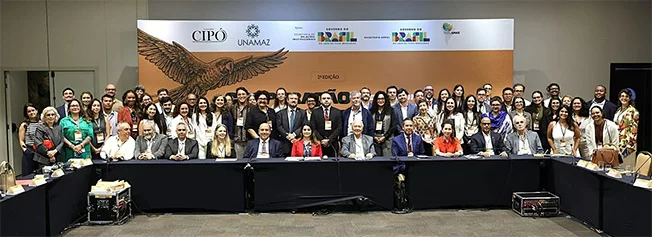
    On April 9, a critical regional consultation focused on Amazon rainforest protection brought together a diverse array of stakeholders in Brazil’s capital city of Brasília, where Suriname emerged as a leading voice demanding systemic reform to global climate finance frameworks that recognizes the contributions of nations preserving extensive, intact forest ecosystems.

    Organized to advance implementation of prior regional commitments to Amazon conservation, the gathering convened representatives from member states of the Amazon Cooperation Treaty Organization (ACTO), ACTO’s administrative secretariat, Brazilian federal authorities, civil society groups, Indigenous communities, and academic research institutions. Discussion centered on strengthening cross-border collaboration, updating scientific data infrastructure, and addressing longstanding inequities in global climate action support.

    Speaking on behalf of the Surinamese government, Ambassador Ike Antonius drew attention to a gaping oversight in current international climate funding structures: the failure to adequately compensate High Forest, Low Deforestation (HFLD) nations. These are countries that maintain vast tracts of intact forest cover with minimal deforestation rates, delivering substantial global public benefits by sequestering carbon and slowing the progression of anthropogenic climate change. Yet they have historically been locked out of the majority of climate finance allocated to forest protection, which is often directed only to nations tackling high existing deforestation rates.

    Suriname, which falls squarely into the HFLD category, has repeatedly raised this demand across global climate policy forums. The country’s position reflects a longstanding government push to overhaul the global financial architecture underpinning international climate policy, to ensure nations that have already prioritized forest conservation receive tangible recognition and support for their ongoing efforts.

    Beyond the debate over climate finance, the consultation reinforced the shared commitment of Amazon basin nations to deepening cross-border collaboration. Participants emphasized that coordinated action on knowledge sharing, aligned policy development, and improved access to up-to-date scientific data is essential to scaling up effective conservation across the region. Stakeholders from Indigenous groups and civil society also contributed perspectives on integrating traditional knowledge and community-led stewardship into regional conservation strategies, underscoring the multi-sectoral approach needed to protect the world’s largest tropical rainforest.
  • Analyse: Rekenkamer legt systeemfout bloot: probleem is geen geld, maar bestuur

    Analyse: Rekenkamer legt systeemfout bloot: probleem is geen geld, maar bestuur

    Dutch Court of Audit’s 2025 annual report does more than just outline technical administrative gaps—it offers a unflinching diagnosis of deep-rooted systemic issues that have plagued the country’s public governance for years. Contrary to common assumptions, the core crisis is not a shortage of public funding or the absence of regulatory frameworks, but a persistent lack of consistent, accountable governance across all levels of government.

    The audit acknowledges that incremental progress has been made in recent years to strengthen oversight systems: the Accountability Act is now being broadly applied, a standardized single-audit principle has been rolled out across departments, and there is greater institutional focus on financial and administrative control. On paper, these reforms have left the public governance framework looking far more robust than it was a decade ago. But in real-world practice, structural shortcomings in implementation remain entirely unaddressed, leading to the report’s most stark conclusion: the Dutch public sector does not lack rules—it lacks consistent compliance with those rules.

    A particularly alarming trend highlighted in the report is the repeated pattern of identical failings across disparate policy areas. Whether the audit examines land allocation, social welfare distribution, or public subsidy disbursement, the same three flaws emerge consistently: inadequate internal control mechanisms, insufficient documentation and public accountability for spending, and most critically, the consistent failure to act on previous audit recommendations. This pattern is not evidence of isolated, one-off errors; it is proof of a fundamental systemic failure, where the government only addresses issues through reactive, ad-hoc corrections rather than implementing permanent structural fixes. This approach allows small errors to accumulate into larger, more costly problems over time.

    The report identifies misaligned policy design and budget implementation as the critical weak link in the current system. While this gap is often framed as a technical administrative issue, the Court of Audit makes clear it is inherently political. Governments regularly set ambitious policy targets and approve corresponding budgets, but the actual execution of those plans consistently falls short. This disconnect exposes a foundational unanswered question in Dutch public administration: who bears ultimate responsibility for policy delivery, and who actually enforces that accountability? Without a clear link between responsibility and oversight, policy remains disconnected from on-the-ground reality, the report confirms.

    Internal oversight, a mechanism designed to catch errors early before they result in public harm, also fails to deliver on its mandate. While every ministry formally maintains internal control systems, the audit found these systems either operate poorly or are not taken seriously by senior leadership. This flaw is consequential: by the time problems are identified through post-implementation audits, the damage to public funds and public trust has already been done.

    The report’s sharpest, though implicit, conclusion centers on a lack of political will to drive meaningful reform. Time and again, the Court of Audit issues evidence-based recommendations to address long-standing gaps, but those recommendations are never incorporated into sustained structural change. This confirms the problem is not a lack of knowledge about what needs fixing—it is a failure of political and administrative discipline to implement the required changes. Good governance, the report argues, is not a matter of expertise—it is a matter of political will to enforce accountability.

    Far from being a final assessment of governance failures, the 2025 report acts as a mirror held up to the Dutch government, ministries, and the National Assembly. The key finding of the audit is already clear; the open question now is how elected and appointed officials will act on these warnings. If the same failings are documented again in the 2026 audit, the conclusion will be unavoidable: the system is not just weak, it is unwilling to change.

  • Rode Kruis activeert landelijke aanpak tegen Chikungunya

    Rode Kruis activeert landelijke aanpak tegen Chikungunya

    As Suriname grapples with a growing Chikungunya outbreak, the Suriname Red Cross has rolled out a structured, community-focused response program to curb transmission and protect at-risk populations, according to the organization’s director general Glenn Wijngaarde.

    The initiative, which launched in early March and will run through the end of July, prioritizes public education, preventive action, and targeted support for vulnerable groups across the country’s highest-risk districts, including the capital district Paramaribo, Commewijne, and Nickerie. Among the populations receiving heightened attention are pregnant women, children, older adults, and school communities, which face greater potential complications from the viral infection.

    A core pillar of the program is eliminating breeding sites for the Aedes aegypti mosquito—the primary vector that carries the Chikungunya virus. Red Cross volunteers are conducting door-to-door outreach across affected communities to raise awareness about how maintaining a clean living environment and eliminating standing water can cut down on mosquito populations. Complementing these on-the-ground efforts, the organization is also running widespread public awareness campaigns through traditional media and social media platforms to reach broader audiences.

    Chikungunya is transmitted by the same mosquito species that spreads two other major tropical viruses: dengue and Zika. The transmission cycle begins when an uninfected mosquito bites a person already carrying the virus, then carries the pathogen to other healthy individuals through subsequent bites. This is why eliminating mosquito breeding grounds—primarily pools of standing water where the insects lay their eggs—is the most critical step in slowing and stopping outbreak spread.

    To ensure the response is coordinated and efficient, the Suriname Red Cross is working closely with national public health authorities. The organization holds regular coordination meetings with the National Chikungunya Working Group to align activities, share data, and avoid duplication of efforts across response teams. The entire emergency response operation is funded by the International Federation of Red Cross and Red Crescent Societies (IFRC), the global body that supports national Red Cross societies in delivering humanitarian and public health action.

  • 10 kilo cocaïne uit Suriname onderschept in Bulgaarse haven

    10 kilo cocaïne uit Suriname onderschept in Bulgaarse haven

    Authorities in Bulgaria have intercepted a 10-kilogram shipment of cocaine hidden inside a shipping container at the Varna-West commercial port, with the container originating from the South American nation of Suriname. Bulgarian customs officials confirmed that the illegal narcotics were concealed in custom-built hollow cavities cut into a cargo of raw timber, a common smuggling tactic used by trafficking networks to hide contraband. The container was flagged for inspection through a targeted risk assessment protocol that the country’s customs service uses to identify high-risk shipments entering its borders. Once the suspicious container was pulled from the port’s processing queue, inspection teams discovered the carefully hidden cocaine stashed within the trunks of the timber load. Law enforcement experts note that this method of hiding contraband in modified cargo is a longstanding tactic employed by drug smuggling rings to evade detection at border checkpoints and port inspections. Following the seizure, Bulgarian authorities have transferred the full case to national police units, which have launched a formal criminal investigation to trace the full supply chain of the shipment, mapping out its original source and intended final destination across European markets. International law enforcement agencies monitoring organized drug trafficking have observed a growing trend in recent years: Black Sea ports including Varna are increasingly being exploited as key entry points for cocaine shipments originating in South America bound for consumer markets across the European continent. This latest seizure of Suriname-origin cocaine, officials confirm, fits squarely into this broader pattern of shifting smuggling routes that trafficking networks have adopted as traditional entry points along Western Europe’s Atlantic coast have tightened border security measures. The operation underscores the evolving challenges that Black Sea states face in countering transnational organized drug crime as trafficking groups adapt their logistics to avoid interdiction.

  • VS en Suriname versterken samenwerking met medische missie en militaire training

    VS en Suriname versterken samenwerking met medische missie en militaire training

    Starting April 13, the South American nation of Suriname and the United States will kick off the long-planned LAMAT 2026 initiative, a combined public-practice exercise that merges joint medical outreach and military capacity building, scheduled to run through April 23. The mission, which will deliver care across two host communities Nieuw Nickerie and Brownsweg, brings together U.S. military medical personnel and local Surinamese healthcare providers to deliver free, accessible care to underserved local populations, with an estimated 800 patients expected to receive treatment over the course of the initiative.

    The scope of medical work will cover core public health and clinical areas, including primary care, general dentistry, and emergency medical response. Beyond direct patient care, a core pillar of the mission is structured knowledge sharing between the two teams, designed to strengthen long-term local healthcare capacity and improve regional readiness for public health emergencies.

    According to a statement from the U.S. Embassy in Suriname, the LAMAT 2026 mission underscores the decades of steady collaborative ties between the two countries, and reflects their shared commitment to building a more robust, resilient national healthcare system in Suriname.

    Running parallel to the medical outreach program is a separate joint military training exercise conducted alongside the South Dakota National Guard, which has maintained a formal partnership with Suriname since 2006. Roughly 70 military personnel from both sides will participate in tactical and skills-based training, with coursework focused on critical skills including jungle operations, field navigation, and coordinated response in high-challenge operating environments.

    Overall, the combined mission is backed by more than $600,000 in U.S. funding, highlighting the breadth of deepening cooperation between Suriname and the United States across three core domains: public healthcare advancement, regional security, and long-term institutional capacity building.

  • Artemis II-astronauten veilig terug op aarde na historische reis rond de maan

    Artemis II-astronauten veilig terug op aarde na historische reis rond de maan

    # Artemis II Crew Safely Returns to Earth, Marking Historic First Crewed Lunar Voyage in Over 50 Years

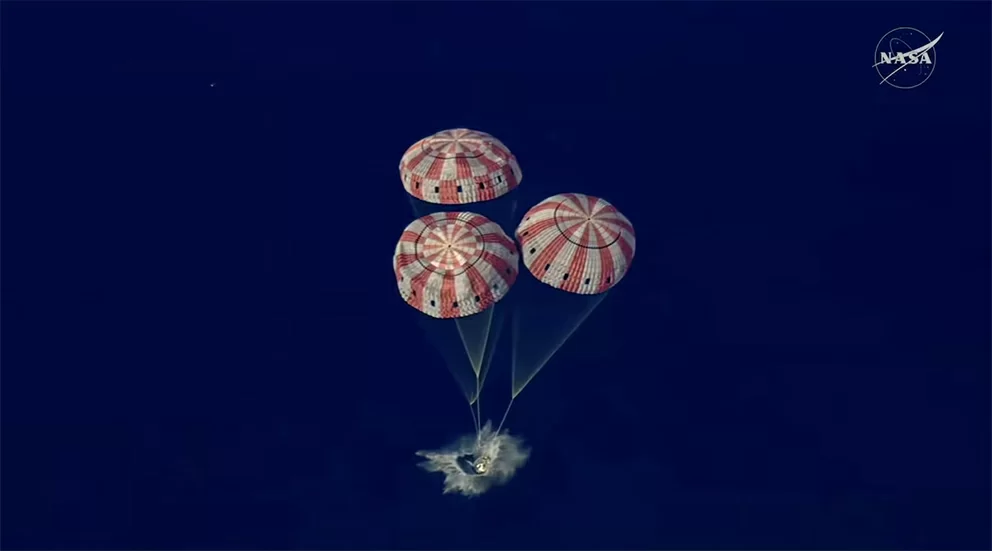
    On April 11, NASA announced the successful completion of the Artemis II mission, as the four-person crew of the Orion capsule *Integrity* splashed down safely in the Pacific Ocean off the coast of Southern California on Friday, capping a nearly 10-day groundbreaking journey beyond Earth. This mission marks the first time humans have traveled around the Moon in more than half a century, breaking multiple space travel records and clearing a critical milestone for NASA’s ambitious deep space exploration program.

    The Artemis II crew — commander Reid Wiseman, pilot Victor Glover, mission specialist Christina Koch, and Canadian Space Agency astronaut Jeremy Hansen — launched from Cape Canaveral on April 1. Over the course of the mission, they completed two orbits around Earth before conducting a close flyby of the Moon’s far side, passing just 6,400 kilometers above the lunar surface. At their farthest point, the crew traveled 407,000 kilometers from Earth, farther than any human mission has ever ventured from our home planet.

    Re-entry into Earth’s atmosphere was the highest-risk phase of the entire mission. The capsule slammed into the atmosphere at 32 times the speed of sound, subjecting its heat shield to extreme temperatures reaching 2,760 degrees Celsius. A six-minute radio blackout, a normal consequence of atmospheric ionization during high-speed re-entry, paused communications between the crew and mission control before contact was restored. Parachutes deployed as planned to slow the capsule’s descent, resulting in what NASA commentators called a “perfect bull’s-eye splashdown.”

    Shortly after landing, Wiseman confirmed via radio that the capsule was stable and all four crew members were in good health. Joint recovery teams from NASA and the U.S. Navy secured the capsule and extracted the astronauts within two hours of splashdown. The crew was then transferred via rescue raft and helicopter to the USS John P. Murtha for initial medical checks, before traveling to Houston to reunite with their families.

    Beyond its technical achievements, the Artemis II mission is a historic milestone for international and inclusive space exploration. Hansen is the first Canadian astronaut to participate in a lunar mission, while Glover is the first Black astronaut and Koch the first woman to join a crewed lunar voyage. The mission comes four years after the successful uncrewed Artemis I test flight in 2022, and serves as a critical validation of Orion’s capsule technology, heat shield, and life support systems ahead of planned crewed lunar landings.

    NASA’s Artemis program was developed to return humans to the lunar surface by 2028, and to lay the groundwork for future crewed missions to Mars. The program’s next step, Artemis III, is scheduled for next year and will include a crewed docking test in Earth orbit ahead of the first attempted crewed lunar landing in more than 50 years. The successful completion of Artemis II has cemented confidence in the program’s technical readiness, though challenges remain: development of the lunar lander has faced repeated delays, partially driven by NASA budget cuts that have reduced funding for scientific missions and cut the agency’s workforce by nearly 20%.

    To overcome these obstacles, NASA is collaborating with commercial space partners including SpaceX and Blue Origin, alongside space agencies from Europe, Canada, and Japan to deliver on the program’s goals. Global public interest in the mission has been unprecedented: more than 3 million viewers tuned in to watch the live broadcast of the splashdown. Former U.S. President Donald Trump congratulated the crew on his social media platform, calling the voyage “spectacular” and the landing “perfect.”

    The safe return of the Artemis II crew confirms decades of technological progress in human spaceflight, and stands as a critical stepping stone toward returning humans to the lunar surface and eventually sending the first crewed missions to Mars.

  • Staatsolie en Belastingdienst bundelen krachten voor betere controle oliesector

    Staatsolie en Belastingdienst bundelen krachten voor betere controle oliesector

    Suriname’s state-owned oil and gas company Staatsolie has entered into a landmark three-year public-private partnership with the country’s Tax and Customs Administration to upskill government officials working in the rapidly expanding offshore energy sector, a move designed to strengthen regulatory capacity and secure public revenue from one of the nation’s most critical growing industries. The partnership agreement for the Tax Administration Capacity Enhancement Program 2025–2028 was officially signed on Friday, with Staatsolie CEO Annand Jagesar and Tax Director Marita Lautan-Wijnerman marking the occasion to formalize the collaboration.

    As Suriname’s offshore oil and gas industry continues to expand at an unprecedented pace, public regulators face growing pressure to keep up with the sector’s evolving technical complexity and rapid market changes. Stakeholders on both sides of the agreement note that accurate tax assessment, revenue collection and regulatory oversight require specialized, up-to-date expertise that many existing government staff currently lack. Without targeted training, the Surinamese government risks failing to capture the full economic benefits of the country’s natural energy reserves, undermining national development efforts.

    Under the terms of the new program, targeted training will be delivered to tax and customs officers directly engaged with oil and gas sector operations over the three-year timeline. The initiative will prioritize building both foundational technical knowledge and hands-on practical skills tailored to the unique needs of energy sector regulation. Training modules will be rolled out in phases, with most initial sessions hosted within Suriname, and supplementary international knowledge exchanges arranged when advanced global expertise is required.

    This capacity building effort forms part of the lead-up activities for Staatsolie’s 45th anniversary celebration scheduled for December 2025, and aligns perfectly with the company’s core anniversary motto: “empowering communities and institutions.” By investing in stronger government regulatory capacity, Staatsolie aims to ensure that oil and gas revenues are managed transparently and responsibly, channeling returns into inclusive national development that benefits all Surinamese citizens.

  • Fractieleiders eren Santokhi in rouwzitting DNA: Verschillen vallen weg, respect blijft

    Fractieleiders eren Santokhi in rouwzitting DNA: Verschillen vallen weg, respect blijft

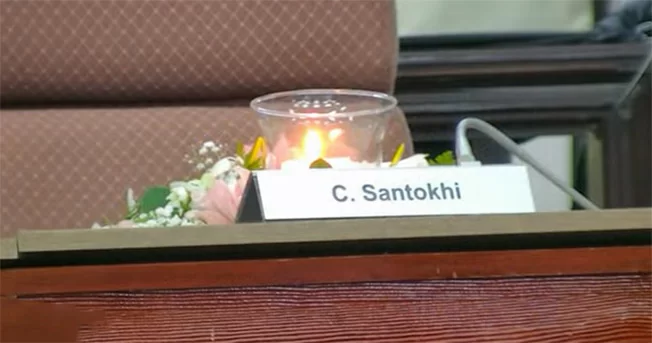
    On a somber Friday session, Suriname’s National Assembly gathered to hold a special memorial sitting honoring Chan Santokhi, a former national president and sitting assembly member who recently passed away. Across nearly all political parties represented in the legislature, faction leaders joined together to pay tribute to Santokhi’s legacy, setting aside longstanding partisan divides to deliver a unified message of respect, recognition, and reflection.

    The most notable absence from the memorial gathering was the entire ABOP faction, which did not attend the sitting. Speaking on behalf of the NDP faction, Rabin Parmessar opened tributes by reflecting on the fragility of life and the importance of collective remembrance. He walked attendees through Santokhi’s decades-long public career, which spanned from his early service as police commissioner all the way to his term as president of the Republic of Suriname, calling his passing a loss felt by every person who knew him.

    Irshaad Fathemohamed of the NPS described Santokhi as a “man of institutions” who left an indelible mark on Suriname’s rule of law and national political landscape. Even across competing political loyalties, Fathemohamed noted, mutual respect between Santokhi and his rivals was always a given. He emphasized that Santokhi’s public identity was defined by a commitment to dialogue, discipline, and unwavering devotion to the Surinamese people.

    Bronto Somohardjo, leader of the PL faction, echoed the call to rise above partisan differences in moments of national loss. He noted that occasions of collective mourning make clear that every elected representative, regardless of ideological stance, serves the nation in their own way. Somohardjo used the tribute to call for greater unity and empathy across Suriname’s political spectrum.

    Ronny Asabina of BEP characterized Santokhi as a multifaceted, transformative Surinamese leader whose leadership and perseverance left a permanent, positive imprint on national society. Asabina stressed that Santokhi never shied away from making difficult, unpopular choices when they served the best interests of the country.

    Steven Reyme, speaking for A20, observed that meaningful leadership always demands sacrifice and is not always widely understood during a leader’s lifetime. He echoed calls for greater mutual respect and political unity, noting that Santokhi’s entire life was centered on selfless service to the Surinamese public.

    For the VHP faction, of which Santokhi was a former leader, chair Asis Gajadien spoke with visible emotion about the loss of both a party leader and revered statesman. Gajadien said Santokhi was not just a colleague, but a constant source of inspiration, known for his unmatched discipline and commitment to public service. He described Santokhi’s legacy as “more than just a memory — it is a mandate” for current leaders to carry forward the work he began.

    Across all the tributes delivered during the sitting, a clear consensus emerged: despite deep political disagreements that often divide Suriname’s parties, Santokhi earned broad, cross-partisan recognition for his lifelong service to the nation. In the words of multiple speakers, moments of national mourning erase partisan dividing lines, leaving only shared humanity and respect for a lifetime of public dedication.

  • Simons bij rouwzitting Santokhi: Het leven roept ons tot bezinning, maar ook tot voortgaan

    Simons bij rouwzitting Santokhi: Het leven roept ons tot bezinning, maar ook tot voortgaan

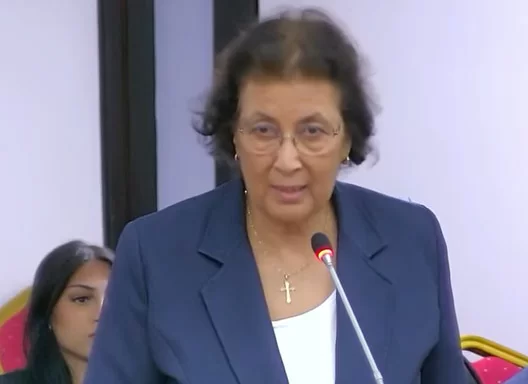
    On a solemn Friday session of Suriname’s National Assembly, lawmakers and political leaders gathered for an extraordinary memorial sitting to honor the sudden passing of Chan Santokhi, a respected former national president and sitting member of the legislative body. Opening the tribute, current National Assembly President Jennifer Simons delivered a heartfelt address reflecting on Santokhi’s unexpected death and the legacy he left behind for the Surinamese community.

    Simons opened her remarks by acknowledging the rare and shocking nature of Santokhi’s passing: it is extremely uncommon for a sitting parliamentarian to die suddenly while still active in public service. The sudden loss, she noted, has forced people across the country to confront a harsh, unavoidable truth about the nature of life and mortality.

    In her reflection, Simons articulated what she described as two seemingly contradictory but equally true truths about human existence. On one hand, all human life is inherently temporary; on the other, the impact and contributions a person makes to their community can endure long after they are gone. These ideas have occupied Simons’ thoughts deeply in the days since Santokhi’s passing, she shared.

    The assembly president also shared personal reflections on her long working relationship with Santokhi, whom she collaborated with across multiple stages of their political careers. She first worked with him when he served as a government minister, and more recently as a fellow colleague in the National Assembly. Simons described their working dynamic as consistently professional, rooted in a shared commitment to advancing Suriname’s national interests, with no dramatic conflicts or extreme rifts even when their political views diverged.

    It was precisely that commitment to professional cooperation, Simons emphasized, that allowed the two to work together effectively within the legislative framework despite any political disagreements. She admitted that the sudden absence of someone who was an active, visible participant in national public life just days before remains difficult to process for many in the political community and across the country.

    Even amid the collective grief, Simons called on the Surinamese people and the National Assembly to demonstrate resilience in the face of loss. “Condolences and mourning are right and proper at this time, but we must move forward from this moment as a society,” she stated. “We will carry his memory with us as we continue our work.”

  • Zon, bewolking en verspreide buien

    Zon, bewolking en verspreide buien

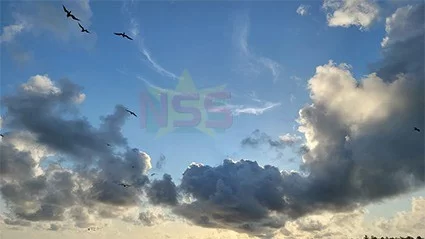
    On April 11, the latest national weather forecast for the Netherlands confirms that the overall weather pattern will remain changeable through the day, with a repeating cycle of sunny intervals, cloud cover, and scattered rain showers across different regions of the country.

    The day will kick off across most locations with partly cloudy skies in the early morning hours, with a chance of isolated light rain showers, particularly concentrated in the coastal lowlands and inland regions. As the morning progresses, short stretches of sunshine will break through the cloud cover, though cloud coverage will gradually build across the country through this period.

    Heading into the afternoon, the probability of rain showers and thunderstorms will rise, most notably across inland areas and the southern parts of the Netherlands. Some local regions could see these storms bring heavier downpours and sudden gusts of wind. In contrast, coastal areas will generally experience shorter, less intense precipitation events.

    Winds across the country will be light to moderate, blowing from an easterly to northeasterly direction. Daytime high temperatures will settle between 30 and 32 degrees Celsius, while overnight low temperatures in the early morning will range from 23 to 25 degrees Celsius.

    Through the evening and overnight hours, skies will remain partly to mostly cloudy, with continued chances of scattered isolated showers, primarily across inland sections of the country.