标签: Suriname

苏里南

  • Bezoek CCJ onderstreept rol Suriname binnen Caribische rechtsorde

    Bezoek CCJ onderstreept rol Suriname binnen Caribische rechtsorde

    A high-level delegation from the Caribbean Court of Justice (CCJ), led by President Winston Anderson, has commenced an official visit to Suriname at the invitation of the country’s Court of Justice President Iwan Rasoelbaks. The delegation, which includes Justice Peter Jamadar, the Registrar, and Chief Marshal, aims to enhance judicial cooperation between regional institutions and national legal systems.

    This strategic engagement aligns with the CCJ’s 2025-2032 Strategic Plan, which prioritizes improving access to justice, strengthening regional legal collaboration, promoting transparency, and building public confidence in judicial institutions. During their stay, the delegation will engage with members of Suriname’s judiciary, the Bar Association, parliamentarians, and other key stakeholders.

    A highlight of the visit will be the delegation’s participation in the Congress on Modernization of the Judiciary on January 22, where they will elaborate on the CCJ’s role, operational methodologies, effectiveness, institutional framework, and jurisdictional authorities.

    The current mission builds upon previous collaborative initiatives between the CCJ and Suriname. In November 2025, the Court concluded a multi-year training program on Referral Procedures in partnership with Suriname’s Bar Association. This comprehensive two-year awareness campaign, partially funded by the European Union, focused on educating legal professionals and business communities about the obligation of national judges to refer questions regarding the interpretation and application of the Revised Treaty of Chaguaramas to the CCJ in its original jurisdiction.

    As part of this ongoing cooperation, President Anderson previously presented the CCJ Original Jurisdiction Rules 2024 and accompanying Referral Manual—now translated into Dutch—to Suriname’s former Minister of Justice & Police. The CCJ anticipates constructive dialogues with Surinamese partners and aims through this visit to foster greater understanding of the Court’s role in advancing rule of law, regional integration, and legal excellence throughout the Caribbean region.

  • Scheidende VS ambassadeur Faucher: ‘Dit is geen afscheid’

    Scheidende VS ambassadeur Faucher: ‘Dit is geen afscheid’

    After completing his diplomatic assignment in Suriname, U.S. Ambassador Robert Faucher emphasized that his departure marks not an ending but the beginning of a new chapter in his four-decade relationship with the nation. During his farewell reception, the ambassador reflected on his transformative tenure while affirming his permanent personal connection to the country.

    Ambassador Faucher characterized his recent three-year term as one of the most significant phases of his diplomatic career, highlighting a period of remarkable recovery and advancement following the challenges of the global pandemic. Under his leadership, bilateral cooperation between Suriname and the United States intensified substantially across multiple sectors including energy development, educational exchange, and commercial engagement. This enhanced partnership manifested through historic business delegations and strengthened academic networks between the two nations.

    The ambassador’s personal journey with Suriname began in 1986, with subsequent visits in 2002 leading to his ambassadorial appointment. Throughout his service, he witnessed the country’s evolution into a confident nation with global perspectives. His extensive travels across all districts—from urban Paramaribo to the remote Sipaliwini region, including visits to Kwamalasamutu and the culturally significant Werehpai area—deepened his appreciation for Suriname’s natural wonders, cultural diversity, and national resilience.

    A cornerstone of Faucher’s diplomatic mission involved highlighting the shared historical narrative between the United States and Suriname. Notable achievements included the installation of the first American Battle Monuments Commission memorial in South America, commemorations of NASA rocket launches in Coronie, and the publication of “Common Past, Shared Future” documenting fifty historical connections between the nations. Most recently, a monument in Commewijne honored 35 American military personnel and diplomats who perished in the 1943 Matapica aircraft tragedy.

    The ambassador described the current bilateral relationship as the strongest in history—characterized by practical cooperation, mutual respect, and future-oriented vision grounded in shared sovereignty and developmental values. Concluding with an optimistic outlook, Faucher expressed confidence that “the best chapters in U.S.-Suriname relations remain ahead of us,” promising to return not as a diplomat but as a permanent friend of the nation.

  • VP Rusland in Davos: Suriname kiest bewust voor duurzaam toerisme

    VP Rusland in Davos: Suriname kiest bewust voor duurzaam toerisme

    Suriname has declared its intention to build economic development around sustainable tourism rather than petroleum revenues, according to Vice President Gregory Rusland’s address at the World Tourism Forum in Davos, Switzerland on January 20, 2026. Speaking during a panel discussion, the vice president positioned ecotourism as a strategic pillar for national development while inviting international investment and collaboration.

    Rusland presented Suriname as a distinctive destination characterized by 93% pristine rainforest, preserved indigenous and tribal communities, and remarkable religious coexistence exemplified by a synagogue and mosque standing peacefully side by side. ‘Though our population numbers merely 600,000, our nation possesses exceptional offerings,’ Rusland stated, highlighting that Suriname ranks among only three carbon-negative countries worldwide.

    The vice president cautioned against mass tourism, advocating instead for high-quality, low-volume tourism where visitors pay premium rates for authentic experiences centered on nature, tranquility, and ecological preservation. ‘Maintaining our current status is crucial,’ he emphasized, underscoring the need to protect the country’s environmental and cultural assets.

    Panel participants broadly agreed that sustainable tourism represents a shared responsibility among governments, businesses, travelers, and local communities. Preservation of natural and cultural heritage for future generations emerged as a central theme, particularly as younger demographics grow increasingly critical of environmental degradation and legacy impacts.

    Rusland challenged the perception of sustainable tourism as costly, arguing that it generates reciprocal value when travelers contribute positively to destinations they visit. In his concluding remarks, he reinforced Suriname’s commitment to avoiding oil dependency and emphasized the essential role of public-private partnerships with active local community involvement. ‘The Surinamese government will support everything necessary to further develop sustainable tourism,’ Rusland affirmed, identifying inclusion as a key component in this strategic direction.

  • Chikungunya-uitbraak bevestigd in Suriname: volksgezondheidsautoriteiten waarschuwen bevolking

    Chikungunya-uitbraak bevestigd in Suriname: volksgezondheidsautoriteiten waarschuwen bevolking

    Suriname’s Ministry of Health, Welfare, and Labor has officially confirmed an outbreak of chikungunya virus within the country, marking a significant public health development. Laboratory analyses conducted by both the Central Laboratory of the Bureau of Public Health and the Academic Hospital Paramaribo have identified eight confirmed cases of the mosquito-borne illness.

    What makes this outbreak particularly noteworthy is that none of the infected individuals had recently traveled abroad, indicating local transmission within Suriname. This pattern suggests established mosquito-borne viral circulation in the community.

    Chikungunya, a viral infection transmitted primarily by Aedes mosquitoes—the same vectors responsible for dengue, zika, and yellow fever—manifests with symptoms including sudden high fever, severe joint pain and swelling, headaches, fatigue, and occasionally skin rashes. The virus is not directly transmitted between humans but spreads when mosquitoes bite infected individuals and then transfer the virus to others.

    Health authorities have initiated comprehensive epidemiological investigations, including contact tracing, enhanced laboratory testing, and strengthened surveillance systems to contain further spread. The ministry emphasized that while serious complications are rare, joint pain can persist for weeks or even months following infection. Elderly individuals, young children, pregnant women, and those with chronic health conditions face elevated risks of complications.

    Medical guidance recommends against using aspirin or ibuprofen for symptom management, instead advising paracetamol for pain and fever relief, adequate hydration, rest, and seeking medical attention if symptoms worsen.

    The ministry has committed to providing timely, accurate, and transparent updates as new information emerges. Simultaneously, they urge citizens to actively participate in mosquito control efforts by eliminating breeding sites—particularly standing water in containers, tires, flower pots, and buckets—while also recommending protective clothing and insect repellents as essential preventive measures.

  • Noodtoestand Guatemala, tien politieagenten vermoord

    Noodtoestand Guatemala, tien politieagenten vermoord

    Guatemala has plunged into a state of emergency following a devastating wave of coordinated gang violence that left ten police officers dead and forced the government to implement drastic security measures. The crisis began with simultaneous prison riots across three correctional facilities on Saturday, where members of the notorious Barrio 18 gang took dozens of guards hostage.

    The violence escalated dramatically on Sunday when gang forces launched retaliatory attacks against police units throughout Guatemala City. This aggressive response came after security forces successfully regained control of a prison housing influential gang leader Aldo ‘El Lobo’ Duppie, who is serving cumulative sentences totaling approximately 2,000 years.

    On Monday, Guatemala’s parliament nearly unanimously approved a 30-day state of emergency that had already been activated by President Bernardo Arevalo. The emergency measures significantly expand police powers, allowing warrantless arrests of suspected gang members, restricting freedom of movement, and prohibiting public demonstrations. Authorities can now also implement vehicle checkpoints and search restrictions in designated areas.

    President Arevalo presided over a solemn ceremony at the Interior Ministry to honor the fallen officers, presenting flags to grieving families. ‘It pains me today to hand each of these families this flag,’ Arevalo stated, ‘a symbol of the nation that will not forget the sacrifice and dedication of its police officers who fell in the exercise of their duty.’

    The Barrio 18 gang, which operates alongside the rival MS-13 in Central American drug trafficking networks, reportedly initiated the violence to demand improved privileges for incarcerated members and leaders. This incident continues a pattern of prison unrest that began in mid-2025, including a major October escape where 20 Barrio 18 leaders fled custody—only six were recaptured, while one was killed.

    Notably, gang leader El Lobo maintains family connections to Sandra Torres, President Arevalo’s primary opponent in the 2023 elections, adding political dimensions to the security crisis. Guatemala City remains under heightened security as the government attempts to restore order amidst widespread fear and outrage.

  • Diaspora  wil uitvoering wettelijke verplichtingen na 50 jaar onafhankelijkheid

    Diaspora wil uitvoering wettelijke verplichtingen na 50 jaar onafhankelijkheid

    An internationally composed coalition of Surinamese diaspora representatives has issued a formal demand for the Surinamese government to finally implement constitutional obligations outlined in the 1975 Transfer Agreement. In an open letter addressed to President Jennifer Simons, the group asserts that the continued absence of a comprehensive national diaspora policy has become indefensible.

    The letter specifically references Article 5, Section 2 of the Transfer Agreement, which legally obligates the Surinamese state to provide equal treatment, access, and residency rights to persons of Surinamese descent regardless of their country of residence or nationality. Despite marking fifty years of independence, this constitutional commitment remains unfulfilled through coherent policy implementation, representing what the diaspora terms a persistent failure to execute state legal agreements.

    While acknowledging the existing PSA policy as a useful preliminary measure, the diaspora characterizes it as fundamentally insufficient due to its lack of an integrated, interministerial, and structural framework. The current approach suffers from institutional fragmentation, inadequate coordination, and insufficient legal certainty for diaspora members, primarily due to the absence of a designated policy authority.

    The coalition advocates for the immediate establishment of a Directorate for Diaspora Policy under the Ministry of Foreign Affairs, International Business, and International Cooperation. This proposed directorate would be led by an appointed director with explicit mandate to develop cohesive policies addressing access rights, nationality provisions, settlement procedures, labor regulations, and developmental engagement opportunities.

    Emphasizing that they are requesting compliance rather than special favors, the diaspora warns that further delay in implementing these obligations would constitute legal, administrative, and social irresponsibility. The group has made the full text of their open letter publicly available for download.

  • Jeugd aan de grens onder druk: Suriname en Frankrijk zoeken samenwerking via sport en preventie

    Jeugd aan de grens onder druk: Suriname en Frankrijk zoeken samenwerking via sport en preventie

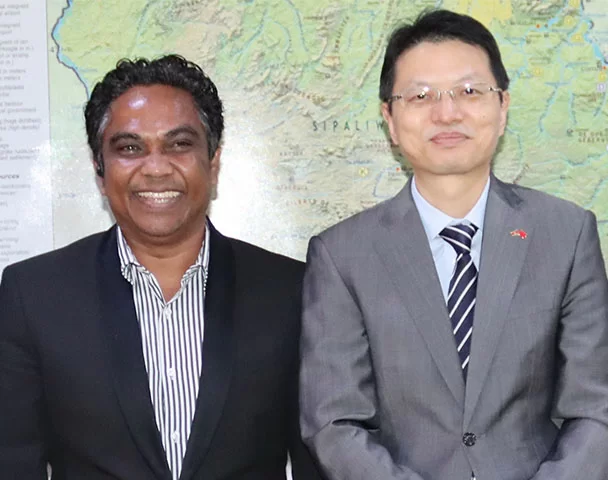
    In a significant bilateral meeting, Suriname’s Minister of Youth Development and Sport Lalinie Gopal and French Ambassador Nicolas de Lacoste have identified sports as a strategic tool to address mounting youth challenges in the border regions shared by Suriname and French Guiana.

    The high-level discussion centered on the Marowijne River border between Suriname’s Marowijne district and France’s Saint-Laurent-du-Maroni territory, where interconnected social issues transcend national boundaries. Ambassador de Lacoste emphasized the urgency of understanding Suriname’s policy priorities given the transnational nature of youth problems in these border communities.

    French officials highlighted severe challenges plaguing French Guiana’s youth, including mental health crises and alarmingly high suicide rates among young people. Both nations recognize organized sports as a powerful mechanism to provide structure, purpose, and future perspectives for vulnerable youth populations.

    The dialogue explored existing and prospective sporting initiatives, including the Inter-Guiana Games, Olympic events, and regional tournaments. France has committed to facilitating participation by providing free visas for sporting and cultural activities, effectively removing financial barriers for Surinamese athletes.

    Minister Gopal outlined Suriname’s infrastructural limitations in sports facilities and policy implementation. She referenced ongoing discussions with the Surinamese Olympic Committee and international partnerships, including India’s donation for upgrading sports infrastructure in Nickerie. The minister stressed the critical gap in school sports programs due to insufficient structural integration within education systems and a shortage of qualified sports instructors.

    Youth development challenges received substantial attention, with particular focus on persistent issues like teenage pregnancies and school dropout rates in border communities. Suriname is collaborating with UNICEF and UNFPA on prevention programs that engage not only girls but also parents and fathers.

    Ambassador de Lacoste expressed France’s willingness to expand cooperation into prevention strategies, sports training, and knowledge exchange. He noted that sports facilities in French Guiana benefit from management by locally elected officials, which enhances accountability and targeted investment.

    Both parties agreed to explore formalizing their collaboration through a memorandum of understanding, potentially establishing concrete agreements addressing youth development, sports, education, and shared cross-border challenges.

  • Na jaren wachten: verpleegkundigen en leerkrachten krijgen grondpapieren

    Na jaren wachten: verpleegkundigen en leerkrachten krijgen grondpapieren

    After enduring prolonged periods of uncertainty, Surinamese nurses and teachers have finally received concrete assurances regarding housing security. On Monday, the Ministry of Land Policy and Forest Management (GBB) distributed 410 land allocation documents, providing these essential professionals with prospects for homeownership and dignified living conditions.

    The allocation comprises 200 land parcels for nurses in Commewijne district and 210 for educators in Para region. President Jennifer Simons, present during the ceremonial distribution, emphasized citizens’ constitutional right to adequate housing according to the Suriname Communication Service. The head of state declared the government’s zero-tolerance policy toward careless or inequitable implementation of land distribution programs.

    Simons highlighted the recent reactivation of the National Housing Construction Fund in December, which received an initial deposit of SRD 20 million. Through coordination with the Minister of Finance and Planning, the administration plans to issue 800-1,000 mortgages from this fund within the year. This initiative enables citizens to construct homes through low-interest financing arrangements. The president urged beneficiaries to closely monitor fund-related updates and complete necessary documentation promptly.

    Collaboration with Minister Stephen Tsang of Public Works and Spatial Planning will ensure allocated lands become construction-ready with proper infrastructure access. GBB Minister Stanley Soeropawiro clarified that recipients need only register their parcels with the Management Institute for Land Registration and Land Information System (MI-GLIS). The minister articulated land’s fundamental role in human existence, stating: “One cannot build a life without land security,” while noting this stability enables active contribution to national development.

    Soeropawiro emphasized his ministry’s commitment to transparent and equitable land administration, with digitalization processes allowing online application tracking. The system directly identifies approved and pending allocations, preventing procedural irregularities. Priority allocation targets first-time land applicants, with the minister advising patience regarding pending requests while warning against unauthorized facilitation payments. Officials expect designated lands to be utilized strictly for their intended purposes.

    Parliamentarians Bronto Somohardjo (Chairman of the Permanent Committee on Land Affairs) and Silvana Afonsoewa attended the event. Afonsoewa has championed nursing staff housing projects in Jagtlust since 2017.

  • World Economic Forum 2026 in Davos van start; wereldwijd leiders bijeen

    World Economic Forum 2026 in Davos van start; wereldwijd leiders bijeen

    The 2026 World Economic Forum (WEF) commenced officially on Monday in Davos, Switzerland, gathering approximately 3,000 participants from over 130 countries. The prestigious assembly brings together heads of state, government officials, corporate executives, and civil society leaders for a four-day convention running through January 23. This year’s theme, ‘A Spirit of Dialogue,’ emphasizes fostering cooperation during an era marked by complex geopolitical and economic challenges.

    Suriname’s Vice President Gregory Rusland is among the distinguished attendees, having received a special invitation to join an exclusive meeting of forty international decision-makers comprising heads of state, CEOs, and ministers. Rusland is scheduled to engage with global leaders on the critical topic: ‘From Commitments to Implementation: Scaling Sustainable Tourism and Hospitality.’

    For decades, the annual WEF summit has served as a crucial platform for addressing pressing global issues including economic growth, multilateral cooperation, technological advancement, and climate change. The 2026 program features more than 200 sessions covering diverse subjects such as global risks, economic inequality, artificial intelligence, and sustainable development.

    Key discussion topics this year include the role of dialogue in an increasingly fragmented global economy. According to recent WEF risk analysis, economic confrontations including trade conflicts and protectionist measures have gained significant prominence on the world stage. The forum will also address the growing divide between economic elites and broader populations. Larry Fink, CEO of investment firm BlackRock and interim co-chair of the forum, emphasized the need for economic systems to evolve toward generating broader societal benefits and reducing distrust.

    Additional focal points include digital innovation and artificial intelligence, investments in strategic sectors like defense and technology, the future of energy and climate policy, and the vital role of international cooperation in tackling global challenges.

    The geopolitical dimension features prominently in this year’s agenda. National security advisors from multiple countries convened in Davos to discuss sensitive matters including policy responses to trade conflicts surrounding Greenland, which have recently created tensions between the United States and European nations. The presence of numerous state leaders and government heads underscores the forum’s continued importance as a diplomatic platform for international collaboration amid global uncertainties including conflict zones and challenges in multilateral relations.

  • Column: Wanneer staatsbezit privé wordt opgericht, faalt de controle

    Column: Wanneer staatsbezit privé wordt opgericht, faalt de controle

    A significant governance crisis has emerged surrounding GuySure, the Guyanese subsidiary of Surinamese state-owned enterprise Grassalco. Official corporate registration documents from Guyana reveal that the company’s shares are formally held by private individuals with connections to Grassalco, contradicting previous representations that it represented a state-controlled regional expansion.

    The disclosure directly challenges the narrative presented during GuySure’s inauguration in Georgetown last May, which was attended by then-President Chan Santokhi, suspended Grassalco CEO Wesley Rozenhout, and former Foreign Minister Albert Ramdin. The high-profile political ceremony had positioned the venture as Suriname’s strategic state-owned presence in neighboring Guyana.

    Investigative findings indicate critical irregularities in documentation handling. Key GuySure documents were only entered into Grassalco’s official records and archives this January—months after both the company’s establishment and its high-profile launch. Forensic analysis confirmed no evidence of external hacking or digital manipulation, suggesting internal procedural deviations.

    The administrative process displayed multiple anomalies including missing сопроводительные документы, irregularities in dossier preparation, and archival inconsistencies. Investigators have not ruled out intentional manipulation or backdating of documents, raising concerns about potential criminal offenses such as document forgery and abuse of position.

    This case transcends political dimensions, touching fundamental principles of legal governance and state property protection. Unlike the separate 4-kg gold investigation, this matter involves international corporate registration, state assets, and possible cross-border legal violations that demand rigorous independent criminal investigation without political interference.

    The central question remains how a purported state subsidiary transformed into a private ownership structure without transparency or accountability, revealing systemic failures in both institutional controls and their appointed guardians.