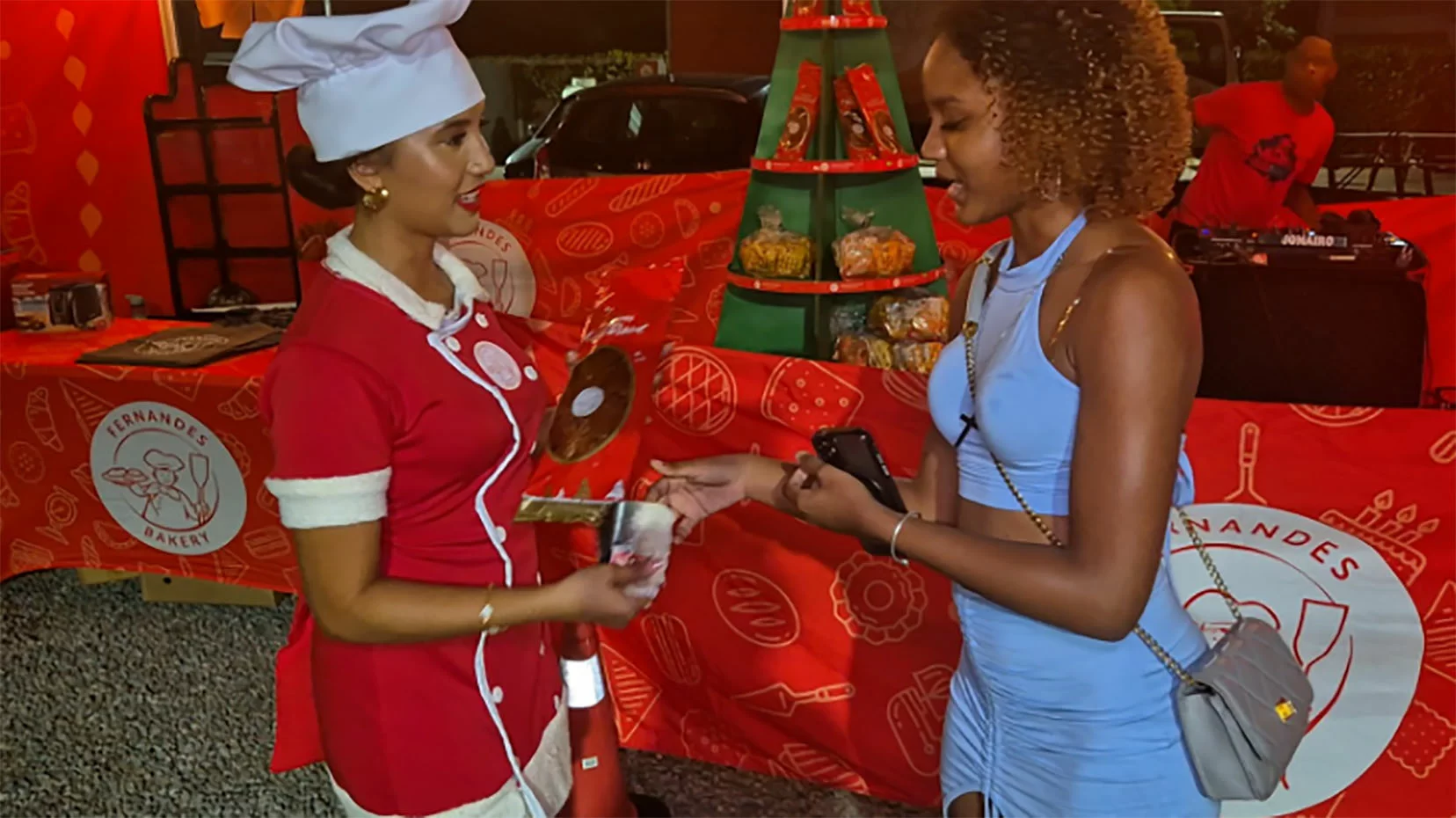
The holiday season kicked off early this weekend for customers of Fernandes Bakkerij, as the bakery’s Christmas Bread Roadshow brought festive joy and exciting giveaways to Rock Oil Zuid. Visitors had the chance to win a variety of prizes, including air fryers, toasters, hand mixers, and even an electric scooter, alongside extra Christmas bread. Shermane Westerborg, the roadshow coordinator, explained that this year’s approach is different. “Instead of cutting meter-long Christmas breads, we’re focusing on giving away as many gifts as possible,” she said. The roadshow, which began in October, will continue until December 12, touring regions such as Paramaribo, Wanica, Commewijne, Para, and Marowijne. Each location features an electric scooter as the grand prize, with three already claimed. The tour will resume in Brokopondo on Tuesday, followed by visits to Wanica, Nickerie, and Paramaribo North, culminating at the Fernandes Bakkerij on Kernkampweg. Westerborg emphasized that the traditional Christmas bread tasting remains a key feature. “We’re still cutting Christmas breads at various locations for people to sample, just not the meter-long ones, so we can focus more on our customers and the prizes,” she noted. Participants can enter the prize draw by submitting a voucher for two Christmas breads. At the ‘grabbelton’—a sealed space where swirling winds float cards—each participant can grab one card to determine their prize. The electric scooter remained unclaimed on Saturday, with all unclaimed prizes rolling over to the roadshow’s final day.
标签: Suriname
苏里南
-
Bewolkt met wat regen
The day begins with overcast skies and a very light easterly wind. Cloud cover is expected to persist throughout the day, with temperatures potentially rising to a peak of 34°C in the afternoon. There is a possibility of light rain occurring during this period. As the evening approaches and into the night, light rain is also forecasted. The wind direction will shift to the northeast but will remain weak. Temperatures are expected to cool down to around 23°C by nighttime.
-

Amerikaans vliegdekschip arriveert in Caribisch gebied
The USS Gerald R. Ford, the United States’ most advanced aircraft carrier, arrived in the Caribbean Sea on Sunday, marking a significant demonstration of American military power. This deployment has sparked concerns about the Trump administration’s intentions in South America, particularly as the U.S. intensifies its military operations against vessels suspected of drug trafficking. The arrival of the Ford and other warships, announced by the Navy, underscores a pivotal moment in what the government terms an anti-drug operation but is widely perceived as escalating pressure on Venezuelan President Nicolás Maduro.
The Ford’s deployment completes the largest buildup of U.S. firepower in the region in decades. The mission, dubbed ‘Operation Southern Spear,’ now includes nearly twelve naval vessels and approximately 12,000 sailors and Marines. This move follows the military’s latest lethal strike on a small boat allegedly involved in transporting illegal drugs. A video released by the U.S. Southern Command on Sunday showed the boat being destroyed in international waters of the eastern Pacific, resulting in three fatalities. Since early September, such U.S. operations in the Caribbean and eastern Pacific have claimed at least 83 lives in 21 attacks.
Rear Admiral Paul Lanzilotta, commander of the strike group, emphasized that the deployment aims to ‘protect the safety and prosperity of our nation from narcoterrorism in the Western Hemisphere.’ Admiral Alvin Holsey, overseeing U.S. operations in the Caribbean and Latin America, stated that American forces are ‘ready to combat transnational threats destabilizing our region.’ Holsey, set to retire next month, described the strike group’s deployment as a ‘crucial step in reinforcing our resolve to protect the security of the Western Hemisphere and the American homeland.’
In Trinidad and Tobago, located just 11 kilometers from Venezuela at its closest point, government officials reported that troops have begun joint training exercises with the U.S. military, expected to last much of the week. Foreign Minister Sean Sobers described these exercises as the second in less than a month, aimed at addressing violent crime on the island, which has become a transit point for drug shipments to Europe and North America. The Prime Minister has been a vocal supporter of U.S. military actions.
The Venezuelan government, however, has condemned these exercises as acts of aggression. President Maduro, accused by the U.S. of drug terrorism, asserted that the American government is ‘fabricating a war’ against him. On his Facebook page, Maduro declared that the Venezuelan people are ‘ready to defend their homeland against any form of criminal aggression.’ Meanwhile, Defense Minister Dan Driscoll highlighted the U.S. military’s increasing focus on Latin America, announcing the reactivation of a jungle training school in Panama.
While the Trump administration maintains that its military buildup is aimed at curbing drug flow into the U.S., it has provided no evidence to support claims that the victims of these operations were ‘narcoterrorists.’ Critics, including regional leaders, the UN Human Rights Commissioner, and U.S. lawmakers, have questioned the legal justification for these attacks. Nonetheless, Senate Republicans recently blocked legislation that would have restricted Trump’s ability to launch an attack on Venezuela without Congressional approval.
Experts remain divided on whether U.S. combat aircraft should be used to strike land targets in Venezuela. Regardless, the deployment of the 100,000-ton warship sends a clear message. Elizabeth Dickinson, a senior analyst for the Andes region at the International Crisis Group, noted, ‘This is the core of what it means to reassert American military power in Latin America. It has raised significant concerns not only in Venezuela but across the region. Everyone is watching with bated breath to see how far the U.S. is willing to go in using military force.’
-

Column: Stay true to yourself and your professionalism
In a world that is constantly evolving, where expectations and trends shift at a rapid pace, it is easier than ever to lose sight of oneself. The pressure to conform and align with what is ‘in’ can be overwhelming. However, one guiding principle remains steadfast: stay true to yourself and your professionalism. This means adhering to your values, beliefs, and professional standards, even when the path is challenging. Clarisa, who reached out to me through a mutual friend, reminded me of this when she said, ‘Stay true to yourself and your professionalism.’ This simple yet profound statement underscores the importance of authenticity and integrity in both personal and professional life. Remaining true to oneself involves listening to your inner voice and choosing what aligns with your core values. Similarly, professionalism is about maintaining integrity, passion, and quality in your work. When these two principles converge, they create something extraordinary—work that is not just a means to an end but an extension of who you are. Losing oneself often leads to a loss of professional essence. Authenticity and professionalism reinforce each other, as seen in the individuals we admire in their fields. They stand out not just for their skills but for their commitment to ethics and consistent professional conduct. Clarisa’s words, ‘I am here for my country,’ also highlighted the importance of hope and collective progress, especially as we approach the celebration of 50 years of independence. Staying true to oneself and professionalism can sometimes mean going against the tide, but it is precisely this courage that sets individuals apart and drives meaningful change. By weaving these principles into the fabric of our multicultural society, we can build a chain of strength and unity that propels our nation forward. Integrity and authenticity should be the norm, not just for individuals but as the foundation for our collective growth.
-
Ambassadeur Ricardo Panka: ‘Geen gewijzigd, maar hernieuwd beleid richting Nederland’
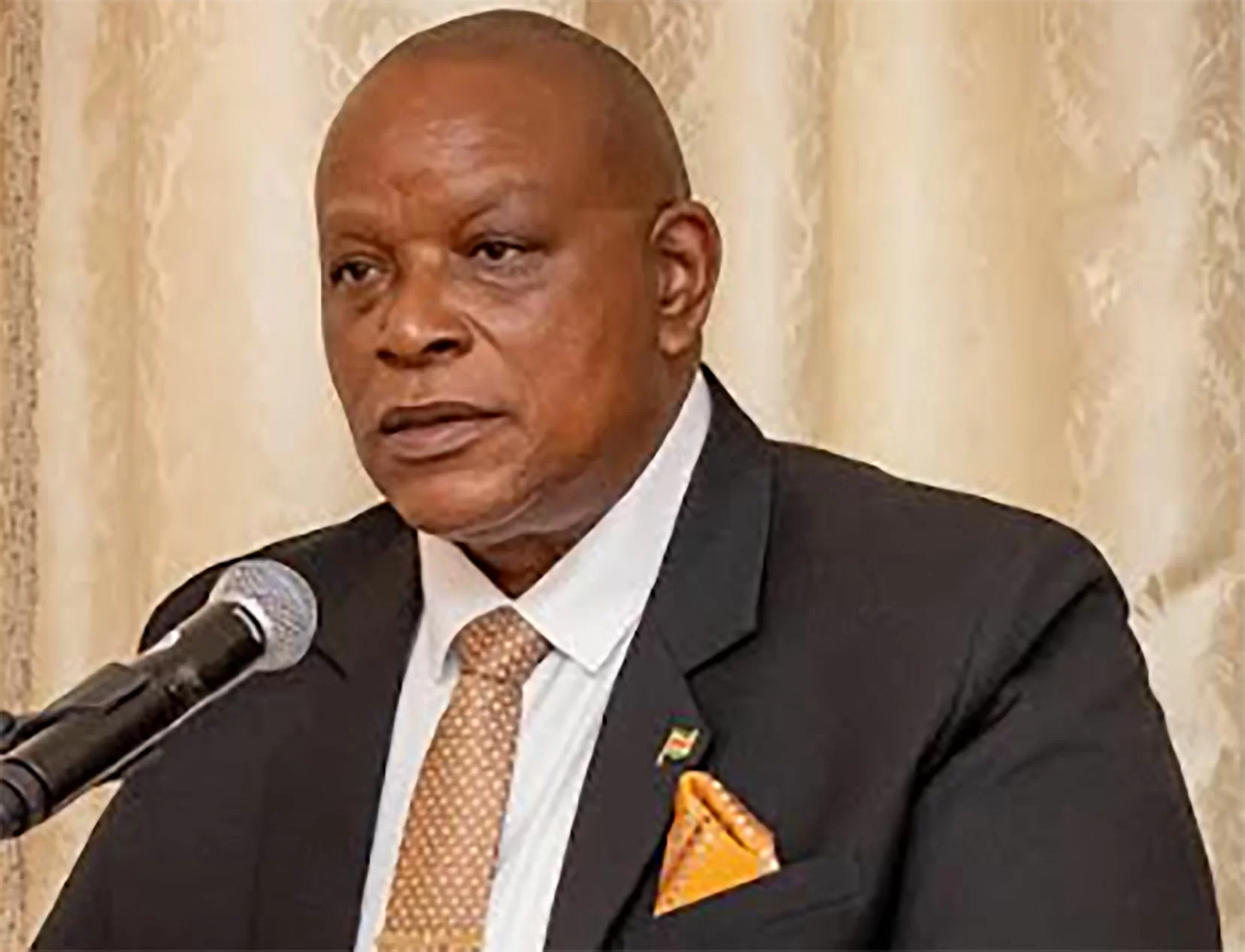
The swearing-in of Suriname’s new ambassador to the Netherlands, Ricardo Panka, has marked a significant shift in the bilateral relationship between the two nations. Panka, representing the National Democratic Party (NDP), emphasized that Suriname will not tolerate external interference from The Hague. He stated that the renewed policy aligns with the principles upheld by Suriname under NDP-led governments, including the tenure of former President Bouterse. Panka acknowledged that this principled stance introduces challenges in the political relationship with the Netherlands, given their historical disagreements. However, he asserted that Suriname has the right to chart its own course based on equality within bilateral cooperation. Panka highlighted that the new policy aims to address neglected sectors from the previous administration, emphasizing the need for change. Before fully implementing his strategy, Panka plans to assess the organizational structures of the embassy and consulate in the Netherlands, addressing past complaints about customer service and accessibility. His priorities extend beyond diplomatic relations, focusing on cultural exchange, public health, education, and tourism. A key initiative is the establishment of a diaspora directorate to engage Surinamese communities abroad in national development. Panka also addressed pressing issues such as visa-free travel, high airline ticket prices on the Mid-Atlantic route, and broader aviation policies. He noted that the government has already reduced fees for the PSA pass (Persons of Surinamese Origin) but acknowledged the ongoing challenge of expensive airfares. Panka, a law graduate and seasoned diplomat, is set to present his credentials to King Willem-Alexander in the Netherlands.
-

Column: Borrelpraat no. 898
In a recent discussion on education reform and teacher salaries, concerns were raised about the inflationary effects of salary increases and the broader implications for the education system. Marcelino N. der Kus, in an article published on Sterrennieuws, argued that while salary adjustments might provide temporary relief, they would not address the systemic issues plaguing the education sector. Instead, he emphasized the need for comprehensive reforms starting from the training of the next generation of teachers, as highlighted in Ivan Fernald’s latest book. The conversation also touched on the inefficacy of past educational conferences, which have often resulted in confusion, wasted time, and unused reports. To truly transform the education system, bold actions are required, such as reintroducing school fees, starting with higher education and gradually extending to lower levels. This measure, though politically unpopular, could ensure sustainable funding. Additionally, students enrolling in teacher training programs should receive substantial monthly allowances to focus solely on their studies, with the condition of repayment upon graduation. The discussion also highlighted the necessity of rigorous entrance exams for aspiring teachers, including proficiency in Dutch and English, and the ability to articulate current issues clearly. Experienced retired teachers and overseas specialists could play a crucial role in mentoring new educators. However, these reforms would require significant financial investment, new infrastructure, and a long-term commitment of 15 to 20 years. The government must explore new revenue streams, such as property taxes, and reduce subsidies to loss-making state enterprises to fund these initiatives. The conversation concluded with a call for decisive action rather than mere rhetoric, as the future of the education system hangs in the balance.
-
OM stelt hoger beroep in tegen beslissing Rechter-Commissaris over inverzekeringstelling Torilal
The Public Prosecution Service (OM) has filed an appeal against the decision of the examining magistrate (Rechter-Commissaris, RC) that deemed the detention of businessman Ryan Torilal on November 14, 2025, unlawful. This appeal has delayed Torilal’s release by three days, adhering to legal procedures. The case will now proceed to a higher court, with a date yet to be determined. Torilal is suspected of involvement in attempted fraud and forgery, allegedly using falsified documents in 2023 to persuade the government to pay SRD 86 million for a cattle delivery that never occurred. The scheme was uncovered by the Central Government Accounting Service (CLAD), which detected irregularities and halted the payment. The Ministry of Agriculture, Livestock, and Fisheries (LVV) initiated an internal investigation, revealing that cattle from the ministry had been sold without the proceeds reaching the state treasury. Additionally, the LVV director reportedly leased parts of the state farm to Torilal without formal approval since 2022 and signed documents falsely claiming entitlement to the SRD 86 million payment. The OM awaits further proceedings in the higher court.
-
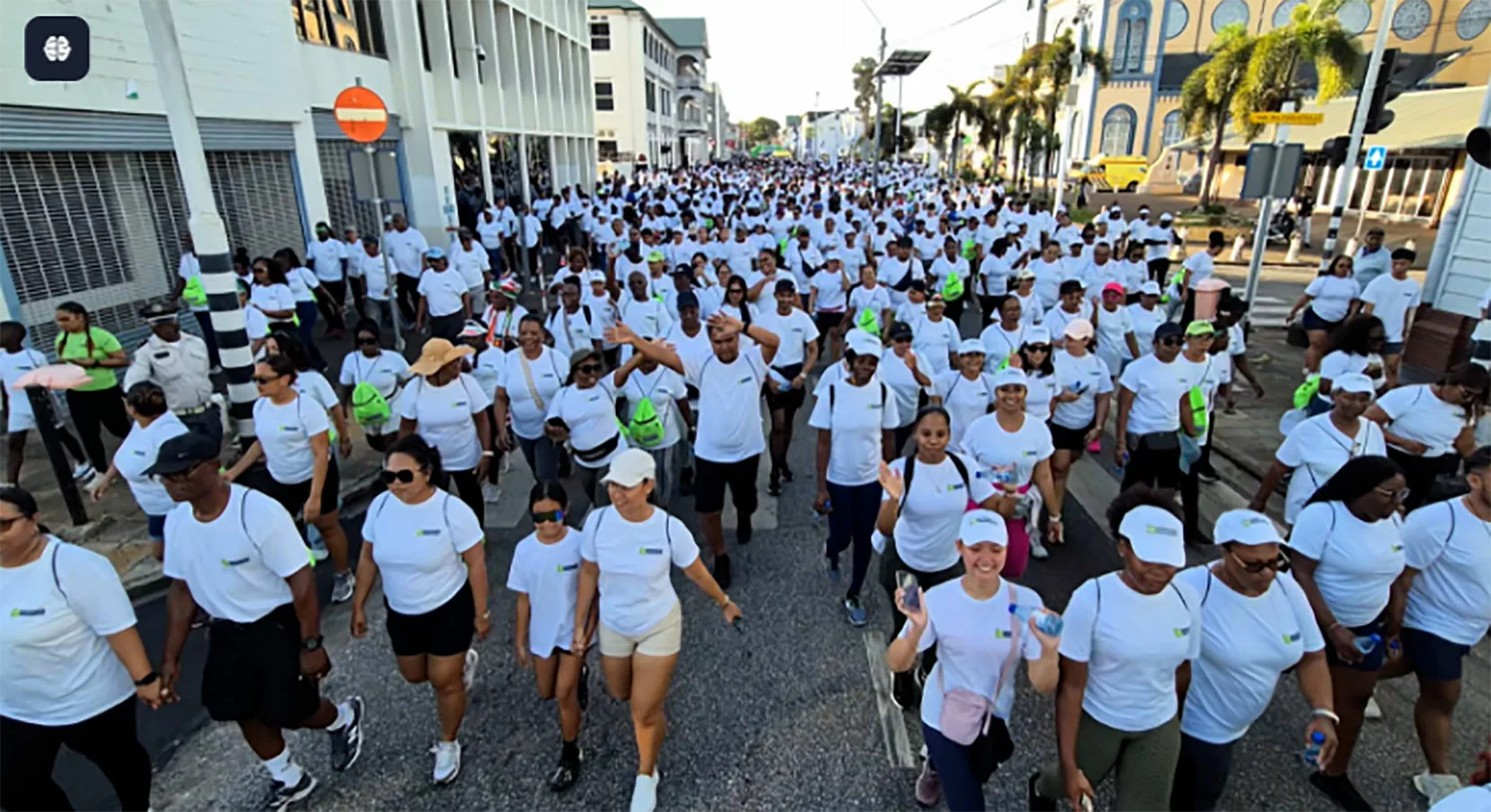
Meer dan 3.000 deelnemers bij succesvolle DSB Bigi Yari Run
The DSB Bigi Yari Run, held last Saturday, proved to be a resounding success, drawing over 3,000 participants to the streets of Paramaribo. Organized by De Surinaamse Bank (DSB) to commemorate its 160th anniversary, the event aimed to give back to the community while promoting health and wellness. Gail Chin On, representing DSB, expressed delight at the overwhelming turnout, stating, ‘We wanted to do something meaningful for society on this milestone occasion, and we couldn’t have asked for a better response.’ The event featured a 6-kilometer walk for casual participants, alongside competitive 5K and 10K races for seasoned runners. Notably, the 10K races were dominated by international athletes, with Ruben Lindongo of France and Jelesa Wright of Guyana clinching top honors in the men’s and women’s categories, respectively. The event commenced and concluded at the DSB headquarters, with Chin On hinting at more upcoming celebrations, including the traditional Kresneti Fatu and the inaugural DSB Owru Yari New Year’s Eve festivities. A portion of the registration proceeds will be donated to beneficiaries, to be announced soon. The DSB Bigi Yari Run not only celebrated the bank’s legacy but also fostered community spirit and athletic excellence.
-
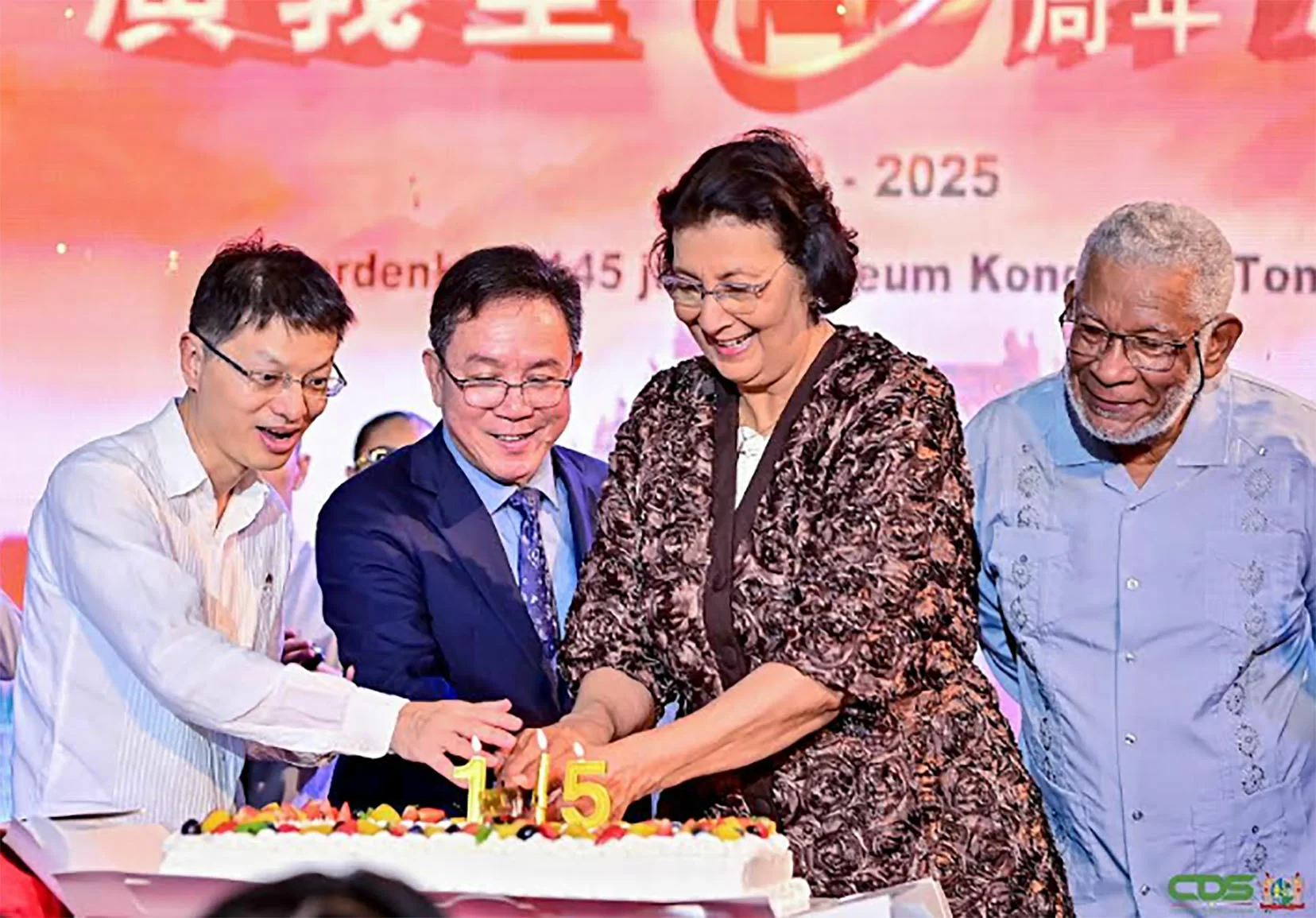
Simons: Chinese vereniging blijft strategische partner in Surinaamse ontwikkeling
Suriname’s President Jennifer Simons has lauded the Chinese association Kong Ngie Tong Sang as a steadfast and strategic partner in strengthening the nation. During her visit to the association’s headquarters on Saturday to celebrate its 145th anniversary, President Simons highlighted the organization’s enduring role in Suriname’s multicultural society and its significant contributions to national development. The event, themed ‘Eternal Heritage, Future Glory,’ underscored the association’s commitment to preserving cultural traditions while extending its influence beyond the Chinese community. ‘Kong Ngie Tong Sang honors its roots but shares its branches and fruits with all of Suriname. This is nation-building,’ Simons remarked. She expressed hope that the association would continue to be a source of strength, culture, and unity, playing a pivotal role in the country’s progress. Chinese Ambassador Lin Ji emphasized the historical ties between the Chinese community and Suriname, noting that the president’s presence symbolized the government’s recognition and appreciation. Lin also highlighted the association’s professionalism and organizational strength as opportunities to deepen diplomatic and economic cooperation between Suriname and China. Parliamentarian Jeffrey Lau, secretary of the Suriname Chinese United Association (SCUA), pointed to the association’s long-standing societal contributions, including the establishment of a Chinese school and its current project to build a nursing home. During the celebration, donations were presented to three care homes—Leliëndaal, Ramoth, and Fatima Oord—demonstrating the association’s social commitment. The evening concluded with a dinner and performances by various Chinese cultural groups. With 145 years of history, Kong Ngie Tong Sang remains an indispensable bridge between communities and a key partner in Suriname’s future.
-

Meervoudige inbraakverdachte aangehouden
In a significant breakthrough, the Jarikaba police apprehended 24-year-old N.H., widely known by his alias ‘NIA,’ on Friday, November 14, 2025. The suspect, who has been linked to multiple burglaries, was arrested following a complaint filed by victim R.A. on Thursday, November 13, 2025. R.A. reported a home invasion at his residence on Lakatanweg, where the intruder gained access by removing three shutter glasses from his bedroom window. The burglar allegedly stole a bottle of perfume and an undisclosed amount of money in SRD.