标签: Saint Vincent and the Grenadines

圣文森特和格林纳丁斯

  • Donald Trump needs to free the Cuban people

    Donald Trump needs to free the Cuban people

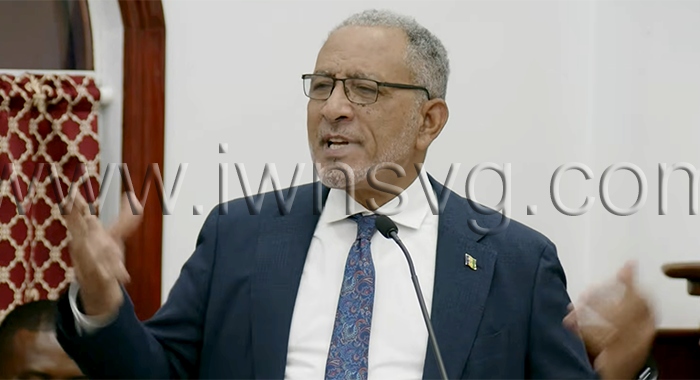
    In a forceful rebuttal to Jomo Thomas’s commentary “Ungratefulness is worse than witchcraft,” political commentator C. ben. David presents a starkly contrasting perspective on Cuba’s political reality since the 1959 revolution. The author characterizes Fidel Castro’s rise to power as an “illegal rebellion” that replaced a democratic government with a “fascist Marxist regime,” establishing what he describes as a “communist reign of terror” that continues to oppress the Cuban people.

    The analysis highlights the estimated exodus of one million Cubans—approximately ten percent of the island’s population—who have fled their homeland due to economic devastation and political repression. Those remaining face severe hardships including chronic food shortages, rationing systems, poverty-level incomes, arbitrary property confiscation, banned political opposition, inadequate healthcare, and pervasive state surveillance.

    Contrary to common narratives, the author argues these conditions cannot be attributed to the American trade embargo, noting Cuba maintains trade and diplomatic relations with numerous nations including Russia and China, both of which have provided substantial aid during economic crises. The piece asserts that Cuba’s economic struggles are largely self-imposed through systemic mismanagement.

    The commentary sharply criticizes Cuban leadership for enjoying “sumptuous but idle luxury” while the population suffers, describing Cuba among Caribbean “shit hole countries” due to leadership that prioritizes “rapacious and power-hungry goals” over public welfare. The author endorses Donald Trump’s approach to Cuba, interpreting it as a genuine effort to “restore the freedom and dignity of the mass of the Cuban people”—a sentiment reportedly shared by many exiles and their descendants.

    Additionally, the piece questions the ethics of Cuba’s international medical missions, noting physicians are paid “rock bottom wages” with most earnings repatriated to the Cuban government, creating what the author characterizes as a system that “further exploit[s] their very own people.”
  • Amid corruption allegations, Housing Minister wonders if  SVG is world’s ‘pit-latrine capital’

    Amid corruption allegations, Housing Minister wonders if  SVG is world’s ‘pit-latrine capital’

    A major political controversy has erupted in St. Vincent and the Grenadines as the newly installed New Democratic Party (NDP) administration launches an investigation into alleged financial misconduct within the previous government’s housing initiative. The scrutiny centers on the ‘Lives to Live’ program, established under former Prime Minister Ralph Gonsalves’ Unity Labour Party (ULP) administration.

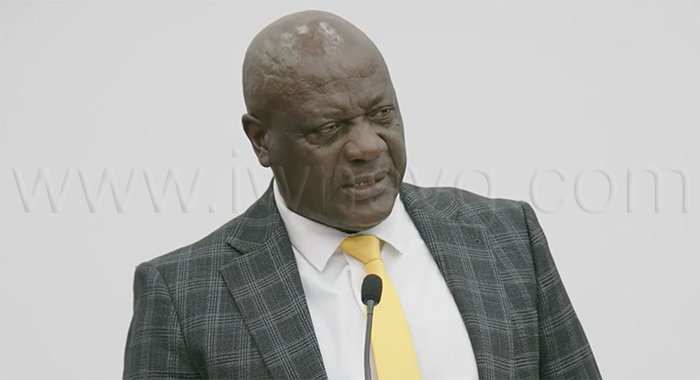
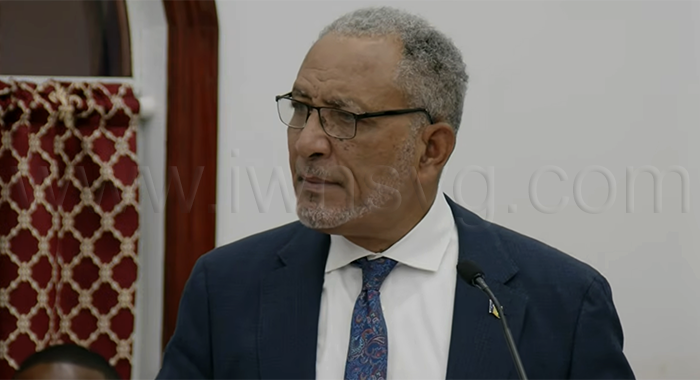
    Housing Minister Andrew John ignited the debate during parliamentary discussions on the 2026 national budget, questioning the allocation of millions toward a program that demonstrated insufficient results relative to its substantial funding. The minister specifically highlighted the Diamond Estate community within his South Windward constituency as a case study of systematic failures.

    The Lives to Live program, designed to assist marginalized populations including indigent citizens, persons with disabilities, and those displaced by development projects, operated under the Ministry of Housing with significant expenditures on construction materials and essential household fixtures.

    Minister John presented compelling evidence of irregularities, noting that despite the previous administration’s reported expenditure of US$9 million (EC$24.3 million) from the Saudi Fund for Development specifically allocated to this program, numerous communities still lack basic sanitation infrastructure. ‘One might wonder if St. Vincent and the Grenadines has become the pit-latrine capital of the world,’ John remarked during his parliamentary address.

    The government has designated Diamond Estate as a pilot project for informal settlement upgrades, allocating EC$150,000 initially for essential services including electricity, potable water, and proper bathroom facilities. ‘This transcends mere infrastructure—it concerns human dignity,’ Minister John emphasized, outlining plans for comprehensive community rehabilitation including proper road systems.

    The investigation has revealed substantial financial transactions with Jamaica-based Tankweld Ltd., totaling tens of millions of dollars over multiple administrations for construction materials, particularly following natural disasters including Hurricane Beryl’s devastation in July 2024.

  • ULP’s criticism of $105m deficit proves their fiscal irresponsibility — PM

    ULP’s criticism of $105m deficit proves their fiscal irresponsibility — PM

    In a fiery conclusion to the parliamentary debate on St. Vincent and the Grenadines’ 2026 national budget, Prime Minister Godwin Friday launched a robust defense of his administration’s fiscal strategy while delivering a scathing critique of opposition claims. The government passed its EC$1.9 billion fiscal package without support from the three-member parliamentary opposition, simultaneously approving EC$200 million in domestic borrowing.

    The opposition Unity Labour Party (ULP), led by former Prime Minister Ralph Gonsalves, had characterized the budget’s EC$105 million current account deficit as fiscally irresponsible, warning of potential regional fundraising difficulties and predicting overdraft dependence amid a looming cash crunch. The ULP suffered a decisive electoral defeat in November, retaining only one parliamentary seat.

    Prime Minister Friday framed the opposition’s criticism as politically motivated fearmongering, questioning why any political faction would seemingly wish for International Monetary Fund intervention. ‘Now, no matter your politics, why would you wish that on your country? Why would you wish that on your people?’ Friday challenged lawmakers.

    The Prime Minister noted a ‘rare moment of agreement’ with Opposition Leader Gonsalves regarding the deficit figures while completely rejecting the ULP’s interpretation. Friday presented historical context revealing that during the ULP’s final term, cumulative current account deficits exceeded EC$200 million, including a EC$70 million deficit in 2025 alone.

    ‘They cannot, on the one hand, claim that 90% of the budget is a carryover of their plans and programmes… and then, on the other hand, they deny responsibility for the fiscal position those same plans produced,’ Friday argued, characterizing the opposition’s stance as contradictory.

    The Prime Minister positioned the current deficit not as governmental failure but as transparent accounting of what he termed a ‘rescue mission’ inherited from the previous administration. He emphasized that allocated funds would address longstanding social injustices while charting a sustainable economic path informed by the principles of the 1984-1989 New Democratic Party administration, which achieved the unprecedented feat of winning all parliamentary seats.

    Friday concluded by reaffirming his government’s commitment to responsible economic management, stating: ‘We are charting a sustainable, forward-looking path for our country. We are not doing it on a wing and a prayer.’

  • Time to take occupational health and safety seriously in SVG

    Time to take occupational health and safety seriously in SVG

    A series of fatal workplace incidents in St. Vincent and the Grenadines has exposed critical gaps in occupational safety enforcement, prompting urgent calls for systemic reform. Recent tragedies include a worker who fell to his death from a steel structure near high-voltage power lines and multiple construction site fatalities involving falls from height—incidents that safety experts characterize as preventable rather than isolated accidents.

    As an emerging nation pursuing international recognition and improved living standards, SVG faces mounting pressure to elevate workplace safety from peripheral concern to national priority. In truly developed economies, comprehensive safety protocols are deeply integrated into governmental policy, corporate operations, and individual conduct through rigorous planning, enforcement, and cultural adoption.

    The implementation of robust occupational health standards would yield multifaceted benefits across SVG’s economy. For the vital tourism sector, demonstrable safety protocols signal a well-regulated destination—a key consideration for modern, safety-conscious travelers. Commercial enterprises would experience fewer accidents, reduced operational disruptions, enhanced productivity, and strengthened reputational standing.

    From an investment perspective, consistent enforcement of national safety regulations provides essential assurance to businesses considering SVG operations. While many corporations maintain internal safety standards, they require host countries to establish reliable legal frameworks—particularly when competing for international contracts and tenders where safety records undergo intense scrutiny.

    Beyond economic implications, workplace safety fundamentally affects family welfare. Workers rightly expect to return home safely after shifts, and families deserve confidence that adequate protections exist for their employed relatives. Employers bear not only legal obligations to establish safe working systems but also profound moral responsibilities toward those sustaining their operations.

    Comprehensive occupational safety represents more than regulatory compliance—it constitutes ethical necessity and economic wisdom. Preventable accidents extract human lives, devastate families, overload public services, and tarnish national image.

    Although SVG’s Occupational Safety and Health Act provides legislative foundation, experts emphasize that meaningful implementation remains lacking. With each preventable incident, the same urgent question emerges: was this death avoidable?

    Businesses must integrate safety into daily operations as practiced reality rather than bureaucratic formality. Simultaneously, workers and citizens should be empowered to identify hazards, voice concerns, and reject the normalization of unsafe conditions.

    [Opinion disclaimer: The views expressed represent the author’s perspective and may not align with iWitness News editorial stance]

  • Gov’t conducting comprehensive assessment of VAT

    Gov’t conducting comprehensive assessment of VAT

    The government of St. Vincent and the Grenadines has announced sweeping fiscal reforms that could eliminate Value-Added Tax on residential electricity consumption, offering substantial relief to thousands of households served by national utility provider VINLEC. Prime Minister Godwin Friday unveiled these measures during his 2026 Budget Address to Parliament, signaling a major shift in economic policy aimed at alleviating financial strain on vulnerable populations.

    In a comprehensive budgetary presentation, Prime Minister Friday revealed that the Ministry of Finance, the Inland Revenue Department, and key stakeholders are conducting an extensive evaluation of VAT reduction strategies. This assessment specifically targets essential commodities and domestic power consumption, with the dual objective of providing tangible consumer relief while maintaining fiscal responsibility.

    The current VAT framework exempts most residential consumers who stay below the 250 kWh monthly threshold. Those exceeding this consumption level face a 16% VAT charge on their electricity bills—a tax structure originally implemented at 15% in May 2007 by the previous Ralph Gonsalves administration, later increased by one percentage point to contribute to natural disaster recovery funds.

    Prime Minister Friday emphasized his administration’s acute awareness of mounting cost-of-living pressures, noting that elevated prices for food, electricity, and essential goods are eroding wages, straining household budgets, and threatening social stability. He characterized addressing these economic pressures as a fundamental governance obligation rather than a policy option.

    These developments fulfill campaign promises made by the New Democratic Party during the November 2025 general election, which included reducing VAT rates from 16% to 13% across the economy and eliminating VAT on essential items like fresh produce and pharmaceuticals. The government is additionally evaluating the implementation of VAT-free shopping initiatives during financially demanding periods such as back-to-school seasons and Christmas holidays.

    The Prime Minister stressed that all tax relief measures must be precisely targeted, administratively practical, and aligned with broader fiscal consolidation goals, including public debt reduction and sustainable Primary Balance achievement. The government intends to present its comprehensive assessment findings to the public and Parliament ahead of an October 2026 implementation deadline, ensuring evidence-based policy-making rather than impulsive fiscal decisions.

    Friday concluded that responsible governance delivers cost-of-living solutions through meticulous reform rather than rhetoric, promising practical, costed measures that return disposable income to households while preserving fiscal stability.

  • Budget 2026 approved; ULP critique no match for NDP’s super-majority

    Budget 2026 approved; ULP critique no match for NDP’s super-majority

    In a landmark parliamentary session, Prime Minister Godwin Friday’s New Democratic Party (NDP) administration has successfully passed its inaugural EC$1.9 billion national budget for 2026, marking the party’s first fiscal package since returning to power after a 25-year hiatus. The budget approval came through the government’s decisive super majority of 14 out of 15 parliamentary seats, despite unified opposition from the Ralph Gonsalves-led Unity Labour Party (ULP).

    Prime Minister Friday, who also serves as Finance Minister, characterized the fiscal plan as a definitive break from what he termed ‘the fiscal recklessness of previous administrations.’ During his concluding debate remarks, Friday delivered a scathing assessment of opposition criticism, describing their arguments as ‘weak, confused, and delivered without conviction or self-belief.’

    The political context underscores the significance of this budgetary process. The NDP’s return to power in November’s general elections ended the ULP’s two-decade dominance, a period the Prime Minister referenced as marked by ‘politics of division and spite.’ Friday asserted that the electoral outcome represented more than mere political rotation—it embodied a national yearning for transformative governance and substantive change.

    Addressing specific opposition allegations, including claims that portions of the budget were drafted using artificial intelligence tools like ChatGPT, Friday dismissed these assertions while acknowledging his unfamiliarity with such technology. He emphasized the document’s distinctive character, noting its fundamental departure from previous budgets in ‘tone, construction, and vision.’

    The budget’s philosophical foundation rests on what the Prime Minister termed ‘prudent conservatism,’ shifting the government’s role from primary economic operator to facilitator of private enterprise. This approach explicitly rejects deficit spending and prioritizes fiscal responsibility, with Friday stating ‘the state can no longer be the engine of growth in this economy.’

    Central to the budgetary framework is the ‘rescue to resilience’ strategy, designed to transition the nation from immediate recovery to sustainable development. The Prime Minister emphasized creating predictable conditions for both domestic and international investors, noting that ‘certainty is what business likes.’ The administration positions this budget as establishing St. Vincent and the Grenadines as open for business and partnership, with poverty alleviation constituting a core priority.

  • Vincy NGO Hand2Earth to present at climate forum in Vienna

    Vincy NGO Hand2Earth to present at climate forum in Vienna

    Saint Vincent’s grassroots organization Hand2Earth has achieved international acclaim by securing an invitation to present at the prestigious UNIDO Climate Adaptation and Industrial Resilience Forum scheduled for February 2026 in Vienna, Austria. This recognition comes as a direct result of the NGO’s receipt of the highly competitive GEF Assembly Challenge Award in 2023, where it emerged victorious among 600 global applicants as one of only 22 selected winners.

    The organization will showcase its innovative vetiver systems project, which has demonstrated remarkable success in farmland recovery throughout North Leeward. Since its inception in 2022 with initial funding from the SVG Conservation Fund, the project has expanded significantly, now engaging 85 active farmers and 21 craft beneficiaries while positively impacting over 200 households through its comprehensive watershed management and agri-heritage tourism initiatives.

    Project Manager Vonnie Roudette has been personally invited to deliver a keynote address focusing on the governance, design, and sustainability of community-led climate adaptation solutions. Her presentation will emphasize the holistic approach that has become Hand2Earth’s trademark—a methodology that combines creative praxis with inclusive problem-solving to ensure community ownership and long-term viability.

    The four-day UNIDO forum, aligned with the UNIDO Climate Action Plan 2025–2029, will convene government representatives, private sector leaders, and technical experts to establish practical pathways for integrating climate adaptation into sustainable industrial development. Additionally, a specialized workshop will provide capacity-building training and networking opportunities for the 22 selected civil society organizations, enabling knowledge exchange and initiative scaling.

    Hand2Earth’s invitation acknowledges both its environmental achievements and its established reputation in prisoner rehabilitation programs encompassing vetiver crafts, literacy education, and sustainable farming practices since 2015. The organization’s participation represents not just local success but a model for global community-led climate resilience.

  • SVG triumph in bilateral chess competition in Grenada

    SVG triumph in bilateral chess competition in Grenada

    The St. Vincent and the Grenadines Chess Federation has proudly announced the exceptional achievement of its National Lottery Junior Chess Team at the historic Fedon Bilateral Invitational Chess Competition held in Grenada. The young Vincentian squad, comprising Captain Vedant Shetty, Le’mar Abbott, Nathanael Lawrence, Stacy Baptiste-King, and Arianna Balcombe, delivered a masterclass in competitive chess under the guidance of manager Oris Robinson and coach Terence Latctman.

    Facing formidable regional opposition from Team Grenada across three demanding rounds, the SVG contingent exhibited extraordinary mental fortitude, strategic acumen, and impeccable sportsmanship throughout the tournament. The competition commenced with a hard-fought 3-2 victory in Round One, followed by a dominant 4-1 performance in Round Two that highlighted their tactical discipline and competitive resolve. The final round culminated in a tense 2.5-2.5 draw after fiercely contested matches from both sides.

    Securing a comprehensive overall victory with a final score of 9.5-5.5, Team SVG’s triumph stands as a testament to their collective talent, rigorous preparation, and unwavering dedication to the sport. The federation officially commended the players for representing the nation with outstanding integrity and determination while expressing profound gratitude to the National Lottery Authority for its sustained investment in youth chess development initiatives.

    The team is scheduled to return home on Monday, with their next competitive challenge set for the Chatoyer Youth Tournament in St. Vincent and the Grenadines in March 2026.

  • Let’s have clarity on PM Friday’s son

    Let’s have clarity on PM Friday’s son

    The appointment of political leaders’ offspring to government positions has reignited debates in St. Vincent and the Grenadines, echoing historical controversies that previously gripped the nation. Current Prime Minister Ralph Friday’s utilization of his son as an unofficial aide has drawn public scrutiny, despite parliamentary procedures blocking formal questioning from opposition figures.

    This situation evokes memories of the 2007 appointment of Camillo Gonsalves, son of then-Prime Minister Ralph Gonsalves, as the nation’s UN ambassador. That controversial decision first introduced the term ‘nepotism’ into mainstream political discourse within SVG, with then-opposition leader Arnhim Eustace condemning it as a clear case of preferential treatment based on family connections.

    The current administration faces mounting questions about the nature and scope of the prime minister’s son’s involvement in government affairs. Citizens seek transparency regarding his access to confidential information, participation in cabinet meetings, travel arrangements, and overall exposure to sensitive governmental operations. These concerns mirror those previously directed at the Gonsalves administration during their tenure.

    While Speaker of the House has blocked official parliamentary questioning on the matter, public curiosity remains unabated. Commentators argue that Prime Minister Friday, who during his swearing-in ceremony pledged accountability to the people, should proactively address these concerns through official channels rather than allowing speculation to flourish.

    Observers suggest that formalizing the arrangement with a clearly defined job description, even for a voluntary position, would provide the transparency necessary to maintain public trust and prevent the gradual erosion of accountability mechanisms that has characterized the nation’s political landscape over recent decades.

  • Cop among duo charged over chopping incident

    Cop among duo charged over chopping incident

    In a significant development that has drawn attention to law enforcement conduct, authorities in St. Vincent and the Grenadines have taken the unusual step of arresting and charging one of their own personnel. Ezran Harper, a 39-year-old police constable with nearly twenty years of service in the tactical Rapid Response Unit, now faces serious criminal charges alongside Damian Harper, a 30-year-old barber from the same community.

    The two men stand accused of perpetrating a violent machete attack on Marcus Billy, a 51-year-old resident, during an incident that occurred last Friday in the Langley Park area of Georgetown. According to official charges, the defendants unlawfully and maliciously inflicted grievous bodily harm upon Billy by striking him with a cutlass (a type of machete) on his left foot and right hand.

    The case has raised questions about police accountability, particularly given Harper’s long-standing service within the specialized tactical unit of the Royal St. Vincent and the Grenadines Police Force. Both accused individuals have been granted station bail pending their scheduled appearance before a magistrate, which is set for Monday. The judicial proceedings will determine the next steps in a case that has highlighted the legal system’s handling of alleged offenses committed by law enforcement personnel.