标签: Saint Vincent and the Grenadines

圣文森特和格林纳丁斯

  • SVG’s investment door ‘unlocked, … held wide open’ – Invest SVG Chair

    SVG’s investment door ‘unlocked, … held wide open’ – Invest SVG Chair

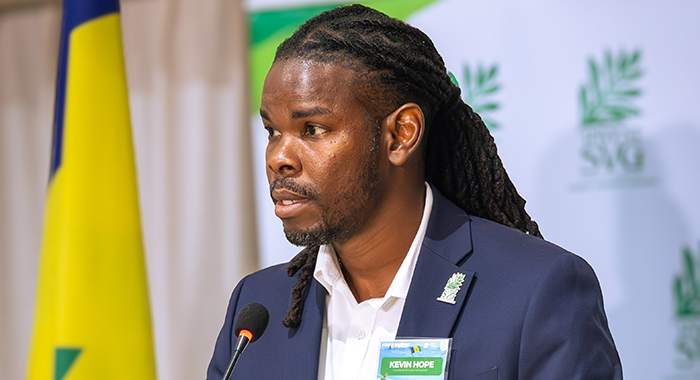
    During a recent diaspora outreach event held in the British Virgin Islands as part of the “Home is Where the Heart Is” tour, top St. Vincent and the Grenadines (SVG) economic official Kevin Hope delivered a landmark announcement that the Caribbean nation is enacting sweeping, systemic reforms to overhaul its investment climate, moving away from a long-standing reputation for bureaucratic gridlock to a transparent, rules-based environment designed to attract global and diaspora-backed investment.

    Hope, who serves as both Ambassador of Finance and Investment and Chairman of the Board of Invest SVG, acknowledged that for decades, the nation’s investment ecosystem has been held back by a reputation for closed doors and excessive red tape. Many potential investors from the global Vincentian diaspora, who recognized the abundant untapped potential of SVG’s natural resources, maritime assets, and skilled local workforce, ultimately walked away from opportunities due to the perceived complexity and inefficiency of bureaucratic processes. But this outdated narrative is no longer accurate, Hope emphasized, noting that the SVG government has repositioned ease of doing business as a top national strategic priority, with far-reaching changes already underway to reshape the nation’s legal, regulatory, and procedural landscape for investors.

    Unlike the previous policy framework that focused exclusively on attracting inward capital investment, the SVG government has adopted a new dual mandate that incorporates two additional core goals: promoting homegrown Vincentian products and services in global markets, and mobilizing the full range of resources held by the Vincentian diaspora around the world. Hope clarified that this focus on diaspora engagement extends far beyond soliciting financial investment; the nation is also eager to leverage the diverse knowledge, professional skills, and global experience that diaspora members have built over decades living and working abroad. As a diaspora member himself who returned to SVG after 25 years living overseas to contribute to national development, Hope offered himself as a tangible example of the open door the government now extends to global Vincentians.

    On the legislative front, the government is advancing a groundbreaking new St. Vincent and the Grenadines Investment Act, which will enshrine binding, legally enforceable protections for all investors. This legislation goes far beyond a symbolic policy statement: it codifies fair and equitable treatment, non-discrimination standards, and consistent, transparent procedural rules that apply equally to diaspora investors and foreign investors, guaranteeing the same high level of legal protection for all parties. The new framework replaces the vague, inconsistent requirements of the previous system with clear, predictable rules that give investors greater confidence to commit long-term capital to projects in SVG.

    In addition to legal reform, the SVG government is completely restructuring its investment incentive system, moving away from broad, one-size-fits-all blanket concessions that delivered little economic benefit to targeted, performance-based incentives that reward concrete, outcome-driven investment. These targeted incentives will be focused on the nation’s priority economic sectors, which include agriculture, tourism, the blue economy, and the cultural and creative industries, aligning private investment with national development goals.

    To address the most frustrating practical bottlenecks for new investors, the government has committed to cutting the timeline for new company registration dramatically. Prime Minister Godwin Friday, who also oversees private sector development policy, has made a public pledge to reduce the process of starting a new business from the current two months to just five business days. To systematically identify and eliminate remaining bureaucratic barriers, the government is assembling a cross-agency Business Investment Reform Team, which will bring together stakeholders from the Private Sector Development Unit, the Ministry of Foreign Affairs, and the Ministry of Finance to root out unnecessary red tape.

    A core piece of the practical reform agenda is the development of a new digital Business Gateway portal, which will allow investors to track permit applications and approval processes in real time. This digital platform will replace the outdated fragmented system that forced investors to navigate multiple separate government agencies in person, replacing it with a single digital window for all investor interactions with the state. For micro, small, and medium-sized enterprises, the government is also strengthening the support ecosystem through a partnership with the Centre for Enterprise Development, building specialized capacity in market research and intelligence to give investors the actionable data they need to make informed business decisions.

    Positioning Invest SVG as both a dedicated partner and advocate for investors throughout their entire journey in the country, Hope noted that the agency has trained specialized staff to support investors from initial application through long-term growth, ensuring that investors do not have to navigate the market alone. Closing his address to the BVI-based diaspora community, Hope emphasized that the reforms are not just symbolic: SVG is ready and waiting to welcome both the skills and capital of Vincentians living abroad, and it is time for the global diaspora to join the nation in building a more resilient, competitive St. Vincent and the Grenadines.


  • High maintenance and proud

    High maintenance and proud

    Against a global cultural backdrop where involuntary celibate (incel) communities are growing rapidly, where gendered norms still pressure women and girls to dim their own accomplishments to lift up men, and where far too many men derive their sense of power from putting women down, single-sex girls’ schools like Girls’ High School (GHS) are far more than a nice-to-have — they are a critical necessity for nurturing the next generation of female leaders.

    This defense comes in response to a recent opinion piece that criticized GHS as an institution that produces “high-maintenance girls” and relies excessively on constant fundraising. Let’s break down why that critique misses the full picture of what GHS actually delivers for its students and the broader community.

    Critics point to GHS’s frequent, often aggressive fundraising campaigns as evidence of unnecessary extravagance. But what these critics fail to acknowledge is that every dollar raised goes toward tangible, impactful opportunities for students that go far beyond the basic education funded by the government. Unlike the outdated narrative that frames girls’ school participation as little more than attending sports day parades and wearing themed spirit wear once a term, GHS offers a vast portfolio of enrichment programs that shape well-rounded, capable young women: from science research clubs and cultural preservation initiatives to community gardening projects, student-led leadership organizations, international exchange programs, and local community development projects. Most recently, a cohort of GHS students completed a transformative cultural exchange program in St. Kitts and Nevis — an experience that broadened their global perspective but would have been impossible without additional funding.

    None of these opportunities materialize on their own. The annual baseline funding provided by the Ministry of Education only covers core operational costs, leaving no room for the extra programs and student support that make GHS stand out. That is why fundraising is not a choice for the school — it is a requirement to deliver on its mission.

    In an interview with current GHS Headmistress Latoya Deroche-John, I learned of even more unseen, impactful work that fundraising makes possible, work that the public rarely hears about. Through the school’s Student Life initiative, funds raised go directly to supporting low-income, underprivileged students by covering basic essentials that many families struggle to afford: daily school breakfasts, prescription eyeglasses, school uniforms, and blouses. This quiet, consistent support is part of GHS’s everyday operation, a commitment to leaving no girl behind that many other schools across the region do not prioritize.

    Deroche-John also clarified a key policy shift that many outside of school administration do not understand. In the past, schools could access targeted project funding through a system called “the vote”, which allowed institutions to lobby for additional allocations for specific programs. That system is no longer in place, leaving schools to rely on their own resource generation to expand beyond core services. The Ministry of Education’s current annual school budget is modest at best: it covers only basic necessities and minimal operational support, falling far short of what is needed to sustain enrichment programs, maintain campus facilities, and meet the diverse everyday needs of the student body.

    This context makes clear: when GHS students, parents, and alumni are constantly organizing fundraisers, it is not because the school is frivolous or unnecessarily high-maintenance. It is because delivering excellence requires investment. Holistic student development costs money. Life-changing cultural exchanges cost money. Extracurricular clubs that build new skills cost money. Feeding food-insecure students costs money. Providing a low-income student with the eyeglasses they need to clearly see the whiteboard and keep up with their studies costs money.

    Critics did raise one fair, legitimate concern: what happens to girls from low-income families who cannot afford to contribute to these fundraising efforts? The good news is that GHS has long centered equity as a core value, operating under the principle that excellence should never be a privilege reserved only for wealthy students.

    From my own time as a GHS student, I can attest to this commitment. Students were encouraged to contribute what they could, even if it was just one dollar a day. Older students, alumnae, and community donors regularly step in to cover gaps for students who cannot contribute. If a student shows a willingness to participate and grow, the school finds a way to make that happen — no one is excluded because their family cannot pay.

    That is because GHS’s core expectation has never been just that students show up to class. The expectation is that every girl will achieve excellence. Under Deroche-John’s leadership, students are taught that they are not just learners — they are future stewards of society, called to lead, to outperform, and to claim space in fields that have long been dominated by men.

    And GHS’s track record speaks for itself. Alumnae of the school have gone on to hold roles as politicians, journalists, diplomats, doctors, nurses, small business owners, public servants, and leaders across every sector of society. GHS does not just teach students to pass exams — it emboldens young women to reject the cultural pressure to shrink themselves, to stand tall in a world that still too often tries to diminish women.

    So to the critics who call us high-maintenance: we own that label, and we are proud of it. At GHS, we teach girls to expect respect, expect dignity, expect excellence, and to believe they deserve the very best that life has to offer. And every single dollar raised to make that mission possible is more than worth it.

  • Sandy Bay man to pay for injuring hearing-, speech-impaired man

    Sandy Bay man to pay for injuring hearing-, speech-impaired man

    A 30-year-old resident of Sandy Bay has received a mixed court sentence including a bond, financial penalties, and mandated compensation after pleading guilty to a 2024 assault that left a 51-year-old disabled fellow villager with a facial laceration. The case concluded on April 4 at the Georgetown Magistrate’s Court, where defendant Rolston Hoyte appeared before presiding Magistrate Kaywana Jacobs for re-arraignment at the request of his defense attorney, Charmaine Walters. It was during this hearing that Hoyte changed his previous plea to a guilty plea, taking open responsibility for the violent incident.

    Before prosecution attorneys laid out the official facts of the case, Walters gave Hoyte the opportunity to address the court directly. In his statement, Hoyte acknowledged he was heavily intoxicated at the time of the attack and extended a direct apology to his victim, Henderson “Dummy” Browne, who lives with permanent hearing and speech impairments.

    The official case narrative, presented by Police Inspector Corlene Samuel, details the unprovoked attack that unfolded shortly after 5 a.m. on November 24, 2024. Browne was at the popular OTR Lounge Night Club in Sandy Bay, accompanied by family and other patrons, when he stepped outside the main building to the side of the venue. Hoyte approached Browne and asked him for a drink, which Browne declined. The rejection triggered an angry outburst from Hoyte, who immediately initiated a physical altercation with the disabled man. During the fight, Browne sustained a deep cut to the left side of his face from an unidentified object. Browne and his legal guardian subsequently filed a formal report with local law enforcement, and the case was assigned to Corporal 860 Cobbler for investigation.

    In her mitigation argument to the court, Walters emphasized Hoyte’s genuine remorse for his actions, his willingness to accept a guilty plea, and his young age as reasons to grant him leniency. She framed the incident as an out-of-character incident fueled by excessive alcohol consumption, telling the court “it was the rum bottle talking that night”, and requested the court hand down a sentence of a bond and fine rather than active prison time.

    However, Inspector Samuel pushed back on the request for leniency, noting that Hoyte has a prior criminal record and that this was not his first time facing a criminal charge. She confirmed that the attack was entirely unprovoked, but ultimately aligned with the defense on a request that Hoyte be placed on a bond and ordered to pay compensation to Browne, with the amount left to the magistrate’s discretion.

    After carefully weighing both the aggravating factors of the unprovoked attack on a disabled victim and Hoyte’s prior record, alongside mitigating factors including his guilty plea and expression of remorse, Magistrate Jacobs delivered her final sentence consistent with local sentencing guidelines. Though the court initially considered a prison term of two years and 11 months, Jacobs noted that Hoyte’s last prior conviction dated back to 2020, and none of his previous offenses were similar in nature to the current assault charge, justifying leniency. Upon examining the facial injury Browne sustained, Jacobs found the resulting scar is barely visible, but still ruled that the victim deserved compensation for the pain and suffering he endured.

    The final sentence ordered Hoyte to pay EC$2,000 in compensation to Browne by July 3, with a default sentence of 12 months in prison if the payment is not completed on time. Hoyte was also placed on a one-year bond in the amount of EC$1,000; if he violates the terms of the bond, he will be required to pay the full amount immediately or serve nine months in prison. Additionally, Hoyte was fined EC$300, due by July 3, with a three-month prison sentence for default. Closing the hearing, Jacobs told Hoyte explicitly that the sentence was intended as a second chance to reform his behavior.

  • Police find gun, ammo, suspected cocaine at murder victim’s home

    Police find gun, ammo, suspected cocaine at murder victim’s home

    A shocking fatal shooting has rocked the Caribbean nation of St. Vincent and the Grenadines, where a 37-year-old former national football player was gunned down in a public street Friday night. Now, law enforcement officials have launched a wide-ranging investigation into the killing, which has pushed the country’s 2025 homicide total to 15, marking a disturbing surge in violent crime in recent weeks.

    According to official police statements released Saturday, emergency dispatchers received the first report of the shooting at approximately 8:06 p.m. local time. First responding officers rushed to the incident site, located just steps from the local Anglican Church in the Calliaqua district, where they found Keith “Devon” James, a long-time resident of Golden Vale, Calliaqua, lying unresponsive on the left side of the roadway.

    Witness accounts collected by investigators suggest James had just returned to his neighborhood and was exiting his vehicle when the gunman opened fire. Local residents have told investigators they spotted an unregistered dark-colored vehicle speeding away from the area immediately after the shots rang out, leading to widespread speculation that the killing was a premeditated attack, with the suspect lying in wait for James before striking.

    A medical examiner who arrived at the scene shortly after the shooting pronounced James dead at the location. Forensic investigators working the case recovered five spent 9mm shell casings from the road and surrounding area, evidence that will be used to match against weapons recovered as part of the investigation. In a subsequent search of James’s private residence, law enforcement seized a Glock pistol, 10 live 9mm rounds of ammunition, an extra pistol magazine, a large cache of cash that included both local and foreign currency, and an undetermined amount of a controlled substance that field testing suggests is cocaine.

    In their official statement, police noted that all seized items are currently undergoing forensic examination as part of the active investigation, and investigators have not yet confirmed what connection, if any, the recovered materials have to the fatal shooting. “Investigators are pursuing several lines of inquiry and are examining all relevant circumstances that may assist in determining the motive and identifying the person or persons responsible,” the statement read.

    A post-mortem examination is scheduled to take place in the coming days to formally confirm the cause and manner of James’s death. The Royal St. Vincent and the Grenadines Police Force has extended formal condolences to James’s family and loved ones as they navigate this tragedy, while also urging the general public to avoid spreading unconfirmed speculation about the case. Officials asked that community members allow the investigative process to proceed unimpeded.

    Police are calling on any member of the public with information related to the shooting, no matter how small it may seem, to come forward to assist with the investigation. Tips can be submitted to the Criminal Investigations Department/Major Crimes Unit at 456-1810, Police Control at 457-1211, the emergency police line at 911 or 999, or any local police precinct. All submitted information will be kept completely confidential, per police policy.

    James’s killing marks a grim milestone for the small island nation: it pushes the total number of homicides recorded in St. Vincent and the Grenadines so far this year to 15, and James is already the fourth person to be killed by gunfire in the country in less than a month.

  • Short-term shipments, long-term systems to tackle Grenadines water woes

    Short-term shipments, long-term systems to tackle Grenadines water woes

    A crippling dry season has pushed St. Vincent and the Grenadines into a widespread water crisis, with the island chain of the Grenadines facing particularly acute shortages that have sparked public scrutiny of the current administration’s response. In a series of public communications released in early May 2026, senior government officials have pushed back against criticism, defended their ongoing emergency interventions, and laid out a timeline for permanent infrastructure upgrades while blaming past leadership for long-unresolved structural gaps in the region’s water systems.

    The current drought has impacted every part of the nation, forcing the Central Water and Sewerage Authority (CWSA) to implement sweeping water rationing measures on the main island of St. Vincent, which operates a municipal water network. Conditions are far more dire across the Grenadines, a collection of smaller southern islands that lack natural rivers, streams, and any established municipal water distribution system. Most residents rely on private household cisterns to store rainwater, and current supplies have dropped to critically low levels or run completely dry in many communities. The severity of the situation was first brought to wider public attention through independent commentaries submitted to local media outlets, prompting the government to issue its formal response.

    Addressing the public in an official video published by the state-run Agency for Public Information on May 8, Terrance Ollivierre — Member of Parliament for Southern Grenadines and Minister of Grenadines Affairs — confirmed that emergency water shipments from St. Vincent to the Grenadines have been ongoing, with scheduled weekly voyages planned through the dry season. “A boat will be going down to the Grenadines on Saturdays and stopping in Mayreau and Union Island,” Ollivierre stated. After arriving on each island, water is loaded onto CWSA trucks and other civilian vehicles for final distribution to community drop-off points, an arrangement that will continue as long as dry conditions persist. Ollivierre noted that he has maintained regular coordination with CWSA leadership and Water Minister Daniel Cummings to prioritize the Grenadines’ needs, acknowledging that the crisis has reached emergency proportions in the island chain while stressing that the main island also faces its own water shortages. “We would do our best to make sure that both mainland and in the Grenadines… we get the water to the people that they need,” he said.

    Daniel Cummings, Minister of Health with formal oversight of the CWSA and a former CWSA manager himself, echoed Ollivierre’s comments, confirming that emergency sea shipments have been active for an extended period. He added that the core long-standing challenge in the Grenadines is not just water production, but the complete absence of a modern, piped distribution network to deliver water to households. The government’s planned infrastructure projects will address this gap by constructing elevated storage facilities and a full network of gravity-fed transmission mains that will bring running water directly to residences across the Grenadines. “There will be transmission and distribution mains on the islands of a comprehensive water distribution system, as you expect in a normal society,” Cummings said, expressing regret that previous administrations failed to move forward with these critical projects decades ago. He also urged all residents across the country, particularly on the mainland, to actively reduce water waste by fixing personal leaks and reporting broken infrastructure to the CWSA to stretch limited supplies through the dry spell.

    In a separate interview with local radio station Hot 97 FM, Senator Lavern King, a native of the southern Grenadine island of Canouan, outlined the government’s full policy roadmap, pushing back against claims that long-term improvements are moving too slowly. King explained that the current NDP administration, which took office in November 2025, has already allocated significant funding for Grenadines water infrastructure in its first national budget — so much so that opponents labeled it a “Grenadines-only budget” — moving beyond stopgap measures to plan for a permanent, island-wide water solution.

    In the short term, King confirmed weekly water shipments from St. Vincent will continue, and left open the possibility of increasing delivery volumes if needed. She also cited declining overall rainfall across the archipelago as a key driver of the current crisis, urging residents to practice conscientious water conservation. For the long term, the government is actively pursuing external financing to build multiple desalination plants across the Grenadines, which will create a locally sustainable source of fresh water independent of rainfall.

    King pushed back against critics demanding immediate completion of these multi-year projects, noting that large-scale, permanent infrastructure requires rigorous environmental studies, detailed design work, and professional project management to avoid costly mistakes. “Can you have a long-term plan implemented in five months? You cannot… because it’s impossible,” she said. She contrasted the current administration’s methodical approach with what she described as haphazard, vote-focused planning by the previous government, which she claimed rolled out rushed projects right before elections that ultimately failed and required costly repairs later, resulting in widespread public funds waste. King emphasized that water access has been a persistent challenge in the Grenadines for generations, and that the current government is committed to delivering a lasting solution rather than short-term political gains.

    Cummings added that the government remains committed to moving the full infrastructure package forward as quickly as possible, bringing reliable running water to every community across the Grenadines for the first time in the nation’s history.

  • The real toll of ULP debt

    The real toll of ULP debt

    In June 1985, political commentator Dr. Kenneth John published a column assessing the first year in office of the Mitchell-led New Democratic Party (NDP) administration, which had swept into power the previous year. Among the key actions Dr. John highlighted from the new government were the release of Junior Cottle after more than a decade of incarceration, the recruitment of former Caribbean Development Bank official Arnhim Eustace to head the country’s planning division, and the appointment of St. Claire Leacock to lead the Marketing Board.

    The most enduring takeaway from Dr. John’s 1985 column, however, was his conclusion on the NDP’s early fiscal approach: the government had stayed on a sustainable path by prioritizing strict budget discipline and implementing a temporary austerity program, rather than falling into what Dr. John called the permanent debt trap of the International Monetary Fund — the only other option on the table at the time. This 40-year-old observation carries new weight today, as the island nation once again grapples with pressing questions about public debt under a new NDP administration, drawing sharp comparisons between past and present political eras.

    The current political debate over national debt has reignited after recent public disclosures on the country’s fiscal position from Prime Minister Richmond Friday and IMF representatives. The now-opposition Unity Labour Party (ULP) has seized on the disclosures to criticize the new NDP government, but this analysis turns the lens the other way, examining the cumulative debt accumulated by ULP during its 25 years in power.

    When Mitchell’s NDP took control from the previous Cato-led Labour administration in 1984, the incoming government inherited a national debt of EC$190 million. Mitchell publicly described the sum as a “helluva debt situation”, particularly given the unaffordable 9% to 11% interest rates attached to the infrastructure development loans that made up much of the total.

    When ULP won power in 2001, then-Prime Minister Ralph Gonsalves argued the new administration had inherited a poor fiscal hand. Speaking during a December 2001 parliamentary session, Gonsalves claimed the outgoing NDP government had left behind a total national debt of EC$640 million, including EC$140 million in debt tied to the controversial Ottley Hall development project. After the Ottley Hall debt was ultimately forgiven, the adjusted debt legacy left by the NDP after 17 years in power stood at EC$500 million. Subtracting the EC$190 million the NDP inherited from Cato’s government, this works out to an average of just EC$18 million in new debt added each year during the NDP’s tenure.

    By the end of September 2007, just six years into ULP’s first term, official reports put the national debt at EC$1.162 billion. With the Ottley Hall debt written off that same year, this represents a net increase of EC$662 million in just six years. Notably, the value-added tax (VAT), a major new revenue stream, was introduced just months before this debt milestone, in May 2007.

    Official budget data from 2015 puts the national debt at EC$1.51 billion as of September 30, 2014, meaning the national debt grew by an additional EC$348 million between 2007 and 2014. By the end of 2019, the official debt total had reached EC$1.7 billion, an increase of EC$190 million over the 2014 to 2019 period. As of September 30, 2023, 2024 budget estimates pegged the total national debt at EC$2.5 billion — split between EC$726 million owed to domestic creditors and EC$1.7 billion in external loans. This works out to an EC$800 million increase over just four years, from 2019 to 2023.

    When the current NDP administration took office in November 2025, it publicly disclosed that the national debt had grown past EC$3.5 billion, meaning ULP added roughly EC$1 billion to the national debt between September 2023 and the end of 2025, when it left office. In total, over 25 years of ULP governance, the national debt grew by EC$3 billion, averaging EC$120 million in new debt added per year — nearly seven times the annual average recorded by the previous NDP administration.

    This commentary is the work of an independent observer, and the opinions expressed do not necessarily reflect the editorial position of iWitness News. Opinion submissions may be sent to [email protected]. This analysis sets the stage for a deeper full comparison of the 1980s NDP administration and the current NDP government when the current administration marks its first anniversary in office.

  • GHS and the creation of ‘high-maintenance women’

    GHS and the creation of ‘high-maintenance women’

    A recent controversial comment from St. Vincent and the Grenadines’ former prime minister and current opposition leader, who blamed rising national crime rates on so-called “high maintenance women”, has drawn widespread and well-deserved condemnation across the country. This misleading, dismissive statement does nothing to address the root of the nation’s most pressing social challenges – many of which trace directly back to deep, long-standing flaws in the country’s public education system, a crisis that has already been formally flagged by global development experts.

    A 202? World Bank assessment has repeatedly warned that the Caribbean region faces a systemic education crisis, with entrenched structural issues that carry devastating long-term consequences for social stability and economic growth. In St. Vincent and the Grenadines, these gaps are visible even at the nation’s most prestigious educational institutions, underscoring the scale of the problem. This year marks the 115th anniversary of Girls’ High School, the country’s long-revered premier all-girls secondary school. But behind its decades-long reputation for excellence lies a troubling pattern of missing oversight from the national Ministry of Education that has gone unaddressed for years.

    Parents of enrolled students have repeatedly raised alarms about unregulated autonomy at the school, claiming school leadership operates outside formal accountability frameworks. While educational leaders are rightfully granted a degree of institutional autonomy to manage campus operations, this authority must always be bounded by clear national regulations, consistent monitoring, and public transparency. The same standards that govern small rural schools across the nation must apply equally to so-called “elite” institutions – from the curriculum offered to student access to learning equipment, and even to the fees charged for graduation and school events.

    It is true that some schools enjoy advantages from more connected, wealthy alumni networks and parent communities, but public education in St. Vincent and the Grenadines is supposed to be founded on the core principle of equal opportunity for all students, regardless of background. Today, however, relentless fundraising demands have shifted priorities dramatically: many students report that revenue generation has overtaken actual learning as the school’s top focus. Frequent allegations of financial impropriety surrounding combined government funding and independent school fundraising efforts have yet to be addressed by a formal public audit from the Ministry of Education, leaving concerns uninvestigated.

    One alumna of Girls’ High School commented that the school “exposes us to the finer things in life so that we know what we should want later”. But this framing exposes a dangerous double standard: does this mean that young Vincentian women who could not attend the elite school are inherently less capable of aspiring to a high quality of life? For low-income students like Mary Jones, who struggles to cover daily transportation costs for school, let alone the endless fees for mandatory school events, the pressure of keeping up appearances and covering unplanned costs completely overshadows the goal of learning.

    This system risks institutionalizing systemic classism across generations, teaching students that social status and image matter more than knowledge, and that fundraising events matter more than student wellbeing. Instead of scapegoating women for national crime, as the opposition leader did, the country must turn its attention to fixing these deep structural flaws in education – the foundation of any strong, equitable nation.

    If St. Vincent and the Grenadines is serious about building a prosperous, united future, leaders must commit to meaningful reform across the entire education sector. Administrative appointments must be made based on merit and public accountability, not patronage, and consistent oversight must be enforced for every school, regardless of its reputation or student demographic. The education system must be restructured to prepare young people to navigate 21st-century challenges, staffed by well-supported educators focused on the core mission of nation-building, one student at a time.

    Instead of perpetuating learned helplessness, class division, and harmful hierarchies under the guise of education – the very dynamics that produce the inequity the opposition leader wrongly blames on women – the nation must build a new system rooted in equal access, consistent accountability, and opportunity for every young Vincentian, regardless of gender, class, or which school they attend.

  • Volcano-affected fishers get equipment ULP stored since 2022

    Volcano-affected fishers get equipment ULP stored since 2022

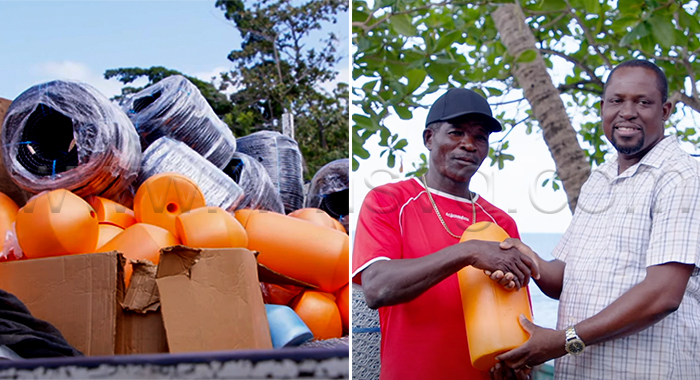
    Three and a half years after the devastating 2021 volcanic eruption in Saint Vincent and the Grenadines, fishers across Central Leeward and South Windward have finally received critical fishing supplies that had sat locked in government storage since 2022. The long-overdue equipment, which includes essential gear such as rope, flotation devices, and fish pot wire, has been distributed to fishing communities across Buccament, Layou, Shipping Bay, and Barrouallie as part of this week’s handover events. The unclaimed supplies were originally earmarked for a post-eruption recovery initiative launched by the former Unity Labour Party (ULP) government, which was voted out of national office in last November’s general election. According to reporting from iWitness News, the gear was never distributed to the intended fisher recipients due to public infighting between at least two ULP cabinet ministers during the previous administration’s term. Conroy Huggins, who serves as both Member of Parliament for Central Leeward and the head of the new Ministry of Fisheries under the newly elected New Democratic Party (NDP) administration, made the remarks during an official handover ceremony held in Bottle and Glass, Barrouallie. Huggins explained that the now-defunct recovery program was designed from its inception to help fishing communities rebuild their livelihoods after the 2021 volcanic eruption, which caused widespread disruption to the local fishing industry. “Sadly, they were not distributed to the fishers within the time span,” Huggins told attendees at the ceremony. After winning office and learning of the years-long delay in delivering the critical supplies, Huggins said he immediately directed ministry staff to cut through bureaucratic hold-ups and get the gear to the fishers who needed it. “It’s long overdue. It is something that they should have had at least three, four years ago… So today, we have been doing these distributions,” he added. The fisheries chief also noted that fish pot fishing is a common traditional practice in Barrouallie, making the fish pot wire included in the shipment particularly useful for local fishers. The distribution is being held as a key event during the country’s annual Fisheries Month celebrations, which lead up to the 49th National Fisherman’s Day on May 25. Huggins framed the handover of backlogged recovery supplies as a perfect opportunity to highlight a stark difference in governing philosophy between the new NDP administration and the former ULP government. “And this is essentially the difference between the previous administration and this present administration,” he said. “We are operating on efficiency and delivery. We are about people. So whatever forms of benefits that the fishers are entitled to, we will ensure that they are able to receive this in a timely manner, so that they can be able to recover, operate and move forward with their business.” While he used the delay under the previous government to draw political contrasts, Huggins also acknowledged that the new administration faces a massive backlog of work to repair and upgrade fisheries infrastructure across all of Saint Vincent and the Grenadines, from central ministry headquarters to small local fishery centers in remote coastal communities. “We have quite a lot of work to do in the fishery sector,” he said. Huggins added that the ongoing shifts in the national fisheries sector have drawn significant attention from local, regional, and international stakeholders, framing the current policy adjustments as a once-in-a-generation shift for the industry. “We are confident that we can maximise our ocean [and] improve the livelihoods of our fishers,” Huggins said. “So from a fisheries standpoint, we are here to facilitate and ensure that the capacity building takes place and the necessary equipment, tools that they need. We are here to give that support.”

  • Former national footballer gunned down in Calliaqua

    Former national footballer gunned down in Calliaqua

    A devastating act of violence has shaken the small coastal community of Cailliaqua in St. Vincent and the Grenadines, where former senior men’s national footballer Keith James was shot to death late Friday, just nine days shy of his 38th birthday.

    Local law enforcement agencies remain on site in the hours following the incident, working to gather forensic evidence and interview witnesses near the Anglican Church at the heart of the south coast town where the shooting unfolded.

    Preliminary accounts from early investigators indicate James had just completed his journey back to his local residence. The fatal attack occurred moments after he stepped out of his vehicle, leaving residents and officials in shock.

    Local community members have put forward preliminary speculation about the premeditated nature of the killing: a dark-colored unregistered vehicle was spotted speeding away from the area immediately after the gunshots rang out, leading locals to believe the gunman lay in wait for James before striking.

    The tragedy marks a grim milestone for the Caribbean nation this year. James’ murder pushes the total number of homicides recorded in St. Vincent and the Grenadines in 2024 to 14, and he is the fourth person to be killed by gun violence in the country in less than a four-week period.

    Beyond his time representing St. Vincent and the Grenadines on the international football stage, James also built a well-known legacy as a player for the local club side Avenues United, earning respect from teammates and fans across the country’s domestic football circuit.

  • Farmer, 61, fined for marijuana

    Farmer, 61, fined for marijuana

    A 61-year-old small-scale farmer from Barrouallie has avoided jail time after pleading guilty to a marijuana possession charge in a St. Vincent court, receiving a steep fine instead of a custodial sentence. Andy Reece admitted to the charge of possession with intent to supply a controlled substance before Chief Magistrate Colin John at the Serious Offences Court this Thursday. The case traces back to April 21, when police at the Barrouallie Station received an anonymous tip about Reece’s illicit activity, prompting officers to secure a formal search warrant for his residence.

    When law enforcement officers arrived at the property, they were greeted by Doritha Solomon, who informed the team that Reece was not present at the time. After officers disclosed that they were conducting a search for illegal firearms, ammunition, and controlled drugs, Solomon granted the team permission to proceed with the search, noting that only she and her granddaughter were staying in the home at that point.

    During a search of Reece’s personal bedroom, conducted with Solomon present as a witness, officers first discovered a plastic bag holding suspected cannabis hidden inside a storage container. A further search of the space turned up additional amounts of the drug, stashed inside a tub and bucket tucked under the bed. When confronted with the illicit find, Solomon immediately denied any ownership of the drugs, leading officers to take her into custody on suspicion of drug possession and transport both her and the seized evidence to the Barrouallie Police Station. The total weight of the confiscated marijuana was recorded at 8,034 grammes, equal to roughly 17.7 pounds.

    Roughly an hour and 20 minutes after the search concluded, Reece voluntarily presented himself at the police station and claimed full responsibility for the seized cannabis. Police followed formal procedure, cautioning Reece before conducting an interview in the presence of Justice of the Peace Nash. In his official caution statement, Reece claimed the drugs were for his own personal use rather than for distribution to other buyers, saying: “The drug belongs to me. Me just get it to smoke, not to sell.”

    Grant Connell, Reece’s legal representative, presented several mitigating arguments to the court ahead of sentencing. Connell highlighted that this marked Reece’s first criminal conviction, emphasized that his client voluntarily came forward to take responsibility for the drugs, and entered a guilty plea at the earliest possible opportunity. The attorney also told the court that Reece had relied on illegal marijuana cultivation to support his family financially for the past 40 years, and formally requested that the court issue a non-custodial sentence rather than prison time.

    After weighing both the mitigating circumstances presented by the defense and the aggravating factors of the case, the court initially calculated a total fine of EC$3,320. When Connell informed the judge that Reece only had EC$3,000 available to pay immediately, Chief Magistrate John adjusted the fine to EC$3,000, ordering that the sum be paid right away. The sentence also includes a backup penalty of one year in prison if the fine is not paid. Beyond the fine, the magistrate ordered that the storage containers seized in the search be returned, and that the entire cache of marijuana be destroyed.