
In a landmark verdict, Timothy Timmons has been found guilty of second-degree murder by a Clinton County, New York jury for the December 2024 killing of Jahfari Joseph, a Saint Lucian resident of Plattsburgh. The decision, reached on Thursday after a 10-day trial, marks the culmination of a high-profile case that gripped the local community. Joseph, a 40-year-old who had lived and worked in the Plattsburgh area, was reported missing on December 29, 2024. The investigation gained momentum when authorities charged Timmons, 61, following a search of property linked to the case. Jurors deliberated for less than an hour before delivering a unanimous guilty verdict, swayed by compelling evidence presented by prosecutors, including witness testimonies, digital records, and phone call logs. In an emotional interview with NBC5, Joseph’s mother, Theresa John, expressed profound relief, stating, ‘I’m just happy as a mom that justice is served.’ Clinton County District Attorney Andrew Wiley confirmed that sentencing is set for January 2026. Under New York law, second-degree murder carries a penalty ranging from 15 years to life, with a maximum of 25 years to life in prison.
标签: Saint Lucia
圣卢西亚
-

Saint Lucia, SIDS left waiting as global shipping emissions deal sinks
A landmark global initiative aimed at reducing greenhouse gas emissions from the shipping industry has been postponed following opposition led by the United States and Saudi Arabia. The International Maritime Organisation’s (IMO) Net-Zero Framework (NZF), designed to make maritime trade cleaner and more sustainable, was expected to be adopted during the Marine Environment Protection Committee’s (MEPC) meeting in October 2025. However, the framework faced significant resistance, resulting in a year-long delay. The NZF proposed drastic emission cuts by transitioning vessels from fossil fuels to renewable energy-based alternatives and introduced a carbon levy to fund climate adaptation in developing nations, particularly Small Island Developing States (SIDS). The US criticized the emissions pricing as an ‘unsanctioned global tax regime,’ while Saudi Arabia proposed an adjournment, which passed with 57 countries in favor. The decision has left small island nations, already vulnerable to climate change, in a precarious position. Countries like Saint Lucia, which rely heavily on maritime trade, face economic challenges in balancing climate commitments with financial realities. Despite the setback, technical work on the framework will continue, with hopes for renewed dialogue between developed and developing nations.
-

La Marguerite King calls for more recognition
Antoninus Thomas, a revered figure in Saint Lucia’s cultural landscape, has proudly worn the crown as La Marguerite King for four decades. His unwavering dedication to the Dennery Marguerite Society and his advocacy for the recognition of cultural royalties have made him a national icon. On October 17, during the Grande Fete La Marguerite in La Ressource, Dennery, Thomas marked his 40th anniversary as King, reflecting on his profound love for the festival and Saint Lucian culture.
-
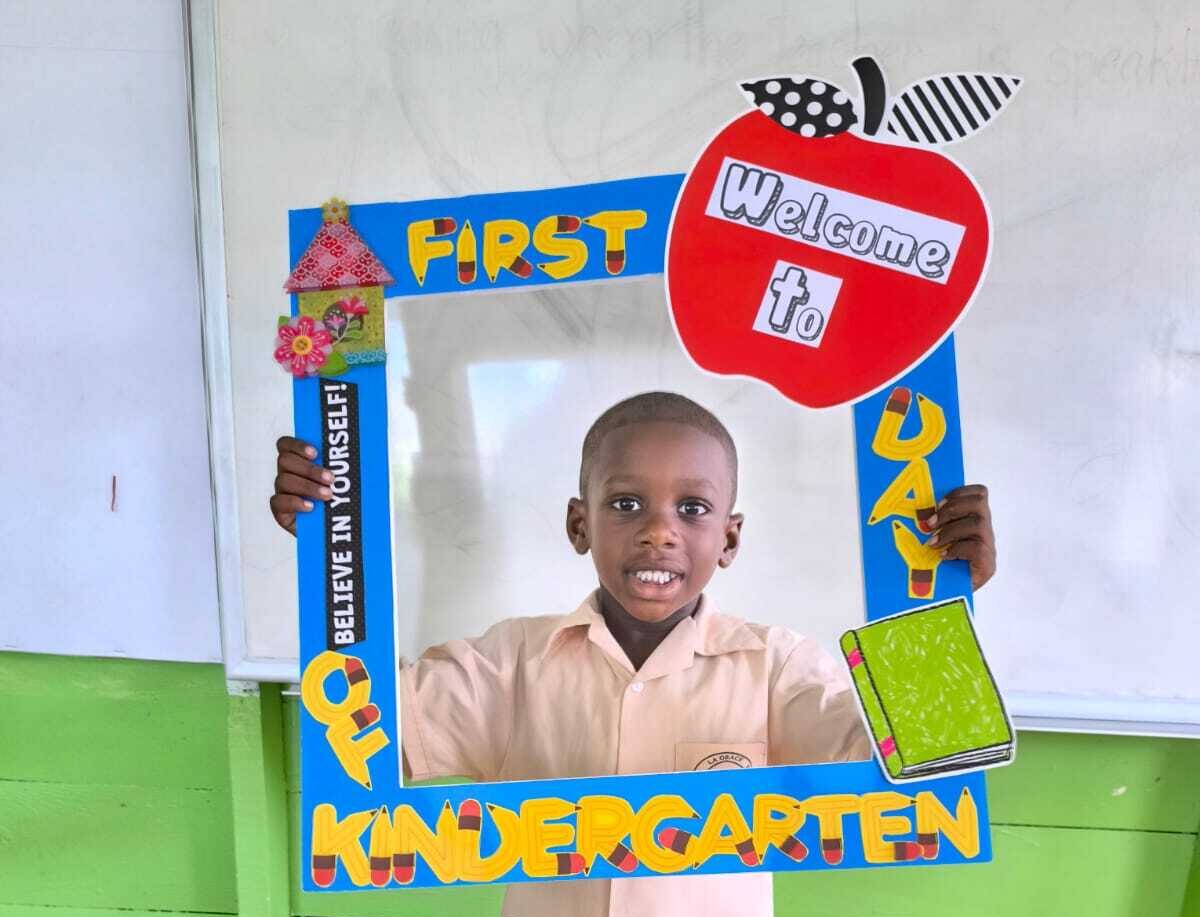
Kindergartener dead following Vieux Fort collision
The community of Vieux Fort is grappling with profound grief after a devastating three-vehicle collision on October 25, which claimed the life of a young kindergarten student, Rikki Samuel. The tragic incident occurred along the Vieux Fort-Laborie Highway, near the Hewanorra International Airport and the Marine Base (Il Pirata), shortly before 11:00 a.m. Rikki, born on Christmas Eve in 2020, was described by his mother, Alister Antoine, as a joyful and car-loving child. He had accompanied his father, Jonard Samuel, a taxi driver, to refuel their vehicle when the accident occurred. Disturbing footage from the scene showed the child lying on the ground, having been ejected from the vehicle. The collision involved three minibuses, including a public bus with a route band. While Rikki is the only confirmed fatality, 11 others sustained injuries. The Royal Saint Lucia Police Force and Saint Lucia Fire Service responded promptly, but no official statement has been released. The tragedy has sparked intense social media debates, with calls for stricter driving regulations and heightened road safety awareness.
-

One dead, multiple injured after three-vehicle Vieux Fort collision
A devastating incident occurred in Vieux Fort on October 25, as a three-vehicle collision resulted in multiple injuries and the tragic death of a young child. According to reports from St. Lucia Times, several individuals were rushed to the hospital for urgent medical care. Eyewitnesses recounted the harrowing scene, describing the child as motionless at the crash site. Tragically, it was later confirmed that the child succumbed to his injuries. The deceased was identified as a student of Banse La Grace Combined School, leaving the local community in profound grief. The aftermath of the collision, captured in images and videos circulating on social media, has ignited widespread sorrow and anger among residents. Many Saint Lucians have taken to social media to express their frustration, calling for immediate action to enhance road safety measures and stricter enforcement of traffic laws. One Facebook user emphatically stated, “High time they take the necessary actions to deal with these drivers.” The incident has reignited urgent discussions about the need for improved road safety protocols to prevent such tragedies in the future.
-

National dress debates run deeper than just fabric
The concept of geographical authenticity in cultural products has gained global recognition, with examples like tequila from Mexico, champagne from France, and now Kente cloth from Ghana. In October, Ghana’s Geographical Indications Act officially classified Kente cloth as a product of specific regions like Agotime and Adanwomase, safeguarding its authenticity and value. This development has sparked a broader conversation about cultural identity and authenticity in fashion, particularly in Saint Lucia, where national and Creole wear reflect a complex history of cultural blending. Across the Caribbean and the Americas, fabrics and garments often serve as cultural emblems, tracing their origins to centuries of interwoven identities. In Saint Lucia, Madras—a colorful, checkered fabric originating from Chennai, India—has become dominant, though floral cotton prints were once the fabric of choice. Designer and cultural advocate Sean Greaves notes that floral material was historically associated with the Wòb Dwiyèt, worn by the less affluent, while French brocade, imported from French Guiana, signified wealth. Madras, initially used for hair ties, gradually became central to Saint Lucian attire. The evolution of national costumes in the French Caribbean, including the douillette and chemise-jupe, reflects a blend of African, Asian, East Indian, European, and Indigenous American influences. Saint Lucia inherited these styles, with the chemise-jupe evolving into the Madras-based national dress. Greaves attributes the shift to Madras’s accessibility, as most fabrics are imported from Trinidad and Tobago. Unlike Ghana’s Kente, which remains rooted in its origin, Saint Lucia’s national wear embodies a layered history shaped by the transatlantic slave trade and indentured labor. Entrepreneur Anselm Mathurin’s Calabash Wear print, showcased at New York Fashion Week, highlights the ongoing quest for a distinctly Saint Lucian identity. The question remains: Is authenticity about origin, or the reinvention of historical legacies?
-

Where AI meets music: Saint Lucian creatives weigh promise, risks, law
Artificial intelligence (AI) is revolutionizing the music industry, from composition to marketing, but in Saint Lucia, the response is a mix of enthusiasm and caution. Local voices, including a tech consultant, a hitmaker, and a reggae artist, share their perspectives on this transformative technology. While AI offers efficiency and cost savings, it also raises complex questions about ownership, creativity, and cultural authenticity. Critics fear AI-generated music and cloned voices could dilute artistry and undermine copyright, while proponents view it as the next evolutionary step in music. Jim Joseph, a tech consultant, likens the current skepticism to past technological shifts, such as the transition from live bands to synthesizers. He predicts gradual acceptance but warns of unresolved legal issues, particularly around copyright and fair use. Award-winning musician Sherwinn Dupes Brice describes the duality of excitement and fear, emphasizing the need for artists to adapt and elevate their creativity. He stresses the importance of marketing and calls for updated copyright laws to address AI cloning. Reggae artist Werner Semi Francis sees AI as a supplementary tool, advocating for a hybrid approach that blends AI with human creativity. He believes success still hinges on song quality and business acumen. Joseph highlights the lag in copyright laws, noting that fully AI-generated content may not qualify for protection. He advises creators to scrutinize platform terms to avoid unintended reuse of their work. Brice and Francis both emphasize the need for legal clarity and cultural preservation, urging artists to maintain authenticity while leveraging AI. As regional experiments, like Trinidad and Tobago’s AI soca artist JOU VAY, emerge, questions about voice ownership and royalty distribution grow more pressing. The consensus among Saint Lucian artists is clear: embrace AI’s efficiency, navigate legal complexities, and preserve the human essence of music.
-

Shanice Francis: Stitching Saint Lucia into global fashion
Culture, though challenging to articulate in words, finds profound expression through actions. In Saint Lucia, one of the most compelling cultural manifestations is the tradition of wearing Madras fabric. This vibrant textile, with its origins in Madras (now Chennai), India, arrived in the Caribbean through colonial trade routes. Initially a lightweight cotton material, Madras became a symbol of resilience and identity for enslaved Africans in Saint Lucia. While they were often compelled to wear estate livery, they embraced Madras garments during feast days and special occasions as a form of self-expression and dignity.
Over time, Madras became integral to Creole fashion, particularly in the Wob Dwiyet, a traditional four-piece costume for women. Today, it stands as a national emblem, especially during Creole Month celebrations. Shanice Francis, known as Gruntage Baby, is a Saint Lucian fashion designer and owner of Gruntage Studios, who has been instrumental in preserving and redefining this cultural heritage. Living in the diaspora, Francis uses Madras to connect with her roots and celebrate her heritage through her innovative designs.
Francis emphasizes the importance of evolving traditional Madras designs to make them accessible to a broader audience. She envisions leveraging Saint Lucia’s tourism industry to promote Madras globally, suggesting its incorporation into resort staff uniforms. She also advocates for better access to resources for local creatives to thrive and scale their productions. Francis’s advice to young designers is to infuse their work with the spirit of Saint Lucia, sharing the stories behind the art and collaborating globally while retaining their unique cultural voice.
-

King, Fevrier, Stiede: Three-way race for Castries North
The upcoming general election in Saint Lucia is shaping up to be a historic event, with Castries North emerging as the focal point of national attention. This constituency, once a stronghold of the United Workers Party (UWP), is now a battleground for three formidable candidates: the seasoned incumbent Stephenson King, UWP’s rising star Stephen Fevrier, and independent newcomer Marcellus Stiede. The race is emblematic of a broader clash between experience, innovation, and grassroots leadership. Stephenson King, a political stalwart with a career spanning over four decades, has been a dominant figure in Castries North. However, his decision to leave the UWP in 2021 and run as an independent candidate marked a turning point in his career. Despite his long-standing influence, King now faces stiff competition from Fevrier, a globally experienced diplomat, and Stiede, a former professional basketball player turned community advocate. Fevrier, with his international background and vision for economic revitalization, promises to bring fresh perspectives to the constituency. Meanwhile, Stiede emphasizes youth development and transparency, critiquing the culture of political dependency. The election has sparked widespread debate, with voters weighing the merits of King’s legacy against the transformative potential of his challengers. As Saint Lucia prepares for this pivotal moment, Castries North stands as a microcosm of the nation’s political evolution, where tradition meets the promise of change.
-

Multiple SLASPA employees charged in $705K drug bust
In a significant crackdown on drug trafficking, three employees of the Saint Lucia Air and Sea Ports Authority (SLASPA) have been arrested and charged following a major drug bust at Port Castries. The operation, conducted on October 17, 2025, was a joint effort by the Royal Saint Lucia Police Force (RSLPF) and the Customs and Excise Department, based on intelligence reports.
During the operation, authorities intercepted a grey van driven by Cyril Joseph, a Red Cap assigned to the port. A barrel in the vehicle, which had not been cleared for customs inspection, was found to contain cannabis, cannabis resin (hashish), and MDMA crystals (commonly known as ecstasy), with an estimated street value of $705,686.50.
Further investigations revealed a coordinated effort among several port employees to bypass customs procedures, leading to the arrest of two additional SLASPA workers, Ian Moncherry and Nadia Edward. A subsequent search of Moncherry’s residence uncovered an additional quantity of cannabis resin valued at $4,200.
All three individuals were charged on October 22, 2025, with offences including importation of a controlled drug, possession with intent to supply, aiding and abetting, and fraudulent evasion of customs duties and controls. They appeared before the First District Court on October 24 and were each granted bail in the sum of $45,000, either in cash or with a suitable surety.
The RSLPF emphasized that this operation highlights ongoing efforts to safeguard Saint Lucia’s borders and combat corruption within key institutions. A police statement declared, ‘This operation is a clear message that corruption and criminal collusion will not be tolerated,’ noting that illegal drugs and firearms entering through the island’s ports ‘directly fuel violent crime, gang activity, and homicides within our communities.’