标签: Saint Lucia

圣卢西亚

  • US Marine planes cause stir in Tobago

    US Marine planes cause stir in Tobago

    Two U.S. Marine Corps Boeing C-17A Globemaster III military transport aircraft departed from ANR Robinson International Airport in Tobago yesterday morning following a brief presence on the island. The aircraft, identified by tracking codes RCH660 (01-0192) and RCH661 (99-0165), originated from Marine Corps Air Station Cherry Point in North Carolina and were returning to the United States. While only one aircraft appeared on public flight tracking service FlightRadar24, departing at 5:53 a.m., open-source intelligence sources confirmed both aircraft had transited through the airport.

    Prime Minister Kamla Persad-Bissessar addressed the presence of U.S. military personnel in Trinidad and Tobago, confirming that marines remain in the country for training exercises with the Trinidad and Tobago Defence Force. She characterized the aircraft’s mission as assistance with ‘a bit of roadway’ at the airport but provided no specific details about the nature of this assistance.

    The Prime Minister explicitly denied any connection between the military aircraft and escalating tensions between the United States and neighboring Venezuela. ‘It is not a military force as such; they are not here on the ground, we are not about to launch any campaign against Venezuela,’ Persad-Bissessar stated emphatically. ‘Trinidad and Tobago has not been asked to be a base for any war against Venezuela.’

    The departure occurred just one day after U.S. General Dan Caine, a top military officer, met with the Prime Minister. While Persad-Bissessar confirmed the meeting, she insisted there were no discussions about Venezuela during their conversation.

    The C-17 Globemaster III, described by the U.S. Air Force as its ‘most flexible’ cargo aircraft, is capable of rapid strategic delivery of troops and various types of cargo to both main operating bases and forward deployment areas. Social media posts throughout yesterday documented sightings of the large aircraft departing Tobago.

  • Debunking some myths shaping Saint Lucia’s energy laws

    Debunking some myths shaping Saint Lucia’s energy laws

    In a striking analogy highlighting institutional conflict of interest, Saint Lucia’s energy sector faces critical scrutiny over whether electricity providers should dictate energy policy. This situation mirrors allowing drug dealers to write drug laws—a fundamentally flawed approach that stifles progress, limits employment opportunities, and prevents consumer investments from yielding financial returns during economically challenging times.

    While residents face restrictions on residential and commercial solar installations, the island’s primary utility provider LUCELEC has strategically expanded its own solar capabilities. The company has developed a 3MW solar farm in La Tourney Vieux-Fort and installed a 75kW rooftop system at its Cul-de-Sac headquarters, simultaneously investing in its solar subsidiary Energise.

    Despite abundant sunshine, Saint Lucian families continue grappling with exorbitant energy costs. The authentic impediments to solar adoption are structural rather than technical, perpetuated by LUCELEC’s substantial influence over energy policy through repeatedly debunked arguments.

    Myth 1: Grid Destabilization Concerns
    The notion that excessive solar integration causes blackouts persists despite evidence from smaller grids achieving remarkable stability. Kauaʻi in Hawai’i, serving 70,000 residents, operates at nearly 70% renewable energy—primarily rooftop solar—through sophisticated grid management including smart inverters, grid-forming batteries, demand response mechanisms, and community collaboration. The genuine challenge involves modernizing infrastructure rather than limiting solar potential.

    Myth 2: Cost-Shifting to Non-Solar Customers
    Contrary to claims that solar users avoid fair grid contribution, research from Lawrence Berkeley Lab and Brookings Institution demonstrates solar adoption reduces peak demand, decreases infrastructure requirements, and lowers generation costs. These substantial benefits frequently remain unacknowledged in policy deliberations. Evidence-based legislation must recognize solar’s comprehensive value for creating balanced energy futures.

    Myth 3: Financial Inaccessibility Argument
    The perception of solar as prohibitively expensive contradicts reality: if households can pay electricity bills, they can afford solar. Photovoltaic technology has been commercially available in Saint Lucia for over fifteen years, with prices declining below $5 per watt for specific projects. Local financial institutions offer financing options eliminating upfront costs, with monthly payments frequently matching or outperforming conventional utility bills. Commercial systems typically achieve return-on-investment within three to five years, delivering decades of subsequent savings.

    Myth 4: Baseload Power Necessity Fallacy
    The outdated concept requiring constant fossil fuel generation is superseded by modern grid flexibility. Australia—an industrialized island nation—anticipates sourcing over 75% of energy from solar and wind by 2030 without cross-border electricity dependence. Distributed solar networks combined with battery storage and smart grid technology effectively balance energy systems, eliminating baseload power requirements.

    Myth 5: Utility Policy Dominance Justification
    LUCELEC’s policymaking influence stems from governmental capacity gaps rather than inevitable monopoly rights. Recent policies favor obsolete technologies and protect the utility’s diminishing generation role rather than facilitating renewable transition. Establishing an independent committee guided by empirical evidence and national interests should determine energy policy, with LUCELEC providing technical consultation without legislative authority.

    Citizen investments warrant equal protection to monopoly interests. As Barbados Prime Minister Mia Mottley articulated regarding abundant solar and wind resources, “Why should we be paying the price for energy when we have those gifts in abundance?” Embracing this perspective enables Saint Lucia to forge equitable, sustainable energy futures through regulatory modernization and renewable adoption.

  • Colombian president says oil is ‘at the heart of’ US pressure campaign on Venezuela

    Colombian president says oil is ‘at the heart of’ US pressure campaign on Venezuela

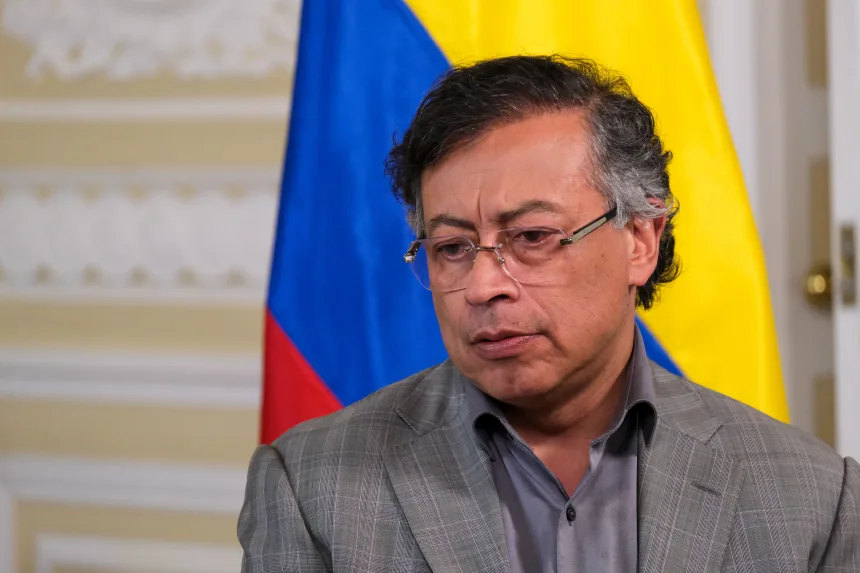
    Colombian President Gustavo Petro has launched a scathing critique of the Trump administration’s Venezuela policy, asserting that Washington’s true motivation centers on accessing Venezuela’s vast oil reserves rather than combating drug trafficking or promoting democracy.

    In an exclusive CNN interview, Petro characterized oil as “at the heart of the matter,” noting Venezuela possesses the world’s largest proven petroleum reserves. “That’s a negotiation about oil. I believe that is Trump’s logic. He’s not thinking about the democratization of Venezuela, let alone the narco-trafficking,” Petro stated, challenging the official U.S. justification for increased military presence in the Caribbean and Pacific.

    The Colombian leader dismissed Venezuela’s significance in global drug trafficking, citing United Nations Office on Drugs and Crime data showing the country produces no cocaine and handles only a minor portion of international drug flows. Instead, Petro emphasized Colombia’s dominant role in both production and interdiction, claiming his government has seized more cocaine than any administration in history.

    The relationship between Petro and Trump has deteriorated significantly since the Colombian leader returned to the White House. Tensions escalated when the U.S. State Department revoked Petro’s visa following his UN General Assembly speech where he urged American soldiers to disobey Trump and “not to point their rifles at humanity.”

    Further complications emerged in October when the U.S. Treasury sanctioned Petro, alleging his involvement in the global drug trade—accusations the Colombian president vehemently denies. The sanctions followed Trump’s threat to halt all U.S. payments and subsidies to Colombia, claiming Petro “does nothing to stop” drug production.

    Petro attributed the administration’s stance to personal animosity, suggesting Trump views him as “a subversive thug, a terrorist” due to his past membership in the M-19 guerrilla movement during the 1970s and 1980s.

    Despite these high-level tensions, U.S. officials maintain that bilateral relations with Colombia remain strong. Secretary of State Marco Rubio emphasized that administration issues are specifically with Petro rather than Colombian institutions, noting the enduring partnership between the two nations will outlast the current leadership.

  • Venezuela revokes access for six international airlines Link:

    Venezuela revokes access for six international airlines Link:

    In a significant escalation of international aviation tensions, the Venezuelan government has formally revoked flight concessions for six major international carriers. The National Institute of Civil Aeronautics (INAC) announced via social media that Iberia, TAP Portugal, avianca, LATAM Colombia, Turkish Airlines, and GOL Airlines have lost their operational rights in Venezuelan airspace. The decision, published in Official Gazette No. 43264, notably excluded local carrier Caribbean Airlines from the sanctions.

    The aviation authority justified its action by alleging these airlines ‘joined the actions of state terrorism promoted by the United States government’ when they previously suspended services to Venezuela. This dramatic move follows last week’s ultimatum from Caracas demanding airlines resume operations or face permanent exclusion from the Venezuelan market.

    The revocation leaves Panama-based COPA Airlines among the very few international carriers maintaining connectivity to Venezuela. The International Air Transport Association (IATA) has expressed grave concerns, warning this decision will further isolate a nation already suffering from severely limited air connections within the region.

    This development comes shortly after the U.S. Federal Aviation Administration (FAA) issued a safety advisory cautioning pilots about operating within Venezuelan airspace. The Notice to Airmen (NOTAM) specifically referenced deteriorating security conditions and increased military activity around Venezuela, prompting numerous airlines to preemptively cancel services citing passenger safety concerns.

  • Different activities held throughout Business Month in November 2025

    Different activities held throughout Business Month in November 2025

    Saint Lucia has launched an expansive Business Month celebration throughout November 2025, uniting the nation’s commercial ecosystem under the forward-looking theme ‘Securing Tomorrow, Powered by Sustainability, Built on Resilience.’ The initiative, now marking its tenth anniversary since its establishment by Commerce Minister Emma Hippolyte, features 25 coordinated events designed to highlight the private sector’s critical role in national development.

    The official commencement on October 30 saw strong endorsements from business leaders including Brian Louisy, Executive Director of the Saint Lucia Chamber of Commerce, who emphasized that “businesses are the backbone of the economy” while specifically acknowledging the contributions of farmers, fishermen, and entertainers as essential business operators. Minister Hippolyte reaffirmed her ministry’s comprehensive engagement across all economic sectors.

    A significant development emerged on November 11 with the expansion of the Micro, Small and Medium Enterprise (MSME) Loan-Grant Facility, introducing specialized support for bakers and producer cooperatives. Sophia Alfay-Henry revealed that the program has already exceeded expectations, benefiting over 700 MSMEs despite initially planning for just 500 applications. The facility specifically promotes automation, standardization, and value addition while improving financial access for small enterprises.

    Educational institutions joined the celebration through innovative programs like the Agribusiness Pitch Competition hosted by the Ministry of Agriculture in partnership with the Saint Lucia TVET Institute. Held on November 21 in Dennery, the event featured Form 4 and Form 5 students presenting value-added agricultural products addressing market needs, climate resilience, and food security. Sonia Bispack, Head of the TVET Department, observed the profound impact on participants who experienced the satisfaction of creating marketable products.

    The youth entrepreneurship movement gained further momentum through the Youth Investment Forum 2025 on November 25, organized by the Youth Economy Agency (YEA). Chairman Thomas Leonce articulated the transformative power of branding, telling young entrepreneurs that “a strong brand is more than a logo or a catchy slogan” but rather “the story of the business.” The agency continues to provide comprehensive support through business registration, financial literacy, product development, and market access initiatives.

    The month-long program included numerous collaborative events including the Saint Lucia-Taiwan Partnership Trade Show (November 7-9), Accountants Week (November 8-15), and Global Entrepreneurship Week (November 17-23), demonstrating the government’s holistic approach to economic development through multi-sector partnerships.

  • The outlook for sports after Saint Lucia Election 2025

    The outlook for sports after Saint Lucia Election 2025

    As Saint Lucia approaches a pivotal electoral period, the nation’s two dominant political forces—the United Workers Party (UWP) and Saint Lucia Labour Party (SLP)—have unveiled comprehensive manifestos detailing contrasting approaches to sports development and infrastructure modernization.

    The detailed analysis reveals significant disparities in scope and emphasis between the parties’ proposals. The UWP’s platform demonstrates substantially greater elaboration on athletic development strategies, though both share certain fundamental objectives regarding national sports advancement.

    Infrastructure commitments emerge as a central battleground, with both parties addressing long-standing frustrations over unfulfilled promises. The George Odlum Stadium, repurposed as emergency medical facilities after the 2009 fire, receives renewed attention in the SLP manifesto with pledged refurbishment using reportedly secured funding. Conversely, the UWP focuses on Soufriere Stadium enhancements including modular seating, grandstand improvements, and aquatic facilities.

    The aquatic infrastructure competition intensifies with the National Aquatic Centre already underway in Gros Islet. The UWP commits to establishing four pools nationwide, while the SLP emphasizes implementing a national Learn to Swim program—addressing decades of discussion about community aquatic facilities.

    Both parties revisit previously unrealized pledges regarding indoor sports complexes. The UWP renews its 2016 commitment to transform the Vigie Multipurpose Sports Complex into an indoor facility while proposing another southern complex. The SLP references partial progress on their 2021 promise to modernize Marchand and Mindoo Phillip Grounds, now targeted by the UWP for transformation into an integrated sporting complex.

    Athlete support mechanisms reveal further contrasts. The persistent issue of unpaid leave for national representatives remains unresolved despite repeated commitments. Both parties resurrect the elusive sports scholarship system—initially proposed by UWP in 2016, echoed by SLP in 2021, and reintroduced by UWP in their current manifesto.

    The UWP further commits to integrating sports into all government-sponsored Community After School Programs, expanding existing coaching infrastructure across communities. Additional pledges include financial support for community academies, grassroots tournament funding, expansion of the Elite and Emerging Athlete Program, and implementing a Talent Identification Program within school sports.

    Alternative sports receive unprecedented attention, with both parties addressing the longstanding auto racing debate through pledged facilities by 2031—the SLP promising a state-of-the-art southern track while the UWP commits to motocross and drag racing infrastructure.

    The Saint Lucia Sports Academy emerges as another differentiation point. The UWP proposes expanding the institution they established in 2019, enhancing residential and technical capabilities while establishing a southern branch. The SLP counters with plans to repurpose the former Gros Islet Secondary School into the Levern Spencer Institute of Sports Training and Development.

    The SLP highlights delivered commitments from their 2021 manifesto, including expanded programming for alternative sports (surfing, dominoes, chess, darts, pool, and drag racing), widespread field lighting upgrades, and professionalization of football and cricket. The UWP promises continued support for these leagues while considering semi-professional basketball development.

    Looking forward, the UWP proposes summer camps and showcase events to support scholarship ambitions, complemented by a “Sports for All” initiative targeting senior sports participation and broader promotion of active lifestyles across the population.

  • EDITORIAL: Civility and compassion must guide election victors, losers

    EDITORIAL: Civility and compassion must guide election victors, losers

    In one week’s time, Saint Lucia will witness the culmination of an intensely fought parliamentary election cycle. The brief yet fervent three-week campaign period has laid bare the profound divisions inherent within the British-derived winner-takes-all political system that governs this Caribbean nation.

    The electoral process has exposed deep societal fractures, with reported incidents of malice, vandalism, and sporadic violence overshadowing substantive political discourse. Familial and community bonds have been strained as political allegiances turned neighbor against neighbor, relative against relative.

    Most alarmingly, the campaign witnessed the inappropriate involvement of children, who were reportedly ushered onto sidewalks during nomination day events and handed partisan materials without parental consent. This exploitation of the young has sparked national concern about the erosion of ethical political practices.

    The timing of these political tensions presents a particular irony, occurring just as the Christian community enters Advent—a season traditionally marked by peace, goodwill, and spiritual preparation. Instead of reflecting these values, the campaign manifested through vitriolic exchanges and diminished public discourse.

    As the nation looks toward December 13th’s Festival of Lights and Renewal followed by Christmas celebrations, there emerges a collective call for compassion and healing. The need for substantive review of the recently signed code of conduct has become increasingly apparent, with advocates urging documentation of campaign shortcomings and improved frameworks for future elections.

    The path forward requires balancing rightful celebration for victors with genuine consolation for the defeated, all while recentering the national conversation on the shared project of building a better Saint Lucia for future generations.

  • Historian warns against political reliance for Dennery segment’s future

    Historian warns against political reliance for Dennery segment’s future

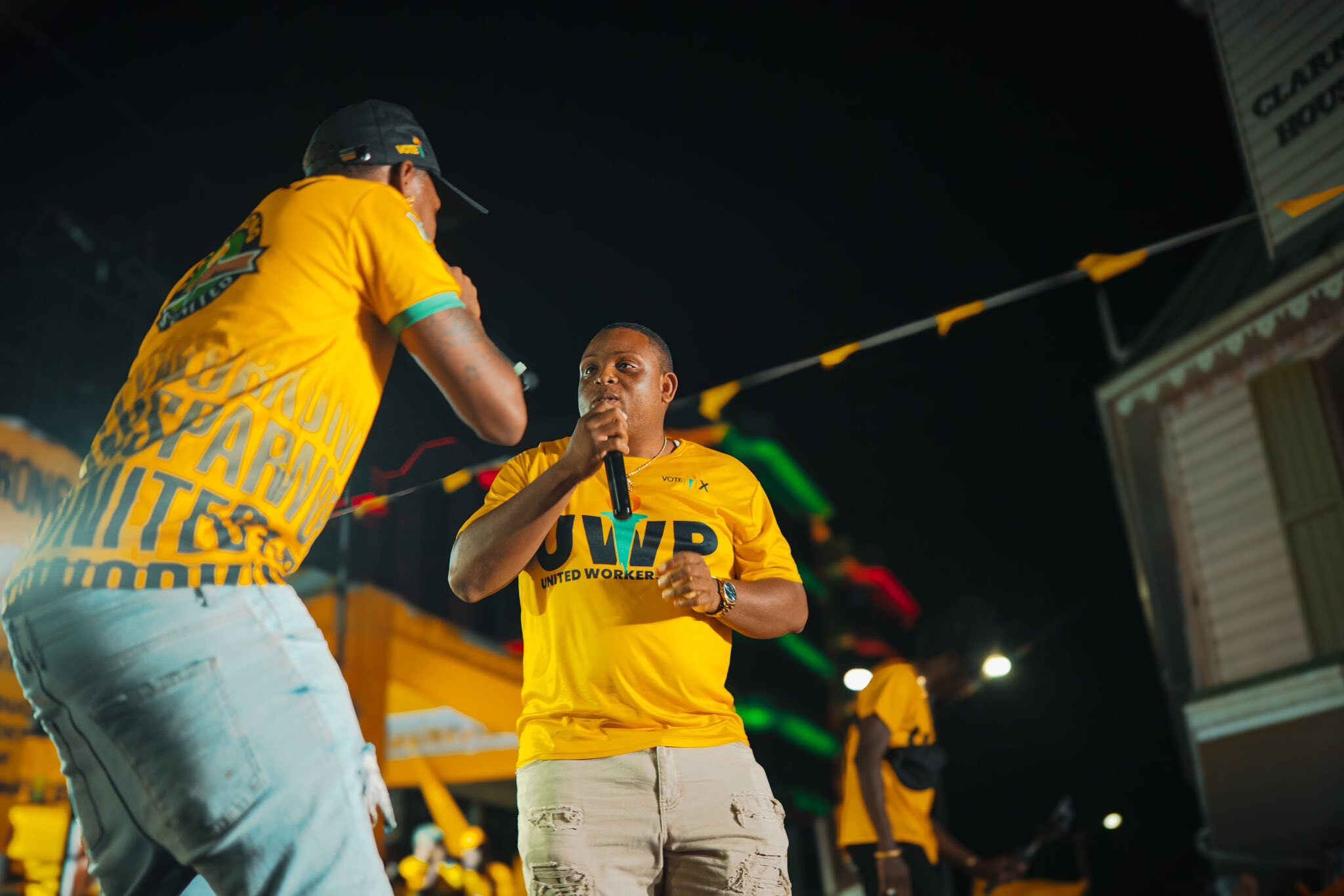
    With Saint Lucia’s December 1 General Election approaching, cultural policy has emerged as a significant battleground, particularly regarding the future of Dennery Segment music. Historian Sant Justin has issued a compelling warning to the genre’s artists: maintain creative independence despite political promises. His caution comes as the United Workers Party (UWP) pledges substantial support, including an internationally-produced dedicated event and expanded Carnival celebrations throughout July if elected.

    The UWP’s cultural proposals extend beyond events to include placement of Dennery Segment artists on major stages, mirroring the exposure given to international performers during Saint Lucia Jazz. This commitment has garnered strong endorsement from performer Kurtly ‘Pablo’ Estava, who publicly criticized the incumbent Saint Lucia Labour Party (SLP) for what he termed ‘years of neglect’ of the creative sector during a November 16 rally.

    Justin provided crucial historical context, describing Dennery Segment as a ’21st-century blend of soca, dancehall, and zouk’ born from ‘rebellion, audacious self-awareness and confidence.’ He emphasized that the genre historically created its own opportunities through timely, regular releases addressing topical issues, rather than waiting for permission or external validation. This independent spirit, Justin argued, embedded the genre firmly in Saint Lucia’s cultural landscape and drove recent entertainment industry growth.

    While acknowledging the positive community response to the 2025 D’Vibez festival and the genre’s growing international visibility (including appearances at Expo Dubai, Expo Japan, Miami Carnival, and Soca Monarch victories), Justin maintained that ‘quality and frequent releases remain the best way to continue carving out a niche.’ He advocated for artist unity in participating in development opportunities while preserving the genre’s foundational independence.

    The political landscape reveals competing visions for cultural development. The UWP emphasizes immediate support and international promotion, with leader Allen Chastanet promising ‘everybody in the world will know what Dennery Segment is.’ Meanwhile, the SLP has outlined a comprehensive cultural modernization roadmap in its 2025 manifesto, including financial mechanisms like low-interest loans and tax concessions, structural reforms through a transformed Development and Training Agency for the Arts (DATA), and an Orange Economy Unit to coordinate international promotion. The SLP also proposes tangible recognition through National Music Awards, public art installations, and a national museum.

    This intersection of cultural preservation and political ambition highlights the delicate balance artists must maintain between welcoming support and safeguarding creative autonomy as Saint Lucia approaches a pivotal election.

  • Dennery Segment – the new soundtrack to political campaigning

    Dennery Segment – the new soundtrack to political campaigning

    Saint Lucia’s political arena has undergone a profound sonic transformation since Prime Minister Philip J. Pierre initiated the election cycle on November 9. The traditional campaign elements—rallies, posters, and slogans—now share the stage with an unexpected powerhouse: the infectious beats of Dennery Segment music that have become the soundtrack of this election season.

    This distinctive Saint Lucian musical genre, characterized by its percussive intensity and catchy hooks, has revolutionized political mobilization strategies. Campaign events have evolved into carnival-like festivities where Dennery Segment artists perform customized tracks supporting various parties and candidates. The phenomenon has particularly resonated with younger demographics, creating an unprecedented fusion of political messaging and musical entertainment.

    The current musical landscape contrasts sharply with historical approaches. During the 1970s political awakening, conscious reggae from icons like Bob Marley and Peter Tosh underpinned the Saint Lucia Labour Party’s messaging. Later eras incorporated calypso’s social commentary and even international pop hits, such as the UWP’s strategic use of Bryan Adams’ “Everything I Do, I Do It for You” in 1992.

    Sociologist and former Labour Party MP Damian Greaves observes: “Politics, to some extent, is a vibe and it has to be the vibe of the times. What we’re witnessing represents a shift from the anti-colonial intellectualism of previous generations to a new ethos shaped by social media dynamics.”

    The digital dimension has proven crucial to Dennery Segment’s political ascendancy. Tracks like Ricky T’s “Ring the Bell” and General Bakes’ “Flambeau Off” have generated viral memes and TikTok trends, amplifying their reach beyond physical rallies. Music industry expert Ian Sanchez notes: “The creativity of these artists makes their songs easily adaptable to suit any party or candidate, while their social media mastery ensures maximum visibility.”

    However, concerns emerge regarding substantive political discourse potentially being drowned out by rhythmic entertainment. Some observers question whether the musical spectacle might overshadow critical policy discussions, reducing complex electoral decisions to emotional responses to musical performances.

    Adding to the conversation, creative promoter Sant Justin highlights economic implications: “Campaign season now rivals traditional peak periods for creative professionals. But we must address the troubling practice of importing foreign talent when our local artists possess superior cultural understanding and creative capability.”

    This musical politicization represents more than temporary campaign strategy—it signifies a fundamental evolution in how democratic engagement manifests in the digital age, where cultural expression and political messaging increasingly intertwine.

    (Note: All photographic credits remain with original sources as indicated in source material)

  • The barriers facing women in politics

    The barriers facing women in politics

    As Saint Lucia approaches its 2025 general elections, an unprecedented six female candidates—three from each major party—are mounting a historic challenge to the island nation’s male-dominated political landscape. This record number of women contenders represents a potential turning point in Saint Lucian politics, yet their campaigns reveal how deeply entrenched gender barriers remain.

    Historical context underscores the magnitude of their challenge. Over the past fifteen years, female representation among general election candidates has consistently languished below 25%, with elected women in the House of Assembly rarely exceeding two simultaneously. The 2021 election saw merely 11 women among 45 total candidates, with only two securing seats—maintaining parliamentary representation at approximately 11%, far below modern democratic standards.

    The campaigns of these six women illuminate the persistent obstacles facing female politicians. Marcella Johnson, United Workers Party candidate for Gros Islet, describes enduring weekly televised character assaults from male opponents. “Every single week, a minister uses his television show to shame women, insult women, demean women,” Johnson revealed to St. Lucia Times, noting her personal life becomes fodder for fabricated narratives despite being unknown to her detractors.

    Similarly, Labour Party Senator Lisa Jawahir, candidate for Castries South East, confronted gender-based opposition when UWP Deputy Leader Guy Joseph dismissed a $250,000 allocation for addressing period poverty in schools as unnecessary spending. Jawahir’s swift rebuttal resonated particularly with young female constituents, galvanizing support from women demanding recognition that “our voices matter.”

    Perhaps most unexpectedly, political newcomer Leeana “Lady Lee” Johannes-Paul entered the race despite previous disdain for politics, describing her decision as a divine calling. Her campaign in Vieux Fort has faced overt misogyny, with critics asserting male candidates possess superior experience and strength. This lack of institutional support forced Johannes-Paul to largely self-fund her early campaign, though adversity strengthened her resolve to bring what she terms a “feminine touch” to governance focused on community care rather than personal enrichment.

    Veteran politician Alvina Reynolds, who entered politics in 2011 and now serves as President of the Senate, provides historical perspective. While she experienced greater party support than current candidates, Reynolds still faced condescension from male colleagues who depicted her as a “headless chicken” and used musical metaphors to suggest she was an unprepared child needing maternal guidance. She emphasizes that contemporary candidates face comparatively less hostility than pioneers like Heraldine Rock, who endured public humiliation from within her own party.

    Reynolds advises the new generation: “Don’t be tokenized. Be strong. Negotiate. Represent your constituencies with confidence.” She maintains an open-door policy for all female candidates across party lines, embodying her belief that women must uplift each other.

    These six candidates are consequently campaigning on dual fronts: seeking electoral victory while simultaneously battling historical stereotypes about political leadership. Their collective effort represents a referendum on whether Saint Lucia will continue male-dominated governance or embrace leadership reflective of its entire population.