标签: Saint Lucia

圣卢西亚

  • What the return of US hemispheric primacy means for Saint Lucia and CARICOM

    What the return of US hemispheric primacy means for Saint Lucia and CARICOM

    The Trump Administration has initiated a profound transformation in US-Caribbean relations, placing Saint Lucia and the CARICOM bloc under unprecedented strategic scrutiny. This geopolitical shift represents the most significant reorientation of American foreign policy toward the region in decades, marked by a more assertive posture that prioritizes bilateral engagement over multilateral frameworks.

    The cornerstone of this transformation is the 2025 National Security Strategy (NSS), which dramatically elevates Latin America and the Caribbean to the status of ‘Very High’ strategic importance—the top global priority for Washington. This represents a stark departure from previous administrations that consistently ranked the region as having low to moderate significance throughout the post-Cold War era.

    This strategic recalibration manifests through concrete policy changes. The administration has imposed visa restrictions on citizens of Antigua and Barbuda and Dominica, signaling a willingness to leverage travel access as a diplomatic tool. Simultaneously, Washington has abandoned the non-reciprocal trade preferences established under the Caribbean Basin Economic Recovery Act, implementing instead a bilateral tariff regime that treats CARICOM states individually rather than collectively.

    The NSS explicitly frames the Caribbean as a privileged sphere of US interest, aiming to prevent strategic competitors—particularly China, Russia, Iran, Cuba, and Venezuela—from establishing dominant positions in the region. This modern interpretation of the Monroe Doctrine, termed the ‘Trump Corollary,’ asserts America’s right to maintain hemispheric primacy through unilateral action when necessary.

    For Saint Lucia, the implications are multifaceted and profound. The nation’s Citizenship by Investment Program faces heightened scrutiny over potential homeland security concerns. Foreign policy alignment, especially regarding relationships with Venezuela and China, will attract increased Washington attention. Additionally, the region faces potential economic consequences through possible travel advisories, expanded visa restrictions, and maritime enforcement actions that could impact tourism and investment flows.

    The fundamental challenge for CARICOM lies in Washington’s deliberate shift toward bilateralism, which undermines the bloc’s collective bargaining power and ability to advance regional interests cohesively. With the United States reengaging the Caribbean on its own terms, Saint Lucia and its neighbors must develop strategic responses that preserve sovereignty while navigating renewed great power attention.

  • The Breakout Tournament is feeding the fatted calf, not the future

    The Breakout Tournament is feeding the fatted calf, not the future

    Cricket West Indies has scheduled its second Breakout Tournament for the third week of January 2026 in Trinidad and Tobago, according to sources within the organization. While official announcements remain pending, the tournament reportedly carries a substantial operational budget of approximately US$1 million.

    The inaugural 2024 event, held at Trinidad’s Brian Lara Cricket Academy, identified twelve exceptional young talents who demonstrated outstanding performance capabilities. The standout performers included:

    Navin Bidaisee (25, Trinidad & Tobago) – Allrounder
    Quentin Sampson (25, Guyana) – Batsman
    Micah McKenzie (18, Leeward Islands) – Leg spinner
    Kofi James (27, Leeward Islands) – Batsman
    Karima Gore (27, Leeward Islands) – Allrounder
    Zishan Motara (19, Barbados) – Leg spinner
    Riyad Latiff (18, Guyana) – Leg spinner
    Joshua James (24, Trinidad & Tobago) – Fast bowler
    Johann Jeremiah (26, Windward Islands) – Opening batsman
    Anderson Mahase (22, Leeward Islands) – Left-arm spinner
    Nathan Edward (20, Leeward Islands) – Left-arm spinner
    Kamil Pooran (29, Trinidad & Tobago) – Batsman

    Notable individual achievements from the previous tournament included Johann Jeremiah’s explosive 97 runs from 50 deliveries against Jamaica and Kamil Pooran’s impressive 73 from 44 balls during the final match against Leeward Islands. The bowling department saw exceptional performances from left-arm spinners Anderson Mahase and Nathan Edward, who claimed 10 and 9 wickets respectively.

    Despite these successes, concerns have emerged regarding the tournament’s current structure. The 2024 format predominantly featured players who had recently participated in the CWI First Class Competition, raising questions about the event’s effectiveness in discovering genuinely new talent. Critics argue that this approach minimizes opportunities for emerging players who haven’t yet established themselves in the four-day game format.

    Cricket analysts and insiders suggest that implementing an Under-23 age restriction would better serve the tournament’s stated purpose of identifying promising young talent. Such a format could incorporate recent West Indies U-19 representatives who competed against England in Grenada, along with other documented emerging players from regional competitions.

    Despite these recommendations, sources indicate that Cricket Director Miles Bascombe will maintain the existing format for the 2026 event, with playing kits and uniforms already ordered. However, there is growing anticipation that organizational policies might evolve for the 2027 tournament, potentially implementing age restrictions and focusing on white-ball format specialization.

    The tournament is expected to receive global coverage through CWI’s YouTube Channel, providing streaming access to audiences throughout the Caribbean and worldwide. Broadcasting considerations include incorporating fresh commentary talent from the region, with potential candidates being Saint Lucia’s Claudius Emmanuel and Dwight Thomas, both widely recognized throughout the Eastern Caribbean. Additional opportunities may exist for emerging voices like Antigua and Barbuda’s Mali Richards.

    Suggestions have been made to organize a preparatory workshop for young commentators prior to the tournament’s commencement, potentially enhancing broadcast quality while developing regional media talent. The information regarding previous tournament performances was compiled with assistance from former Windward Islands and Combined Islands opening batsman Lockhart Sebastien and former Antigua and Barbuda and Leeward Islands middle order batsman Mali Richards.

  • EDITORIAL: Civil society, please stand up

    EDITORIAL: Civil society, please stand up

    Saint Lucia’s political landscape has undergone a dramatic shift following the December 1 general election, which reduced the opposition’s presence in the House of Assembly from two members to a single representative. This electoral outcome has sparked urgent conversations about the mechanisms for maintaining democratic checks and balances in the absence of a robust parliamentary opposition.

    The nation operates under a winner-take-all majoritarian representation system that grants absolute power to the party securing the most votes in each electoral district. This structure has previously produced lopsided results (16-1) and now threatens the possibility of a complete parliamentary sweep (17-0) in future elections unless systemic reforms are implemented.

    With constitutional amendments addressing this power imbalance remaining pending, concerns mount about citizen representation when governments control all state resources and face no requirement for supermajority approval on legislation. This democratic deficit highlights the crucial role that civil society organizations, community leaders, and influential citizens must play in safeguarding governance accountability.

    In developed democracies, such independent voices provide impartial analysis of national issues, demand governmental transparency, recommend anti-corruption measures, promote social justice, and facilitate dialogue between citizens and their representatives. However, Saint Lucia has witnessed significant erosion of its civil society framework in recent years.

    Many citizens now hesitate to engage with media on pertinent issues, fearing marginalization or partisan labeling. Dissenting opinions are frequently mischaracterized as opposition alignment, creating a chilling effect on public discourse. Meanwhile, social media and radio talk shows have increasingly become platforms for vitriolic attacks against those holding differing viewpoints.

    Prime Minister Philip J. Pierre addressed these concerns during his December 5 swearing-in ceremony, calling for reduced negativity and intolerance in society, particularly online. He emphasized that platforms should not serve as vehicles for vilification through slander, malicious rumors, or disinformation campaigns.

    This appeal for civil discourse extends to all societal segments, including those in positions of power whose words and actions often exacerbate social divisions. There is growing consensus that civil society organizations, independent thinkers, and community influencers must consistently engage in national dialogue rather than emerging only during crises or when pressured for commentary.

    Trade unions, the National Youth Council, Saint Lucia Chamber of Commerce, Bar Association, Christian Council, environmental advocates, human rights activists, cultural organizations, and community groups are being urged to amplify their voices on pressing national matters. Their contributions should reflect reasoned analysis rather than self-interest, prioritizing representation for voiceless, disenfranchised, and marginalized communities.

    Ultimately, Saint Lucia must foster an environment where elected officials truly serve all constituents and genuine power resides with citizens. This vision requires embracing respectful disagreement as a democratic virtue rather than a source of enmity, echoing former Prime Minister Sir John Compton’s 2006 appeal for unity after political contests conclude.

    The path forward demands collaborative efforts among government, civil society, and citizens to build a society where tolerance prevails, and love and unity guide national development. Only through such collective commitment can the nation fully realize the ideals expressed in its anthem: ‘May our people live united, strong in soul and strong in arm. Justice, truth and charity, our ideals forever be.’

  • Celebrity visits strengthen Saint Lucia’s position on global tourism stage

    Celebrity visits strengthen Saint Lucia’s position on global tourism stage

    Saint Lucia is systematically transforming its tourism landscape through a meticulously engineered celebrity engagement strategy that is generating unprecedented global visibility. The island nation’s tourism authority (SLTA) has implemented a multi-faceted approach combining strategic partnerships, digital marketing excellence, and cultural event integration to position itself as an elite leisure destination.

    The methodology involves precisely timed hosting of international celebrities during peak cultural events including Jazz Festival and Carnival celebrations. This strategic synchronization creates maximum exposure through both traditional media channels and social platforms. The SLTA has established robust collaborations with luxury resorts such as Windjammer Landing, creating symbiotic partnerships that enhance the island’s premium positioning.

    Digital engagement has proven particularly impactful, with social media buzz directly influencing celebrity visitation patterns. High-profile figures including NBA legend Michael Jordan, boxer Jake Paul, and Hollywood actresses Taraji P. Henson and Tasha Smith have generated substantial organic promotion through their social media content. Their posts showcasing Saint Lucia’s natural beauty and cultural offerings have created a ripple effect of international interest.

    The economic impact is quantitatively measurable through increased occupancy rates during event periods and verified through post-visit tourism data analysis. The SLTA employs sophisticated metrics tracking, including social engagement analytics and visibility measurement during major events, to quantify the return on investment from celebrity engagements.

    Looking forward, the tourism authority plans to expand its ambassador program, incorporating athlete representatives like Julien Alfred, while deepening collaborations with international cultural festivals. The strategy maintains a dual focus on showcasing both luxury amenities and authentic cultural experiences, ensuring broad appeal across diverse traveler demographics while maintaining the island’s premium positioning in competitive global tourism markets.

  • The Casimir Legacy and the way forward: Part 2

    The Casimir Legacy and the way forward: Part 2

    Following Prime Minister Philip J. Pierre’s cabinet reshuffle after the Saint Lucia Labour Party’s reelection, Sports Minister Kenson Casimir’s expanded role combining youth development, sports, and education has created new possibilities for athletic development. This marks the first reunification of education and sports ministries since 2006, breaking the tradition of one-term appointments and providing continuity for existing policies.

    The consolidation has generated optimism about establishing a comprehensive National Sports Policy and creating a School Sports Commission. Sports administrators across the island have identified critical investment areas needing immediate attention to advance Saint Lucia’s athletic programs.

    Infrastructure development emerges as a primary concern, with experts highlighting the absence of modern facilities. David Shakes Christopher, President of the Saint Lucia Boxing Federation, emphasized the urgent need for decentralized facilities, particularly in the southern region. His comments followed a historic victory by a Vieux Fort boxer in Dubai, demonstrating the potential of regional talent when properly supported.

    Dora Henry, President of the Saint Lucia Athletics Association, echoed these concerns while expanding on the infrastructure requirements: “Saint Lucia needs safe, modern and well-maintained facilities in both the north and south, along with clear policies for management, access and maintenance. When athletes train on inadequate surfaces, performance, safety, and retention are directly affected.”

    Beyond physical infrastructure, sports leaders identified club development and human resource investment as critical gaps. Henry emphasized the need for “sustained investment across the entire athletics pathway from early talent identification to world-class high-performance support,” advocating for structured long-term frameworks rather than event-based support.

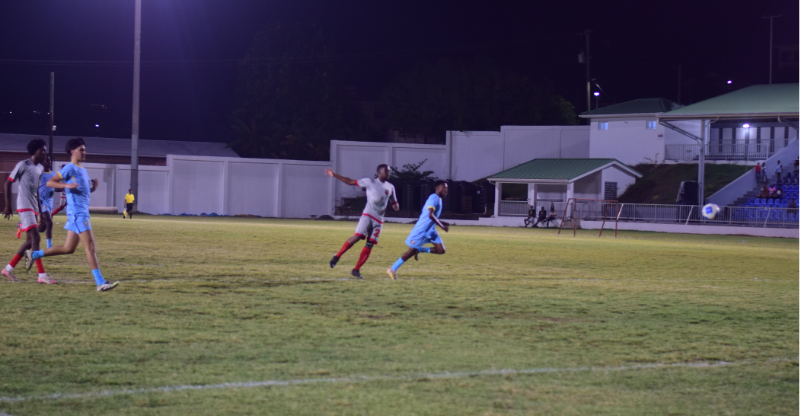
    The rise of semi-professional leagues has begun bridging the gap between amateur and professional sports, but significant challenges remain. Francis Daniel, CEO of the Saint Lucia Semi-Professional Football League, noted their transformative impact while calling for further streamlining: “The next phase of growth will require us to streamline our operations to maximize efficiency and ensure consistent delivery.”

    Similar developments are needed in boxing, according to Christopher, who advocated for semi-professional programs that would allow athletes to focus on training rather than menial jobs. The coaching certification gap was highlighted by Mandalee Mason of the Saint Lucia Mixed Martial Arts Federation, who stressed the need for formally qualified trainers to advance athlete development.

    Despite these challenges, sports administrators remain optimistic about Saint Lucia’s athletic future. As Henry concluded: “Saint Lucia already has the talent and the passion. What we now require is an environment that makes high performance achievable and sustainable for generations to come.”

  • UN and Palestinians warn West Bank demolitions could permanently displace hundreds

    UN and Palestinians warn West Bank demolitions could permanently displace hundreds

    Israeli military authorities have issued demolition orders for 25 residential buildings in the Nur Shams refugee camp near Tulkarem in the occupied West Bank, citing security concerns and “operational necessity.” The controversial decision has drawn sharp condemnation from Palestinian officials and international observers who warn it represents systematic forced displacement tactics.

    The Palestinian Refugee Affairs Department condemned the move as “a blatant violation of international humanitarian law” in an official statement, asserting that the demolitions would displace dozens of families. The department characterized the action as part of a broader strategy to empty Palestinian camps and establish long-term control over the territories, ultimately aiming to annex the West Bank including East Jerusalem.

    Roland Friedrich, Director of UNRWA Affairs in the West Bank, described the development as “devastating news” in a social media post, noting that hundreds face imminent displacement. Friedrich observed that this pattern of home destruction has intensified throughout 2023, with Israeli security forces permanently altering the topography of northern West Bank camps to consolidate control.

    The demolition orders follow closely after the Israeli cabinet’s approval to legalize and establish 19 settler outposts across the occupied West Bank, including two previously evacuated under the 2005 disengagement plan. Israeli settlement watchdog Peace Now criticized the government’s actions as deliberately foreclosing possibilities for future peace and a two-state solution.

    The Israeli military defended its decision, stating that northern West Bank areas “have become a significant center of terrorist activity” operating from civilian populations. Authorities indicated residents would receive opportunity to evacuate personal belongings before demolitions commence, potentially as early as December 18.

    This development occurs amidst sustained Israeli military operations in northern West Bank refugee camps, including Nur Shams, Tulkarm and Jenin. While Israel maintains these operations target militant networks and prevent attacks, Palestinian officials and human rights organizations argue they constitute collective punishment and forced displacement of the more than 32,000 Palestine refugees in the region.

  • Warner Bros Discovery rejects Paramount’s hostile takeover bid

    Warner Bros Discovery rejects Paramount’s hostile takeover bid

    Warner Bros Discovery’s board of directors has formally rejected a hostile $108.4 billion acquisition proposal from Paramount Skydance, alleging the bidding studio misrepresented critical financial details to shareholders. In a December 17 communique to investors, the board asserted that Paramount had consistently misled stakeholders by claiming its $30-per-share cash offer was fully guaranteed by the Ellison family, led by Oracle billionaire Larry Ellison.

    The rejection comes amid an intense corporate battle for control of Warner Bros Discovery’s coveted assets, including its prestigious film and television studios, HBO Max streaming platform, and valuable intellectual properties like the Harry Potter franchise. Paramount launched its aggressive bid after Warner Bros had already accepted a competing offer from streaming titan Netflix.

    The board characterized Paramount’s proposal as posing ‘numerous, significant risks’ and declared it ‘inferior’ to Netflix’s binding $27.75-per-share agreement, which features robust debt commitments and requires no equity financing. Unlike Netflix’s solidified arrangement, Paramount’s offer could be terminated or modified arbitrarily prior to finalization, creating substantial uncertainty for shareholders.

    Warner Bros leadership has not yet scheduled a shareholder vote on the Netflix merger but anticipates holding the decision during spring or early summer, according to Chairman Samuel Di Piazza. The Ellison family has reportedly cited their connections to former President Donald Trump as potentially smoothing regulatory approval, though Netflix executives have already initiated discussions with both the U.S. Department of Justice and European Commission regarding their proposed acquisition.

    In a significant concession to address industry concerns, Netflix has assured Warner Bros it will continue theatrical releases for the studio’s films, alleviating fears that the merger would eliminate a major source of cinema content. The company’s co-CEO Ted Sarandos affirmed the board’s position that the Netflix agreement represents the superior path forward for stockholder interests.

  • Philip J. Pierre: “They cannot read me; I’m a mystery.”

    Philip J. Pierre: “They cannot read me; I’m a mystery.”

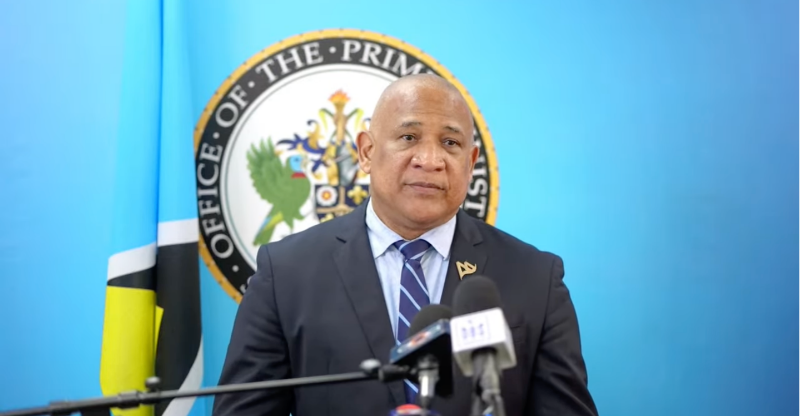
    Prime Minister Philip J. Pierre has embarked on his second consecutive term following a landmark electoral victory that solidifies his political legacy in Saint Lucia. The December 1, 2025 general election saw Pierre’s Saint Lucia Labour Party secure a commanding majority with 14 out of 17 parliamentary seats, marking his record seventh term as MP and making him only the third prime minister since independence to achieve back-to-back terms.

    The administration’s first term was characterized by significant advancements in national infrastructure and social programs. The most notable achievement came with the November 16 handover of the reconstructed St. Jude Hospital, finally replacing the temporary facilities at George Odlum Stadium that had served healthcare needs since the original hospital’s destruction by fire in 2009. The new facility is scheduled to become fully operational within the first quarter of 2026.

    Economically, Pierre introduced Saint Lucia’s largest-ever national budget at $2.06 billion for the 2025/2026 fiscal year. This financial plan builds upon documented successes including record-low single-digit unemployment, substantial tourism growth, increased foreign investment, and strengthened consumer confidence. While acknowledging potential global economic uncertainties, the government maintains that its fiscal policies have created capacity for unprecedented support to vulnerable populations.

    The administration has demonstrated particular commitment to youth development and sports, exemplified by an additional $500,000 allocation for sports equipment following the Prime Minister’s Independence T20 Cup final. This funding supplements a previously announced $1 million commitment and will be distributed through the Ministry of Youth Development and Sports with priority given to communities most in need.

    Pierre’s political persona, encapsulated in his parliamentary declaration “They cannot read me; I’m a mystery,” has resonated with the electorate and even inspired musical compositions by local DJs. Following his December 6 swearing-in ceremony at Government House, the Prime Minister characterized his electoral mandate as a profound expression of public trust that would drive his people-first governance approach.

    The administration has immediately moved to implement key campaign promises, including the approval of a VAT-free day on December 22, 2025, excluding certain items such as motor vehicles, fuel, alcohol, tobacco, and firearms. Looking forward, Pierre has outlined an ambitious development agenda including:

    – Continued redevelopment of Hewanorra International Airport with new air traffic control tower and terminal improvements
    – Construction commencement on the Gros Islet to Castries highway project within first quarter 2026
    – Equipment installation and operational transition for St. Jude Hospital
    – Preparatory work for the fifth wing of Owen King EU Hospital with construction expected in first half 2026
    – House of Justice project completion targeted for 2027
    – New police headquarters in Gros Islet and northern regions operational by first quarter 2026
    – School building extensions scheduled for September completion
    – Development of super administrative building and Soufrière elderly home

    Structural governmental changes include the creation of a new ministry dedicated to continuing education, special education, and early childhood development, with ambitions toward universal early childhood education. The agriculture portfolio has been expanded to include climate change and nutrition, strengthening connections between food production, public health, tourism, and school feeding programs.

    Emphasizing human development investment, the forthcoming budget will include targeted programs for young men addressing frustration and social challenges through collaborations with institutions like the Centre for Adolescent Renewal and Education (CARE). As he assumes his second term, Prime Minister Pierre has committed to governing with “purpose, discipline, and confidence” in pursuit of making Saint Lucia “the best place to live and work.”

  • Why the Union Power Station is active again

    Why the Union Power Station is active again

    In a strategic move to enhance national energy security, Saint Lucia Electricity Services Limited (LUCELEC) has repurposed the decommissioned Union Power Station into a critical standby facility. This initiative marks a significant step in fortifying the island’s electrical infrastructure against potential disruptions.

    The Union facility, once a cornerstone of northern Saint Lucia’s power supply, was rendered obsolete in 1990 when the centralized Cul De Sac Power Station became the nation’s sole generation source. Alongside its southern counterpart in Vieux Fort, the Union plant was phased out due to operational limitations from aging infrastructure and insufficient capacity.

    Recent reactivation efforts have transformed the site into a reliability asset. Ormond Reece, LUCELEC’s Senior Planning Manager, confirmed the station now serves as emergency capacity to satisfy regulatory mandates requiring uninterrupted service even during major generator failures. “This investment ensures LUCELEC meets its statutory obligation to maintain sufficient, reliable capacity,” Reece stated to St. Lucia Times.

    The standby capacity also supports grid stability during renewable energy integration. Reece emphasized that “it helps reduce the risk of system interruptions and supports a more stable grid as renewable integration continues.”

    This development coincides with broader regional energy modernization. The World Bank recently approved a $131.87 million Caribbean Efficient and Green Energy Buildings Project, encompassing Saint Lucia, Grenada, and Guyana. The initiative targets reduced fossil fuel dependence through retrofitting 500 public buildings with energy-efficient technologies and solar panels, aiming for minimum 20% energy savings.

    However, legislative progress faced setbacks. The Electricity Supply Bill, designed to enable independent renewable power producers, stalled in Parliament after stakeholders requested extended review time for the complex legislation. The proposed framework maintains LUCELEC’s grid control while allowing third-party generation, acknowledging the market’s limited size for competing infrastructure.

    Looking forward, LUCELEC advances its 10MW solar farm on the southeast coast with full construction approval. Bidding for the project opens January 16, 2026, with construction anticipated by Q2 2026. Concurrently, the company will develop an Integrated Resource and Resiliency Plan through a multi-stakeholder process to guide Saint Lucia’s energy transition aligned with National Energy Policy goals.

  • Analysts: Cabinet built for control, continuity, calculated risk

    Analysts: Cabinet built for control, continuity, calculated risk

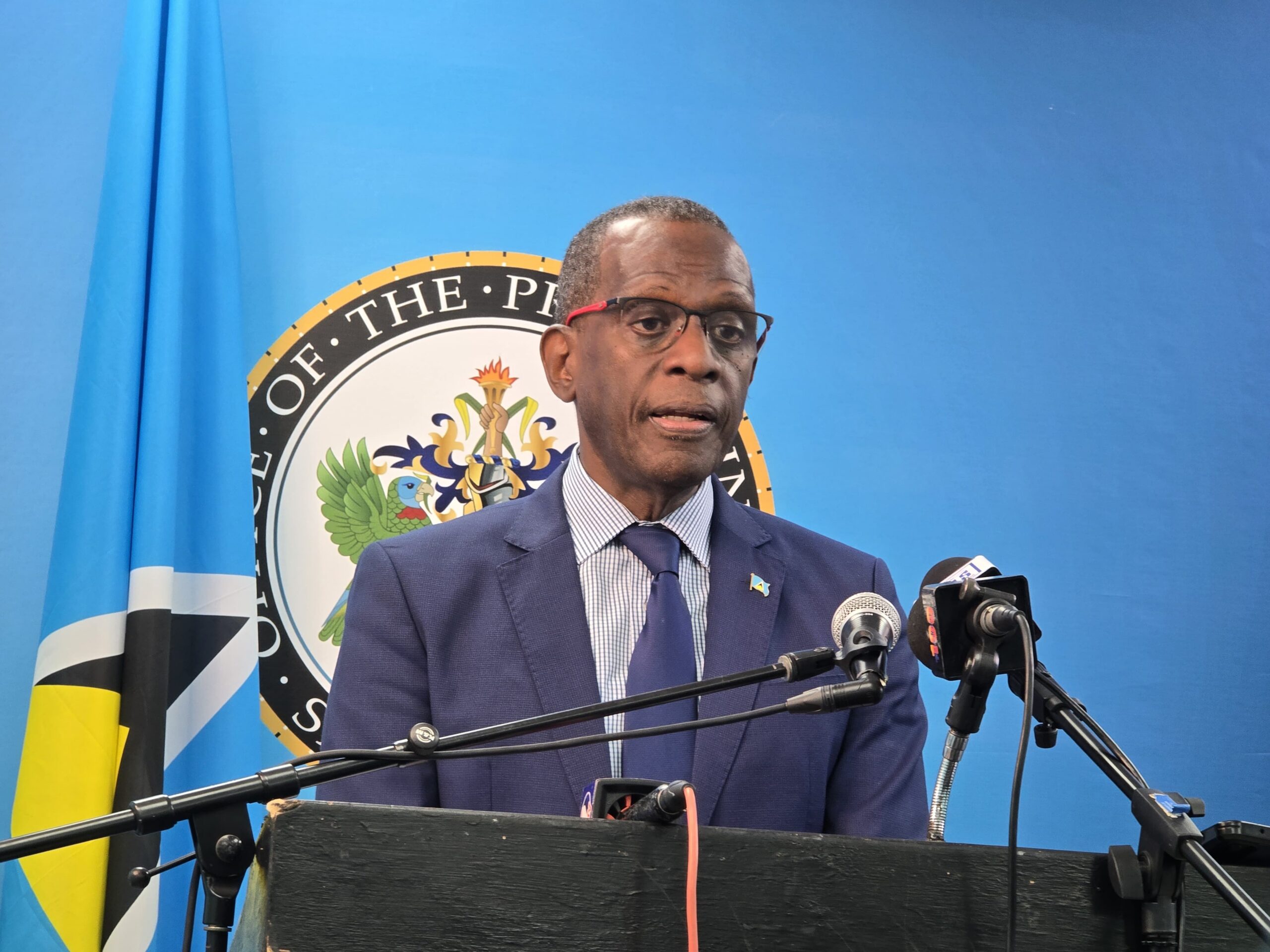
    Prime Minister Philip J. Pierre’s newly unveiled Cabinet emphasizes strategic continuity rather than radical transformation, according to political analysts Rahym Augustin-Joseph and Earl Bousquet. The February 12th announcement revealed a structure where Pierre maintains control over critical portfolios including Finance, National Security, Justice, while assuming additional responsibilities for Constituency Development and People Empowerment.

    Augustin-Joseph, a Rhodes scholar and political commentator, characterizes the arrangement as a clear centralization of authority within the Westminster system. “This configuration leaves no ambiguity regarding accountability,” he noted. “The Prime Minister stands at the center of governance, meaning governmental success or failure will directly correlate with his performance across these key areas.”

    Veteran analyst Bousquet offered a contrasting perspective, interpreting the cabinet composition as a deliberate equilibrium between experience and innovation. He emphasized that the structure reinforces Pierre’s longstanding position that no minister possesses exclusive control over any portfolio, describing the reshuffle as demonstrating both continuity and adaptability.

    The government’s economic strategy remains anchored by Dr. Ernest Hilaire, who retains Tourism and Investment while gaining Commerce oversight. This consolidation brings major agencies including Invest Saint Lucia, Export Saint Lucia, and Lucian Carnival under his unified direction. As Deputy Prime Minister, Hilaire continues shaping Saint Lucia’s global economic presence, building upon his first-term achievements in revitalizing the Saint Lucia Jazz and Arts Festival and expanding Lucian Carnival.

    Augustin-Joseph highlighted the critical nature of Hilaire’s role, stating, “The administration’s fortunes are intrinsically linked to his performance, given tourism’s fundamental importance to our economy.” Bousquet concurred, noting Hilaire’s collaborative environment within cabinet ensures he won’t operate in isolation, with former Commerce Minister Emma Hippolyte remaining available for policy continuity consultation.

    The cabinet maintains several experienced figures, with Stephenson King continuing as senior minister and Alva Baptiste retaining External Affairs—a decision analysts attribute to requiring steady diplomacy amid global uncertainties. Bousquet interpreted King’s reassignment from Infrastructure as reinforcing Pierre’s message that experience doesn’t guarantee entitlement, characterizing it as affirming collective responsibility rather than demotion.

    Infrastructure responsibilities transition to Shawn Edward, a move Augustin-Joseph suggests addresses public concerns regarding infrastructure delivery. Education, Youth Development, Sports and Digital Transformation consolidate under Kenson Casimir, despite public debate about the expanded workload. Bousquet defended the appointment, citing Casimir’s electoral success and demonstrated resilience.

    The most discussed appointment proved to be Lisa Jawahir’s elevation to Agriculture, Fisheries, Food Security and Climate Change. While critics questioned her background, Bousquet dismissed assumptions that formal training alone determines competency, noting her regional parliamentary work on food security and climate change initiatives. Her appointment marks Saint Lucia’s first female Agriculture Minister, representing broader inclusion efforts that have increased female representation in both Cabinet and Senate.

    Other significant changes include Jeremiah Norbert assuming a newly created Conflict Resolution portfolio addressing crime and social cohesion concerns, while Emma Hippolyte’s expanded ministry unites equity, labour and social justice under centralized leadership. Danny Butcher joins Education with responsibility for Early Childhood, Continuing and Special Education and Digital Transformation, supporting foundational reforms.

    Analysts ultimately agree this cabinet configuration prioritizes delivery above symbolism. Augustin-Joseph summarizes it as “more continuity than change,” while Bousquet characterizes it as “a forward-looking team tasked with fulfilling manifesto promises made by the SLP and its independent affiliates—a cabinet appointed to deliver not just for today, but for the future.”