
As he gears up for his own electoral battle in Saint Vincent and the Grenadines, Prime Minister Ralph Gonsalves has extended a public endorsement to Saint Lucia’s Prime Minister Philip J. Pierre and the Saint Lucia Labour Party (SLP) in the lead-up to their December 1 general election. In a recent interview with SVG TV, Gonsalves expressed his unwavering support for Pierre and the SLP, referring to them as a “sister party.” He emphasized the solidarity between their respective Labour movements, underscoring the deep political alliance shared by the two leaders. Gonsalves, confident in his Unity Labour Party’s prospects for re-election, also revealed plans to travel to Castries, Saint Lucia, to join Pierre during the final stages of the campaign. “At the invitation of Philip Pierre, I will be in Saint Lucia at least for the final rally,” he stated. “I have to be there with my Labour comrade.” This endorsement not only reinforces the camaraderie between Gonsalves and Pierre but also highlights the interconnectedness of Labour parties across the Caribbean region.
标签: Saint Lucia
圣卢西亚
-
The battle for Castries South
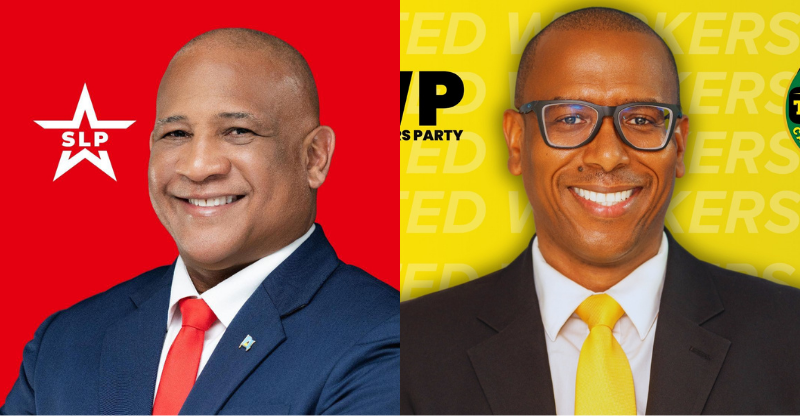
On December 1, voters in Castries South, Saint Lucia, will cast their ballots in a pivotal election that will shape the constituency’s future for the next five years. The contest features two contrasting candidates: Dr. Ernest Hilaire, a seasoned politician and Deputy Prime Minister, and Tommy Descartes, a first-time candidate with a technocratic background. The election is not just a battle between party loyalties but also a clash of visions for a district that has become a symbol of national pride and political ambition. Castries South, a constituency within Saint Lucia’s capital, has garnered international attention since Julien Alfred, a native of Ciceron, won the country’s first Olympic gold medal. The area boasts significant infrastructure, including the Dr. Winston C.V. Parris Medical Complex, Owen King European Union Hospital, and Tapion Hospital. It also includes Bananes Bay, a politically sensitive zone near Tapion and Hospital Road, which is expected to be impacted by the Global Port Holding redevelopment of Port Castries. Dr. Ernest Hilaire, representing the Saint Lucia Labour Party (SLP), is seeking a third term. A graduate of the University of the West Indies, Cambridge University, and the London School of Economics, Hilaire has held numerous high-profile roles, including Permanent Secretary in the Ministry of Youth and Sports, CEO of Saint Lucia’s ICC Cricket World Cup operations, and Chief Executive Officer of the West Indies Cricket Board. His campaign emphasizes legislative achievements and resilience during his tenure, particularly during his time in opposition. Hilaire highlights the Tourism Development Act as a key accomplishment, which he claims has incentivized local participation in the tourism industry. In contrast, Tommy Descartes, representing the United Workers Party (UWP), is a first-time candidate with a background in economics. A graduate of the University of the West Indies and the University of Nottingham, Descartes has worked with the Caribbean Development Bank, Saint Lucia’s Department of Economic Planning, and the Ministry of Equity. Descartes positions himself as a fresh, relatable alternative, focusing on youth empowerment and a ten-year development plan that includes the creation of a Youth and Sports Academy. The election will hinge on which candidate can best address pressing issues such as employment generation, infrastructure upgrades, and sports and social development initiatives. Voters will ultimately decide whether to continue with Hilaire’s experienced leadership or embrace Descartes’ new vision for Castries South.
-
‘Anguish has ended’: St Jude Hospital handed over to Government
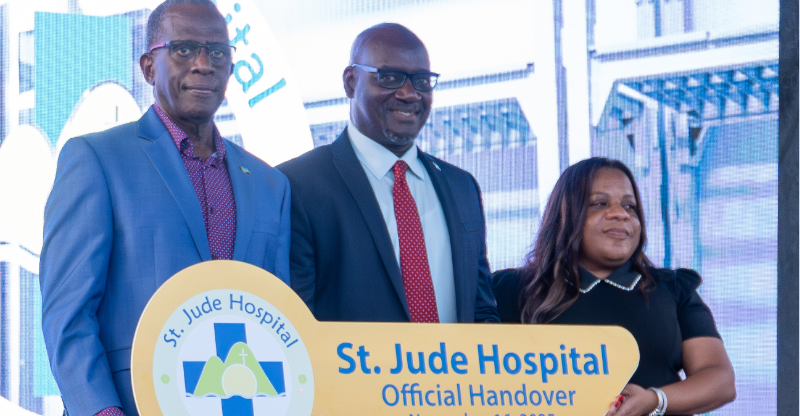
After years of delays and public scrutiny, the Government officially received the reconstructed St Jude Hospital on Sunday, marking a significant milestone in the facility’s journey toward full operational readiness. Although the hospital is not yet prepared to admit patients, the handover ceremony symbolized the completion of extensive reconstruction efforts and the commencement of the final phase of preparation. The event was attended by government officials, hospital staff, contractors, and community supporters, underscoring the collaborative effort behind the project. Paul Hilaire, Permanent Secretary in the Department of Economic Development, highlighted the hospital’s advanced features, including modern diagnostic capabilities, energy-efficient systems, and enhanced clinical workflows, designed to serve future generations. Hilaire emphasized that the handover signifies the start of critical tasks such as commissioning, staffing, and regulatory alignment to ensure a safe and efficient opening. Prime Minister Philip J. Pierre reiterated that the reconstruction was guided by technical expertise rather than political considerations, addressing public skepticism and the challenges faced over the years. The hospital’s staff had operated from the George Odlum Stadium for 15 years following a fire that destroyed the original facility. Outgoing Vieux Fort South MP Kenny Anthony expressed relief, stating that the project’s completion marks the end of a long period of uncertainty and the beginning of a more confident future.
-

Tommy Descartes demands CIP accountability ahead of December 1 polls
Tommy Descartes, the United Workers Party (UWP) candidate for Castries South, has publicly challenged the Saint Lucia Labour Party (SLP) to provide a detailed account of the funds generated through the Citizenship by Investment Programme (CIP). Speaking at a UWP rally on William Peter Boulevard, Descartes, a former chief economist in the Department of Economic Planning, raised concerns about potential under-reporting of CIP revenues. He pointed to the significant financial gains made by neighboring countries like Saint Kitts and Grenada through their CIP initiatives, suggesting that billions of dollars might be unaccounted for in Saint Lucia. Descartes emphasized the importance of transparency, stating that the SLP must release the audited CIP report before the upcoming elections on December 1. Although Parliament has been dissolved, he insisted that the report should still be made public. Despite his call for accountability, Descartes expressed skepticism about the SLP’s willingness to disclose the figures, urging voters to hold the party accountable by voting them out of office.
-

Dennery Segment artist Pablo backs UWP as ‘only party’ with a plan for creatives
Renowned Dennery Segment artist Kurtly Pablo made a significant political statement at a United Workers Party (UWP) rally on William Peter Boulevard, openly endorsing the party and criticizing the incumbent Saint Lucia Labour Party (SLP) for its alleged neglect of the creative sector. Pablo, a prominent figure in the Dennery Segment for the past eight years, accused the SLP administration of failing to provide adequate support to artists, despite the global recognition of Saint Lucian music. He emphasized the lack of a structured industry, which hinders artists from fully capitalizing on their international success. Pablo highlighted issues such as work permits and distribution deals as areas where creatives desperately need assistance. ‘Exposure without a plan doesn’t really work,’ he stated, arguing that artists often return home without tangible benefits after performing abroad. Pablo expressed confidence in the UWP, led by Allen Chastanet, as the only party committed to developing the Dennery Segment and the broader creative industry. He revealed that the UWP has already initiated collaborations with other Caribbean nations to strengthen the music sector. Pablo urged young Saint Lucians to support UWP candidates in the upcoming December 1 general election, asserting that a UWP-led government would provide the necessary resources to help artists thrive.
-
Hurricane Melissa exposes brutal reality
The Caribbean, a region perpetually on the frontline of climate change, is grappling with the harsh realities of innovative financial instruments designed to mitigate disaster impacts. Hurricane Melissa, a Category 5 storm, recently devastated Jamaica and neighboring islands, exposing the limitations of catastrophe bonds—a sophisticated financial tool aimed at transferring climate risk to global capital markets. These bonds, which release funds based on predefined storm metrics, failed to trigger despite the widespread destruction, highlighting a critical gap between theoretical models and on-the-ground realities. This incident underscores the broader challenges faced by Small Island Developing States (SIDS), which bear the brunt of climate change while contributing minimally to global emissions. The paradox of climate finance innovation lies in its inability to address the root causes of the crisis, leaving SIDS trapped in a cycle of debt and disaster. As the Caribbean pioneers resilience strategies, the global community must confront the moral and financial imperatives of climate justice, ensuring that innovation is matched by equitable action.
-

‘Everything gone’: Hurricane Melissa leaves devastation in southern Jamaica
The rural parish of St Elizabeth, located on Jamaica’s southwestern coast, is grappling with the aftermath of Hurricane Melissa, one of the most destructive storms ever to hit the island. The Category 5 hurricane left a trail of devastation, uprooting trees, flattening homes, and severing communication lines. Residents are now embarking on the arduous journey of recovery, relying on community solidarity and government aid to rebuild their lives.
David Muschette, an 84-year-old resident of the Wilton district, narrowly escaped disaster when his home was reduced to rubble. Fleeing barefoot through flying debris and torrential rain, he sought refuge at his neighbor Pamela Heath’s house. Heath, herself shaken by the storm, provided him with shelter, dry clothes, and comfort. “Mi can’t take fi see the sufferation,” she said, emphasizing her commitment to helping those in need despite her own struggles.
The storm’s impact was felt across the parish, with many homes losing roofs and essential belongings ruined. Carnel Williams and his partner, Keisha Granville, lamented the loss of their home and possessions. Granville, who lost a leg years ago, expressed her frustration at being unable to move or contact her grandchildren. Neighbor Linoval Wright, whose house also lost its roof, described the storm as worse than Hurricane Gilbert in 1988, calling it “terrible.”
In response to the crisis, the Jamaican government established a National Hurricane Relief Committee, co-chaired by ministers Desmond McKenzie and Daryl Vaz, to coordinate rebuilding efforts. Regional support has also been mobilized, with Barbados dispatching a humanitarian team and supplies to assist in the recovery. Prime Minister Mia Mottley emphasized the importance of Caribbean solidarity, pledging continued cooperation through the Caribbean Disaster Emergency Management Agency (CDEMA).
As recovery efforts continue, the resilience of St Elizabeth’s residents shines through. Despite losing everything, they remain determined to rebuild their lives, relying on the strength of their community and the support of their neighbors. “Everybody lose something,” Heath said, “But we still here.”
-

Epstein mentioned Trump multiple times in private emails, new release shows
Newly disclosed emails from Democrats on the House Oversight Committee have revealed that Jeffrey Epstein, the convicted sex offender who died by suicide in 2019, mentioned former President Donald Trump multiple times in private correspondence over the past 15 years. The emails, exchanged with Epstein’s longtime associate Ghislaine Maxwell and author Michael Wolff, suggest Trump spent significant time with a woman described as a victim of Epstein’s sex trafficking network. In one message, Epstein claimed Trump “knew about the girls,” seemingly referencing Trump’s assertion that he expelled Epstein from his Mar-a-Lago club for targeting young women there. The emails, released on November 12, were obtained after subpoenaing Epstein’s estate earlier this year. Notably, Trump neither sent nor received any of the messages, which largely predate his presidency, and he has not been accused of any criminal wrongdoing related to Epstein or Maxwell. White House Press Secretary Karoline Leavitt criticized the release, calling it a “selective leak” to create a “fake narrative” against Trump. Meanwhile, Wolff, who was in communication with Epstein, stated he couldn’t recall the full context but confirmed discussing Epstein’s relationship with Trump. The emails have reignited scrutiny of Epstein’s connections to high-profile figures, though their implications remain unclear.
-

The unfinished fight for women’s political inclusion in Saint Lucia
The recent political ascendancy of women in Trinidad and Tobago has sparked a broader conversation about gender equality in the Caribbean. Christine Kangaloo, Kamala Persad-Bissesser, and Penelope Beckles have shattered glass ceilings, becoming President, Prime Minister, and Leader of the Opposition, respectively. Their achievements have been celebrated by the University of the West Indies Cave Hill Campus and have challenged outdated stereotypes of the Caribbean as merely a tourist destination. However, this progress has also highlighted the stark contrast in Saint Lucia, where women remain significantly underrepresented in politics. Despite the contributions of notable female politicians like Heraldine Rock and Dr. Gale Rigobert, the political arena in Saint Lucia is still dominated by men. Recent elections saw only 11 women out of 45 candidates, a mere 25% of the field. This is below the regional average of 30% and the Commonwealth average of 25.9%, according to the Inter-Parliamentary Union. The Convention on the Elimination of Discrimination Against Women (CEDAW) recommends that 33% of decision-making roles be held by women, a target Saint Lucia has yet to meet. Cultural and institutional barriers continue to hinder women’s political participation. Societal norms often relegate women to domestic roles, and the political process is seen as ‘nasty’ and unsuitable for women. Additionally, women face challenges in balancing political careers with family responsibilities, and they often lack access to the networks and funding necessary for successful campaigns. Despite these obstacles, women in Saint Lucia are outpacing men in educational achievements and leadership roles in the workplace. The International Labour Organisation found that 52.3% of bosses in Saint Lucia are women, suggesting that other factors are at play in the political sphere. To address this disparity, experts recommend public education on gender equality, increased support for female political candidates, and the implementation of quotas to ensure greater female representation. As Saint Lucia moves forward, it is crucial to create an inclusive political environment that empowers women to take on leadership roles and contribute to the nation’s development.
-

It’s your right: protect it, cherish it
As Saint Lucia gears up for its upcoming general election, the political atmosphere has grown increasingly volatile, raising concerns about the integrity of the democratic process. Reports have emerged of private properties being vandalized with slogans and emblems representing the two major political parties. Additionally, instances of name-calling, both in person and on social media, as well as acts of intimidation by opposing supporters, have become alarmingly common. Rumors suggest that some confrontations have escalated from verbal exchanges to physical altercations, though no direct involvement from candidates has been confirmed. Despite these troubling developments, neither the candidates nor their parties have issued strong condemnations of such behavior. Earlier calls for political parties to adopt a code of conduct during this critical period have gone unanswered. The Constitution of Saint Lucia guarantees citizens the right to vote, freedom of association, and the right to assemble, emphasizing the importance of a peaceful and democratic election process. It is imperative that all political leaders and candidates uphold these principles and set a positive example. The media and law enforcement must also play their roles in ensuring that the election remains free from violence and intimidation. As the campaign progresses, it is crucial for all stakeholders to act with civility and respect, fostering an environment of peace and fairness. The election date coinciding with the Advent season serves as a poignant reminder of the values of peace and goodwill, which should guide the nation during this pivotal time.