标签: Saint Kitts and Nevis

圣基茨和尼维斯

  • Government addressing challenges with Bypass Road Vending

    Government addressing challenges with Bypass Road Vending

    BASSETERRE, St. Kitts – Amid a steady rise in the number of informal vendors operating across the Federation of St. Kitts and Nevis, national authorities have launched a coordinated effort to regulate the street vending sector, prioritizing public safety, proper land use, and sustainable livelihood support for local traders.

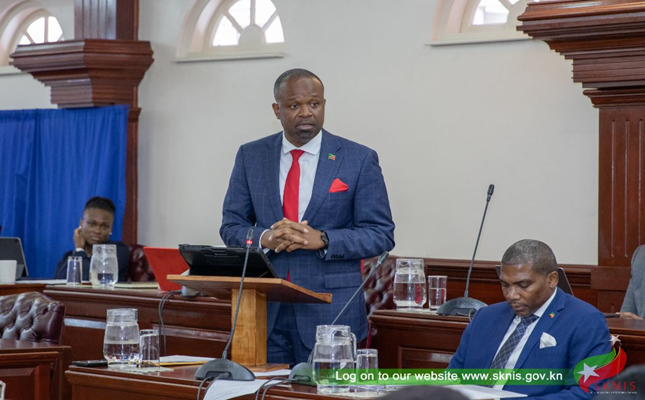
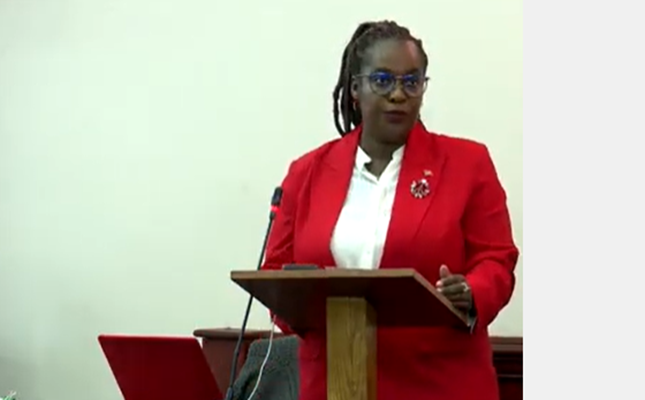
    The push for updated regulation comes in response to a growing trend of vendors setting up unauthorised operations in non-designated zones, most prominently along the busy bypass road corridor of the FT Williams Highway. During a recent parliamentary sitting, Environment Minister Joyelle Clarke outlined the scope of non-compliance across the Basseterre area, which includes unapproved vending in public green spaces and the construction of semi-permanent vending structures without official planning approval or safety inspections. Clarke confirmed that ministry officials have already begun one-on-one engagement with dozens of vendors operating in restricted areas to resolve the situation.

    “For every vendor who has set up on a green space without permission, we engage several times to explain to them this is not a place that’s authorised for vending. Either it’s going to create an environmental problem or a traffic congestion problem,” Clarke told the National Assembly.

    In a departure from heavy-handed enforcement, the Ministry of Sustainable Development has adopted a supportive, livelihood-first approach to relocation, Clarke explained. Recognizing that street vending serves as a critical source of household income for many local families, the ministry prioritizes connecting vendors with alternative approved vending locations wherever possible. In cases where a designated commercial spot is not immediately available, officials grant vendors extended timelines to secure new sites and offer logistical support to complete relocation, rather than imposing immediate fines or removals.

    This current effort builds on earlier action taken by the previous national administration, which relocated unauthorised street vendors from central Basseterre thoroughfares to two designated hubs: the central Basseterre Public Market and the Agri-Strip vending zone in Ponds Pasture.

    Clarke highlighted specific public health and environmental risks linked to unregulated operations along the FT Williams Highway, where the number of informal coconut sellers, food stalls, and even mobile bars has surged in recent months. Beyond creating visual blight along the major roadway, discarded coconut husks left on-site by vendors create ideal breeding grounds for mosquitoes, increasing the risk of vector-borne disease outbreaks for nearby communities and placing extra strain on public health resources, the minister noted.

    To address immediate risks, Clarke is calling on all vendors to adopt daily clean-up practices for their operating zones. “So we’re asking you kindly to take everything with you when you leave. For those of you who have permission to set up and sell under your tents, you know that the permission comes with a caveat: you have to move everything at the end of the day,” she said. She added that the Ponds Farmers Market Strip is reserved exclusively for agricultural producers, and any non-farming vendors seeking to operate in the area must first apply for official approval from the Ministry of Sustainable Development to access a suitable legally designated spot.

    While the ministry acknowledges that the growth of local vending reflects economic activity in Basseterre, officials are urging all informal traders to collaborate with government regulators to formalize their operations. “The Ministry is recognising that the growth in vending in Basseterre. We’re recognising this growth, but we’re asking you to connect with us and the Department of Physical Planning or the Department of Urban Development and Resilience for us to assign you to a designated location for vending,” Clarke said. She also confirmed that some high-risk areas, including the Greenlands district, remain strictly off-limits for all informal vending operations.
  • US losses mount as Iran conflict intensifies and global impact grows

    US losses mount as Iran conflict intensifies and global impact grows

    As the escalating confrontation between the United States and Iran stretches on with no diplomatic or military resolution in sight, American casualties and resource losses are mounting on the front lines, while the conflict’s ripple effects continue to destabilize the Middle East and send shockwaves through global energy and food markets.

    The latest setback for U.S. forces came Friday, when an American F-15E fighter jet was downed over Iranian territory. U.S. officials have officially confirmed the crash, and the jet’s two-person crew remains unaccounted for. Iranian state media has reported that the Iranian government has placed a bounty on the missing airmen, offering a reward for their capture by local groups or individuals.

    User-uploaded videos circulating across major social media platforms appear to document U.S. military helicopters carrying out intensive search-and-rescue operations to locate the missing crew and recover aircraft wreckage. Multiple reports indicate the rescue mission came under heavy hostile gunfire from Iranian-aligned forces during the operation, further complicating efforts to locate the airmen.

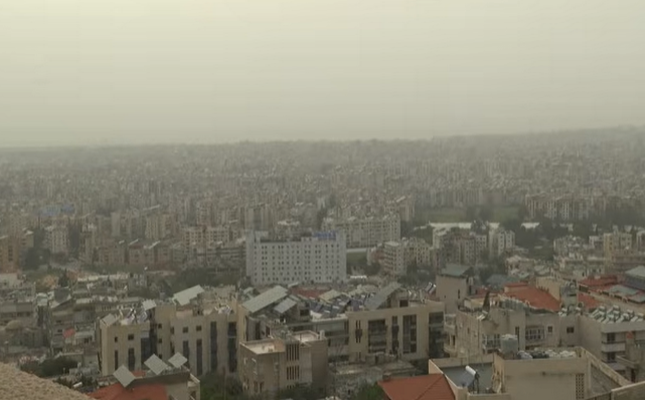
    The current full-scale confrontation erupted after the U.S. and Israel launched joint airstrikes against Iranian military and strategic targets across the Middle East, pulling the region into its worst crisis in nearly two decades. Since the escalation began, repeated cross-border and regional strikes have damaged critical energy, transportation, and communication infrastructure in multiple regional states, leaving communities vulnerable and stoking widespread fears that the conflict will draw in neighboring countries and escalate into a wider regional war.

    Beyond the immediate human and security costs, the conflict has already triggered measurable global economic disruption. Iran responded to the joint strikes by moving to block all commercial shipping traffic through the Strait of Hormuz, the strategic chokepoint through which roughly 20% of the world’s daily oil supplies pass. The closure immediately sent global crude oil and fuel prices soaring in trading markets, hitting consumers and businesses in every region of the world.

    In addition to energy market chaos, the blockage of the Strait has disrupted global shipments of key fertilizer ingredients, which are largely exported from the Middle East. Agriculture analysts and global food security organizations warn that extended disruptions could push up input costs for farmers worldwide, leading to higher global food prices and increased food insecurity for vulnerable populations in the coming months.

    As of Friday evening, diplomatic efforts to broker a ceasefire have yet to gain traction, and both sides have signaled they intend to continue military operations. With tensions remaining at fever pitch, the Middle East and the broader international community are bracing for an extended period of economic volatility and geopolitical fallout from a conflict that shows no immediate signs of de-escalation.

  • Senator Phillip gives full support for the establishment of a Sovereign Wealth and Resilience Fund in Saint Kitts and Nevis?

    Senator Phillip gives full support for the establishment of a Sovereign Wealth and Resilience Fund in Saint Kitts and Nevis?

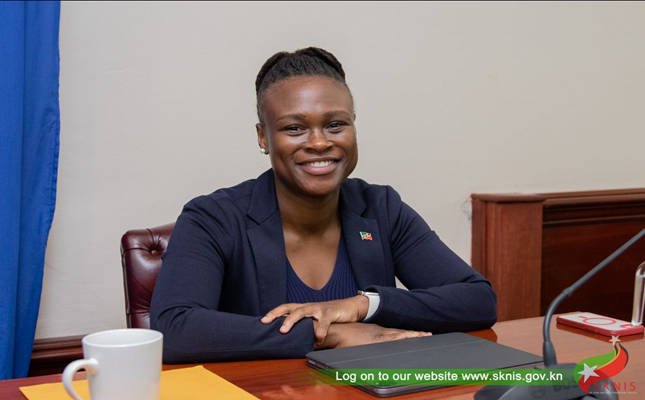
    BASSETERRE, Saint Kitts – In a landmark step for the Caribbean federation’s long-term fiscal planning, Senator Hon. Isalean Phillip has thrown her full support behind the recently passed Saint Kitts and Nevis Sovereign Wealth and Resilience Fund Bill 2026, framing the legislation as a transformative measure to shield the nation’s economic future and boost systemic fiscal resilience.

    The bill secured approval during the National Assembly’s March 31, 2026 sitting, where Phillip outlined the core purpose of the new fund: to serve as a strategic national savings and investment reserve that will buffer the federation against unforeseen economic downturns and global volatility. Under the legislation’s terms, the government will only be able to draw on the fund’s resources when explicit, pre-approved conditions are met, guaranteeing that reserves are reserved exclusively for moments of national crisis and critical public need.

    “Creating this sovereign wealth and resilience fund enshrines a commitment to fiscal prudence and protects our collective national savings as a sovereign state,” Phillip explained during the debate. “This financial legislation embodies the culture of intentional, wise savings and investment that the Prime Minister, who also serves as Minister of Finance and leads this administration, has worked to build for our country.”

    Phillip emphasized that the new fund is fully aligned with the ruling government’s flagship Sustainable Island State Agenda (SISA), serving as concrete proof of the administration’s ongoing efforts to diversify the national economy and drive inclusive, long-term growth. She pointed to the government’s sustained investments across critical foundational sectors – including renewable energy development, national water security, tourism expansion, and agricultural modernization – as complementary pieces of the broader national strategy to build systemic resilience and environmental and economic sustainability.

    “Across energy, water, tourism, and agriculture, we have consistently prioritized strategic investments that lay the groundwork for long-term strength,” Phillip said, noting that these ongoing efforts reflect the administration’s unwavering focus on constructing a resilient, diversified economy that can withstand external shocks.

    The senator also linked the new sovereign wealth fund to the government’s earlier progressive policy, the ASPIRE Programme, an initiative that creates dedicated savings and investment accounts for young citizens to foster a culture of personal financial responsibility from early adulthood. Phillip framed both policies as examples of the administration’s forward-thinking approach to national financial management.

    A key strength of the new legislation, Phillip highlighted, is its robust, internationally vetted governance framework. The bill includes strict anti-corruption safeguards and transparency measures to prevent misuse or misappropriation of fund assets, and its structure draws on proven best practices from leading global sovereign wealth fund jurisdictions including Singapore, Chile, Botswana, Norway, and Mauritius.

    Wrapping up her remarks, Phillip reaffirmed her enthusiastic backing for the bill, calling it a historic, forward-looking piece of legislation that will lock in long-term financial sustainability for the federation and strengthen its economic sovereignty.

    “This initiative is fundamentally about building resilience as an independent nation,” she added. “It is about ensuring we are prepared, protected, and positioned to deliver continued progress for all our citizens for generations to come.”

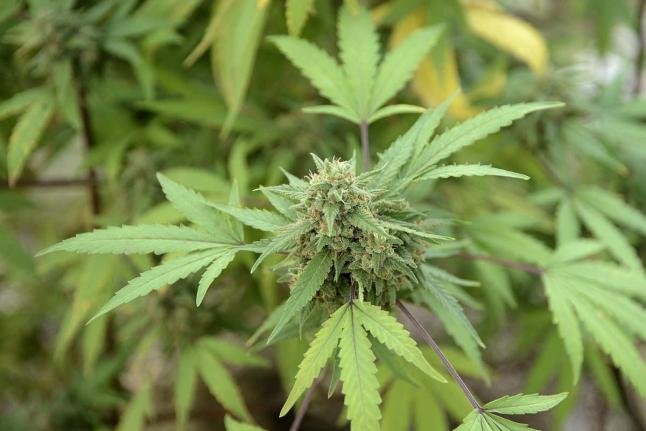
  • St Kitts wants cautious approach to marijuana use

    St Kitts wants cautious approach to marijuana use

    BASSETERRE, St Kitts – In a formal address to the nation’s parliament, Prime Minister Dr. Terrance Drew has outlined the federal government’s deliberate, risk-mitigating approach to cannabis integration, emphasizing that all reforms must prioritize the Caribbean nation’s economic stability, public health, and long-term social and financial wellbeing.

    Drew, a practicing medical professional, noted that his administration has already advanced historic progressive changes to outdated cannabis laws, including upholding the fundamental rights of the Rastafari community to practice their faith without criminal penalty. But he stressed that these changes are being rolled out with full awareness of the dangers that unregulated mismanagement could pose to the twin-island federation.

    “We are being responsible with how we introduce cannabis as part of our way of life here in St Kitts and Nevis, it has to be done responsibly,” Drew told parliament. He explained that the government’s new legislative framework is intentionally structured to strike a balance: it protects constitutionally guaranteed rights, while putting systems in place to prevent substance abuse, economic disruption, and harm to local citizens.

    The prime minister reaffirmed that the government has removed criminal penalties for Rastafarians’ religious use of cannabis, enabling the community to exercise their faith freely. At the same time, he issued a clear caution against any actions that could erode St Kitts and Nevis’ standing in global finance, particularly its critical correspondent banking relationships with major international institutions.

    Upholding the country’s regulatory obligations is not optional, Drew said, but a non-negotiable requirement for maintaining global confidence in the federation’s financial system. He urged all new entrants to the emerging cannabis sector to abide by existing regulations, to ensure St Kitts and Nevis retains its reputation as a rule-abiding actor on the global stage.

    Speaking to the specific case of medicinal cannabis, Drew highlighted that while the plant shows clear potential for therapeutic applications, strict regulatory oversight is mandatory to guarantee product safety and quality for patients. “When people get a product in St Kitts and Nevis for medicinal purposes, they must know that this product is regulated, that what’s in it, or what is claimed to be in it is in it, and so that the overall health is protected,” he explained. He added that protections for vulnerable populations are a core component of the government’s framework, as regulated substances require careful management to avoid harm to bystanders and at-risk groups.

    Drew closed his address by calling on all citizens and industry stakeholders to act responsibly and comply with the law, noting that the government’s approach is explicitly designed to protect both current and future generations of the federation.

    Attorney General Garth Wilkin, who also serves as Minister of Justice and Legal Affairs, followed the prime minister’s address with a detailed breakdown of why full nationwide legalization of recreational cannabis remains unfeasible for St Kitts and Nevis at this time, pointing to binding international legal and financial constraints that cannot be ignored.

    While the government has moved forward with targeted progressive reforms to uphold religious freedom and decriminalize limited categories of cannabis use, Wilkin explained that all changes must remain aligned with the country’s binding international treaty obligations. These international agreements explicitly restrict full legalization of cannabis for non-medicinal and non-religious use, and deviating from these rules would trigger severe consequences for the federation’s financial system.

    “What that means is that if we were to legalize [recreational cannabis broadly], our corresponding banking relationships would almost come to an end,” Wilkin warned. He explained that St Kitts and Nevis’ access to the global financial system depends almost entirely on correspondent banking partnerships with institutions in major economic jurisdictions – including the United States and Europe – where cannabis remains illegal under federal or national law.

    “So if you were to make money from cannabis in St Kitts and Nevis, and those countries [and] those banks were to realise that anybody in St Kitts and Nevis could legally make money from cannabis, they would cut off our banking system from the international finance system,” Wilkin added. He noted that this outcome would create cascading harm across every sector of the economy, disrupting international trade and eliminating citizens’ ability to complete even basic financial transactions when traveling or doing business abroad. “It would cause irreparable harm to our banking system,” he said.

    Under the government’s current structured regime, cannabis is legal for religious use consistent with freedom of conscience, as well as for regulated medicinal purposes. The framework formally permits cultivation, possession, and use of cannabis within these legal bounds, Wilkin explained, aligning the new rules with the constitution’s protections for freedom of conscience and religious practice.

    Alongside the new legal framework, the government has launched extensive public education initiatives, including an official cannabis information platform designed to help all citizens understand their rights and responsibilities under the updated law. Wilkin encouraged all residents to familiarize themselves with the new regulations and comply fully with their requirements, emphasizing that the government’s incremental approach reflects a deliberate, balanced compromise between progressive reform and national responsibility.

  • Twenty-four athletes to represent Federation at CARIFTA Games

    Twenty-four athletes to represent Federation at CARIFTA Games

    BASSETERRE, St. Kitts – Ahead of the 53rd edition of the Caribbean Free Trade Association (CARIFTA) Games, the St. Kitts and Nevis Athletics association has officially announced its 24-athlete delegation set to compete at the regional youth track and field championship, hosted this year at Grenada’s Kirani James Athletic Stadium from April 4 to 6, 2026.

    Nicknamed “Team Unstoppable SKN,” this year’s roster balances experience and emerging talent: it includes seasoned returning CARIFTA medalists and veteran competitors, alongside a cohort of ambitious first-time qualifiers who met all selection standards during national qualifying trials. The entire team is scheduled to depart St. Kitts and Nevis for Grenada on April 2, two days ahead of the opening round of competitions.

    In an official statement following the team announcement, SKN Athletics President Wayne Delaney shared his pride in the selected athletes, emphasizing that their spots on the national team are a direct reflection of the relentless effort they have put into their craft. “Their selection is a testament to their hard work, resilience, and passion for athletics,” Delaney said. “We encourage them to continue pushing their limits, knowing that the entire Federation of St. Kitts and Nevis stands behind them.”

    The delegation is split across four age and gender divisions: the Under-17 Girls category features Khylinn Prentice (100m, 200m), Ta-Junique Huggins (100m Hurdles, 400m Hurdles), Trishana O’Donoghue (400m Hurdles), Dejhanee Moses (High Jump, Long Jump), Janiah McNeil (High Jump), Miel Pemberton (Long Jump), Ayrian Walters (Shot Put, Javelin) and Kezia Phillip (Shot Put). The Under-17 Boys roster includes Kymarni Newton (800m), Najeeb Kelly (1500m), Shandon Burton (1500m, 3000m), Malik Freeman (Shot Put, Javelin) and Kylan Woods (Javelin). Just one athlete, De’Cheynelle Thomas (200m, 400m), will represent the nation in the Under-20 Girls division. The Under-20 Boys contingent is the largest group on the team, with Chesson Liburd (100m), Jaylen Bennett (400m), Tejuan Webbe (100m Hurdles, Long Jump), Jayden Hendrickson (400m Hurdles), Josano Henderson (Javelin), Akanye Samuel-Francis (400m Hurdles), Dejuaan Pemberton (High Jump), Zackery Nisbett (High Jump), Kialan Morton (Shot Put), Jaheem Clarke (Javelin) and Naseem Gerald (Decathlon).

    A full specialized staff will support the athletes throughout the championship: Shirmon Caines serves as Head Coach and throws coach, Adelvin Philip leads sprints and relays training, Roatter Johnson acts as jumps coach, Royston Queeley handles hurdles coaching, Niketa Isles fills the role of team manager, Alister James is the team physiotherapist, Nicola Huggins Parris serves as safeguarding officer, Corneil Williams and Dwayne Warner are congressional delegates, and Rashid Stanley handles team media operations.

    SKN Athletics also extended formal thanks to the key sponsors that have made the team’s trip and participation possible. Major backers include the St. Kitts-Nevis-Anguilla National Bank, the Government of St. Kitts and Nevis’ Ministry of Sports, the Nevis Island Administration, and SKN Athletics itself. As the team makes its final preparations for departure, national sports officials are calling on residents and supporters across St. Kitts and Nevis to rally behind Team Unstoppable SKN as they compete against the Caribbean’s top young track and field talent.

  • Strait of Hormuz traffic nearly grinds to a halt, raising global economic fears

    Strait of Hormuz traffic nearly grinds to a halt, raising global economic fears

    Almost the entire flow of maritime traffic through the Strait of Hormuz, one of the world’s most critical energy and trade chokepoints, has ground to a halt this week, triggering urgent warnings from the United Nations Conference on Trade and Development (UNCTAD) about looming global economic fallout. The development, unfolding against a backdrop of rapidly escalating tensions between the United States, Israel, and Iran, has already sent shockwaves through international commodity and energy markets.

  • Global Agencies Form Taskforce to Tackle Economic Fallout from Middle East War

    Global Agencies Form Taskforce to Tackle Economic Fallout from Middle East War

    As an ongoing military conflict involving Iran, the United States and Israel stretches on, ripple effects have begun to destabilize the global economy, with warning from economic analysts that these disruptions could persist for months or even years. In a proactive response to the growing crisis, three of the world’s most influential multilateral institutions — the International Energy Agency (IEA), International Monetary Fund (IMF), and World Bank Group — have joined forces to form a dedicated coordination taskforce aimed at lessening the conflict’s broad energy and economic damage.

    The joint announcement, made via a public media statement from Washington D.C. on Wednesday afternoon, lays out the urgent need for unified action amid unprecedented market turmoil. Per the statement, the Middle East conflict has already claimed untold damage to livelihoods across the region and triggered one of the most severe global energy supply shortages in modern history. Unlike economic shocks from past regional conflicts, the current fallout is deeply asymmetric, placing the heaviest burden on energy-importing nations, particularly low-income economies that lack the policy buffer to absorb sudden price spikes.

    Since the outbreak of hostilities, targeted strikes on critical regional oil infrastructure have sent crude and natural gas prices soaring. Iran has also halted commercial vessel traffic through the Strait of Hormuz, the world’s most critical chokepoint for global commodity trade, which handles roughly a fifth of the world’s daily oil consumption. The disruption extends far beyond energy markets: higher fertilizer costs have sparked fears of imminent food price inflation, while key global supply chains for critical materials including helium, phosphate, and aluminum have been thrown off course. Flight disruptions at major Gulf aviation hubs have also hit international tourism hard, erasing revenue for destinations that depend on international travel.

    The cascading shocks have already spiked widespread market volatility, weakened currency valuations across emerging markets, and shifted inflation expectations higher. These developments have raised the specter of forced monetary policy tightening across major economies, which would further drag down already slowing global growth projections. Both the IMF and World Bank have issued repeated warnings about the conflict’s impact on the global economic outlook in recent weeks, stressing that the ultimate scale of damage will be tied directly to how long the conflict remains unresolved.

    In an environment of extreme economic uncertainty, institutional leaders emphasized that coordinated action is non-negotiable. “It is paramount that our institutions join forces to monitor developments, align analysis, and coordinate support to policymakers to navigate this crisis,” the statement noted, adding that targeted support is especially critical for the countries most exposed to downstream disruptions, which often face limited policy room to maneuver and already carry unsustainable debt loads. Among the regions identified as most at risk is the Caribbean, which relies almost entirely on imported fuel and food to sustain its population and economy.

    The newly formed taskforce has outlined three core pillars for its coordinated response. First, it will conduct a granular, global assessment of impact severity through standardized cross-institutional data sharing, covering energy market dynamics, trade flows, fiscal and balance of payments pressures, inflation trajectories, commodity export restrictions, and supply chain breakdowns. Second, it will align response mechanisms, including delivering targeted policy guidance to national governments, evaluating country-specific financing needs, deploying concessional financing and other forms of financial support, and rolling out risk mitigation tools where market volatility creates unmanageable exposure. Third, the taskforce will coordinate with a broad network of stakeholders, including other multilateral bodies, regional development organizations, and bilateral donor partners, to deliver efficient, unified support to vulnerable countries in need. The group also noted it will draw on the technical expertise of other specialized international organizations to address niche challenges emerging from the conflict.

  • Nevis Geothermal Project Advances with August Drilling Target

    Nevis Geothermal Project Advances with August Drilling Target

    CHARLESTOWN, Nevis — In a major milestone for the Caribbean island’s quest for energy independence, Nevis Premier Mark Brantley has officially confirmed that the long-planned national geothermal energy project is on track to launch drilling operations by August 2026, following detailed planning sessions with the selected contractor, Iceland Drilling.

    During his regular monthly press briefing held Monday, Brantley shared that technical representatives from Iceland Drilling completed an on-site inspection of the project area last week, where they formalized their aggressive operational timeline. The firm has committed to full mobilization and the start of core drilling activities by the August target, a timeline Brantley says he is cautiously optimistic the team will meet.

    “During my discussions with the Iceland Drilling delegation, they laid out a clear, ambitious schedule to get all equipment and personnel in place ahead of the August start date,” Brantley told reporters. “Right now, their drilling rig is already en route to Iceland for necessary repairs and custom retrofitting, after which it will sail directly to Nevis to begin work. Getting this drilling phase underway will be a transformative leap forward for our geothermal development goals.”

    The updated project timeline comes as a much-needed boost for both the Nevis Island Administration and the broader Federation of Saint Kitts and Nevis, which is already facing growing economic pressure from skyrocketing global fossil fuel prices. These price spikes have been driven by escalating geopolitical tensions linked to ongoing conflict in the Middle East, with ripple effects hitting small island economies heavily dependent on imported energy.

    Brantley emphasized that ongoing global instability, centered on major oil-producing regions including the Persian Gulf and the Strait of Hormuz, has created a sustained period of market volatility. Major global energy players including Russia, Venezuela, Iran and key Gulf Cooperation Council nations are all facing overlapping political and economic disruptions that have pushed crude oil and energy costs steadily higher. Brantley warned that Nevis residents should prepare for an extended period of elevated prices for fuel, electricity, and essential goods, as rising energy costs flow through every sector of the local economy.

    The current global energy crisis has underscored the urgent strategic importance of Nevis’ geothermal project for the entire federation, Brantley noted. The initiative is core to the government’s policy agenda to boost national energy security and cut longstanding reliance on costly imported fossil fuels.

    Brantley also pointed to the direct, tangible impacts of global conflict that are already being felt across Nevis’ local economy, pushing back against the common perception that distant geopolitical events do not affect small Caribbean islands. “Fishermen have no option but to raise fish prices because their fuel costs are climbing. Bus operators have to increase fares for the same reason,” he explained. “Too often, we see conflicts playing out on international news channels like CNN or BBC and write them off as distant problems that have nothing to do with us. But that’s not the case — the impacts of these tensions are felt right here, on the streets and in the markets of Nevis, and that’s a reality we all need to recognize.”

    The project update, delivered during Brantley’s scheduled Monday press briefing, confirms that Nevis remains on track to advance one of the Caribbean’s most high-profile renewable energy infrastructure projects this year.

  • Senior Minister Douglas highlights deepening engagement with Nigeria and new opportunities for national development

    Senior Minister Douglas highlights deepening engagement with Nigeria and new opportunities for national development

    Basseterre, Saint Kitts and Nevis – In remarks delivered during a March 30, 2026 prime ministerial press conference with cabinet members held at the National Emergency Management Agency (NEMA), Senior Minister and Minister of Foreign Affairs Denzil Douglas has outlined a new phase of strengthened diplomatic and economic cooperation between Saint Kitts and Nevis and the Federal Republic of Nigeria, highlighting tangible early gains and targeted future initiatives set to drive inclusive national development.

    Diplomatic ties between the two Caribbean and African nations stretch back more than a decade, marked by the official opening of a diplomatic commission in Nigeria’s capital Abuja in 2014. The latest step to advance cooperation comes with the recent appointment of a special envoy, a move Douglas says will bring greater structure and intentionality to joint efforts following a series of high-level diplomatic dialogues this year. The envoy will be tasked with advancing actionable initiatives born from these discussions, ensuring commitments translate to real benefits for citizens of both nations.

    Among the key sectors earmarked for expanded collaboration is the creative industry, a priority identified during the 12th UK-Caribbean Forum held in London just one week prior to the press conference. Douglas noted that unlocking investment and knowledge sharing in creative fields will not only drive domestic economic growth but also help Saint Kitts and Nevis fully leverage the economic partnership agreements it has signed with the United Kingdom and the European Union, as the nation continues to build equitable post-colonial partnerships with European states.

    Beyond creative economy growth, the bilateral partnership has already delivered immediate, tangible results addressing critical workforce gaps in Saint Kitts and Nevis. Following the Africa-Caribbean Community meeting held in Ethiopia several months ago, Douglas made a diplomatic stop in Abuja on his return journey, where he met with Nigeria’s foreign minister to discuss workforce collaboration. The minister connected Douglas directly with Nigeria’s international training and recruitment framework, and within just six weeks, a cohort of Nigerian medical and education professionals arrived in Saint Kitts and Nevis to fill critical vacancies. Today, those recruited doctors, nurses and teachers are fully integrated into the country’s public systems, serving local communities.

    Douglas emphasized that the appointment of the new special envoy will expand this successful model, opening doors for additional professional support to address ongoing technical and skilled labor shortages across key public sectors. This expanded support will in turn strengthen the country’s core public infrastructure and lay a more solid foundation for long-term, sustainable national development.

    The push to deepen ties with Nigeria aligns with the Saint Kitts and Nevis government’s broader strategic agenda: pursuing targeted international partnerships that deliver measurable improvements to citizens’ lives, strengthen domestic national capacity, and create new pathways for inclusive, sustained economic growth.

  • Consumers urged to reduce $28m arrears for water service as government expands supply infrastructure

    Consumers urged to reduce $28m arrears for water service as government expands supply infrastructure

    BASSETERRE, Saint Kitts – Just one day before the start of April 2026, Saint Kitts’ Minister responsible for water services Konris Maynard made a pressing public appeal to residential and commercial water consumers across the island: clear the $28 million in accumulated outstanding payments owed to the national Water Services Department, to support the government’s ongoing large-scale investment to improve universal water access.

    Maynard shared the unprecedented $28 million arrears figure during an address to the National Assembly on March 31, noting that the region’s lowest household water rates have created a damaging cycle of delayed payment for many consumers. Many users treat low monthly bills as an excuse to put off payments, a habit that adds up month after month until the outstanding balance grows so large that many households can no longer afford to clear their debt in one payment.

    “People think, ‘Water is so cheap, it’s only $20, I’ll pay it next month,’” Maynard told legislators, referencing the common attitude that has driven the massive backlog.

    To accommodate consumers facing genuine financial hardship, the Water Services Department has introduced flexible, customized payment plans that allow users to pay down their balance incrementally. Minister Maynard emphasized that the policy is rooted in empathy, not punishment: any payment, regardless of size, will keep an account active and avoid service disconnection, even if it does not cover the full outstanding amount. Consumers who owe arrears are strongly encouraged to reach out to department staff in person or online to arrange a schedule that fits their budget. Only accounts that remain unpaid for more than 90 days with no arrangement in place will face interruption of service.

    The appeal for arrears repayment comes as the current administration advances a multi-year project to restore reliable 24/7 water access across Saint Kitts, a goal it says was left unaddressed by years of neglect and inadequate planning under the previous government. Since taking office in 2022, the administration has allocated millions of dollars to upgrade the island’s water network: two new desalination plants have been completed and brought online, a new production well has been drilled in Cayon, new elevated water storage facilities have been constructed, and thousands of feet of aged, leaking underground pipes have been replaced. Currently, exploratory drilling is underway at a promising site in Saddlers, which could add more capacity to the national water supply in the coming months.