标签: Saint Kitts and Nevis

圣基茨和尼维斯

  • Prime Minister Drew champions youth innovation and economic empowerment at Validation Workshop

    Prime Minister Drew champions youth innovation and economic empowerment at Validation Workshop

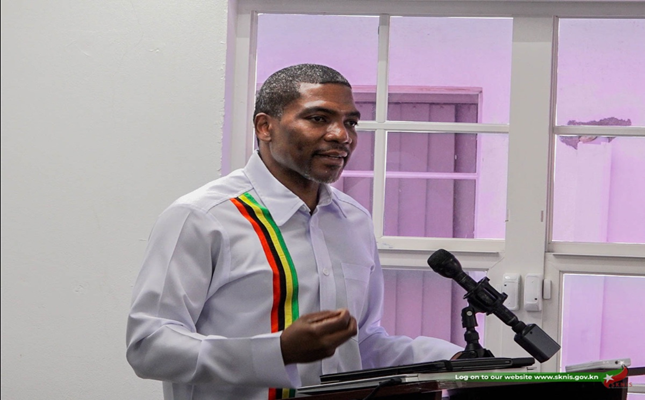
    BASSETERRE, Saint Kitts – On May 22, 2026, Prime Minister and Minister of Finance Dr. Terrance Drew used the opening of the national Youth Economic Empowerment Bureau Validation Workshop to shine a spotlight on the untapped potential of Saint Kitts and Nevis’ young population, while locking in the government’s pledge to build a supportive ecosystem for youth innovation and entrepreneurship.

    Addressing a room of stakeholders, youth leaders and workshop participants, Drew urged the federation’s young people to reject limitations imposed by the nation’s small geographic size and population, adopt a global outlook, and position themselves as active contributors to the fast-interconnected global economy. “The world is your stage, and you must see yourself as capable of competing and succeeding on that stage,” he told attendees, noting that widespread technological advancement and open access to information have opened unprecedented new pathways for young innovators to turn ideas into economic opportunity.

    Drew pointed to recent standout successes by local youth groups to illustrate just how much young people in the federation can achieve. The St. Kitts and Nevis Robotics Association, he noted, developed an electronic health record system that earned a top ranking among Caribbean innovations from the Pan American Health Organization (PAHO) – a recognition that has now translated into a major commercial contract valued at roughly 5 million Eastern Caribbean dollars. He also highlighted the Clarence Fitzroy Bryant College AI Association, which took top honors at a regional tech competition after building interactive stock market learning tools to upgrade the government’s ASPIRE Programme, expanding financial literacy access for young people across the country.

    “These accomplishments demonstrate that the youth of Saint Kitts and Nevis can compete with anyone in the region and beyond,” Drew said. “Our size does not define our potential.”

    The core focus of Friday’s workshop is refining the framework for the upcoming Youth Economic Empowerment Bureau, a new government entity designed to cut through red tape and deliver comprehensive support to young people with entrepreneurial ambitions. Once launched, the bureau will connect emerging youth business owners to critical resources: hands-on mentorship, accessible financing pathways, targeted skills training, and specialized technical support.

    The initiative is structured to help young founders meet growing demand for expanded services across Saint Kitts and Nevis, while integrating young people into fast-growing emerging sectors including sustainable tourism, modern agriculture, digital technology, and the creative orange economy. Drew emphasized that economic empowerment is not limited to scaling large enterprises, noting that small and micro-businesses are the unsung backbone of sustained national economic growth.

    “We cannot underestimate the power of small and micro businesses,” he said. “A small idea, properly supported, can transform a family, strengthen a community, and contribute to national development.”

    Friday’s validation workshop is a key part of the government’s collaborative consultative process, which will gather input from stakeholders to strengthen and fine-tune the bureau’s operating framework before it rolls out formally to the public.

  • United States Announces $8 Million in New Support for Caribbean Forensic Capabilities

    United States Announces $8 Million in New Support for Caribbean Forensic Capabilities

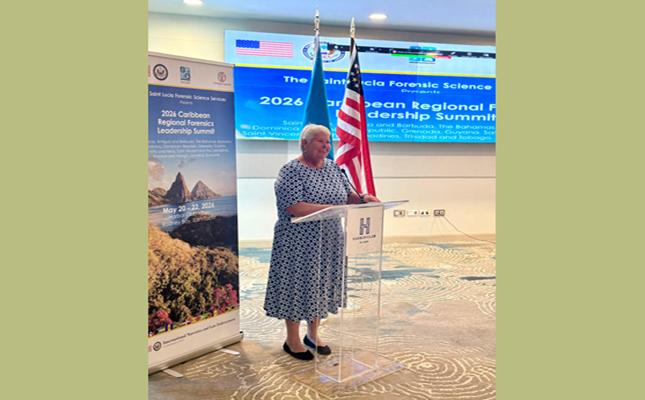
    Against a backdrop of rising transnational synthetic drug trafficking threatening Caribbean security, the United States has announced an $8 million investment in new support for regional forensic capabilities, unveiled during the second Caribbean Regional Forensic Leadership Summit held in Saint Lucia from May 20 to 22, 2026.

    This new funding package will deliver cutting-edge synthetic drug detection technology to Caribbean forensic laboratories, alongside specialized technical training for local personnel and expanded operational collaboration with the U.S. Drug Enforcement Administration (DEA). The three-day summit, hosted jointly by the Saint Lucia Forensic Science Laboratory and the U.S. Department of State under the long-standing Caribbean Basin Security Initiative (CBSI), gathered forensic leadership and security stakeholders from 14 Caribbean nations, including a delegation from the Royal St. Christopher and Nevis Police Force Forensic Services Department.

    The core objectives of the funding and summit align with shared regional priorities: upgrading local capacity to detect fentanyl and other illicit synthetic drugs, cutting persistent backlogs in forensic laboratory processing, and strengthening the quality of forensic evidence that meets admissibility standards for criminal courts prosecuting transnational organized crime groups. Beyond technical upgrades, the summit brought together forensic scientists, senior prosecutors, security agency leaders, and representatives from two key regional bodies—the Regional Security System and CARICOM IMPACS—to align strategies for deeper cross-border cooperation against evolving criminal and drug threats.

    “This partnership between the United States and Caribbean nations reflects a shared, unwavering commitment to disrupting dangerous criminal networks and countering the rapidly shifting drug threats that impact communities across our region,” noted U.S. Chargé d’Affaires Sarah Nelson in remarks during the summit.

    The event also marked two landmark milestones for regional security cooperation. Attendees launched the Caribbean Forensic Scientific Working Group, the first region-wide coordinated platform that connects Caribbean forensic practitioners directly with U.S. forensic experts to harmonize operational standards, improve evidence reporting protocols, and streamline ongoing collaborative efforts. Separately, Saint Lucia and Guyana made history as the first Caribbean countries to roll out the DEA’s Global Uniform Reporting and Drug Seizure (GUARDS) program, a standardized system for analyzing and documenting seized drug-related substances.

    The new investment builds on 16 years of security partnership under the CBSI framework. Launched in 2010, the initiative has brought together the U.S. and Caribbean nations including Saint Kitts and Nevis to systematically strengthen regional security infrastructure, disrupt drug trafficking operations, and dismantle transnational criminal organizations operating throughout the Caribbean basin.

  • CWI Congratulates Trinidad & Tobago Red Force on 2026 West Indies Championship Triumph

    CWI Congratulates Trinidad & Tobago Red Force on 2026 West Indies Championship Triumph

    ST JOHN’S, Antigua – A new chapter of regional cricket history was written at the Sir Vivian Richards Stadium this week, as Trinidad & Tobago Red Force claimed the 2026 West Indies Championship title with a clinical victory over defending champions Guyana Harpy Eagles, capping off a dominant tournament run that has ended two decades of waiting for the side.

    In the wake of the historic four-day final win, Cricket West Indies (CWI) President Dr. The Hon. Kishore Shallow has issued a formal statement of congratulations to the Red Force, praising the team for their exceptional performance across the entire tournament.

    The Red Force’s composed, determined showing in the high-stakes final secured their first regional four-day championship crown since 2006, bringing a fitting close to a stellar season for the side. Facing off against a Guyana Harpy Eagles team that entered the match as defending title holders, Trinidad & Tobago rose to the occasion to deliver a memorable victory that has resonated across Caribbean cricket circles.

    In his public message, Dr. Shallow highlighted the core qualities that drove the Red Force to success: unwavering discipline, consistent form through every round of the tournament, and remarkable resilience when facing testing match situations. He also singled out for praise the strong leadership and relentless commitment demonstrated by the entire squad and coaching staff throughout their championship campaign.

    “On behalf of Cricket West Indies, I extend heartfelt congratulations to the Trinidad and Tobago Red Force on capturing the 2026 West Indies Championship title,” Dr. Shallow said in his statement. “This achievement is a testament to the team’s hard work, preparation, and consistency throughout the season.”

    He added, “The players and management demonstrated tremendous character and professionalism, particularly in a high-pressure final against a very strong Guyana Harpy Eagles side. Their success reflects the rich cricketing tradition of Trinidad and Tobago and the continued strength of first-class cricket within the region.”

    Beyond celebrating the Red Force’s win, the CWI president also emphasized the broader value of the annual West Indies Championship, noting that regional first-class competition remains a foundational pillar for nurturing emerging talent that will go on to represent the West Indies at the international level.

    “The West Indies Championship remains a vital pillar in our cricket development pathway and continues to provide an important platform for players to sharpen their skills and compete at the highest regional level,” Dr. Shallow explained. “The quality of cricket displayed throughout the tournament is encouraging for the future of West Indies cricket.”

    Dr. Shallow also extended recognition to the Guyana Harpy Eagles for their own outstanding 2026 season, which saw them advance to the final and defend their title through a tightly contested tournament. He additionally offered sincere thanks to every participating team, match officials, regional territorial cricket boards, tournament sponsors, and fan bases that contributed to the success of this year’s edition of the championship.

    Organized cricket body CWI also joined in the expression of gratitude, acknowledging the ongoing passion and support from fans and stakeholders across the Caribbean – a foundation that continues to drive the growth and long-term success of regional first-class cricket across the region.

    This report is compiled from official CWI press materials.

  • Teen Boys Conference promotes healthy life choices

    Teen Boys Conference promotes healthy life choices

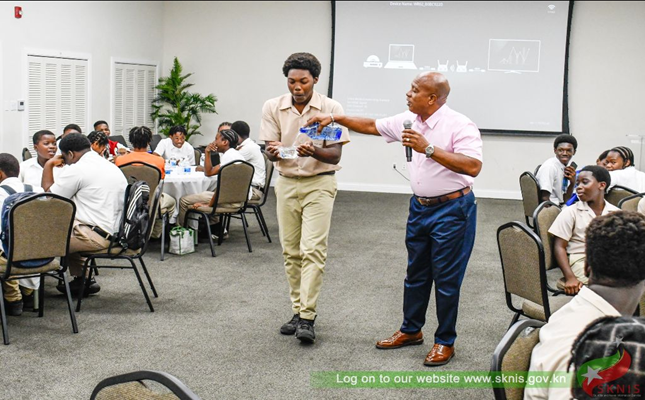
    BASSETERRE, Saint Kitts – One day ahead of its official public announcement, adolescent boys from across the Caribbean island nation gathered at the Cuna Conference Room on May 21, 2026, for a landmark youth-focused event: the Teen Boys Conference, organized by the country’s Department of Gender Affairs. Built around the ambitious, youth-centered theme “Promoting Healthy Choices, Responsible Relationships, Educational Success and Consent,” the day-long event was designed to directly address the unique developmental gaps that often leave adolescent boys without targeted guidance on critical life issues.

    Unlike traditional lecture-style youth workshops, the conference leaned into interactive, approachable programming, opening with a light, engaging practical exercise led by probation officer Lauston Percival to help participants feel comfortable sharing. Over the course of the day, a lineup of experienced speakers led dynamic discussions on high-stakes topics rarely covered comprehensively in standard school curricula: boys’ sexual and reproductive health, boundaries in healthy dating relationships, legal literacy surrounding the island’s Romeo and Juliet Clause, and the long-term impact of staying engaged in secondary education.

    Organizers intentionally structured the event to create a judgment-free, safe space, a deliberate choice that encouraged attendees to speak openly about their personal challenges and questions without fear of stigma. In his opening welcome address, Tchaikouski York, a Gender Field Officer with the Department of Gender Affairs, framed the conference as more than a one-off workshop: it is a direct fulfillment of commitments laid out in the country’s 2021 National Gender Policy and Action Plan.

    That national policy framework explicitly recognizes that adolescent boys in Saint Kitts face a unique set of gender-specific developmental barriers, particularly in the realms of educational retention and health access. It calls for expanded targeted programming that builds life skills, increases awareness of critical health and legal issues, and strengthens support systems to keep boys connected to school and empower them to make well-informed decisions for their futures. Thursday’s conference marked a key milestone in turning that policy commitment into tangible, on-the-ground support for the nation’s youth.

  • Prime Minister Drew: Political Will Is Essential to Transforming Crime Prevention Across the Caribbean

    Prime Minister Drew: Political Will Is Essential to Transforming Crime Prevention Across the Caribbean

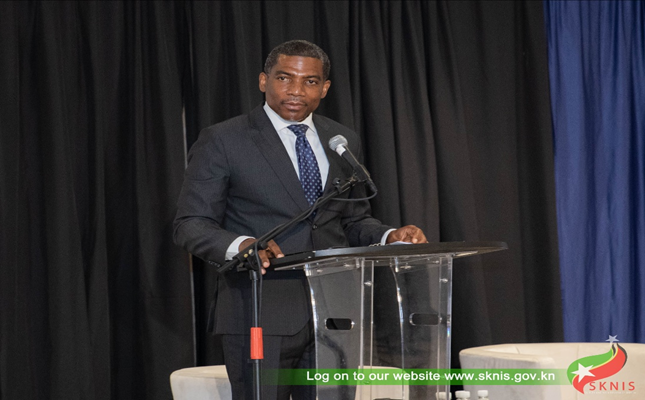
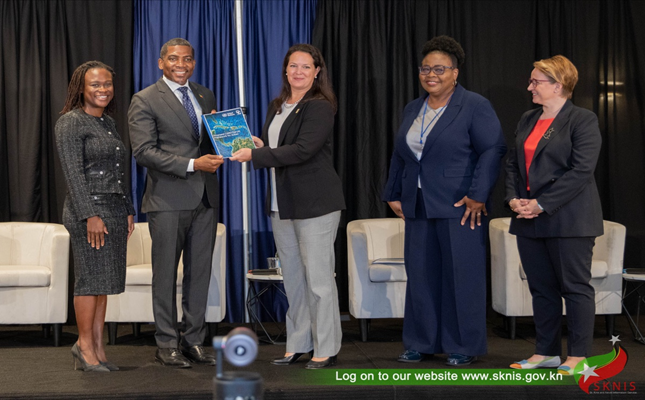
    On May 21, 2026, at the official launch of the joint CARICOM-UNDP Diagnostic Document and the CARICOM-UN Action Framework on crime reduction held in Basseterre, St. Kitts, the Prime Minister of St. Kitts and Nevis and current Chairman of the Caribbean Community (CARICOM), the Hon. Dr. Terrance Drew, delivered a keynote address that centered political commitment as the non-negotiable foundation for sustained, meaningful progress against rising crime and violence across the Caribbean region.

    In his remarks, Drew emphasized that turning ambitious crime prevention blueprints from theoretical documents into tangible, on-the-ground change depends entirely on decisive political will. “I’ve always held that nothing can really be done unless there’s political will,” Drew told attendees. “The political will is what allows us to be able to implement policies and to put whatever is necessary behind it to get it done.”

    Drew, who previously served as St. Kitts and Nevis’ Minister of National Security, explained that the greatest barrier to advancing a preventative public health-focused approach to crime is not a lack of scientific evidence supporting its effectiveness, but resistance to shifting away from the decades-old dominant narrative that frames crime exclusively as a matter for policing and punishment. Drawing from his domestic experience building support for broad-based crime reduction in St. Kitts and Nevis, he detailed the challenging but necessary cross-sector conversations required to reframe the issue.

    “Crime and violence is not a political football, it is a societal matter. It is not merely a law enforcement matter,” he said. “And if we are going to deal with a societal issue, then all of us need to be on board.”

    Drew noted that building this collective buy-in requires unprecedented collaboration across every segment of society, including ruling and opposition political actors, social service agencies, public health professionals, faith groups, educational institutions, local businesses, and regional and international partners. This collaborative, root-cause focused model matches the St. Kitts and Nevis government’s existing Citizen Security framework, which prioritizes strengthened interagency coordination, expanded social intervention programs, evidence-led policy design, and deep community partnerships. Over the past several years, the administration has increasingly centered public health, prevention, and community resilience as core pillars of both national security and broader national development.

    The Prime Minister acknowledged that elected leaders routinely face intense public pressure to deliver quick, visible crackdowns during spikes in violent crime. Even so, he argued that long-term, systemic transformation of regional security can only happen when leaders commit to addressing the underlying socioeconomic and social drivers of crime, rather than just responding to criminal activity after it occurs. He recalled that earlier leaders who attempted to champion this preventative model faced public criticism and ridicule, but noted that the approach is grounded in rigorous research, not political guesswork.

    Looking ahead, Drew expressed confidence that the expanded partnership between CARICOM and United Nations agencies marks a key turning point for the region, signaling growing consensus around evidence-based preventative crime strategies. The CARICOM Chairman reaffirmed his unwavering commitment to advancing regional cooperation on this issue, noting that the goal extends far beyond cutting crime statistics: it seeks to build stronger, more resilient communities and lift overall societal well-being across every Caribbean nation. “I really want this to be successful,” he said. “I really want to see it implemented.”

    The address was released via press release from the St. Kitts and Nevis Prime Minister’s Office and originally published by SKNVibes.com.

  • St. Kitts and Nevis’ Preventative Crime Strategy Gains Regional Attention as CARICOM–UN Partnership Advances

    St. Kitts and Nevis’ Preventative Crime Strategy Gains Regional Attention as CARICOM–UN Partnership Advances

    BASSETERRE, St. Kitts – May 21, 2026 – A community-centered, prevention-first approach to cutting crime and violence developed by St. Kitts and Nevis is gaining traction across the Caribbean, as regional and global leaders launch a new coordinated framework to advance evidence-based security policy. The official rollout of the CARICOM-UNDP Diagnostic Document and CARICOM-UN Action Framework this week placed a spotlight on the Federation’s pioneering model, which reframes public safety beyond traditional law enforcement tactics.

    Speaking to an audience of regional delegates, United Nations officials, security stakeholders and domestic partners, Prime Minister Dr. Terrance Drew, who also serves as Minister of National Security, explained the core philosophy behind his country’s strategy. Drew, a former medical doctor, says his clinical background shaped his view that crime, like a public health crisis, is best addressed by targeting root causes rather than only responding to its end-stage harms.

    “By the time law enforcement and the judicial system intervene, a person has already been pushed down a long path toward criminal activity,” Drew noted in his address. “Traditional security measures remain critical pillars of public safety, but they cannot deliver long-term change on their own. Right now, the prevention angle remains vastly under-explored across the Caribbean.”

    Drew’s administration has built its national crime reduction strategy around this principle, bringing together a cross-sector coalition of stakeholders that extends far beyond police and judicial bodies. Health practitioners, school leaders, social development agencies, community groups, political organizations, private sector leaders and security institutions all collaborate under a unified national framework to tackle the social, psychological and environmental conditions that drive criminal activity before it occurs.

    This integrated model is already operational through existing national initiatives, including the Citizen Security Secretariat (CSS), an entity focused on strengthening cross-sector partnerships and rolling out data-driven interventions to cut violence and strengthen community cohesion. All government-led public safety programs increasingly prioritize prevention, early intervention for at-risk groups and local community engagement as core pillars of the country’s broader citizen security strategy.

    The results of this approach have been dramatic, Drew reported. “After we put these preventative methods into practice, we recorded a widespread drop in crime and violence across all categories, not just major offenses. Major crime alone has fallen between 75 and 80 percent,” he said.

    These measurable outcomes have drawn growing interest from neighboring Caribbean nations, many of which have begun reaching out to St. Kitts and Nevis to study the model and adapt its core elements for their own national contexts, Drew added.

    The Prime Minister praised the new CARICOM-UN partnership, framing the launch of the new diagnostic document and regional action framework as a landmark step toward embedding preventative, evidence-based security policy across the entire Caribbean. He emphasized that coordinated regional action will amplify the impact of individual national efforts and deliver safer communities for coming generations.

    “To see CARICOM now align behind this approach, and to see the United Nations commit to such a significant, substantive partnership, gives me enormous hope,” Drew said. “I can confidently say that the next decade for Caribbean security will be far better than the last, thanks to this coordinated shift toward prevention.”

  • Wanted Jamaicans deported after being found hiding in Federation

    Wanted Jamaicans deported after being found hiding in Federation

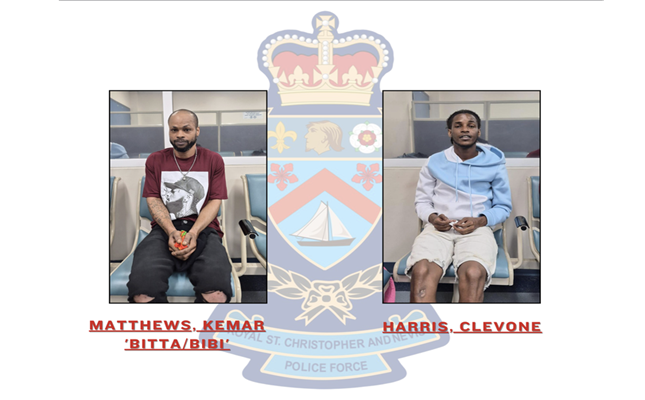
    BASSETERRE, St. Kitts — A cross-security force cooperation in the Federation of St. Kitts and Nevis has taken two high-profile Jamaican fugitives off the region’s streets, with the pair now back in Jamaica to answer for serious violent criminal charges they face at home.

    The Royal St. Christopher and Nevis Police Force (RSCNPF) confirmed the successful operation in an official media release distributed Wednesday evening, noting that law enforcement officers worked alongside the St. Kitts-Nevis Defence Force (SKNDF) to track and apprehend the two men, who had been hiding in the federation for an undisclosed period. The fugitives have been identified as Kemar Matthews and Clevone Harris.

    The joint law enforcement team captured the two suspects in two separate targeted operations carried out on May 18 and May 20, 2026, respectively. Jamaican law enforcement agencies have been actively searching for the pair, who are wanted on charges of murder and intentional wounding, according to official filings.

    In an update just 24 hours after the release of the operation announcement, police confirmed that both men completed the repatriation process and were back in Jamaican custody by 1:00 p.m. local time on May 21. At the time of publication, authorities have not released any further information about the specifics of the deportation process or additional operational details surrounding the arrest operations.

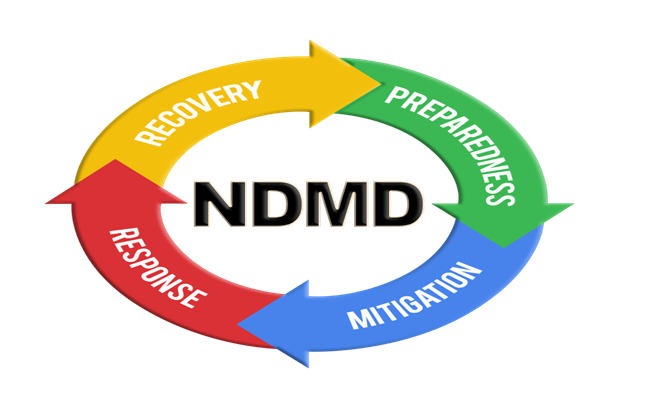
  • NDMD Partners with International Universities for Fire Simulation (THURSDAY, 21ST AT 2;00 PM)

    NDMD Partners with International Universities for Fire Simulation (THURSDAY, 21ST AT 2;00 PM)

    On May 21, 2026, the Nevis Disaster Management Department (NDMD) launched a large-scale, multi-partner fire emergency simulation exercise at Fort Charles, Nevis, codenamed “Caught by Surprise: Fire Outbreak During Camp Siesta”. The drill, held as a core hands-on component of a two-week international study abroad program focused on disaster risk reduction and emergency management, brings together local government agencies, international academic institutions and non-profit stakeholders to test and strengthen cross-sector response capacity.

    The initiative is executed in formal partnership with two U.S.-based higher education institutions — Widener University and Utah Valley University — alongside key national response bodies including St. Kitts and Nevis’ National Emergency Management Agency (NEMA), the local Ministry of Health, and the St. Kitts-Nevis Red Cross Society. The simulation is designed to replicate a plausible, high-stakes real-world scenario: an unexpected fire breaking out at a recreational camp while participants rest during the afternoon siesta period.

    Over the course of the drill, participating responders, students and volunteers are challenged to navigate a rapidly evolving crisis, testing their proficiency across a full spectrum of emergency response functions. Key competencies assessed and practiced include structured building evacuation protocols, on-site triage and treatment for burn and smoke inhalation injuries, systematic headcounts to account for missing persons, de-escalation of mass panic among camp attendees, and coordinated real-time public communication during an active emergency.

    Beyond the core fire simulation, the broader international study abroad program integrates additional hands-on training, including certified first aid and cardiopulmonary resuscitation (CPR) instruction. These supplementary modules are designed to embed foundational lifesaving skills among all participants, reinforcing long-term community-level preparedness across St. Kitts and Nevis.

    A full roster of participating stakeholders includes the local Fire and Rescue Services, national Emergency Medical Services, the Royal St. Christopher and Nevis Police Force, Alexandra Hospital, official camp leadership teams, communications specialists, participating university students, and cross-sector supporting partners. In a public advisory ahead of the drill, NDMD pre-emptively informed residents and visitors that the visible emergency activity in the Fort Charles area — including frequent emergency vehicle transit, staged casualty management, and large-scale response operations — is entirely part of the planned exercise, and urged the public not to mistake the drill for a real emergency.

    The simulation represents one key work package of the 14-day international collaborative program, which was developed jointly by NDMD and its partner universities. The program’s overarching mission is to advance applied learning in emergency management, strengthen cross-border institutional partnerships, and boost public awareness of disaster preparedness and public health safety across St. Kitts and Nevis. Through a combination of field practicums, hands-on drills, professional knowledge exchanges, and direct community engagement activities, the initiative aims to build long-term resilience that benefits both local communities and participating emergency management students from around the world.

  • Ebola remains a concern in Central Africa, as WHO declares international health emergency

    Ebola remains a concern in Central Africa, as WHO declares international health emergency

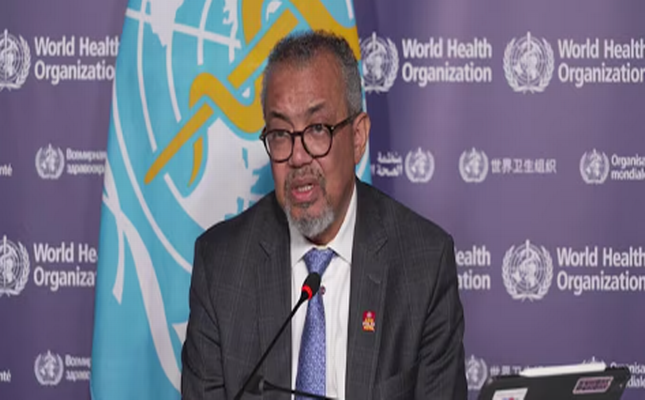
    In an unprecedented, urgent move announced Wednesday, World Health Organization Director-General Dr. Tedros Adhanom Ghebreyesus has formally designated the growing Ebola outbreak across the Democratic Republic of Congo (DRC) and Uganda as a Public Health Emergency of International Concern (PHEIC), marking the first time a WHO chief has issued this highest global alert before convening the organization’s formal Emergency Committee under international health rules.

    The declaration comes as confirmed infections, deaths, and geographic spread of the virus accelerate, with the pathogen now reaching densely populated urban centers across the two Central African nations. Speaking at a press briefing, Dr. Tedros explained the early declaration followed direct consultations with the DRC and Ugandan health ministers, and was driven by the critical need for immediate coordinated international intervention to curb the outbreak’s expansion. Officials were quick to clarify that the outbreak has not been upgraded to a pandemic emergency, the top tier of alert under the International Health Regulations (IHR), a position the WHO Emergency Committee affirmed after convening following the formal declaration.

    As of the latest update from global health authorities, 51 confirmed Ebola cases have been documented in the DRC, concentrated primarily in the conflict-stricken northern provinces of Ituri and North Kivu, including the major urban hubs of Bunia and Goma. WHO analysts warn that the actual caseload is almost certainly far higher than official counts, as the virus is believed to have been circulating undetected for weeks before the outbreak was identified. Uganda has also reported two confirmed cases, both linked to travel from the DRC, in its capital city Kampala, including one fatality. Most recently, an American citizen working in the DRC tested positive for the virus and was evacuated to Germany for specialized medical care.

    Beyond confirmed infections, nearly 600 additional suspected cases and 139 suspected deaths are currently under investigation, numbers that health officials expect to rise in the coming weeks. Multiple risk factors have deepened global concern over the outbreak. Unlike previous Ebola events, this outbreak is driven by the Bundibugyo Ebola strain, for which no widely approved vaccines or targeted treatments currently exist, leaving frontline healthcare workers with limited tools to combat the disease.

    The outbreak has already spread beyond isolated rural areas to multiple urban centers, creating conditions for far faster person-to-person transmission. Compounding this risk, ongoing transmission has been documented within healthcare facilities, resulting in infections and deaths among frontline medical staff, a dangerous sign that safety protocols in local health settings are currently insufficient to stop spread.

    Regional instability and population movement have further amplified transmission risks. Ituri province, the epicenter of the outbreak, has seen a sharp escalation of armed conflict since late 2025, with fighting over the past two months displacing more than 100,000 people. The region is also a major commercial mining hub, leading to constant cross-border and cross-regional movement of workers and residents that health experts say can quickly carry the virus to new areas.

    Currently, WHO assesses the outbreak’s risk as high at both the national and regional levels, while rating the overall global risk as low. Dr. Tedros emphasized that the confluence of dangerous risk factors left no room for delay, noting that immediate coordinated international action is required to prevent unnecessary loss of life and scale up an effective global response to the unfolding crisis.

  • Government reaffirms commitment to second chances for youth with the recommissioning of new Horizon Rehabilitation Centre

    Government reaffirms commitment to second chances for youth with the recommissioning of new Horizon Rehabilitation Centre

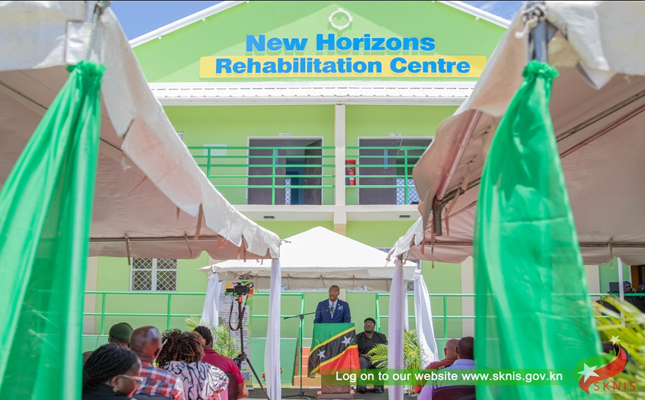
    On the Caribbean twin-island nation of Saint Kitts and Nevis, the government has formally recommissioned the upgraded New Horizon Rehabilitation Centre (NHRC) in Harris’ Village, reinforcing its longstanding pledge to prioritize rehabilitation, social reintegration, and second opportunities for young people who have come into conflict with the law. The recommissioning ceremony, held on May 20, 2026, drew government officials, community stakeholders, and local partners, with Deputy Prime Minister and Minister of Social Development Dr. Geoffrey Hanley delivering the keynote address to attendees.

    In his remarks, Dr. Hanley framed the reopening of the purpose-built facility as a landmark statement of national values, underscoring that the government and people of Saint Kitts and Nevis refuse to abandon young people facing legal and personal challenges. “By reopening the centre, we send a clear signal to courts, law enforcement, schools, local communities, and family units that we do not give up on our nation’s children,” Hanley told the gathered audience.

    The recommissioning of the NHRC is not an isolated infrastructure project, but a core component of a broader government initiative to overhaul and strengthen the country’s child justice and youth rehabilitation systems, Dr. Hanley explained. Moving forward, the administration will pursue two interconnected tracks of reform: first, rebuilding public trust and awareness of the rehabilitation centre’s mission and services, and second, advancing targeted legislative updates to strengthen national child protection and support frameworks.

    A key part of this public outreach will be a national campaign to reintroduce the centre’s work to communities across the country, to correct misperceptions and encourage collaborative support for its programming. Dr. Hanley emphasized that while the NHRC fills a critical rehabilitative role for vulnerable youth, the facility cannot replace the foundational responsibility of families and local communities in youth development. Echoing the well-known proverb that it takes a village to raise a child, he noted that modern youth support in 2026 and beyond requires consistent, active engagement from parents, guardians, and local stakeholders, not just institutional intervention.

    Dr. Hanley further announced that the Ministry of Social Development will table new legislative changes in the coming months aimed at improving cross-sector coordination for youth services, strengthening support systems for young people in contact with the law, and expanding community-based support structures for at-risk children and their families. He stressed that institutional placement at the NHRC will always remain a last resort, with prevention, early intervention, and community-centered treatment retaining top priority in the government’s youth justice strategy.

    Speaking under the ceremony’s official theme “Renewal, Restoration and Recommitment,” Dr. Hanley called on all national stakeholders and ordinary citizens to renew their shared commitment to protecting and uplifting the nation’s children. The recommissioning of the New Horizon Rehabilitation Centre, he concluded, embodies the government’s broader promise to expand accessible rehabilitation services, lift up vulnerable youth populations, and guarantee that every young person in Saint Kitts and Nevis receives the guidance, support, and opportunity to grow and build a positive future.