标签: Saint Kitts and Nevis

圣基茨和尼维斯

  • Liquor Licence Amendments to make licencing easier for small businesses

    Liquor Licence Amendments to make licencing easier for small businesses

    Basseterre, Saint Kitts – In a targeted move to support small and medium-sized local enterprises, the Government of Saint Kitts and Nevis has tabled proposed amendments to the country’s 1990s-era Liquor Licence Act, designed to streamline the often burdensome licensing and renewal process for small business owners across the federation.

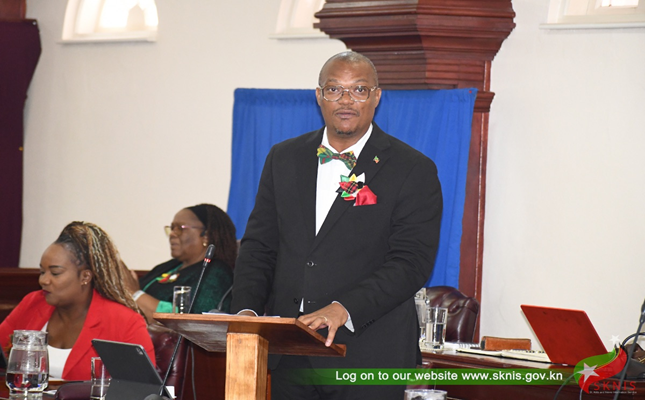
    Presenting the Liquor Licence (Amendment) Bill 2026 to the National Assembly on September 18, Acting Prime Minister Dr. Geoffrey Hanley outlined that the core goal of the legislative changes is to eliminate unnecessary administrative red tape that has disproportionately hurt small operators, including neighborhood bars, family-owned restaurants, small independent hotels, local convenience stores and other micro-enterprises that rely on alcohol sales for a significant share of their revenue.

    Under the current regulatory framework, all liquor licence holders are required to make an in-person appearance at the Magistrate’s Court every January to complete their annual licence renewal – a requirement that remains in place even when there are no public objections to renewal and no outstanding issues that require judicial review. Dr. Hanley emphasized that this mandatory court appearance carries a steep, avoidable cost for small, owner-operated businesses. “For a sole trader, a day at the Court is a day with the doors closed and a day’s takings lost,” he told lawmakers.

    The proposed reforms address two key pain points of the existing system. First, the amendments will replace the single annual January licensing sitting with four scheduled quarterly sittings held each January, April, July and October. This change eliminates the long waiting period that new businesses have previously faced: under the old rule, an entrepreneur that missed the January application window could be forced to wait nearly a full year before they could legally begin selling alcohol, delaying their business launch and cutting into potential early revenue.

    Second, for existing licence holders seeking renewal with no outstanding objections and no judicial order requiring their appearance, the amendments will remove the mandatory in-person court attendance rule. Instead, these operators will be able to collect their renewed licence directly from the Magistrate’s Court Office, skipping the need for a court appearance entirely.

    Crucially, Dr. Hanley stressed that the regulatory changes do not weaken existing public safety safeguards governing alcohol sales. All existing rules related to grounds for licence refusal, mandatory closing hours, defined offences and associated penalties remain completely unchanged. Law enforcement and members of the public also retain their full legal right to object to any new licence application or renewal request, maintaining the current system of checks on irresponsible alcohol sales.

    “This Bill is part of this government’s wider effort to make public services work for the people who use them,” Dr. Hanley said. “It saves the time of business owners. It saves the time of our Courts. And it does so without any new cost to the Treasury and without any reduction in public safety.”

    The proposed reforms were developed after months of collaborative consultation with key stakeholders, including the Office of the Chief Magistrate, the Commissioner of Police and the Ministry of National Security, to ensure the changes would function smoothly for both businesses and regulatory bodies.

    Dr. Hanley added that the amendments form one part of the government’s broader national agenda to improve the overall ease of doing business across Saint Kitts and Nevis, with a particular focus on removing barriers that hold back the growth of small and medium-sized enterprises, which form the backbone of the country’s local economy.
  • Payment Systems and Services Bill, 2026, passed in National Assembly

    Payment Systems and Services Bill, 2026, passed in National Assembly

    On September 18, 2026, the National Assembly of the Federation of Saint Kitts and Nevis approved the groundbreaking Payment Systems and Services Bill, 2026, a piece of legislation crafted to overhaul the country’s outdated legal and oversight structure for domestic payment systems and financial services.

  • Guyana Defence Force Troops to join Saint Kitts and Nevis Independence 43 Parade

    Guyana Defence Force Troops to join Saint Kitts and Nevis Independence 43 Parade

    As the Federation of Saint Kitts and Nevis prepares to mark its 43rd anniversary of independence, a special contingent of soldiers from the Guyana Defence Force (GDF) has arrived in Basseterre to take part in the milestone celebrations, marking another step forward in deepening bilateral security cooperation between the two Caribbean nations.

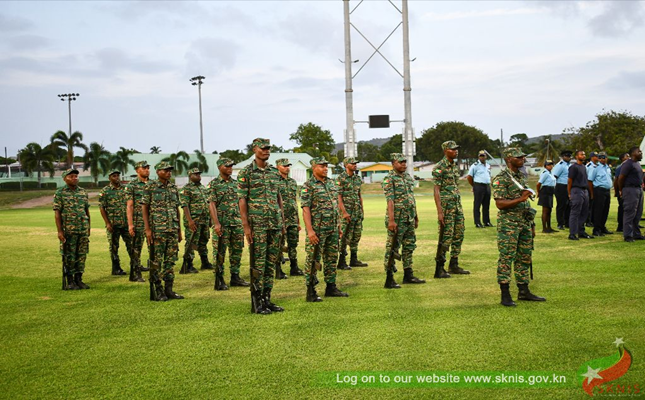
    Led by Lieutenant Darick Griffith, the GDF contingent touched down in Saint Kitts on September 16, 2026, and has since been preparing alongside their local counterparts for the main ceremonial Independence Parade scheduled for September 19. During the parade, the visiting troops will march alongside armed and unarmed units of the St. Kitts-Nevis Defence Force (SKNDF) in a show of regional solidarity.

    Major Kayode Sutton, Acting Commander of the SKNDF, extended a warm official welcome to the GDF delegation. He highlighted that the upcoming joint participation in the parade is made possible by a Memorandum of Understanding (MOU) focused on Non-Lethal Defence and Security Cooperation, which was signed between the two defense forces in April 2025. This agreement laid the groundwork for expanded collaborative engagements between the two military institutions.

    “Having the Guyana Defence Force join us for this year’s independence celebrations is a truly meaningful moment,” Major Sutton shared in a statement. “The relationship between Guyana and Saint Kitts and Nevis will only emerge stronger from this exchange.”

    Public anticipation for the parade has been building, with local residents traditionally showing great enthusiasm for the participation of visiting military contingents in the annual celebrations. Rehearsals held at Warner Park on Thursday demonstrated just how well integrated the GDF contingent has become with their local counterparts.

    “The seamless coordination we saw during rehearsals shows just how aligned our training programs are,” Major Sutton explained. “The drill procedures we follow here in Saint Kitts and Nevis are identical to those used by the GDF in Guyana.” He added that the visiting contingent is eager to take the parade route at 6 p.m. on Saturday at Warner Park, and that he looks forward to a high-profile, successful ceremony.

    The MOU, which was negotiated under the leadership of Saint Kitts and Nevis Prime Minister and Minister of National Security, the Honourable Dr. Terrance Drew, opens the door to a wide range of collaborative activities beyond ceremonial parades. These include joint training exercises, personnel exchange programs, technology sharing, mentorship initiatives, and other capacity-building efforts. In addition to the defense forces, other Saint Kitts and Nevis national security agencies, including law enforcement units and border protection teams, will also benefit from the cooperation framework established by the agreement.

    During their stay in the Federation, GDF soldiers will take part in a series of routine joint engagements with SKNDF personnel before returning to Guyana early next week. This year’s 43rd Independence Anniversary celebrations are being held under the unifying theme “One People, One Vision, Endless Possibility, Independence 43.”

  • Premier of Nevis, the Honourable Mark A. G. Brantley Address on the Occasion of Independence 43

    Premier of Nevis, the Honourable Mark A. G. Brantley Address on the Occasion of Independence 43

    On September 19, 2026, as the Federation of St. Kitts and Nevis marked the 43rd anniversary of its independence from colonial rule, Nevis Premier and Leader of the Opposition Mark A. G. Brantley delivered a reflective, forward-looking address to the nation’s citizens, residents and friends.

    Opening his remarks, Brantley framed the day not only as a celebration but a tribute to the generations of people who built the nation’s freedom: from the struggles of enslaved people to the sacrifice of independence leaders who secured the right to self-governance. “Today is the anniversary of our people’s remarkable journey from colonialism to political freedom, a sacred journey of resilience and sacrifice, a journey of pride and success,” he said.

    This year’s independence theme, “One People, One Vision, Endless Possibility: Independence 43,” is more than a celebratory slogan, Brantley emphasized. It is a call to action. While the federation is home to people with diverse backgrounds, experiences and views, he argued that intentional national unity is the only path to overcoming shared challenges and unlocking the country’s full potential.

    Brantley reminded the public that independence is not a static historical achievement to be inherited, but a living project that each generation must build upon. True independence, he argued, rests on core values: discipline, diligence, mutual responsibility, and collective commitment to nation-building. He called on all members of society to set aside division, anger and hostility, and join in the incremental, intergenerational work of strengthening the federation, writing a new national chapter defined by unity, peace and mutual understanding.

    Against the backdrop of traditional independence celebrations—including public displays of national symbols, parades and cultural showcases—Brantley challenged citizens to move beyond passive or performative patriotism. True love of country, he said, is demonstrated through active civic engagement, community service and accountable participation in national life. It requires committing to a collective purpose greater than individual self-interest, following the example of forebears who fought for freedom not for their own gain, but for future generations. True patriotism fosters hope and optimism rather than fear and cynicism, rooted in the belief that the work of today will build a brighter future for tomorrow’s citizens, Brantley added.

    Reflecting on 43 years of self-governance, Brantley highlighted progress and achievement across nearly every sector of national life, from sports and academia to business, agriculture, culture and innovation. He outlined four core pillars of the nation’s 43-year legacy: consistent celebration of nationhood with pride and dignity; a national flag that unites citizens through shared identity and belonging; unwavering commitment to the rule of law and democratic governance; and the steady building of a nation bound by one people, one vision, one shared destiny.

    The nation’s 43-year journey has not been without hardship, Brantley acknowledged. St. Kitts and Nevis has endured natural disasters, global public health crises, economic downturns and persistent social challenges. Through every trial, however, the country’s resilience has been its defining strength. “Our nation has, at times, bent but never broken, we have never surrendered, we have always persevered and prevailed,” he said.

    Looking ahead, Brantley stressed that the future is not guaranteed, and independence carries responsibilities as well as benefits. It falls to all current citizens to protect the nation’s founding values, cultivate prosperity, and build a stronger St. Kitts and Nevis for coming generations. He issued a targeted call to action across all segments of society: urging young people to step forward as innovative creators; calling on civil society to serve as an active bridge between communities and government; encouraging local communities to organize around shared purpose rather than division; and challenging leaders to prioritize honorable, humble, and integrity-driven service over political office-seeking.

    Brantley closed by calling on the nation to reaffirm its commitment to the core ideals of independence: dignity, equality, unity, and dedicated service. He asked that this year’s anniversary serve as a turning point, where the nation chooses construction over destruction, progress over retreat, and inclusion over exclusion. “May this Independence Day be more than just a date on the calendar or a single moment in our history, but may it be for all of us, a living promise of shared responsibility and continuous commitment to the development and prosperity of our country,” he said. He ended with a blessing for all residents and families, and a benediction for the ongoing prosperity of the Federation of St. Kitts and Nevis.

  • HH the Amir sends congratulations to Governor-General of Saint Kitts and Nevis

    HH the Amir sends congratulations to Governor-General of Saint Kitts and Nevis

    In a formal diplomatic gesture released on September 19, 2026, His Highness Sheikh Tamim bin Hamad Al-Thani, the Amir of Qatar, has extended official congratulations to Marcella Althea Liburd, Governor-General of the Federation of Saint Kitts and Nevis, to mark the Caribbean nation’s annual Independence Day celebration.

    The message, transmitted via official cable through Qatar News Agency from Qatar’s capital Doha, reaffirms the ongoing commitment to peaceful bilateral engagement between the two sovereign states. Diplomatic exchanges of this nature are a standard cornerstone of international statecraft, serving to reinforce mutual respect and people-to-people connections between Qatar and Saint Kitts and Nevis.

    This announcement comes alongside other concurrent Qatari public news items covering national participation in the upcoming Asian Games and regional Gulf Cup football tournaments, highlighting the country’s active engagement across diplomatic, sporting, and regional spheres in this period.

  • Shafaq News..Iraq drawn with Egypt in FIFA U-15 World Cup

    Shafaq News..Iraq drawn with Egypt in FIFA U-15 World Cup

    The international youth football landscape is set to welcome a groundbreaking new competition next month, with Iraq learning its group stage opponents for the first-ever FIFA U-15 World Cup and Festival, hosted in Azerbaijan. When the draw was finalized, Iraq was placed in Group S, where it will face off against Egypt, the Cayman Islands, Macau, Saint Kitts and Nevis, and Trinidad and Tobago ahead of the tournament kickoff in Baku.

    Scheduled to run in late October, the historic tournament brings together 191 member associations from across the globe, competing in an innovative 8-versus-8 match format that sets it apart from traditional senior and youth FIFA events. Unlike conventional knockout or single-tier competition structures, the new tournament uses a performance-based tier system after the initial group stage: all teams are sorted into six separate tiers matching their group-stage results, with the top side in the highest Tier A claiming the inaugural world championship title.

    Match regulations for the youth-focused event are tailored to young players’ development, with each contest split into two 20-minute halves. Every team will compete in four to five group-stage matches before advancing to their respective performance tier, where they will play an additional four to five games to determine final rankings.

    In preparation for the tournament, the Iraq Football Association finalized its technical and administrative leadership for the under-15 side just one day before the draw. The federation announced the appointment of Safwan Abdul Ghani as head coach of the national U-15 squad. Alongside Abdul Ghani, Karim Allawi will take on dual roles as team supervisor and safety and security officer, Ismail Mohammed will serve as administrative manager, and Alaa Kati has been named goalkeeping coach for the delegation.

    FIFA selected Azerbaijan as the host nation for this maiden edition of the U-15 competition back in June. The tournament was specifically developed by global football’s governing body to expand accessible international competitive opportunities for youth development programs across all of its member associations, prioritizing growth and participation for emerging young talent worldwide.

  • St Brice: Give young people real say in climate decisions

    St Brice: Give young people real say in climate decisions

    On a Wednesday morning at Rodney Bay’s Bay Gardens Hotel, a prominent young climate leader from Saint Lucia made a forceful call to redefine how young people are included in global and regional climate action, arguing that token representation at decision-making tables is no longer acceptable. Kezia St Brice, president of the regional youth organization Climate and Health Action for the Rising Generation (CHARGE), delivered her remarks during the official launch of a new UNICEF-commissioned report, the *Child-Centered Climate Analysis for Building Resilience*, which focuses on climate vulnerability across six Eastern Caribbean nations: Barbados, Dominica, Grenada, St Kitts and Nevis, Saint Lucia, and St Vincent and the Grenadines.

    St Brice pushed back against the common practice of inviting young stakeholders to climate discussions only after major policy decisions have already been finalized, emphasizing that young people are already navigating the daily harms of climate change and actively developing community-level solutions. “They must be part of the conversations from the start. Our responsibility is to ensure that the participation is meaningful, not just a seat at the table, but a voice at the table, not just a voice, but influence, and not just influence, but action,” she told attendees. Unlike older generations that have contributed most to greenhouse gas emissions but will not live with the long-term impacts, young people are already bearing the brunt of climate breakdown today, she noted.

    Across Eastern Caribbean communities, St Brice pointed out, young people are already leading the way: organizing local climate action campaigns, educating their peers about climate risks, designing context-appropriate solutions, and holding decision-makers accountable by asking tough questions that older leaders often avoid.

    The youth advocate also highlighted that children and young people experience climate disasters differently than adults, with impacts that extend far beyond the immediate event itself. A single flood, for example, can force students to miss days or even weeks of school; a hurricane-damaged home can leave families displaced; disrupted local livelihoods can push households into food insecurity; and repeated climate shocks erode children’s long-term sense of safety, harm their educational progress, limit future opportunities, and shape the trajectory of their entire lives. These disparities, she argued, mean climate action cannot be separated from conversations about global development, equitable opportunity, and intergenerational justice. “The child who has the least ability to influence a climate crisis can often be amongst those who experience its greatest consequences,” she said.

    The landmark UNICEF report underscores this vulnerability: its analysis finds that more than one-third of all children, schools, and healthcare facilities across the six study countries are already located in zones exposed to at least three separate climate hazards, including hurricanes, flooding, and sea-level rise. By the middle of the 21st century, that share is projected to grow dramatically as climate change accelerates. To address this growing risk, the report outlines a framework for action across four core priority areas: anticipatory pre-disaster action, shock-responsive social protection systems to support vulnerable families after disasters, structural investments in long-term community resilience, and systemic fiscal transformation to fund climate adaptation.

    For small island developing states like those in the Eastern Caribbean, which are on the frontlines of climate change despite contributing almost nothing to global emissions, resilience cannot be an afterthought added to policy plans at the last minute, St Brice stressed. Instead, it must be embedded into every level of governance, community planning, public investment, education systems, and national development strategy. She also pushed back against the misconception that proactive climate preparedness is a form of defeatism. “Preparedness is not pessimism,” she said. “Preparing our young people for climate-related challenges does not mean we are giving up on their future. It means we believe their future is worth protecting.”

    With the report now published, St Brice emphasized that tangible action must follow, warning that data and recommendations on a page cannot deliver real change on their own. “A report cannot strengthen a school. A statistic cannot feed a family after a disaster. A recommendation cannot protect a child unless it is translated into action,” she said. She went on to challenge regional governments and global stakeholders to turn the report’s findings into policy, rather than letting it collect dust on a shelf. “Will this study sit on a shelf? Or will it sit at the table when policies are developed, budgets are prepared, programmes are designed, and decisions are being made?” she asked. “The greatest value of this work will not be measured by the number of pages in the reports. It will be measured by what we do with what we have learned.”

    Shifting focus to long-term impact, St Brice noted that climate action must center on empowering the next generation, not just preparing for the next storm. “What can we teach today that will empower a young person to become part of the solution tomorrow?” she asked. Following the official launch of the report, UNICEF and the Caribbean Disaster Emergency Management Agency (CDEMA) hosted a two-day workshop for regional journalists, designed to strengthen media coverage of climate change, disaster risk, and the specific impacts of these crises on children.

  • Dwayne Bravo, Ian Bishop inducted into Republic Bank CPL Hall of Fame

    Dwayne Bravo, Ian Bishop inducted into Republic Bank CPL Hall of Fame

    The Caribbean Premier League (CPL), sponsored by Republic Bank, has marked a historic milestone for the T20 cricket competition with the launch of its official Hall of Fame, welcoming two of West Indies cricket’s most recognizable figures as the first honorees. In a celebratory gala dinner hosted at the Hilton Barbados on September 15, 2026, Dwayne Bravo and Ian Bishop were formally inducted into the elite group, capping decades of transformative contributions to the regional tournament.

    Bravo, a star all-rounder who became a fan favorite across the league’s history, received the inaugural Sir Garry Sobers Award, the highest honor of the new Hall of Fame, reserved for playing inductees. The award itself carries deep legacy: it is named for Sir Garry Sobers, the West Indian cricket icon universally hailed as the greatest all-rounder in the sport’s history, and bears his name with formal approval from the Sobers family. The award was presented to Bravo by Daniel Sobers, representing the legendary cricketer’s family.

    Over his celebrated CPL playing career, Bravo earned his place among the tournament’s greats. He retired from competitive play having claimed 129 wickets, and lifted five CPL championship titles as a player with the Trinbago Knight Riders. He added a sixth title to his collection just one year prior, in 2025, when he led the side to victory as head coach.

    The second inaugural inductee, Ian Bishop, was honored in the non-playing category, in recognition of his decades of work behind the microphone as one of cricket’s most beloved commentators. Bishop has been a core part of CPL’s broadcast team since the tournament’s very first edition launched in 2013, and his distinctive insight and passionate delivery have helped bring the league’s signature “Biggest Party in Sport” atmosphere to millions of cricket fans across the Caribbean and the entire globe. Today, he is widely regarded as one of the most respected voices in international cricket commentary.

    In remarks from the ceremony, CPL CEO Pete Russell spoke to the significance of the two inductions, noting that the Hall of Fame was created specifically to honor contributors of the caliber of Bravo and Bishop. “Their contribution to this competition, on the field and behind the microphone, has helped build CPL into the phenomenon it is today, and it was a privilege to welcome them into this inaugural class,” Russell said.

    Beyond the inductions, the gala night also served a charitable purpose: the event supported prostate cancer awareness programming run by the Sir Clive Lloyd Healthcare Foundation. Looking ahead, the CPL has confirmed that two new inductees will be added to the Hall of Fame each year, building on the legacy established by Bravo and Bishop. As the league continues to expand its reach across the Caribbean and grow its profile as one of the top T20 competitions on the global cricket calendar, the Hall of Fame will stand as a permanent tribute to the athletes and personalities who have shaped its success.

  • Shadab hat-trick downs Warriors

    Shadab hat-trick downs Warriors

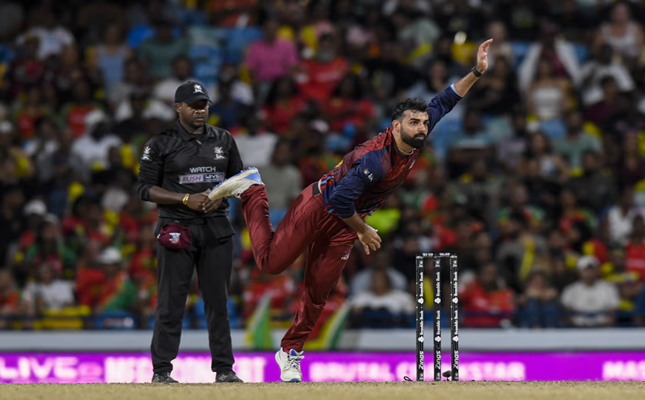
    On September 17, 2026, Antigua & Barbuda Falcons etched their name into Caribbean Premier League (CPL) history, becoming the first side to secure a spot in this year’s Republic Bank CPL title decider after a blistering nine-wicket demolition of Guyana Amazon Warriors at Bridgetown’s Kensington Oval. The lopsided result marks the second-fastest victory in the tournament’s 13-year history, a win fueled by a devastating collective bowling performance that saw Pakistan star Shadab Khan claim a stunning hat-trick, with fellow spinner Sufyan Moqim picking up four wickets of his own to bowl the Warriors out for a paltry 76 all out. A brutal 16-ball 49 from all-rounder Rahkeem Cornwall extinguished any hope of a last-minute Guyana comeback, capping off what observers have already dubbed the performance of the 2026 tournament.

    Falcons skipper won the toss and opted to put the Warriors in to bat, a strategic call aligned with recent pitch trends at Kensington Oval, where batting conditions have consistently improved as matches progress, making preserving wickets a higher priority than piling on early runs. The Warriors appeared to execute the plan perfectly through the mandatory PowerPlay, reaching 34 for the loss of just one wicket, leaving many expecting a competitive middle-order batting display to build a challenging total.

    That narrative collapsed almost immediately after the first six overs, as the Falcons’ high-quality spin attack – the core of their success through this tournament – clicked into gear. Moqim drew loose shots from top-order batters Glenn Phillips and Mohammad Haris first: Phillips failed to generate enough power on a heave to deep mid-wicket and was caught, while Haris feathered a thin edge through to wicket-keeper Amir Jangoo and walked off without waiting for the umpire’s decision.

    Moqim’s breakthrough turned the match over to Shadab, who delivered one of the most iconic spells in CPL history in just his second over. The leg-spinner unleashed three consecutive perfectly disguised googlies to rip through the Warriors’ middle order, claiming a hat-trick that left the opposition reeling. First, Shimron Hetmyer miscued a drive straight to long on. Next, Mehidy Hasan Miraz was trapped leg before wicket, with the on-field decision standing firm after a review. The final, clinical delivery beat Quentin Sampson all ends up, crashing through his defences to clip the top of off-stump, triggering wild celebrations from the Falcons’ fielders. In the space of six deliveries, the Warriors had collapsed to 45 for 6, their tournament prospects in tatters.

    The wickets kept tumbling as Moqim returned to the attack in the following over, picking up two more: Khary Pierre was bowled, while Shai Hope fell LBW, leaving the Warriors adrift. Shadab picked up his fourth wicket shortly after, with veteran spinner Imran Tahir departing for a single run, leaving just the lower order to offer resistance. A late flurry from Romario Shepherd, who hit two crisp boundaries, offered only a brief distraction, as Shamar Springer wrapped up the innings to leave the Warriors all out for 76, setting the Falcons just 77 to win for a place in the final.

    If the Falcons’ bowling was dominant, their batting was ruthless from the first delivery. Rahkeem Cornwall came out swinging, refusing to let the Warriors build any pressure. Even with captain Imran Tahir turning to spin to slow the run rate, Cornwall carved through the attack, treating Tahir, Miraz and Pierre to a sequence of powerful, perfectly placed shots through the PowerPlay. The all-rounder raced towards the fastest half-century in CPL history, just one run short of Andre Russell’s record after only 14 balls, before falling just short, caught by Hetmyer off Tahir’s bowling for 49. His devastating innings had already done the damage, leaving openers Evin Lewis and Amir Jangoo needing just 27 more runs to win with nine wickets in hand.

    Lewis, who had ceded most of the strike to Cornwall through the early innings, picked up right where his teammate left off. Playing through cramp, the experienced opener hammered 21 runs off just six deliveries from pace bowler Shamar Joseph after a bowling change. Jangoo chipped in with a single boundary off four deliveries, before Lewis hit the winning runs in just the 32nd over of the chase, wrapping up one of the most dominant wins in CPL playoff history.

    With the victory, the Falcons will enter Sunday’s 2026 CPL final in devastating form, still waiting to learn who their opponent will be. For the Guyana Amazon Warriors, the defeat means they face a do-or-die knockout match against the Kingsmen in the final eliminator on Saturday night, with the winner earning the right to face the Falcons for the CPL crown.

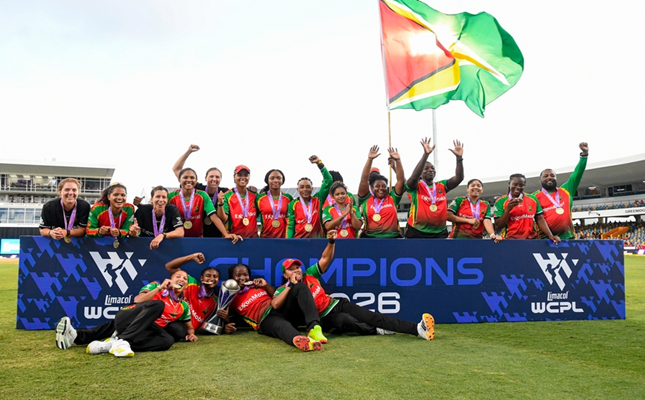
  • Breaking: Guyana Amazon Warriors Women win maiden WCPL title

    Breaking: Guyana Amazon Warriors Women win maiden WCPL title

    At Bridgetown’s iconic Kensington Oval on Thursday, 17 September 2026, the Guyana Amazon Warriors Women etched their name in Women’s Caribbean Premier League (WCPL) history, claiming their first-ever league title with a heart-stopping two-wicket win over defending contenders Trinbago Knight Riders Women.

    Deandra Dottin, captain of the Trinbago Knight Riders (TKR), won the toss on a sun-bathed afternoon and opted to set a target, a decision that looked to have paid off for most of the match. TKR’s innings was anchored by debutant Sushma Verma, who top-scored with a steady 39 runs to build a solid platform for the batting side. Late-order contributions from Marizanne Kapp and Shikha Pandey injected momentum in the final overs, lifting TKR to a competitive total of 145 for 6 at the close of their innings. For the Amazon Warriors, seamer Shabnim Ismail claimed two key wickets, while Shamilia Connell delivered a disciplined, economical spell of four overs that restricted the run rate, finishing with 1 for 18. Dottin, off-spinner Karishma Ramharack, and Pandey each picked up two wickets for TKR in their turn to defend, putting the Guyana side under intense pressure early in the chase.

    The Amazon Warriors’ run chase started disastrously, with their top order collapsing against TKR’s sharp bowling attack by the 10-over mark. Star batter Tazmin Brits made just 22, while Shemaine Campbelle added only 9, both falling among the first five wickets to leave the side reeling. By the 13th over, the situation looked all but hopeless: Guyana was 71 for 6, still requiring a daunting 74 runs from just 46 deliveries to claim the title.

    That was when Cheddean Nation, batting at number eight and only taking the crease for the second time all season, produced one of the most remarkable comeback knocks in WCPL final history. Joined by captain Chloe Tryon, the pair launched a ferocious counterattack that turned the tide of the match completely. They piled on 40 runs from only 23 deliveries, swinging momentum firmly back to the Guyana side before Tryon was bowled by Laura Harris for 32 in the 17th over. When Sheneta Grimmond fell for 10 in the 19th over, TKR reclaimed the upper hand, leaving the Warriors needing 16 runs from the final nine balls.

    Nation remained unflappable, taking on both Pandey and Ramharack to pick off the remaining required runs. She finished unbeaten on a sensational 39 off just 21 deliveries, including four towering sixes, to guide the Warriors across the finish line at 149 for 8 with three full balls to spare. The win marks Guyana Amazon Warriors Women’s first WCPL title, after the side fell just short in final appearances in both 2023 and 2025, turning their years of near-misses into a historic championship win.