标签: Saint Kitts and Nevis

圣基茨和尼维斯

  • Federation’s Human Rights Record to be spotlighted next week

    Federation’s Human Rights Record to be spotlighted next week

    The Federation of St. Kitts and Nevis is poised for international human rights examination as Attorney General Garth Wilkin prepares to present the nation’s human rights record before the United Nations on January 27, 2026. This appearance marks a significant moment in the country’s ongoing engagement with global human rights mechanisms.

    Among thirteen jurisdictions scheduled for assessment next week, St. Kitts and Nevis will undergo scrutiny through the UN Human Rights Council’s Universal Periodic Review (UPR) process. The evaluation will be conducted by the UPR Working Group during sessions at the UN’s Geneva headquarters, representing the fourth such examination for the Caribbean nation since the process began.

    The UPR mechanism employs a comprehensive three-document foundation for its assessments: an official national report submitted by the state under review; compiled information from independent human rights experts, special procedures, treaty bodies, and various UN entities; and substantive contributions from diverse stakeholders including national human rights institutions, regional organizations, and civil society groups.

    Historical data reveals this constitutes the Federation’s fourth UPR cycle, with previous evaluations occurring in January 2011, November 2015, and most recently in January 2021. The available documentation forming the basis for next week’s review has been made accessible to the public through official United Nations channels, ensuring transparency throughout the process.

    The upcoming review represents both a procedural obligation and an opportunity for the Federation to demonstrate its human rights advancements while receiving constructive feedback from the international community on areas requiring further development.

  • UN urges governments to prioritise education funding on International Education Day

    UN urges governments to prioritise education funding on International Education Day

    In a powerful address marking International Education Day, UN Secretary-General António Guterres issued an urgent call for governments worldwide to elevate education funding as a paramount priority in national budgets and development agendas. The January 23rd observance highlighted education’s critical role as both a fundamental human right and essential catalyst for opportunity, dignity, and global peace.

    Guterres revealed startling statistics indicating that over 200 million children and youth remain excluded from educational systems due to intersecting crises of poverty, discrimination, conflict, displacement, and natural disasters. He emphasized that closing persistent gaps in financing, access, and educational quality requires immediate coordinated action from governments, international partners, and donors.

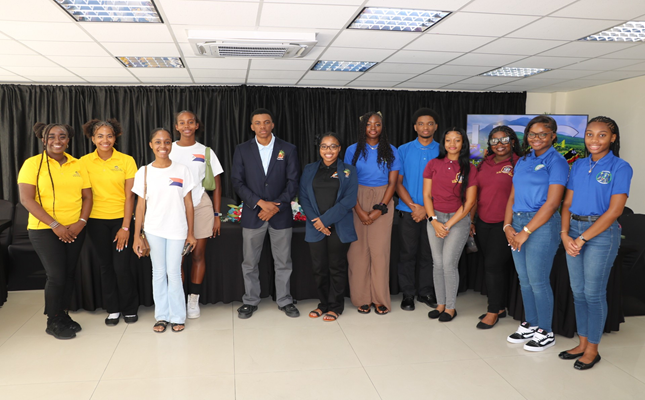
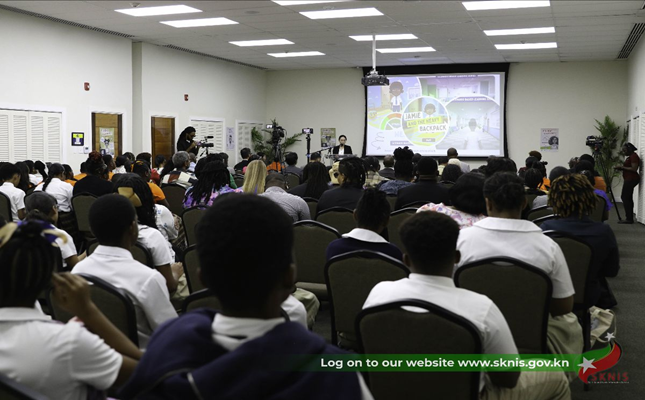
    Parallel developments emerged from the Caribbean region, where the Caribbean Development Bank convened a youth symposium addressing regional educational challenges. Participants identified three critical areas demanding urgent intervention: intelligent integration of technology in learning environments, mandatory implementation of Technical and Vocational Education and Training (TVET) programs, and strengthened collaboration among families, educational institutions, and communities.

    A significant generational divide surfaced regarding technological adoption, with students reporting that many educators and parents lack digital literacy, resulting in excessively restrictive technology policies. Symposium recommendations included comprehensive digital literacy programs for adults to facilitate more effective, safe, and responsible technology use in education.

    Youth representatives particularly emphasized the necessity for practical, hands-on learning experiences, advocating for TVET to become compulsory throughout Caribbean educational systems. They argued that these skills provide essential preparation for future economic success despite not being widely integrated into current curricula.

    Guterres specifically highlighted the importance of incorporating youth perspectives in policy formation, stating: ‘We particularly need to listen to the voices of young people themselves, and act on their pleas for qualified teachers, relevant skills training for a changing world, and equitable access to technology.’ His concluding appeal urged global collaboration to ‘build inclusive, resilient and innovative education systems for all people.’

  • UWI Rises in Global Rankings

    UWI Rises in Global Rankings

    The University of the West Indies (UWI) has commenced 2026 with a remarkable achievement in global academic standing. According to the recently released Times Higher Education World University Rankings 2026, the institution has significantly advanced its position among the world’s premier higher education establishments.

    The prestigious ranking system, which evaluates universities across multiple performance indicators including teaching excellence, research output, knowledge dissemination, and international engagement, assessed over 33,000 institutions worldwide. Only 2,191 universities from 115 countries met the rigorous qualification standards for ranking. UWI’s latest placement positions it within the top 3.6% of global higher education institutions, demonstrating consistent improvement despite increasing global competition.

    Vice-Chancellor Professor Sir Hilary Beckles attributed this success to the university’s strategic adherence to its development plan. “Our unwavering commitment to the strategic framework has proven instrumental in enhancing our intellectual productivity, academic reputation, and global partnership network,” Beckles stated. “These ranking results reflect the tangible outcomes of our substantial collective efforts.”

    The improved ranking follows documented enhancements in research quality across UWI’s academic departments. Faculty members have achieved greater recognition for their publications and scholarly presentations, contributing to elevated citation metrics and academic influence. The university has also strengthened its international perspective through expanded global collaborations, participation in elite intellectual networks, and increased impact on regional and global research environments.

    UWI’s growing prestige spans multiple disciplines including climate change research, public health initiatives, cultural studies, economic development analysis, and social justice advocacy. The institution continues to demonstrate exceptional academic performance despite operating within considerable financial constraints.

    Looking toward the future, Professor Beckles expressed pride in what he described as an “inter-generational achievement” as the university approaches its centennial anniversary in 2048.

  • UNDP Engagement Highlights St. Kitts and Nevis as Regional Leader in Crime Prevention

    UNDP Engagement Highlights St. Kitts and Nevis as Regional Leader in Crime Prevention

    BASSETERRE, St. Kitts – The Federation of St. Kitts and Nevis has gained significant international recognition for its innovative public health-oriented strategy in combating crime and violence. This acknowledgment follows high-level discussions between the nation’s Citizen Security Task Force and representatives from the United Nations Development Programme (UNDP).

    The dialogue occurred during the Task Force’s inaugural 2026 meeting, presided over by Prime Minister Dr. Terrance Drew. This meeting coincided with a UNDP assessment mission evaluating how the Federation’s prevention-focused framework could serve as a blueprint for broader Caribbean regional initiatives against criminal activities.

    Established in 2024, the Citizen Security Task Force has implemented a comprehensive societal approach that integrates law enforcement agencies, educational institutions, youth advocates, government officials, business leaders, and religious organizations. This collaborative model addresses crime fundamentally as both a public health concern and social development challenge rather than purely a law enforcement matter.

    The results have been transformative: the Federation has witnessed a remarkable 76% reduction in homicides, achieving single-digit homicide rates for the first time in more than twenty years.

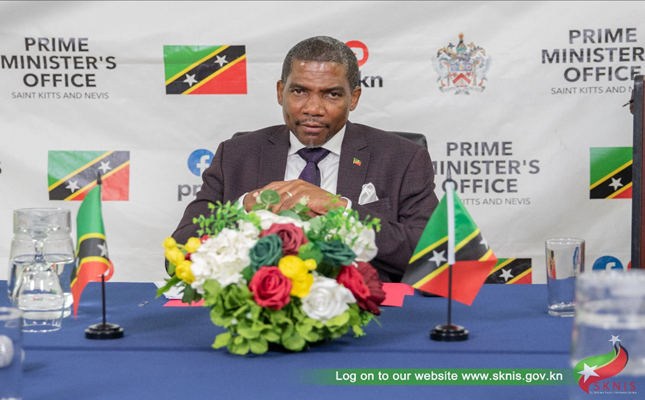
    Prime Minister Drew emphasized that international attention validates both the model’s effectiveness and the collective national effort behind its success. “Today’s recognition celebrates a novel and thoughtful methodology toward citizen security,” stated Dr. Drew. “This approach conceptualizes crime and violence not merely through a law enforcement lens but as multidimensional public health and social challenges. The credit belongs to the people of St. Kitts and Nevis who partnered with government, embraced prevention, and took ownership of their safety.”

    The Prime Minister further noted that the model’s expanding influence creates opportunities for regional impact. “We take pride that our progress can now help shape solutions throughout the Caribbean. If our experience can assist other nations in enhancing safety, resilience, and social stability, that represents a contribution we are honored to make,” he affirmed.

    Eartha Carey, Coordinator of the Citizen Security Secretariat, indicated that UNDP’s engagement reinforces the importance of maintaining momentum throughout 2026. “This international interest confirms that prevention strategies work when communities are actively engaged and properly supported,” Carey observed. “Our current focus involves deepening outreach efforts, strengthening partnerships, and ensuring that achieved progress becomes sustainable long-term.”

    UNDP officials have suggested that St. Kitts and Nevis’ methodology could significantly influence discussions surrounding a proposed Regional Action Plan addressing crime and violence as public health issues. This development aligns with Caribbean leaders’ continued prioritization of prevention mechanisms, social investment, and regional cooperation frameworks.

    The Government of St. Kitts and Nevis reaffirms its commitment to enhancing citizen security through evidence-based policies, community involvement, and international collaboration, with the ultimate objective of ensuring safety and security for all citizens, residents, and visitors.

  • The human rights record of Saint Kitts and Nevis to be examined by Universal Periodic Review

    The human rights record of Saint Kitts and Nevis to be examined by Universal Periodic Review

    The United Nations Human Rights Council will conduct its fourth comprehensive assessment of Saint Kitts and Nevis’s human rights record through the Universal Periodic Review (UPR) process. Scheduled for January 27, 2026, from 09:00 to 12:30 GMT+1 in Geneva, the examination will be publicly webcast from the Palais des Nations Assembly Hall.

    This review places the Caribbean nation among 13 states undergoing evaluation during the January 19-30, 2026 session. The previous assessments occurred in January 2011, November 2015, and January 2021, establishing a consistent pattern of international human rights monitoring.

    The UPR Working Group, comprising all 47 Human Rights Council member states, will evaluate Saint Kitts and Nevis based on three primary documentation sources: the national report submitted by the government, independent assessments from UN human rights experts and treaty bodies, and supplementary information from civil society organizations and national human rights institutions.

    Attorney General and Minister of Justice and Legal Affairs Mr. Garth Wilkin will lead the Saint Kitts and Nevis delegation. The review process will be facilitated by a troika of rapporteurs representing Bolivia, Ghana, and Iceland, ensuring multilateral oversight.

    The UPR mechanism represents a peer-driven evaluation system encompassing all 193 UN Member States. During this fourth assessment cycle, Saint Kitts and Nevis is expected to demonstrate implementation progress on previous recommendations while highlighting recent human rights developments. The Working Group will formally adopt its recommendations on January 30, 2026, providing the reviewed nation opportunity to respond to proposed measures.

    This transparent process allows global observation through live webcast and provides documentation accessibility via the UPR Extranet, maintaining the integrity and openness characteristic of international human rights monitoring.

  • Four Seasons Resort Nevis launches local Manager-In-Training program

    Four Seasons Resort Nevis launches local Manager-In-Training program

    Four Seasons Resort Nevis has inaugurated a groundbreaking Manager-in-Training (MIT) initiative, selecting seven exceptional employees for an intensive 18-month leadership development program commencing February 1, 2026. This strategic investment in local talent development underscores the resort’s commitment to cultivating future leaders who will perpetuate the organization’s legacy of excellence and community engagement.

    The comprehensive program identifies high-potential staff members across diverse departments: Kevin Raymond (Spa), Nykeisha Henry (People & Culture), Margaret Castro (Culinary), Michianna Austrie (Kids for All Seasons), Terrencia Nisbett (Food & Beverage), Tinari Chapman (Housekeeping), and Za’Miere Givace (Residences). These individuals were chosen based on their demonstrated embodiment of Four Seasons’ cultural values and service standards.

    General Manager Avi Phookan emphasized the program’s strategic significance during the resort’s 35th anniversary celebrations in the Federation of St. Kitts and Nevis. “This initiative represents our deliberate investment in professionals who already exemplify our organizational culture and operational standards,” Phookan stated. “By empowering local talent, we ensure our leadership legacy maintains authenticity, resilience, and deep roots within the community we serve.”

    The structured curriculum is designed to equip participants with advanced leadership capabilities, strategic decision-making competencies, and the confidence necessary to assume greater responsibilities. This developmental journey aims to simultaneously accelerate individual career progression while strengthening the resort’s competitive positioning as a Caribbean hospitality leader.

    This workforce development strategy reflects Four Seasons’ forward-looking approach to talent management, ensuring the preservation of service excellence through successive generations while promoting internal career advancement opportunities for Caribbean hospitality professionals.

  • St. Kitts-Nevis joins OAS in solemn reflection on anniversary of Haiti earthquake

    St. Kitts-Nevis joins OAS in solemn reflection on anniversary of Haiti earthquake

    WASHINGTON, DC – Sixteen years after the catastrophic magnitude 7.0 earthquake that ravaged Haiti, member states of the Organization of American States (OAS) convened for a solemn commemoration of the tragic event that continues to resonate throughout the Western Hemisphere. The Federation of St. Kitts and Nevis joined fellow OAS members in honoring the memory of the victims and celebrating Haitian resilience during a special session of the Permanent Council on Wednesday, January 21st.

    Ambassador Jacinth Henry-Martin, representing St. Kitts and Nevis, delivered a poignant address acknowledging the profound human, social, and economic devastation caused by the January 12, 2010 disaster. The earthquake resulted in hundreds of thousands of fatalities, displaced millions of citizens, and triggered significant migration patterns that continue to affect Caribbean nations and the United States.

    In her remarks, Ambassador Henry-Martin paid tribute not only to those who perished but also to the extraordinary fortitude demonstrated by the Haitian people. ‘From a nation of historical overcomers emerged, from the rubble and sorrow, valiant women and men who, despite unimaginable hardships, have continued to rebuild their communities,’ she stated, emphasizing the ‘extraordinary courage and resilience’ that has characterized Haiti’s response to the tragedy.

    The ambassador contextualized Haiti’s ongoing struggles within its remarkable historical legacy, noting the country’s pioneering role as the first Black Republic and the first nation in the Americas to achieve independence. She highlighted how Haiti’s 1804 revolution inspired liberation movements throughout the region and affirmed universal principles of liberty and self-determination.

    Ambassador Henry-Martin reaffirmed the collective responsibility of OAS member states to support Haiti’s recovery and development, stating: ‘It is therefore our collective responsibility to ensure that Haiti is not defined by this or any other disaster, nor by ensuing crises, but by its enduring contributions and its future promise.’

    She recalled the extensive solidarity demonstrated by Caribbean Community (CARICOM) partners and the international community following the earthquake, characterizing this support as ‘not merely an act of charity, but equal as an expression of shared history, shared humanity, and shared destiny within the Americas.’

    The ambassador concluded by calling for sustained international cooperation, respect for Haitian ownership of its development path, and renewed commitment to peace, institution-building, and inclusive growth throughout the nation.

  • Police begin full enforcement of public Smoking Ban

    Police begin full enforcement of public Smoking Ban

    BASSETERRE, St. Kitts – The Royal St. Christopher and Nevis Police Force has initiated comprehensive enforcement of the public smoking prohibition, marking the end of an extended educational campaign period. This decisive action follows the implementation of the Smoking (Designated Areas) Act, 2023 and the Freedom of Conscience (Cannabis) Act, 2023, which collectively ban smoking and vaping in all public spaces unless conducted within officially licensed designated areas.

    Over the weekend, law enforcement authorities disseminated detailed excerpts of the legislation through social media platforms, explicitly clarifying that the restrictions apply to all smoking devices, including electronic cigarettes and vaping apparatus. The enforcement move addresses growing public concerns regarding visible non-compliance during major social gatherings, including the St. Kitts Music Festival and Carnival celebrations, where previous warnings had yielded limited tangible action.

    Police Commissioner James Sutton provided context for the delayed enforcement, emphasizing that the initial phase prioritized public education. “Smoking in public will be addressed at all levels,” Commissioner Sutton stated. “Through public engagement, address systems, entertainment venues, and advertisements, we are utilizing all available platforms to educate citizens. We recognized that despite issuing notices, the notification period was insufficient, necessitating direct community engagement regarding public smoking regulations and ticketing procedures.”

    The police confirmation indicates that enforcement activities are now actively underway, with at least one citation already issued. Authorities have reiterated that “public place” encompasses any indoor or outdoor area accessible to the public, regardless of public or private ownership. This comprehensive definition includes bars, restaurants, hotels, educational institutions, medical facilities, places of worship, government buildings, public transportation, community centers, and all roadways.

    The legislation permits smoking exclusively in areas conspicuously marked as Designated Smoking Areas with appropriate signage. Any location lacking clear designation automatically qualifies as a non-smoking zone. Violators face a fixed penalty of $500, with potential for additional penalties depending on circumstances.

    Law enforcement officials emphasize that the regulations aim to strike a balance between individual freedoms and collective public health priorities. “While the right of adults to choose to smoke is acknowledged and respected,” the police statement noted, “the collective right of all citizens to a safe and healthy environment must also be upheld.”

    Both residents and visitors are urged to maintain full compliance with the legislation as police continue enforcement operations across the federation.

  • Chairman of CARICOM and Prime Minister of the Federation of St. Kitts and Nevis Dr. The Hon. Terrance Drew pays official visit to SVG

    Chairman of CARICOM and Prime Minister of the Federation of St. Kitts and Nevis Dr. The Hon. Terrance Drew pays official visit to SVG

    In a significant diplomatic engagement highlighting Caribbean unity, Dr. Terrance Drew, Prime Minister of St. Kitts and Nevis and current Chairman of the Caribbean Community (CARICOM), commenced an official visit to Saint Vincent and the Grenadines on January 20, 2026. The high-level delegation was formally received at Argyle International Airport by Vincentian Prime Minister Dr. Godwin Friday alongside members of his cabinet.

    The bilateral meeting between the two leaders focused on pressing regional matters, shared strategic priorities, and enhanced cooperation frameworks within the CARICOM structure. This diplomatic exchange represents a concerted effort to address collective challenges and opportunities facing Caribbean nations.

    The visit serves to reinforce the robust and historically cordial relations between the Federation of St. Kitts and Nevis and Saint Vincent and the Grenadines. Both nations demonstrated renewed commitment to advancing regional integration initiatives and strengthening multilateral collaboration through the CARICOM mechanism.

    This high-profile engagement underscores the continuing importance of interpersonal diplomacy among Caribbean leaders in fostering regional solidarity. The meeting provided a platform for strategic dialogue on economic resilience, climate challenges, and coordinated policy approaches that benefit the broader Caribbean community.

  • WINAIR expands to bridge air travel gap between Northern and Southern Caribbean

    WINAIR expands to bridge air travel gap between Northern and Southern Caribbean

    In a significant development for regional aviation, WINAIR has officially expanded its operational network to bridge the long-standing connectivity gap between the Northern and Southern Caribbean. The airline, one of the region’s most established carriers, conducted its inaugural flight to Barbados on January 15, 2026, marking a pivotal moment in Caribbean air travel.

    The historic flight originated from the British Virgin Islands (BVI), with an intermediate stop in St. Kitts and Nevis, before completing the final 75-minute segment to Barbados. This strategic expansion represents a concerted effort to enhance regional integration through improved air transportation infrastructure.

    Barbados Tourism Marketing Inc. officials welcomed the new service with considerable enthusiasm. Chief Operations Officer Cheryl Carter emphasized the route’s significance during arrival ceremonies, noting that it provides essential seat capacity from the Caribbean, which constitutes Barbados’ third-largest tourism market. Carter further elaborated that WINAIR’s entry effectively addresses historical connectivity challenges between the Northern Caribbean and Barbados.

    The new service establishes vital air links between Barbados and key Northern Caribbean destinations including St. Maarten and the British Virgin Islands. Public Relations Manager Belle Hunter characterized the development as reinforcing Barbados’ emerging status as a critical regional aviation hub, while simultaneously demonstrating WINAIR’s strategic investment in the island’s connectivity potential.

    The inaugural flight, commanded by Captain Denrolin Crooke and First Officer Brian Alleyne, received a traditional water cannon salute upon arrival at RLB International Airport despite challenging weather conditions encountered during the return journey. Aviation authorities view this expansion as a substantial step toward creating a more integrated Caribbean transportation network that could stimulate tourism, trade, and regional cooperation.